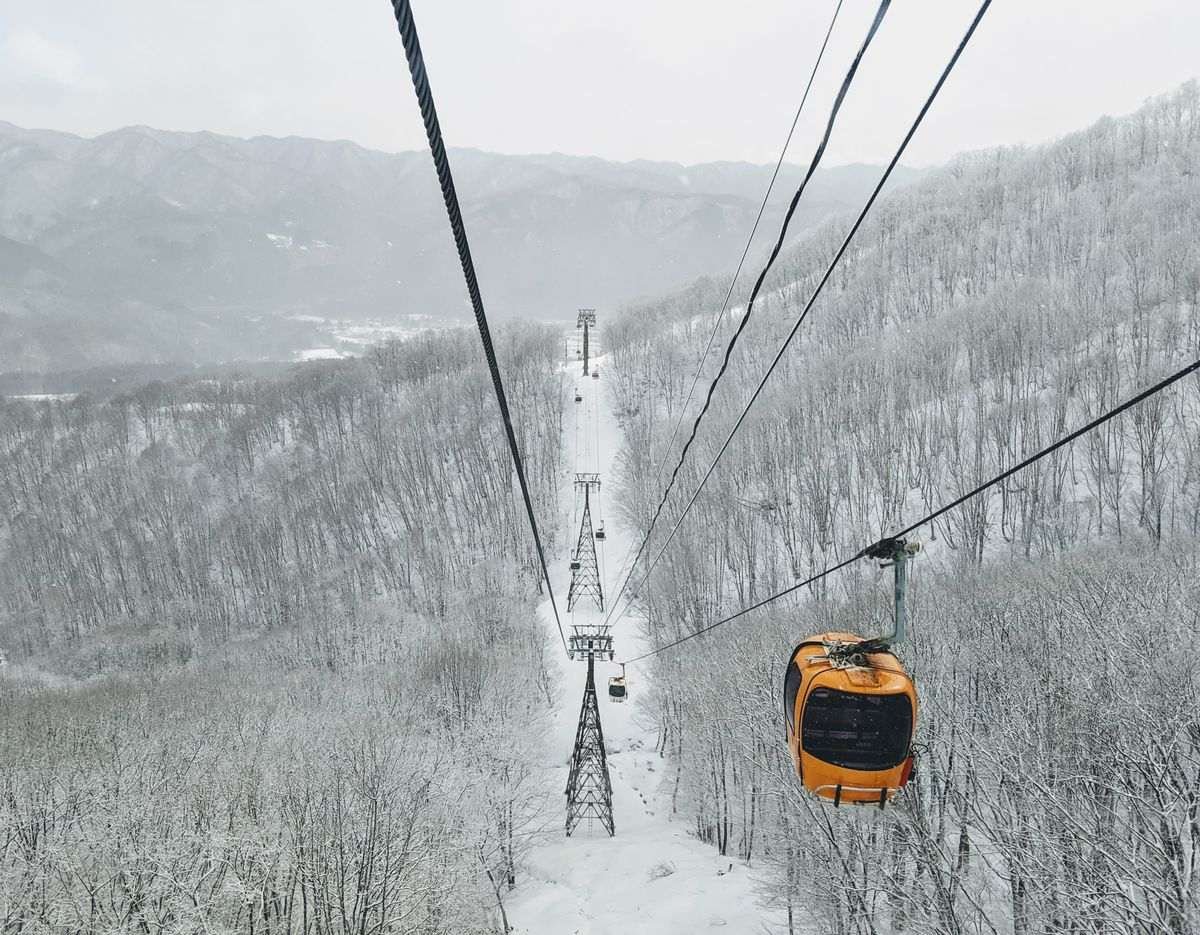
Hakuba sits in the Nagano Alps at the western edge of Nagano Prefecture, roughly 2.5 hours from Tokyo by Shinkansen and bus. The valley hosted the downhill and slalom events at the 1998 Winter Olympics, and the infrastructure built for those Games remains central to the resort’s appeal: excellent lift systems, consistent grooming, and well-maintained runs with meaningful vertical. With 10 interconnected resorts spread across 200km of marked runs, Hakuba Valley is the most diverse ski destination in Japan.
Unlike Niseko, which is purpose-built around international powder tourism, Hakuba retains a working Japanese ski village character. Tatami-room minshuku guesthouses operate alongside luxury chalets, and the local soba restaurants remain busy long after the slopes close.
The Resorts
Happo One is the centrepiece of Hakuba Valley and the largest resort in Japan by vertical drop, at 1,071m. The runs used for the 1998 Olympics Super-G and downhill events are still marked and open to the public. The Kurobishi and Skyline runs represent some of the most technically demanding groomed terrain in Japan, while the Panorama area at the top serves beginner and intermediate skiers with sweeping views across the Hakuba range.
Iwatake caters strongly to families and beginner to intermediate skiers. The main gondola delivers you to a wide, gently pitched plateau with long runs and excellent views of the Hakuba mountain range. The ski school here is well-regarded and operates strong English-language programs.
Cortina is a compact resort on the north side of the valley, with a reputation among tree skiers for holding light, undisturbed powder in its forests. It has limited accommodation and is best visited as a day trip from Happo One.
Tsugaike and Goryu are mid-valley resorts with solid intermediate terrain and significantly shorter lift queues than Happo One during busy periods. Both have direct bus connections to Hakuba Village.
Jiigatake is the most uncrowded resort in the valley, a compact area suited to beginner-to-intermediate skiers wanting to avoid the crowds while building confidence.
Lift Pass Prices (2024/25 Season)
A full-day lift pass at Happo One for the 2024/25 season costs approximately ¥6,200 to ¥6,500 depending on the booking method and date. Adjacent resorts Goryu and Tsugaike cost approximately ¥5,500 to ¥6,000 per day.
The Hakuba Valley Ticket, covering all 10 resorts in the valley, is the best value for multi-day visitors. A single-day Hakuba Valley Ticket costs approximately ¥7,800 to ¥8,500. A five-day pass costs approximately ¥33,000, and a 7-day pass approximately ¥45,000. These are typically available to purchase online from mid-October and at the resort ticket offices.
Ski and snowboard rental packages at Happo One base area run approximately ¥5,000 to ¥7,000 per day for a standard setup. Shops in Hakuba Village often have better rates than on-mountain facilities.
Best Runs
Kurobishi (Happo One): One of Japan’s most celebrated ski runs, a demanding black that drops 700m with sustained gradient and minimal grooming. It was the Super-G course during the 1998 Olympics. Best skied after overnight snowfall.
Skyline (Happo One): A long, cruising red from the top of the Alpen quad down to the mid-mountain, passing through open terrain above the treeline with panoramic views. Excellent for intermediate skiers looking to improve in challenging conditions.
Panorama (Happo One): The broad, gentle zone below the Gondola Alpen summit that suits beginners and intermediate skiers building confidence. Long runs with a consistent pitch.
Cortina Forest Runs: The tree lines through Cortina’s birch forest hold the best off-piste powder in the valley for one to two days after a storm. Accessed from the top lift, with the trees opening into wide powder fields before rejoining the groomed runs.
Getting to Hakuba
The direct route from Tokyo is by far the most convenient of any Japanese ski resort. Take the Hokuriku Shinkansen from Tokyo Station to Nagano Station, which runs every 30 minutes and takes approximately 80 minutes. The fare is approximately ¥8,340 for an unreserved seat; JR Pass holders travel free. From Nagano Station, Alpico Bus services depart for Hakuba Village several times daily, taking 60 to 75 minutes and costing approximately ¥1,500 to ¥1,800. Book bus tickets in advance during peak January weeks.
From Nagano city the same bus runs regularly throughout the ski season. Nagano itself is worth an overnight visit: Zenko-ji is one of Japan’s most significant Buddhist temples and worth an hour of any itinerary.
An alternative route from Osaka or Kyoto uses the Shinkansen to Nagano (approximately 2 hours, no direct service, change at Nagoya or Tokyo). Total journey is around 3 hours from Osaka.
You can reserve the Tokyo to Nagano leg ahead with Shinkansen tickets via Klook, or book a private transfer from Tokyo airports. For full transport routing including Niseko connections, see our Japan winter ski itinerary.
Accommodation
Hakuba Mominoki Hotel is a well-established mid-range option in central Hakuba Village with ski shuttle access to Happo One and Goryu. Western and Japanese-style rooms available, rates from approximately ¥18,000 to ¥35,000 per person per night with breakfast and dinner (typical Japanese pension pricing).
The Orchards Hakuba is a luxury boutique property with private chalets ski-in ski-out at Happo One. Rates from approximately ¥90,000 to ¥180,000 per night in peak season for a two-bedroom chalet.
Wadano House is a mid-range chalet-style hotel in the Wadano area, convenient for Goryu and Tsugaike resorts with quieter surroundings. Doubles from approximately ¥22,000 to ¥40,000 per night including breakfast.
Mimosa Hakuba operates as a traditional minshuku guesthouse in the village, with tatami rooms and home-cooked Japanese dinners. Rates from approximately ¥12,000 to ¥18,000 per person per night with two meals. An authentic choice for travellers wanting a non-resort experience.
Check Hakuba hotel availability and rates before the January peak. For a full accommodation breakdown by area and price tier, see where to stay in Hakuba.
Beyond the Slopes
First-timers and off-piste riders can arrange ski lessons and guided tours in Hakuba through local schools and mountain guides.
Hakuba is exceptionally positioned for combining skiing with other Nagano experiences. The Jigokudani Snow Monkey Park near Yamanouchi is under 2 hours by bus from Hakuba and features wild Japanese macaques bathing in open-air hot springs — one of Japan’s most iconic wildlife sights. See our Jigokudani snow monkeys guide for transport and timing details.
After skiing, the Hakuba Alps Hot Spring Hotel offers public onsen bathing with mountain views, costing approximately ¥700 to ¥1,000 per person. Several ryokan in the village also offer day-use bathing.
For comparisons between Hakuba and Niseko on terrain, access, crowds, and cost, see Niseko vs Hakuba. The full skiing in Japan guide covers all major resorts with season dates and powder statistics.