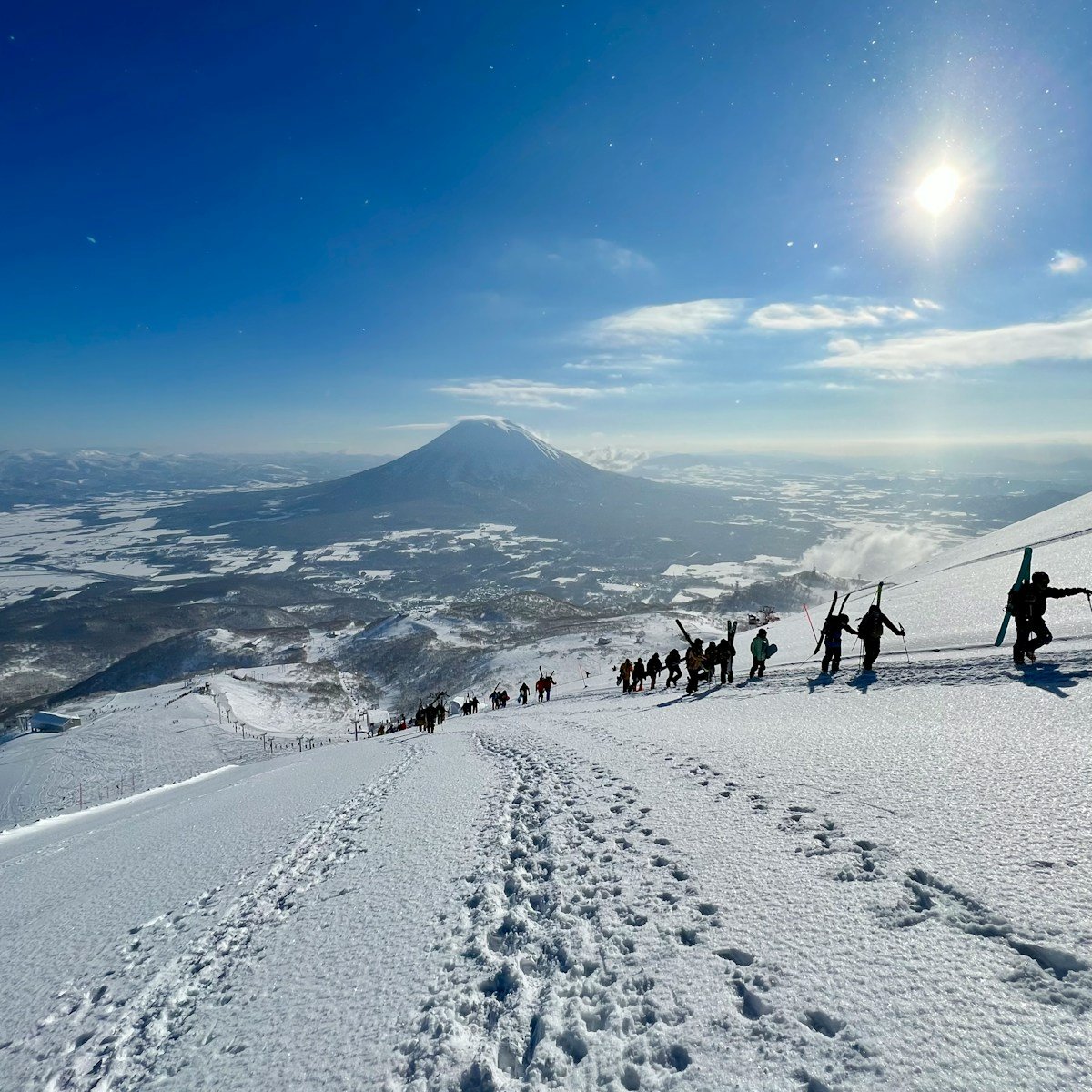
Niseko and Hakuba are Japan’s two internationally recognised ski resorts - and the comparison between them comes up in every planning conversation. Both have deep powder, well-developed infrastructure, and a mature international visitor scene. But they are fundamentally different experiences, and choosing the wrong one will leave you with either an expensive disappointment or a week that didn’t match what you were after.
This comparison covers the factors that actually matter: snowfall and snow quality, terrain suitability, access from Tokyo, accommodation cost range, après-ski, and what each resort does better than the other.
Snow Quality and Quantity
The central selling point of Japanese skiing is the powder, and Niseko wins this comparison by a clear margin.
Niseko (Hokkaido) sits directly in the path of Siberian cold air masses that pick up moisture crossing the Sea of Japan. The result is extremely dry, light powder snow - the international marketing term “Japow” was essentially invented around Niseko’s snow type. Average seasonal snowfall at Grand Hirafu exceeds 15 metres per season, with peak accumulation in January and February. The powder is so dry that it photographs like dust and stays untracked in the trees for days after a storm.
Hakuba (Nagano) receives excellent snow by global standards - 8 to 11 metres per season at Happo-One - but the air masses that hit the Japanese Alps from the Sea of Japan have slightly more moisture than those reaching Hokkaido. The result is heavier, wetter powder: still better than most European and North American resorts, but noticeably different from Niseko’s feather-weight snow. On heavy snowfall days at Hakuba, you will often be skiing in denser conditions. On clear, cold days, the snow quality is excellent.
Verdict on snow: Niseko for quantity and dryness. Hakuba for consistency and reliability over a longer season.
Terrain and Difficulty
This is where Hakuba has a clear edge.
Hakuba’s terrain is more varied and more challenging. The vertical drop at Happo-One is 1,071 metres - the largest of any resort in Japan - with the full range from wide beginner slopes to genuine Olympic-standard black runs. The Usagi course (used for the 1998 Olympic downhill) is a proper black run. The upper mountain at Happo-One sits above the treeline at over 1,800 metres, giving exposure and open alpine skiing that Niseko cannot match. Goryu and Hakuba47 together add another 550 hectares of more mellow intermediate terrain.
Niseko’s terrain is less technically demanding. The highest lift-served point is around 1,200 metres on Mount Annupuri, with runs predominantly oriented toward beginner-to-intermediate skiers. What Niseko does exceptionally is off-piste: gate system access to ungroomed powder fields, tree runs, and sidecountry terrain. The powder culture at Niseko rewards those who chase fresh tracks at gate-opening rather than those looking for technical on-piste challenges.
Advanced and expert skiers will find Hakuba more consistently satisfying over a full week. The Olympic piste, ridge lines, and upper-mountain steeps offer genuine challenge.
Intermediate skiers are well-served by both. Niseko’s powder fields are more forgiving than they look (soft landings), while Hakuba’s Goryu plateau has long, cruising intermediate runs.
Beginners do slightly better at Annupuri (Niseko) - the slopes are gentler, the ski school is very well-organised in English, and the powder’s softness makes falling less punishing. Happo-One’s beginner zone at the base is good but narrower.
Families lean toward Hakuba for the valley setup (more to do between ski days), the proximity to Nagano’s cultural sites, and the shuttle bus infrastructure. Niseko Village and Annupuri at Niseko are also good family options, but the distances between resorts and higher overall costs add friction.
Verdict on terrain: Hakuba for technical skiers and variety. Niseko for powder enthusiasts and backcountry access.
Access from Tokyo
Hakuba is approximately 2h30m to 3 hours from Tokyo:
- Hokuriku Shinkansen: Tokyo to Nagano (1h40m, ¥8,400), then Alpico Bus to Hakuba village (55 min, ¥2,500)
- Direct ski bus from Shinjuku: approximately 4h30m, ¥4,500–¥5,500
- Weekend round-trips from Tokyo are entirely practical
Niseko is approximately 4 to 5 hours from Tokyo:
- Fly Tokyo (Haneda or Narita) to New Chitose Airport, Sapporo: 1h30m
- Airport transfer or shuttle bus to Niseko: 2h30m
- Minimum realistic door-to-door: 4h30m–5h, more with airport check-in time
The shinkansen access to Hakuba makes it significantly more convenient for the Tokyo-based visitor. A three-night weekend at Hakuba is manageable in a way that a three-night Niseko trip is not - the travel cost and time overhead makes Niseko better suited to five-night or week-long trips. The Hokuriku Shinkansen to Nagano is also covered by the JR Pass (with supplement for Granclass seats), reducing the cost further for visitors with a pass.
Verdict on access: Hakuba is the clear winner for Tokyo visitors. Niseko requires a dedicated, longer trip.
Suica is accepted on the Hokuriku Shinkansen to Nagano. For mobile data on both the train journey and at resort, a Japan eSIM covers town connectivity - activate before your flight so it works from landing.
Accommodation Costs
Both resorts have seen significant price increases since 2019–20, driven by international demand and the weak yen attracting Australian, Chinese, and European visitors.
Niseko runs at a higher price floor:
- Budget / guest houses: ¥5,000–¥12,000 per person per night
- Mid-range (private room, breakfast included): ¥15,000–¥40,000 per night
- Luxury (Park Hyatt, Skye Niseko, Setsu): ¥70,000–¥200,000+ per night
Niseko’s luxury accommodation is some of the most expensive ski lodging in Asia. The Park Hyatt Hanazono is internationally competitive with Courchevel or Aspen pricing. Even mid-range accommodation in Hirafu now regularly exceeds ¥25,000 per person per night at peak dates.
Hakuba still has more budget options:
- Budget / pension (often with two meals): ¥9,000–¥15,000 per person per night
- Mid-range: ¥15,000–¥35,000 per night
- Luxury (Sheraton Grande Hakuba): ¥55,000–¥90,000 per night
The Japanese pension (minshuku) two-meal plan model - which survives better at Hakuba than in Niseko - means you can eat breakfast and dinner without worrying about restaurant bookings or meal costs, keeping total trip expenditure more predictable. The Cortina Hotel, a European-style ski lodge in Cortina resort, offers one of the best value-for-money propositions in the valley at approximately ¥30,000–¥45,000 per person including two meals.
Verdict on cost: Hakuba has a lower price floor and more genuine budget options. Niseko’s luxury tier is unmatched, but mid-range pricing has converged significantly.
Après-Ski and Village Life
Niseko has the best après-ski scene in Japan and it is not close. The Hirafu village strip operates as a genuine ski resort town: bars open at 3:00pm, the club-style venues are busy until 3:00am, and the sheer concentration of bars, restaurants, and live music venues within walking distance of the lifts is unlike anything else in Japanese skiing. Bang Bang, Wild Bill’s, the Bang Bang Lodge, and the Green Farm Café are all walkable from the base. The restaurant range - Japanese, Western, pizza, steakhouse, high-end tasting menus - reflects the resort’s decade of international investment.
Hakuba’s après-ski is improving but is still quieter. Noz Music Bar and Peter’s Bar are the two venues with genuine atmosphere. The village restaurant scene is strong for Japanese food (Zekkei and Wadano Kitchen in particular), and the onsen infrastructure is excellent, but the late-night options are limited compared to Niseko. Hakuba’s culture is more family-oriented and less nightlife-focused.
Verdict on après-ski: Niseko is in a different league.
Season Length
Hakuba has the longer season: Happo-One typically runs from late November to early May - approximately 150–160 ski days. Spring skiing in Hakuba (March–April) is particularly good: the snow consolidates into fast corn snow, temperatures rise, and crowds thin substantially. April at Hakuba, with good visibility and spring sunshine, is one of the most pleasant skiing experiences in Japan.
Niseko runs from late November to early May at the main resorts (Annupuri until May), similar in absolute length, but the powder-hunting reason to visit Niseko concentrates between mid-December and early March. Outside that window, the conditions are less distinctive compared to other resorts.
Verdict on season length: Broadly equal, with Hakuba slightly better for spring skiing.
Which Resort Should You Choose?
Choose Niseko if:
- You are specifically chasing powder and deep snow is the primary goal
- You want Japan’s best après-ski and international resort scene
- You are staying at least five nights and have the budget for higher accommodation costs
- You are combining with Sapporo or other Hokkaido destinations
- You are a powder beginner or intermediate who wants forgiving off-piste terrain
Choose Hakuba if:
- You are based in Tokyo and want a practical weekend or 3–4 night trip
- You are an advanced or expert skier who wants technical terrain and more vertical
- You are travelling with a family that needs options beyond the ski day
- You are on a tighter budget and want the two-meal pension model
- You want to combine skiing with Nagano city, the snow monkeys, or cultural Nagano sites
If you can do both: A Japan ski trip combining three nights at Hakuba (train from Tokyo) with four nights at Niseko (fly from Tokyo to Sapporo, connect by shuttle) covers the full range of what Japanese skiing offers. The logistics work well: Hakuba first, then fly from Tokyo to Hokkaido.
Further Reading
Our skiing in Japan guide covers the full range of Japanese resorts including Nozawa Onsen, Furano, Myoko, and Shiga Kogen - worth reading if you are still open to alternatives beyond Niseko and Hakuba.
For destination-specific planning, the Niseko travel guide and Hakuba travel guide cover lift passes, accommodation options, restaurants, and access in full detail.
For timing, our Japan in January and Japan in February guides cover what to expect in the peak ski months.