Nagano Travel Guide: Zenko-ji, Snow Monkeys, & Alpine Views
Nagano travel guide covering Zenko-ji temple, Jigokudani snow monkeys, Matsumoto Castle, and ski resorts in the Japanese Alps.
Guides for Nagano
Nagano sits in a basin surrounded by the Japanese Alps in Honshu’s Chubu region, approximately 240 kilometres northwest of Tokyo. With a city population of around 375,000, it is a mid-sized prefectural capital that punches above its weight as a travel destination. The prefecture hosted the 1998 Winter Olympics and Paralympics, which left behind world-class ski infrastructure that still draws winter sports visitors from across Asia and beyond. The city itself is compact and easy to navigate, and it serves as the most practical base for a cluster of remarkable day trips - Japan’s most famous snow monkey park, the country’s oldest surviving castle keep at Matsumoto, and some of the best backcountry skiing in Asia.
Zenko-ji Temple
Zenko-ji is one of the most important Buddhist temples in Japan - not because of its art collection or architectural grandeur alone, but because of its history as an open, non-sectarian pilgrimage destination. For approximately 1,300 years, pilgrims of any Buddhist denomination have come here, making it among the most visited sacred sites in the country. The temple enshrines what is believed to be the first Buddhist statue ever brought to Japan, in the 6th century - though the original has been sealed from public view for centuries and only a replica is on display.
Entry to the main temple grounds is free. The inner sanctuary - the Hon-do main hall - costs ¥600 to enter. Inside, in a basement passage beneath the altar, is the o-kaidan: a completely lightless tunnel that pilgrims walk through with one hand on the wall, seeking to touch a metal key that, according to tradition, guarantees entry to paradise. The passage costs ¥500 separately. The experience is genuinely disorientating - zero light, unfamiliar sounds, and a sense of communal purpose with the other pilgrims around you in the dark.
The most atmospheric time to visit is before dawn. The morning ceremony, held at 5:30am (6am in winter), involves monks parading from the residence to the main hall carrying lanterns. Pilgrims line both sides of the approach path and the monks pause periodically to offer a blessing. Arriving at 5am to secure a position along the path gives you the best view of the procession. This costs nothing and requires no reservation.
The market street (Nakamise) leading up to the temple is lined with shops selling traditional Nagano products - oyaki dumplings (¥150–¥250), miso, and lacquerware. It opens around 9am and is most active by mid-morning.
Jigokudani Monkey Park
Jigokudani (Hell Valley) Monkey Park is located in the Jigokudani valley within the Joshinetsu Kogen National Park, roughly 2 hours from Nagano city by a combination of train and walking. Entry costs ¥800.
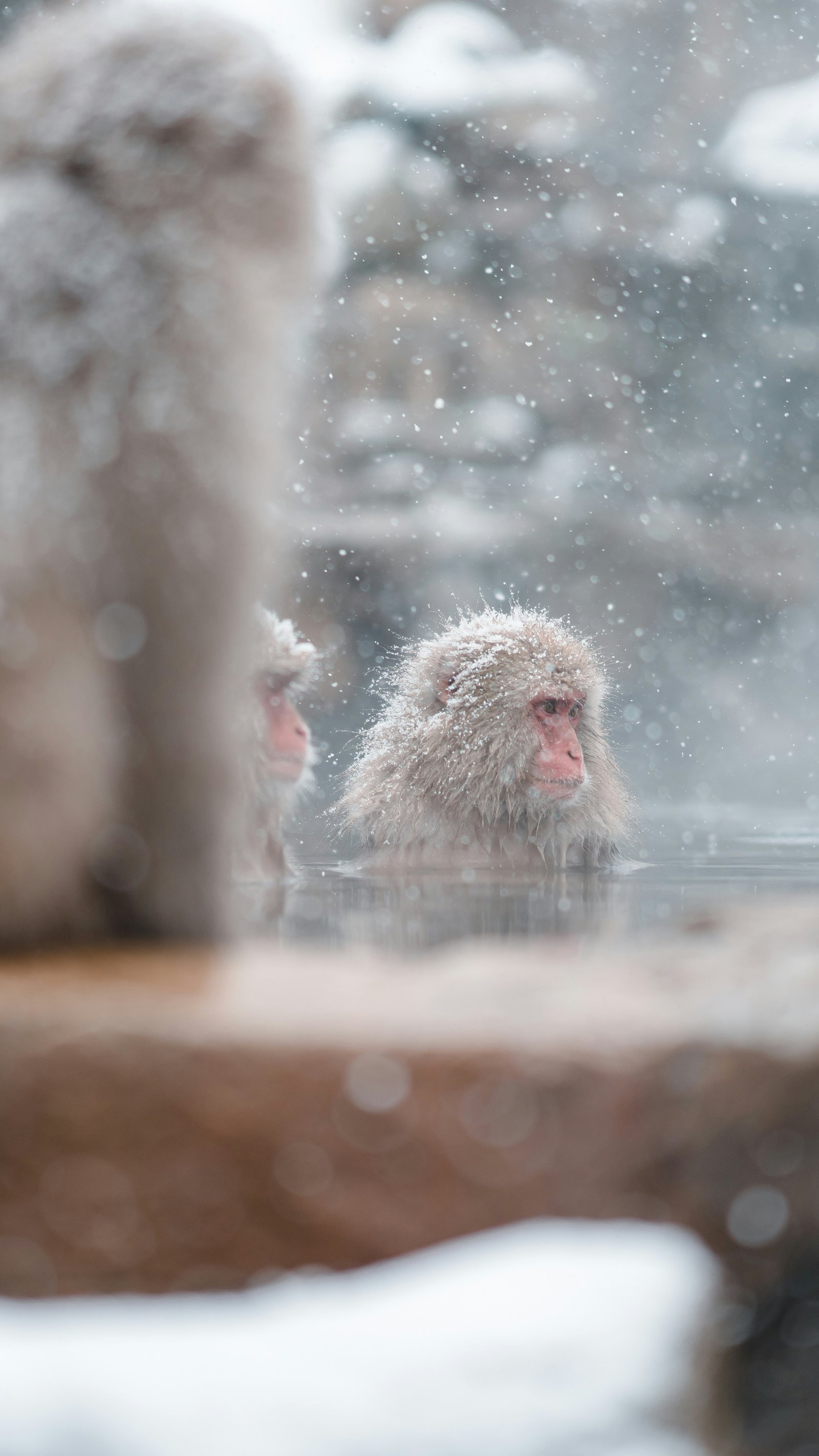
The park is home to a troop of approximately 200 wild Japanese macaques who have learned over generations to bathe in a human-made outdoor hot spring. The steam rising from the thermal water, the macaques floating in the pool with their pink faces visible above the water, and the surrounding snow-covered cedar forest in winter make this one of the most distinctive wildlife experiences in Asia. The monkeys are wild - they are not fed by staff, though they have become habituated to human presence. Visitors can approach to within a few metres.
To reach the park from Nagano, take the Nagano Dentetsu line from Nagano Station to Yudanaka (approximately 1 hour 15 minutes, ¥1,350). From Yudanaka Station, a bus runs to Kanbayashi Onsen (¥600, 15 minutes), followed by a 20-minute walk through forest to the park entrance. Total one-way travel time is around 2 hours; allow a full day.
The monkeys bathe year-round, but December to March is the most visually dramatic period, when heavy snow covers the surrounding forest and the contrast between the steam-filled pool and the frozen landscape is at its greatest. Arrive at the park by 9am - tour groups from Tokyo and Osaka typically arrive mid-morning and can crowd the pool viewing area by 10am.
Matsumoto
Matsumoto is a city of about 240,000 situated 45 minutes south of Nagano by JR limited express (¥1,140). It warrants a full day trip and is worth considering as an overnight stop.
Matsumoto Castle (¥720) is one of the 12 original surviving castle keeps in Japan - structures that have never been destroyed and rebuilt. Constructed between 1592 and 1614, the castle’s black and white exterior has earned it the name “Crow Castle.” The interior is original and contains 6 floors of steep wooden staircases, displays of weapons and armour, and a moon-viewing platform added in the early Edo period. Views from the top floor across the castle moat and city, with the Northern Alps beyond, are exceptional on clear days.
Nakamachi historic street (free walking) preserved a stretch of Edo-period merchant buildings converted into galleries, craft shops, and cafes. The Nawate-dori frog street - named for the frogs that inhabit the adjacent Metoba River - is a short pedestrian street with antique dealers and small restaurants.
Matsumoto City Museum of Art (¥410) has a permanent collection dedicated to artists with connections to the city, most notably Yayoi Kusama. Born in Matsumoto in 1929, Kusama’s polka dot paintings and mirror rooms are the centrepiece of the museum’s contemporary collection.
Snow monkey and Nagano guided tours from Tokyo handle the transport logistics between Jigokudani, Zenko-ji, and Matsumoto - useful given the multiple train and bus changes the circuit involves.
Hakuba Ski Village
Hakuba is one of Japan’s premier ski destinations, located 60 minutes from Nagano by JR (¥1,170). Twelve resorts are interconnected across the Hakuba Valley, with the combination of elevation, Pacific moisture from the Sea of Japan, and cold continental air producing some of the deepest and driest powder snow in Asia.
The main Happo-One resort hosted the 1998 Olympic downhill events. Lift passes for the main interconnected area cost ¥5,000 to ¥7,500 per day depending on the resort and season. Hakuba is also among the best places in Japan for off-piste and backcountry skiing - guides are available through the resort with English-speaking staff from ¥15,000 per half day.
In summer, Hakuba functions as a mountain biking and hiking destination. The Happo-One gondola operates in July and August (¥2,800 return) for access to alpine flower meadows at 1,800 metres elevation.
Shiga Kogen
Shiga Kogen is Japan’s largest ski area, with 19 resorts linked across a high plateau at 1,500 to 2,000 metres elevation. Located approximately 1 hour 30 minutes from Nagano by bus, it hosted the 1998 Olympic biathlon and cross-country skiing events on purpose-built courses that are still used for training and racing.
A day lift pass covering all 19 areas costs approximately ¥6,000. The sheer scale of the ski area - 80 lifts, over 100 runs - means that even during peak periods you can find uncrowded runs by moving between resorts. The plateau also offers excellent cross-country trails in winter and hiking through subalpine wetlands in summer.
Obuse
Obuse is a small town of around 11,000 residents, 40 minutes from Nagano by JR (¥640). It warrants 2 to 3 hours as a half-day excursion.
The Hokusai Museum (¥1,000) houses the largest collection of works by Katsushika Hokusai - the artist responsible for “The Great Wave off Kanagawa” - outside Tokyo. More importantly, it houses several of Hokusai’s late works, including two massive ceiling paintings commissioned for local festival wagons when the artist was in his 80s. These paintings are rarely reproduced and are the primary reason to visit.
Obuse is also Japan’s chestnut capital. Mont blanc chestnut desserts at Obusedo confectionery (¥900) are the most famous local product. The town is small enough to walk entirely in an hour and genuinely pleasant rather than purely touristic.
Getting to Nagano
The JR Hokuriku Shinkansen from Tokyo Station reaches Nagano in approximately 1 hour 20 minutes. The standard fare is approximately ¥8,340 for a reserved seat. Trains run roughly every 30 minutes during peak hours.
From Osaka, the most practical route is via Nagoya on the Tokaido Shinkansen and then by limited express to Matsumoto (total around 3 hours, ¥10,000–¥12,000). From Kyoto the route and time are similar.
Within Nagano city, Zenko-ji is a 30-minute walk from the station or 5 minutes by the regular Gururin Bus (¥150). Taxis are readily available from the station for ¥800–¥1,000 to the temple.
Planning your trip to Nagano? Tours and activities in Nagano cover guided experiences, cultural immersion, and the top sights with local expertise. Flights to Japan vary significantly by season - compare early to secure the best fares. Sort out travel insurance for Japan before you book, and pick up an Airalo eSIM for Japan to have mobile data the moment you land.
Search hotels in Nagano on Booking.com
Once you are in town, our guide to getting around Nagano covers trains and buses in more detail.
In nearby Matsumoto, drummers perform at the castle each summer. See our Matsumoto Castle Taiko Festival event guide for dates and viewing tips.
Explore Nagano
Things to do in Nagano · Where to stay in Nagano · Day trips from Nagano · Getting around Nagano
Nagano is part of the Chubu region. For a broader overview of central Japan travel, see our Chubu region guide. For wildlife enthusiasts, our snow monkeys guide covers the famous Jigokudani Monkey Park nearby.
Official sources worth checking before you go: Japan National Tourism Organization.
See also: Chubu region guide · Nagano food guide · Snow monkeys at Jigokudani · Takayama travel guide · Onsen guide Japan · Japan in February · Three weeks in Japan itinerary
Upcoming Events in Nagano
Hatsumode - New Year Shrine Visits
Hatsumode 2027, 1–3 January. Japan's most important annual tradition - millions visit shrines and temples in the first three days of the new year.
Nearby Cities
Frequently Asked Questions
- How do you get from Tokyo to Nagano?
- Take the JR Hokuriku Shinkansen from Tokyo Station to Nagano. The journey takes around 80 minutes and costs approximately ¥8,340 for a reserved seat. Trains depart roughly every 30 minutes during peak hours.
- Is Nagano city worth visiting beyond the snow monkeys?
- Yes. Zenko-ji is one of Japan's most important Buddhist temples and a genuine pilgrimage destination. Nagano city itself is small and manageable. Matsumoto Castle 45 minutes away is among Japan's most beautiful original keeps.
- What is the best time to see the snow monkeys at Jigokudani?
- December to March offers the most photogenic conditions, when monkeys bathe in the hot spring surrounded by snow. The park (¥800) is open year-round and macaques are present throughout. Arrive by 9am to beat tour groups.
- What ski resorts are accessible from Nagano?
- Hakuba (60 minutes by JR, ¥1,170) has 12 interconnected resorts with excellent powder snow. Shiga Kogen (90 minutes by bus) is Japan's largest ski area with 19 linked resorts. Day lift passes run ¥5,000 to ¥7,500.
- Can you visit Nagano and Matsumoto in one day from Tokyo?
- It is possible but rushed. Two days allows proper time at Zenko-ji, a full Jigokudani visit, and a relaxed Matsumoto day trip. Consider staying one night in Nagano and one in Matsumoto for a more comfortable pace.
Book an experience
Top experiences in Nagano
Explore the best tours and activities in Nagano, with instant confirmation and free cancellation on most bookings.