Nagano city’s compact size belies the extraordinary range of experiences within two hours’ travel. The Nagano Dentetsu rail network, JR lines, and a reasonably reliable bus network connect the city to snow monkey parks, original Edo-period castles, alpine valleys, and some of Japan’s oldest hot spring towns. These are the seven day trips that justify making Nagano a multi-night base.
1. Jigokudani Monkey Park
Travel time: Approximately 2 hours each way. Total budget: Around ¥5,000 for the day including transport, entry, and food.
The journey to Jigokudani is part of the experience. From Nagano Station, take the Nagano Dentetsu private railway line to Yudanaka (approximately 1 hour 15 minutes, ¥1,350). The line passes through apple orchards and rice paddy country before climbing into the Shiga Kogen foothills. At Yudanaka Station, board the Kanbayashi Onsen bus (15 minutes, ¥600 return from the bus stop outside the station). From the Kanbayashi Onsen stop, a 20-minute walk on a paved then unpaved forest path leads to the park entrance.
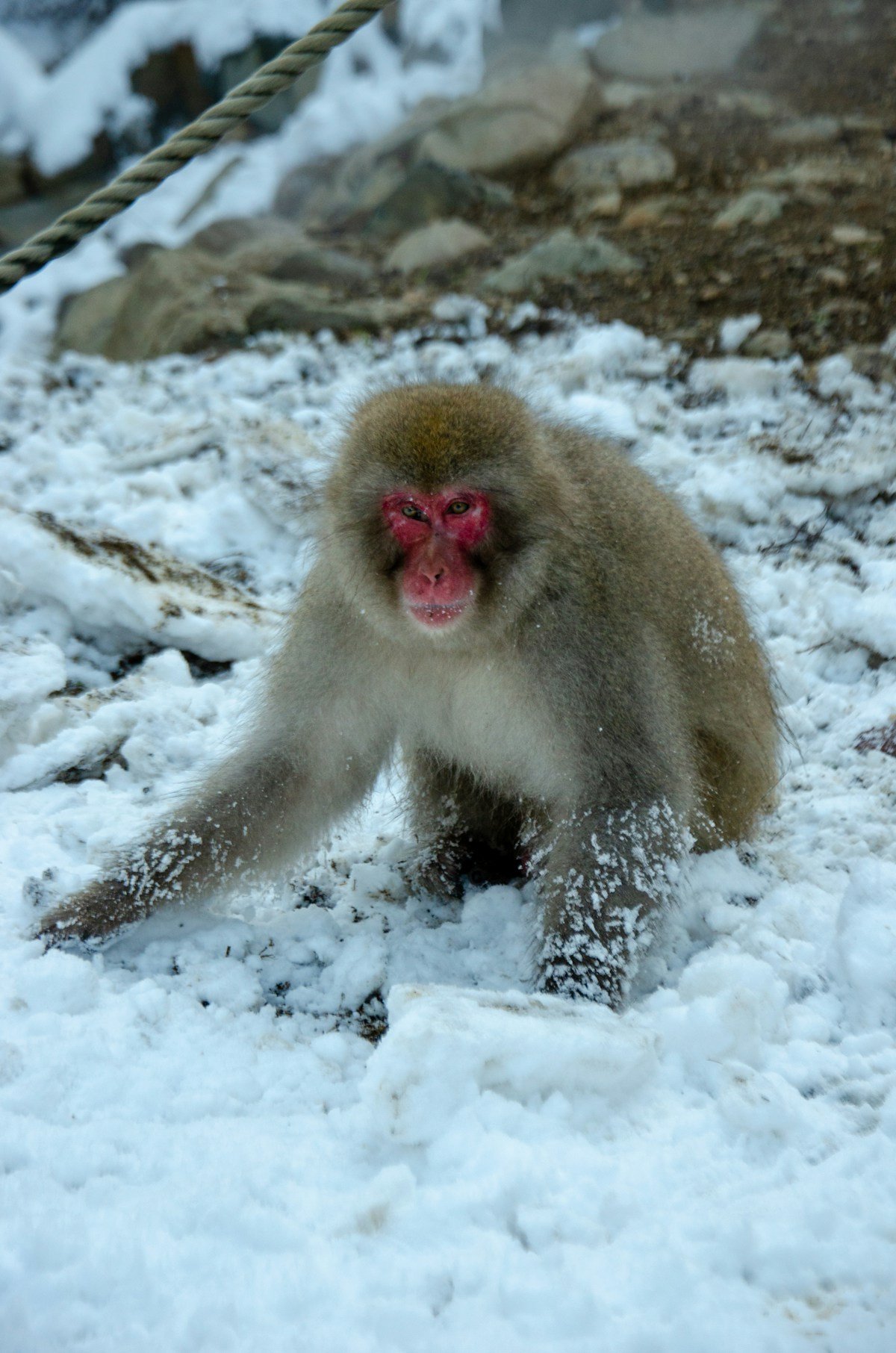
Park entry costs ¥800. Approximately 200 wild macaques live in the valley. The troop’s habit of bathing in the hot spring pool developed gradually from the 1960s onward, beginning with juveniles and spreading through the group over decades. The pool is artificial - maintained by staff - but the macaques’ use of it is entirely voluntary and self-initiated.
The most photogenic conditions occur from December to March, when snow covers the surrounding cedar forest and the contrast between the steaming pool and frozen landscape is at its peak. But the monkeys are present and bathing year-round. In summer, the young born the previous spring are active and playful around the pool edge.
Arrive at the park by 9am. Tour groups from Tokyo and Osaka, which operate on a roughly fixed schedule, typically arrive between 10am and 11am. Staying until 2 to 3pm in the afternoon, after groups have departed, offers another quieter window.
For a fuller day, spend the afternoon at Shibu Onsen town (10-minute walk from Yudanaka Station). The nine public baths accessible to ryokan guests give the town its charm, but day-trippers can use the Shima-yu public bath (¥500) and walk the stone-paved lanes. A bowl of soba at one of Yudanaka’s restaurants before the return train completes the day comfortably.
2. Matsumoto
Travel time: 45 minutes by JR limited express (¥1,140 each way). Total budget: Around ¥5,000–¥7,000 for a full day.
Matsumoto is the most rewarding single day trip from Nagano. The city is large enough to occupy a full day without effort, yet compact enough that the main sights are all within reasonable walking distance.
Matsumoto Castle (¥720, open 8:30am–5pm) should be the first stop, arriving as it opens to avoid the building queue. One of Japan’s 12 original surviving castle keeps, it was constructed in the late 16th century and has stood without major destruction or reconstruction since. The six interior floors - reached by steep original wooden ladders rather than stairs - contain displays of the castle’s defensive mechanisms, seasonal festivals, and historical armour. The top floor view across the city to the Northern Alps requires a clear morning.
From the castle, Nakamichi-dori (10-minute walk) runs past preserved kura storehouses converted into craft shops and galleries. The adjacent Nawate-dori frog street connects to a further cluster of antique dealers and small restaurants. Soba lunch at any of several well-regarded shops in the old town costs ¥900 to ¥1,400 for a full set.
The Matsumoto City Museum of Art (¥410, 10-minute walk from the castle) has a permanent Yayoi Kusama installation - the infinity mirror room and large-scale polka dot works displayed in the artist’s hometown context.
For the return journey, the 4:45pm or 5:30pm limited express returns to Nagano comfortably, arriving in time for dinner.
3. Obuse Chestnut Town
Travel time: 40 minutes by JR (¥640 each way). Total budget: Around ¥3,000–¥4,000 for a half-day.
Obuse is small - the town centre requires only 2 to 3 hours - but it contains one genuinely exceptional museum and a concentrated food culture worth the short journey.
The Hokusai Museum (¥1,000, open 9am–5pm) holds the most significant collection of Katsushika Hokusai’s work outside Tokyo. Hokusai visited Obuse four times in his eighties and created several major works here, including two large ceiling paintings for festival wagons - detailed, richly coloured compositions depicting phoenixes and waves that are rarely reproduced and largely unknown even among art enthusiasts. The museum’s smaller works and sketches showing Hokusai’s technical range are equally rewarding.
Chestnut season in Obuse runs from late August through October, when fresh chestnuts are processed into a range of confectionery. The mont blanc at Obusedo (¥900) is the most celebrated: a rich chestnut cream paste over sweet chestnut pieces. Outside chestnut season, preserved chestnut sweets and chestnut sake are available year-round.
Obuse pairs naturally with a stop at the small but pleasant Ganshoin temple (¥300), which holds another Hokusai ceiling painting - a dragon image painted when the artist was 89 years old.
4. Hakuba Resort and Mountain Scenery
Travel time: 60 minutes by JR (¥1,170 each way). Total budget: ¥8,000–¥15,000 depending on activities.
Hakuba in summer (late June to early September) offers mountain scenery and activities at high elevation without the winter crowds. The Happo-One gondola runs in July and August (¥2,800 return), lifting visitors to 1,830 metres where alpine flower meadows bloom across broad terraces above the treeline.
The 45-minute walk from the gondola top station to the alpine lodge at Karamatsu-so passes through meadows of gentians, lilies, and harebells. White-tailed eagles and Japanese ptarmigan are occasionally spotted above the treeline. The walk back down is equally pleasant and requires no specialist equipment.
In winter, Hakuba Valley is one of Asia’s premier ski destinations. Twelve interconnected resorts cover the valley. Day lift passes cost ¥5,000 to ¥7,500. The area is particularly attractive for off-piste skiing - the combination of deep snowfall and steep terrain above the treeline creates exceptional backcountry conditions from late December through February.
From Nagano Station, the JR Oito line to Hakuba is a direct service. The journey is particularly scenic in winter when the train passes snow-covered rice paddies and approaches the mountains.
5. Bessho Onsen Day Soak
Travel time: About 1 hour total (Nagano to Ueda by Shinkansen ¥1,640, Ueda to Bessho by Ueda Dentetsu approximately ¥760 return). Total budget: Around ¥4,000 for a half-day.
Bessho Onsen is Japan’s oldest documented hot spring town, with thermal bathing records dating to the 8th century. The town is small and quiet, with stone-paved lanes, a handful of ryokan, and three public baths.
The Dai-yu public bath (¥300) is the most central and popular. The water is a distinctive grey-brown clay type - unusual among Japanese onsen, most of which are clear or milky. The Ishiyu bath (¥300) is older and slightly smaller; the Otoginoyu (free, basic) is the most basic of the three.
Ueda Castle (10 minutes from Ueda Station by foot, grounds free) is a pleasant addition before or after Bessho. The castle is famous for twice withstanding siege by Tokugawa forces in the late 16th and early 17th centuries. Only the stone walls and two restored turrets remain, but the grounds are pleasant and the small museum (¥300) covers the castle’s history.
Bessho works well as a quiet rest day between more intensive excursions. The pace is unhurried and the town is almost entirely unvisited by foreign tourists.
6. Kamikochi Alpine Valley
Travel time: Around 2 hours 30 minutes from Nagano (JR to Matsumoto 45 min, bus to Kamikochi 55 min - ¥2,700 return from Matsumoto Dentetsu Bus Centre). Total budget: Around ¥8,000–¥10,000 for the day.
Kamikochi is a glacial valley at 1,500 metres elevation within the Chubu Sangaku National Park. Private vehicles are not permitted in the valley - all visitors arrive by bus or on foot. This restriction, combined with the altitude and the national park status, keeps the environment in exceptional condition.
The centrepiece is the 4-kilometre walking path along the Azusa River from Kappa Bridge (the main bus terminus) to Myojin Pond. Kappa Bridge is the classic first view of Kamikochi - a wooden suspension bridge over the crystal-clear Azusa River, with the Hotaka Mountain range visible behind. Taisho Pond, a 20-minute walk in the opposite direction, reflects the active volcano Mt Yakedake in still water on calm mornings.
The full Kappa Bridge to Myojin Pond walk takes around 2 hours each way and passes through wetland meadows with views of peaks reaching over 3,000 metres. Wildlife sightings - Japanese deer, macaques, and occasionally black bears in the forest margins - are more reliable here than at more-visited national parks.
Kamikochi is open late April to mid-November. Peak periods are the Golden Week holiday (late April to early May), summer holidays (late July to August), and autumn foliage (mid-October). Booking the return bus from Matsumoto in advance is strongly recommended during peak periods.
7. Yudanaka and Shibu Hot Spring Alley
Travel time: 1 hour 15 minutes by Nagano Dentetsu to Yudanaka (¥1,350). Total budget: ¥3,000 day visit, or ¥15,000–¥25,000 per person for a ryokan overnight.
Shibu Onsen - the original hot spring town adjacent to Yudanaka - is most accessible as an overnight experience. Guests staying at any of the town’s 10 or so ryokan receive a stone key that unlocks all nine public baths along the stone-paved alley. These baths are not hotel baths - they are small stone-floored communal rooms heated by the natural spring, and access to all nine (each with slightly different water composition and temperature) is part of the ryokan stay.
A night at a Shibu Onsen ryokan with kaiseki dinner and breakfast costs ¥15,000 to ¥25,000 per person. This is higher than typical business hotel rates but represents good value when the bath access and the meals are factored in. The town’s evening atmosphere - when day-trippers have left, lanterns illuminate the stone lane, and steam rises from the bath vents - justifies the overnight stay.
For day visitors, the Shima-yu public bath (¥500) near the main lane is open without a staying reservation. Walking the alley takes 15 minutes and the lane architecture is worth seeing regardless of bathing.
Make the most of your time around Nagano: Guided day trips from Nagano handle the logistics - transport, guide, and timing - so you can focus on the experience. For airport arrivals and departures, Kiwitaxi offers fixed-price airport transfers with no meter surprises.
Day Trip Planner by Season
| Day Trip | Spring (Apr–May) | Summer (Jun–Aug) | Autumn (Sep–Nov) | Winter (Dec–Mar) |
|---|---|---|---|---|
| Jigokudani Monkeys | Good (spring foliage) | Good (young monkeys) | Good | Best (snow contrast) |
| Matsumoto | Cherry blossoms mid-Apr | Good | Foliage mid-Nov | Good, shorter hours |
| Obuse | Good | Good | Chestnut season best | Good |
| Hakuba | No snow late May | Hiking/gondola | Hiking, foliage Oct | Skiing Dec–Mar |
| Bessho Onsen | Good | Good | Good | Best (cold + hot bath) |
| Kamikochi | Opens late April | Good, busy Jul–Aug | Best mid-October | Closed |
| Yudanaka/Shibu | Good | Good | Good | Best atmosphere |
Where to stay: Search hotels in Nagano on Booking.com
See also: Nagano travel guide · Things to do in Nagano · Where to stay in Nagano · Snow monkeys at Jigokudani · Chubu region guide