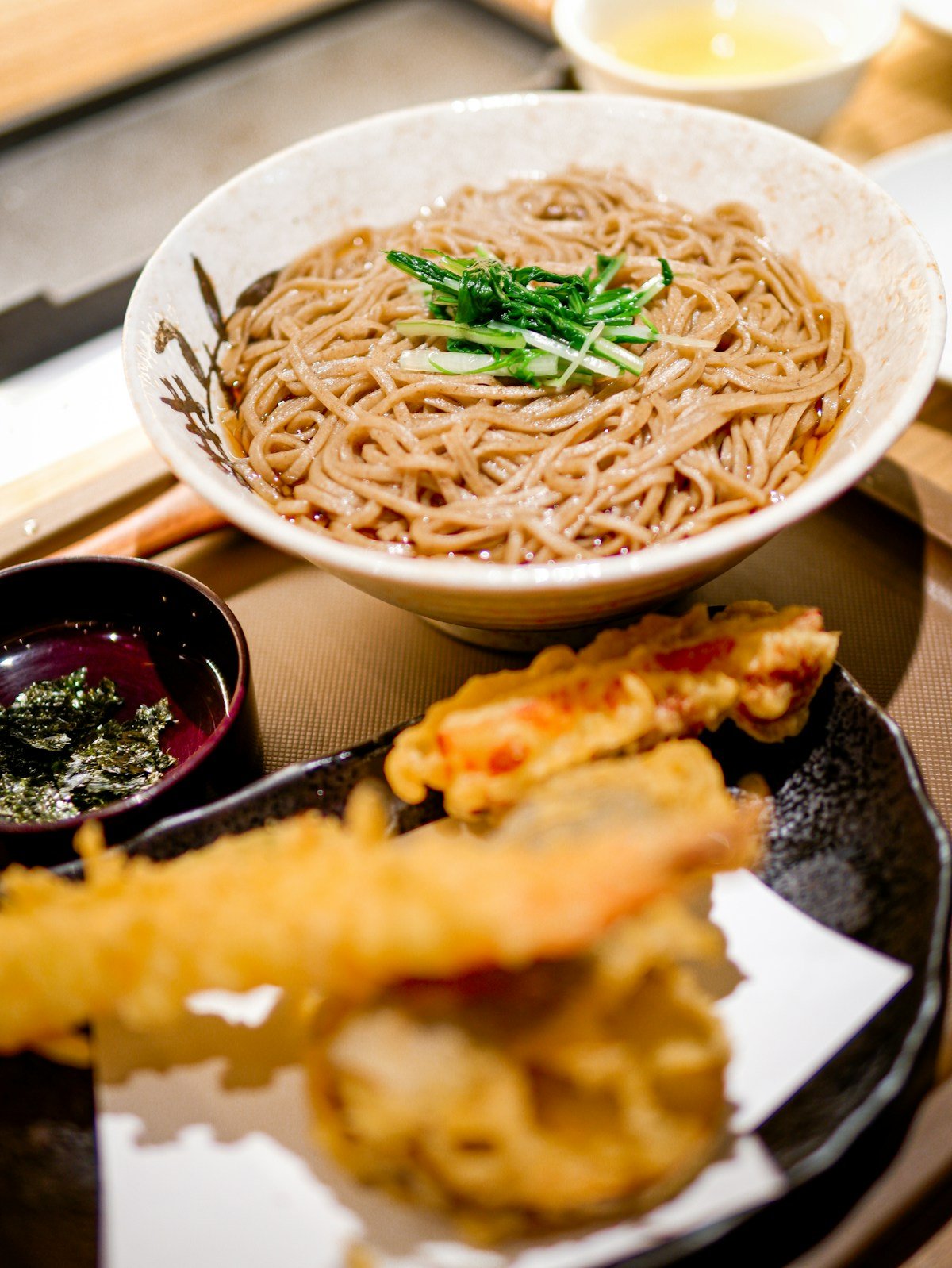
Nagano Prefecture sits in the central highlands of Honshu, enclosed by the Japanese Alps to the west and a secondary mountain range to the east. The climate - colder, shorter growing seasons, abundant snowmelt - produces particular ingredients: buckwheat that becomes soba, apples that ripen slowly to unusual sweetness, and cattle and game animals raised at altitude. The food is honest, filling, and rooted in what the mountains provide.
The two main base cities are Nagano City (home of the former Winter Olympics and Zenko-ji temple) and Matsumoto (castle town with a strong independent restaurant scene). Both are worth knowing.
Soba - The Defining Dish
Nagano grows approximately 30 percent of Japan’s buckwheat crop. At altitude and in cooler temperatures, the buckwheat grain develops more flavour compounds than lowland varieties - this is why Shinshu soba (the regional name) is considered some of Japan’s finest. The most important restaurants in the region are soba-centric.
Kamon (Matsumoto, near Matsumoto Castle) is one of the city’s most respected soba restaurants. Hand-made noodles, served cold (zaru) with a dipping broth or hot (kake) in a clear soup. A zaru soba set with tempura costs approximately ¥1,800–¥2,500. Reservations recommended at weekends.
Soba Dokoro Miyasaka (Nagano City, central area) has operated for decades and is known for noodles made fresh each morning. Lunch menu from approximately ¥900 (plain zaru soba) to ¥1,800 (tempura set). Closes when the day’s soba is finished - arrive before 13:00 to be safe.
Fujimori (Matsumoto) is a popular neighbourhood soba restaurant that also serves a number of Nagano mountain vegetable (sansai) dishes as side orders. Budget approximately ¥1,200–¥2,000 for a full set with pickles and soup.
Takeya (Nagano City, near Zenko-ji) is a good post-temple soba stop: a straightforward menu of cold and hot soba sets, approximately ¥900–¥1,500. Reliable, practical, and good value.
Oyaki - Mountain Dumplings
Oyaki are stuffed dumplings that predate rice cultivation in the Nagano highlands. The dough is made from buckwheat or wheat flour mixed with water and sometimes miso, then filled with nozawana (Nagano’s signature pickled greens), kabocha squash, mushrooms, or sweet bean paste, then steamed, baked, or lightly fried.
Iroha-do (Nagano City, near Zenko-ji) is the city’s best-known oyaki specialist. A small shop with an adjacent eat-in space, selling freshly made oyaki from approximately ¥200 each. Nozawana is the essential filling to try; the mushroom and kabocha versions are also popular. A set of three costs approximately ¥600–¥700.
Ogura-an (Matsumoto) makes oyaki in traditional round form, baked rather than steamed. Each costs approximately ¥220–¥300. The miso and walnut filling is a local variation not found elsewhere.
Shinshu Miso and Miso Cuisine
Nagano is Japan’s largest miso-producing prefecture, and Shinshu miso - lighter in colour, milder in salt, shorter in fermentation time than dark red miso - appears throughout the regional cuisine. It is used in miso soup, as a glaze on grilled foods (miso-dengaku), and in dressings.
Shinshu Miso Dengaku-ya (Matsumoto, near the castle) is a small specialist restaurant serving miso dengaku: skewered tofu, konnyaku, potato, and vegetables coated in a Shinshu miso glaze and grilled over charcoal. Sets of 5–8 skewers cost approximately ¥900–¥1,400. A good midday stop with sake or green tea.
Wild Game (Gibier)
Venison, wild boar (inoshishi), and occasionally bear meat appear on Nagano restaurant menus from October through March. The mountain terrain supports significant deer and boar populations, and the Nagano game hunting tradition is long-established.
Sansai-ya (Nagano City) is an izakaya-style restaurant specialising in mountain vegetables and game. Venison tataki (lightly seared deer), inoshishi nabe (wild boar hot pot), and grilled game birds appear on the autumn/winter menu. Budget approximately ¥3,500–¥5,500 per person for a full evening meal with local sake. Reservations recommended.
Yamaboshi (Matsumoto) serves wild game as a secondary menu alongside mountain fish (iwana char, yamame trout) and sansai vegetables. The inoshishi miso hot pot costs approximately ¥2,800 per person (minimum two). Available October to February; call ahead to confirm the game menu.
Matsumoto’s Broader Restaurant Scene
Matsumoto has a disproportionately strong independent restaurant scene for a city of approximately 240,000 people. The streets around the castle and the Nawate district (a short covered shopping street along the river) have good density.
Niku no Shiro specialises in Shinshu wagyu beef - cattle raised in Nagano’s mountain pastures. The lunch set with wagyu steak, rice, miso soup, and salad costs approximately ¥2,200–¥3,500 depending on cut weight. Considerably cheaper than equivalent wagyu in Tokyo.
Marumo (Nawate district) is a long-running sake bar and light-meal restaurant specialising in Nagano-brewed sake. The prefecture has over 80 sake breweries. A sake tasting set (three small pours) from approximately ¥1,200; small plates of cheese, sansai, and local charcuterie approximately ¥600–¥900 each. Good for an early evening stop.
Parabolica (Matsumoto, central) is a well-regarded cafe and restaurant serving Nagano-sourced ingredients in a light Western-Japanese style. Lunch plates approximately ¥1,200–¥1,800. Popular with local professionals; more design-conscious than most options in the city.
Apples and Apple Sweets
Nagano is Japan’s second-largest apple-producing prefecture (after Aomori). From mid-September through November, roadside stands, market stalls, and supermarkets sell direct-from-orchard apples at prices significantly below urban retail. Recommended varieties: Fuji, Shinshu, and the less common Orin.
Apple-based confectionery - apple pies, apple cakes, dried apple - appears in souvenir shops throughout the city. Cafe Orchard near Matsumoto Station serves apple pie from approximately ¥450 per slice alongside coffee.
Price Reference
| Budget | Typical spend | What it covers |
|---|---|---|
| Budget | ¥1,200–¥2,200 | Soba set lunch, oyaki, konbini |
| Mid-range | ¥3,000–¥5,500 | Full soba restaurant, game izakaya |
| Comfortable | ¥6,000–¥10,000 | Shinshu wagyu dinner, sake bar |
| High-end | ¥12,000+ | Multi-course with selected sake pairings |
Prices as of 2026; fluctuate with season.
Practical Notes
Getting to Nagano City: Hokuriku Shinkansen from Tokyo (Omiya) to Nagano takes approximately 1 hour 20 minutes. From Kanazawa approximately 1 hour.
Getting to Matsumoto: Azusa limited express from Shinjuku (Tokyo) takes approximately 2 hours 40 minutes. From Nagano City by local train approximately 1 hour.
Seasonality: Soba, miso, and mountain vegetables are year-round. Wild game runs October–March. Apple season is September–November. Snow monkey visits to Jigokudani (near Yudanaka, 45 minutes from Nagano City by Nagano Electric Railway) are best December–March.
Cash: Specialist soba restaurants and oyaki shops are almost universally cash-only. Carry ¥3,000–¥5,000 in cash for daytime eating.
For broader trip planning, see our Nagano city guide and things to do in Nagano. For day trips to the Japan Alps and Snow Monkey Park, see our Nagano day trips guide.
See also: Nagano city guide · Tokyo food guide · Osaka food guide · Kyoto food guide
Take a Guided Food Tour of Nagano
Nagano Prefecture produces Japan’s finest soba - the cold mountain air and short growing season create a buckwheat noodle with more flavour than the warmer-region versions, and the soba shops in Togakushi, Azumino, and Matsumoto have been competing on noodle quality for over 300 years. Beyond soba, Nagano is Japan’s leading producer of Shinshu miso (the lightest, youngest style of miso), apple-fed wagyu, and locally cultivated wasabi from the Hotaka region. A guided food experience in Nagano connects the soba tradition with the mountain vegetable culture and the sake breweries that use the Hida mountain snowmelt water - three food experiences that reinforce each other in this one region.
Guided food tours in Nagano take you beyond tourist-obvious spots - local guides know which stall has the freshest soba, where to find the best Shinshu miso, and how to navigate an all-Japanese menu.
Plan Your Trip
- Flights - Find the best fares to Japan
- Travel Insurance - Get covered before you go
- eSIM - Stay connected from landing
- Food Tours - Browse guided food experiences in Nagano
- Hotels - Browse hotels in Nagano - stay central to reach the soba shops, sake breweries, and mountain vegetable restaurants with ease.