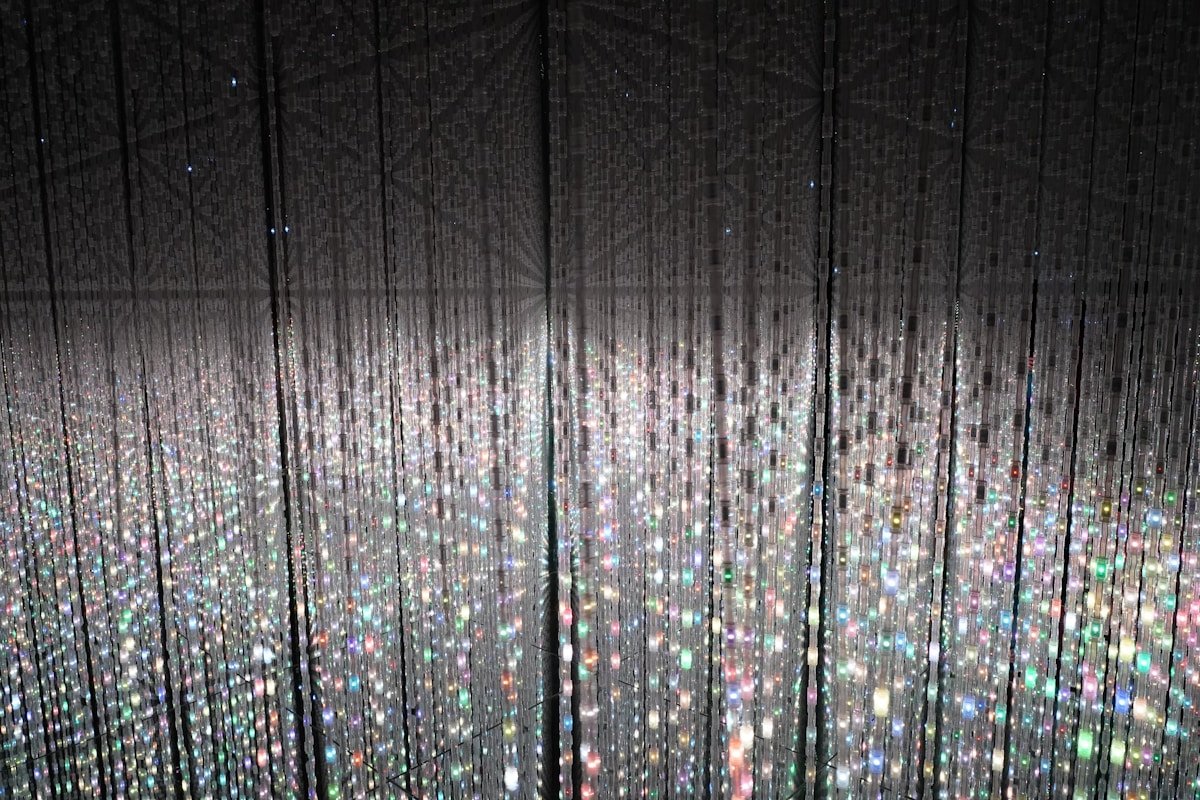
teamLab Planets is a walk-through digital art museum in Toyosu, Tokyo, where rooms become environments rather than displays. Visitors move barefoot through water, stand inside fields of blooming light, and pass through installations that respond to their presence in real time. It is one of the few attractions in Tokyo that consistently surprises people who have already seen photographs of it.
The venue opened in 2018 as a temporary exhibition. It has remained open continuously since then by popular demand, and in 2025 its run was extended until at least late 2027.
Prices are approximate as of 2026. We suggest booking teamLab tickets in advance on Klook, as timed slots sell out on weekends.
Top Tours at a Glance
Here’s a quick comparison of top-rated teamLab Planets ticket options on GetYourGuide:
| Tour | Duration | Price (from) | Highlights |
|---|---|---|---|
| teamLab Planets TOKYO - Entry Ticket | 60–90 min | from ¥3,450 | Timed entry, skip the queue, digital confirmation |
| Tokyo Night Tour: teamLab Planets & Tsukishima Monja Walk | 3.5 hrs | from ¥16,950 | Evening entry, monjayaki dinner district, English guide |
| Private Tour: teamLab Planets & Asakusa | 4 hrs | from ¥15,600 | teamLab + Senso-ji, private guide, flexible timing |
Browse Tokyo tours and digital art experiences → GetYourGuide
What Is Inside teamLab Planets
teamLab Planets follows a fixed sequence of around ten rooms, which you move through in order from entrance to exit. Unlike teamLab Borderless (the larger venue at Azabudai Hills), there is no free-roaming or choosing your own path. The sequence takes most visitors 60 to 90 minutes.
The Water Entrance
The experience begins with water. You remove your shoes and socks at the entrance and descend a ramp into a room with a shallow reflective pool, typically ankle-deep with a controlled temperature. The ceiling projects continuous flower imagery that blooms, falls, and regenerates. The water acts as a second surface for the projection, doubling the visual depth of the room.
Wear clothing suitable for wading. Skirts and trousers that roll up above the ankle work well. Anything that trails into the water at knee level will get wet.
Floating in the Falling Universe of Flowers
This is the installation most visitors photograph first and describe longest. A mirrored room dissolves floor and ceiling into a single continuous environment of falling digital flowers. Petals bloom and drop on every surface simultaneously, and the mirrors remove any visible edge to the room. It is difficult to tell where the actual walls are.
The installation updates in seasonal cycles. The specific flowers and colour palette shift depending on the time of year.
Universe of Water Particles on a Rock
A room-scale waterfall rendered in thousands of individual particle simulations. The water physics responds to your movement through the space. Standing close changes the behaviour of particles around you; the waterfall splits and reforms based on where visitors stand.
Catching and Collecting
A participatory room filled with glowing spheres suspended at varying heights. Touching a sphere changes its colour. That colour propagates outward to surrounding spheres in a wave, so deliberate coordination between visitors produces visual effects that single visitors cannot.
This room is particularly effective with children. The physical interaction is immediate and the cause-and-effect relationship is legible to anyone.
Garden of Flames and Resonating Microcosm
The circuit closes with an outdoor garden section that creates a different relationship between visitor and artwork than the interior rooms. The scale is larger and the light is different: more diffuse, less concentrated. It works as a decompression after the intensity of the enclosed dark rooms.
The Table (Optional)
A separate booking option within the venue allows visitors to reserve seats at a dining table where food and drink appear to interact with seasonal nature imagery projected onto the surface. Seasonal courses are available at approximately 4,000 to 7,000 yen per person as of 2026 (separate from the entry ticket). Reservations are required and must be booked through the teamLab website in advance of your visit.
Tickets and Entry Fees
Adult ticket: Approximately 3,200 yen as of 2026.
Child tickets (3-15): Reduced rate; children under 3 enter free.
Seasonal pricing: Rates occasionally adjust during peak periods. Always confirm the current price at teamlab.art before booking.
Tiqets also offers teamLab Planets tickets, sometimes with flexible cancellation policies. Compare prices before purchasing.
Opening Hours
Generally 9:00am to 9:00pm daily, with last entry at 8:00pm. Extended hours apply on some weekends and public holidays. Confirm current hours on the teamLab website before your visit, particularly during Golden Week (late April to early May) and the summer period.
The venue operates timed-entry slots in 30-minute windows. Your ticket specifies an arrival window, but once inside, there is no time limit.
How to Book
Book directly at teamlab.art, through GetYourGuide, or on Tiqets. The interface is available in English. Select your date, choose a time slot, and complete payment with a credit card. Tickets are digital and scanned at entry.
When to book: At least two to three weeks ahead during the spring and autumn peak periods. For late March through early May (cherry blossom season), book four to six weeks ahead. If your preferred slot sells out, check again two or three days before your visit: cancellations do release available slots.
Walk-up tickets are not guaranteed. Attempting to purchase on the day of your visit is not recommended during busy periods.
Getting to teamLab Planets
Address: 6-1-16 Toyosu, Koto-ku, Tokyo
By Subway
Toyosu station (Yurakucho Line, Exit 3) is the most direct option. The walk from the exit to the venue entrance is approximately 8 minutes following signs for teamLab Planets.
- From Ginza (Ginza-itchome station on Yurakucho Line): approximately 10 minutes
- From Tokyo Station (Yurakucho station, then Yurakucho Line): approximately 18 minutes
- From Shinjuku (Fukutoshin Line to Shibuya, change to Yurakucho Line): approximately 40 minutes
By Yurikamome
The Yurikamome monorail also stops at Toyosu. This route is slower but scenic and connects from Shimbashi, which is useful if you are arriving from the Shiodome or Hamarikyu area.
By Taxi
Taxis from central Tokyo cost approximately 2,500 to 3,500 yen. From Ginza, the ride takes around 15 minutes in normal traffic. This is the most convenient option if you are carrying bags or travelling with young children.
Parking: Limited parking is available at the Toyosu Market complex nearby. Driving is not recommended during weekends.
IC cards (Suica, PASMO) are accepted on the Yurakucho Line and Yurikamome. For mobile data to display ticket QR codes on entry and navigate the Toyosu area, a Japan eSIM is the simplest option - activate before your flight so it’s working on arrival.
What to Bring
- Socks to remove and carry: You will need to carry your socks through the water room section. Waterproof bags are provided at the entrance but a small dry bag is useful for keeping phones and wallets dry.
- Change of clothes (optional): The water is shallow and temperature-controlled, but hems above the waterline can catch spray. Rolled-up trousers or a skirt that sits above the ankle avoids this entirely.
- Charged phone: Both venues permit photography without restriction. No flash, no tripods. A phone camera handles the low-light conditions well.
- Light layers: The interior rooms run cooler than ambient Tokyo temperature in summer. A light cardigan or jacket is comfortable once inside.
Best Time to Visit
Quietest days: Weekday mornings, particularly Tuesday through Thursday. The first time slot of the day (9:00am) consistently has the fewest visitors in frame and the most space in each room.
Peak periods to plan around:
- Late March to early May (cherry blossom season and Golden Week): the busiest time of year by a significant margin
- October and November (autumn foliage season): the second busiest period
- July and August: high domestic visitor numbers, particularly during school holidays
If your travel dates fall within a peak period, book the earliest available slot and arrive at the very start of your time window.
Seasonal installations: The flower rooms change palette across seasons. The autumn cycle (October to November) is frequently cited by repeat visitors as the most visually distinct.
Insider Tips
The water room rewards slow movement. Visitors who walk slowly and pause allow the projection to build density around them. Rushing produces blurred photographs and a less complete experience in the most impressive rooms.
Arrive five to ten minutes early. The locker area and shoe-removal process take a few minutes. Arriving slightly before your time slot allows you to be among the first into the rooms rather than joining a queue in the entrance area.
The Floating Flower room is best photographed from a crouch. The reflection on the floor doubles the visual field. Standing height photographs tend to cut off the floor reflection.
Pairing with Toyosu Market: The Toyosu fish market (Toyosu Shijo) is a 10-minute walk from the venue. The outer market area has seafood vendors and restaurants that are open through the morning and into the early afternoon. Combining teamLab Planets in the morning with lunch at the market makes a full half-day in Toyosu.
Children: teamLab Planets is genuinely well-suited to children from around age three upward. The water room produces immediate delight in young visitors, and the Catching and Collecting sphere room has no age barrier for engagement. Pre-book the earliest slot if you are visiting with children to avoid peak heat and crowds.
Nearby and Related
- teamLab Borderless Azabudai Hills — the larger free-roaming venue in Minato, Tokyo
- Best tours in Tokyo — guided experiences and skip-the-line options
- Things to do in Tokyo
- 3 days in Tokyo itinerary
- Tokyo travel guide