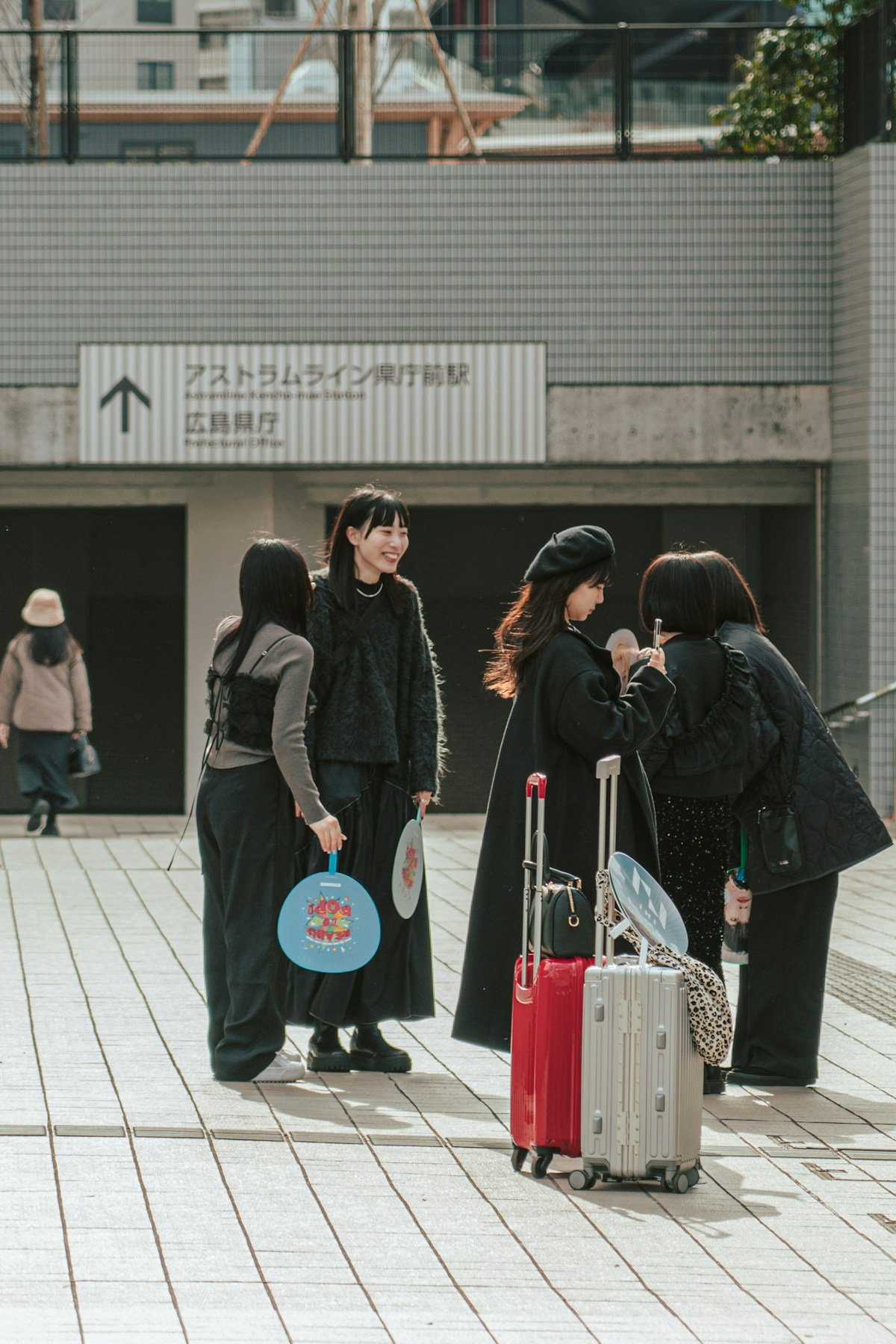
Japan rewards careful packing. The country spans alpine peaks, subtropical beaches, and dense megacities - often within a single itinerary. Underpacking means buying replacements at convenience stores at inflated prices; overpacking means wrestling a 32-litre suitcase through JR turnstiles and narrow ryokan corridors. This list gives you exactly what you need, organised by season and situation. Prefer a checklist tailored to your dates and activities? Try our Japan packing list generator.
Universal Essentials (Every Season)
These items belong in every Japan bag regardless of when you travel.
Documents and money
- Passport (check validity - Japan requires 6 months beyond your travel dates)
- Printed or screenshot copies of accommodation bookings and onward flights
- Travel insurance documentation - see our guide to travel insurance for Japan for what to look for
- IC card (Suica or Pasmo) loaded before arrival at Tokyo or Osaka airport - these reloadable smart cards cover metro, trains, buses, and convenience store purchases across Japan
- Japan Rail Pass exchange order if you bought one - you redeem the voucher at a JR office on arrival, not online
Technology
- Pocket WiFi or local SIM - for a full breakdown of the best data options, read our Japan SIM card guide. Pocket WiFi units (around ¥700–900 per day as of 2026) give multiple people simultaneous access; a data SIM is lighter and cheaper for solo travellers
- Voltage adapter note: Japan runs on 100V/50–60Hz with Type A flat two-prong plugs. Most modern phones, laptops, and camera chargers handle 100–240V automatically - check the label on your charger brick. Older hairdryers and shavers with a single voltage rating will be damaged or destroyed. A step-up transformer is bulky and rarely worth carrying; buy or borrow what you need locally
- Power bank (10,000mAh minimum) - Google Maps, IC card apps, and translation tools drain batteries fast on full-day city walks
- Universal power strip - one plug turns into four; useful when sharing a ryokan room with one socket
Day-to-day carry
- Compact folding umbrella - Japan is one of the rainiest countries in Asia. A compact umbrella lives in your day bag at all times; cheap convenience store alternatives exist but are single-use quality
- Small day pack - separate from your main luggage for shrine visits, day trips, and hikes
- Lightweight waterproof jacket - doubles as a wind layer and adds rain coverage when the umbrella isn’t practical
- Hand sanitiser and pocket tissues - many public restrooms (especially rural ones) have no paper towels or soap
- Reusable water bottle - tap water in Japan is safe to drink everywhere
Spring Packing List (March–May: Cherry Blossom Season)
Cherry blossom season runs roughly late March to mid-April depending on region. Temperatures swing between cool mornings (6–10°C) and warm afternoons (18–22°C), particularly in March.
- Light layers: a Uniqlo Ultra Light Down jacket (around ¥5,990 as of 2026) packs into its own pocket and fits inside any day bag - buy one at home or pick one up in Japan
- Long-sleeve base layers - evenings cool rapidly, especially in Kyoto’s temple districts
- Light trousers or chinos - cherry blossom hanami picnics involve sitting on ground sheets; dark jeans are practical
- One smart-casual outfit for ryokan dinners or kaiseki restaurants
- Allergy tablets if you’re prone to hay fever - cedar pollen (sugi) peaks in March and April
Temple and shrine etiquette items Japan’s temple and shrine visits require you to remove shoes at many indoor spaces. Pack:
- Socks without holes - you will remove your shoes at temple halls, teahouses, ryokan entryways (genkan), and traditional restaurants. Missing socks or socks with holes are embarrassing and cold
- Slip-on shoes or low-top trainers - shoes with multiple laces slow down the queue at busy temples and add frustration at restaurants
- Modest layers for shoulders - some temples and shrines request covered shoulders, particularly at more conservative Shinto or Buddhist complexes; a lightweight scarf doubles as a cover-up and a hanami picnic layer
Summer Packing List (June–August: Humid Heat and Festivals)
Japanese summer is genuinely punishing. July and August in Tokyo, Kyoto, and Osaka regularly hit 35°C with 80–90% humidity. Okinawa is hotter still.
- Moisture-wicking short-sleeve shirts - cotton soaks and stays wet; synthetic or bamboo blends dry faster
- Lightweight linen or linen-blend trousers - cooler than jeans, acceptable everywhere
- Packable sun hat - UV index hits 10–11 in July and August
- SPF 50 sunscreen - easy to buy in Japan (Japanese sunscreens are excellent), but pricier than at home
- After-sun lotion or aloe gel
- Small folding fan (sensu) - a traditional summer carry that actually works; sold at convenience stores and 100-yen shops for ¥100–500
- Extra changes of clothes - plan to change midday if you’re doing full-day outdoor sightseeing
- Insect repellent - mosquitoes are aggressive in parks, forests, and around rice paddies in summer
- Rain gear upgrades: June is tsuyu (rainy season), with near-daily rain for 3–4 weeks. A packable waterproof jacket matters more than an umbrella during heavy tsuyu downpours
Autumn Packing List (September–November: Foliage Season)
Autumn foliage peaks between late October and mid-December depending on location - Hokkaido first, Kyushu last. Temperatures are pleasant (15–25°C in October, dropping to 5–12°C in November in Tohoku and Hokkaido).
- Medium-weight fleece or wool layer
- Light down jacket for evenings from mid-November onward
- Long trousers - shorts are rarely appropriate outside beach areas after September
- Comfortable walking shoes with ankle support - autumn hiking trails (Nikko, Nara, Arashiyama) can be muddy and leaf-slick
- Scarf and light gloves for Hokkaido visits in late October or November
Autumn is peak tourist season alongside cherry blossom. If you’re using Yamato Transport’s luggage forwarding service (Kuroneko Yamato), book ahead - the service ships your main case between hotels for approximately ¥1,500–2,500 per bag as of 2026, freeing you to travel by shinkansen with only a day pack. Particularly useful on multi-city itineraries.
Winter Packing List (December–February: Snow Season)
Northern Japan (Hokkaido, Tohoku) is serious winter territory - Sapporo averages -7°C in January with heavy snowfall. Tokyo winters are milder (3–10°C) but damp and wind-chill cold. Okinawa stays subtropical year-round.
- Thermal base layers (top and bottom) - merino wool if budget allows; synthetic if not
- Mid-layer fleece
- Insulated down jacket - not optional for Hokkaido or the Japan Alps in January and February
- Waterproof outer shell - snow doesn’t care about down insulation once it’s wet through
- Waterproof boots with good grip - Sapporo pavements are icy; standard trainers are slipping hazards
- Wool socks (several pairs)
- Thermal hat, gloves, and neck gaiter
- Hand warmers (kairo) - sold at every convenience store in Japan for ¥100–200; tuck one into gloves or pockets for outdoor waits
Ski resorts (Niseko, Hakuba, Rusutsu): if you’re renting equipment locally, bring only your base layers, helmet, and goggles. Equipment rental at major resorts is comprehensive and often cheaper than checking gear on a flight.
Onsen Essentials
Japan’s onsen culture is one of the country’s defining experiences - see our complete onsen guide for etiquette and the best spots. Pack:
- Small towel (30×80cm tenugui or quick-dry microfibre) - most onsen provide large bath towels for a fee; the small towel is used to cover yourself between pools and to wash at the shower station before entering
- Swimwear note for mixed baths: konyoku (mixed-gender) onsen exist but are uncommon in resort towns. Where they do exist, swimwear is often required or available for purchase at the front desk. Same-sex onsen are bathed nude - do not bring swimwear to these
- Toiletries: ryokan rooms typically provide shampoo, conditioner, and body wash; standalone onsen facilities often do not. A small waterproof bag keeps toiletries organised
- Yukata or robe: provided at ryokan and many hotel onsen - no need to pack one
Tech and Connectivity
Read our full Japan SIM card and pocket WiFi guide before booking. Key points:
- A physical SIM or eSIM from providers like IIJmio or Mobal gives 10–30GB for ¥2,000–4,000 for a 30-day stay as of 2026. An eSIM for Japan can be activated before you fly - no queuing at airport vending machines on arrival
- Pocket WiFi: rent at the airport or have it delivered to your first hotel. Speeds are reliable; battery life is typically 8 hours
- Your IC card (Suica/Pasmo): load it via the Suica iPhone app or purchase at any JR station vending machine - minimum ¥500 deposit plus top-up amount
- For the Japan Rail Pass, our rail pass guide explains when it’s worth buying and how to exchange your voucher on arrival
Hiking Gear (Fuji, Japan Alps, Kumano Kodo)
Mount Fuji (July–August only), the Japan Alps (Kamikochi, Tateyama Kurobe), and the Kumano Kodo pilgrimage trails require proper footwear and layering.
- Waterproof hiking boots with ankle support - essential for Fuji’s volcanic scree above the 5th Station and for wet Kumano forest trails
- Trekking poles - collapsible poles are compressible for checked luggage and make a meaningful difference on Fuji’s steep descent
- Moisture-wicking trekking trousers
- Fleece and waterproof shell - even in August, the summit of Fuji is around 5°C with wind chill
- Headlamp with fresh batteries - required for the Yoshida Trail midnight ascent to catch sunrise
- High-calorie snacks - trail food is sold at Fuji 5th Station huts but at significant markup
- Altitude sickness tablets: not mandatory but worth having above 3,000m; consult a pharmacist before departure
Fuji huts and mountain lodges do not allow large suitcases. Use the Yamato Transport luggage forwarding service to send your main bag to your next destination from the base of the mountain.
What to Leave Behind
- Full-size shampoo and conditioner bottles - convenience stores and pharmacies sell travel sizes; ryokan provide toiletries
- Iron or travel iron - every accommodation in Japan provides one
- Multiple pairs of jeans - heavy, slow to dry, too warm in summer
- Books: Japan has excellent English-language bookshops (Kinokuniya in Tokyo, Osaka, and elsewhere); e-readers are far more practical
- Large luggage for shinkansen travel - overhead racks on the Nozomi and Hikari require reservations for oversized bags (as of 2026, bags over 160cm combined dimensions require an oversized seat reservation). Travel light or forward your bag with Yamato.
Buying What You Forgot
Japan is one of the easiest countries in the world to buy forgotten items. Daiso (¥100 shops), FamilyMart, Lawson, and 7-Eleven stock travel adapters, rain gear, snacks, toiletries, and basic medicine. Uniqlo branches in most cities offer affordable base layers, socks, and fleece in a single stop. Don’t over-pack to compensate for anxiety - trust the convenience stores.
For a broader view of when and how to travel, our best time to visit Japan guide covers seasonal considerations across all regions.
Plan Your Trip
- Flights - Find the best fares to Japan
- Hotels - Search hotels in Japan on Booking.com
- Travel Insurance - Get covered before you go
- eSIM - Stay connected from landing
- Car Rental - Compare prices across providers
- Tours and activities - Browse experiences on GetYourGuide