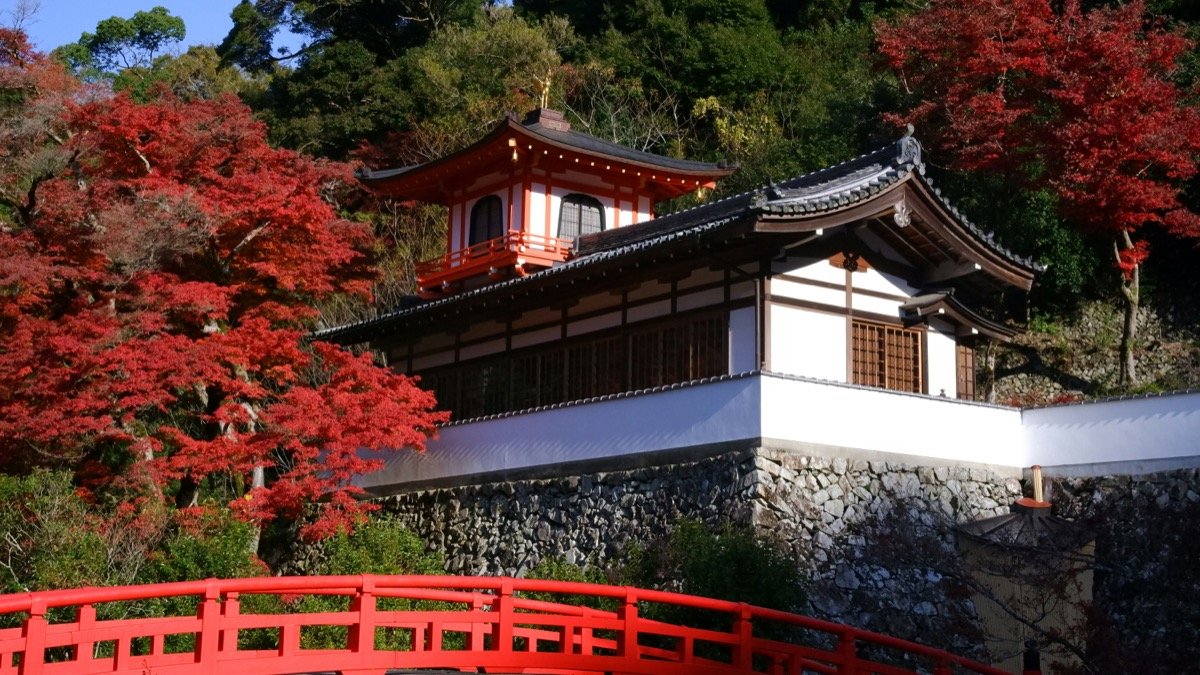
Koyo (紅葉) - the Japanese term for autumn foliage - is treated with the same cultural seriousness as cherry blossom season. The JMA (Japan Meteorological Association) issues daily foliage forecasts; train operators add capacity; hotels in popular viewing areas sell out months in advance. The spectacle is the result of a specific combination: cold nights, warm days, and the abundant maple (momiji), ginkgo (icho), and zelkova trees that dominate Japan’s deciduous forests and temple grounds.
The season runs from late September to early December, progressing south from Hokkaido to Kyushu - a roughly 10-week window across the entire country. Timing your visit to match peak colour in your chosen region is the key decision.
Peak Timing by Region
The following dates are typical ranges based on multi-year averages. Peak timing shifts year to year by 1–2 weeks depending on autumn temperatures, and is tracked closely by the Autumn Leaf Forecast (koyo yoho) published by the Japan Meteorological Corporation from September onwards.
| Region | Typical Peak | Notes |
|---|---|---|
| Hokkaido (Daisetsuzan) | Late September | Japan’s earliest colour; high altitude |
| Hokkaido (Sapporo) | Mid October | Maruyama Park, Hokkaido University ginkgo avenue |
| Tohoku (Towada-Hachimantai) | Early October | One of the most dramatic mountain colour shows |
| Nikko (Tochigi) | Mid–late October | Irohazaka switchbacks peak around 20–25 Oct |
| Tokyo (Shinjuku Gyoen) | Mid November | Urban parks hit peak; good backup if elsewhere crowded |
| Hakone | Mid–late November | Lake Ashi and Owakudani crater area |
| Kyoto | Mid–late November | Temple gardens at peak; very crowded |
| Nara | Mid–late November | Kasugayama Primeval Forest and Yoshino |
| Osaka | Late November | Minoh Park waterfall walk; Expo ‘70 Commemorative Park |
| Hiroshima (Miyajima) | Mid–late November | Momijidani Park on Miyajima Island |
| Kyushu (Aso caldera) | Late October–early November | High altitude caldera and Milky Road |
| Kyushu (Fukuoka, Dazaifu) | Late November | Later season; less crowded than Kansai |
2026 Koyo Forecast
The Japan Meteorological Corporation publishes its official koyo forecast at tenki.jp/koyo/ starting in September - daily colour-stage maps (green → yellow → red → fallen) are updated from that point through December. The table below integrates historical averages with the JMA’s confirmed summer 2026 outlook (above-normal temperatures nationwide through August), which points to peak dates running approximately 3–5 days later than historical norms across Kanto and Kansai. The warm-autumn pattern seen in 2024 and 2025 is expected to continue.
| Region / Location | 2026 Peak Estimate | Notes |
|---|---|---|
| Hokkaido - Asahidake (Daisetsuzan) | 15–25 September | Earliest in Japan; high altitude largely insulates from late-season warmth |
| Hokkaido - Sapporo | 25 October–5 November | Maruyama Park, Hokkaido University ginkgo avenue |
| Tohoku - Towada-Hachimantai | 5–15 October | Alpine roads at altitude; Oirase Gorge follows roughly one week later |
| Nikko (Oku-Nikko / Irohazaka) | 20–30 October | 3–5 days later than average; Ryuzu Waterfall and Chuzenji lakeside are the prime spots |
| Kanto - Tokyo | 20 November–8 December | Ginkgo avenues (Icho Namiki, Meiji Jingu Gaien) peak first (late Nov); urban maple parks follow into early December |
| Chubu - Hakone | 20 November–5 December | Lake Ashi reflections; timing tracking with Kanto pattern |
| Kansai - Kyoto / Nara | 25 November–7 December | Warm summer pushes Kyoto later; peak density likely 29 Nov–3 Dec |
| Kansai - Osaka (Minoh Park) | 1–10 December | Typically 4–6 days behind Kyoto; Minoh waterfall walk |
| Kyushu - Fukuoka / Dazaifu | Late November–early December | Later and less crowded than Kansai; aligned with historical range |
| Kyushu - Kagoshima | ~20 December | Southernmost; latest peak - slightly later than average given warm 2026 summer |
Planning Around the 2026 Forecast
Targeting Kyoto: The best window is projected to be 25 November–7 December 2026, with peak colour density likely falling 29 November–3 December. Book accommodation now - the late-November through early-December period is the single most competitive booking window of the foliage season. If late November is difficult, Nara and Arashiyama often hold colour slightly longer than central Kyoto’s temple gardens.
Avoiding the crowds: Hokkaido in late September–early October (Daisetsuzan, Sounkyo Onsen) and Tohoku in early October (Oirase Gorge) offer equally dramatic colour with a fraction of the visitors. Car rental or a pre-booked tour is needed for both - public transport access is limited.
Building in buffer time: If warm autumn conditions persist, Kyoto’s peak may slip to the last week of November or beyond. A fixed 7-night itinerary with 3–5 days in the Kansai region gives enough flexibility to catch actual peak rather than chasing the calendar.
Top Koyo Destinations
Nikko, Tochigi
Nikko is one of the most reliably spectacular foliage destinations in Japan. The Irohazaka switchback road - 28 hairpin bends connecting the valley floor to Lake Chuzenji - turns vivid orange and red in the third week of October. The lakeside at Chuzenji and the Ryuzu Waterfall (龍頭の滝) with maple framing the cascade are the signature images of Nikko autumn.
Viewing spots: Ryuzu Waterfall lookout (free), Akechidaira Ropeway (¥760 one-way, ¥1,230 return), lakeside walking path from Chuzenji Onsen to Senjogahara Marshland.
Transport from Tokyo: 2 hours by JR + Tobu Nikko Line from Asakusa or Shinjuku; approximately ¥2,700 one-way. World Heritage bus pass (¥1,000 as of 2026) covers transport around Nikko’s major sites.
Crowd management: Weekends in the third and fourth week of October are intensely crowded. Arrive before 09:00 or visit midweek. The Irohazaka road restricts uphill/downhill traffic to different lanes during peak season - check the current schedule before driving.
Kyoto Temples
Kyoto has the highest concentration of classic koyo viewing spots in Japan - the combination of ancient temple gardens, maple trees planted deliberately for aesthetic effect, and illuminated evening sessions makes it the peak destination for most visitors.
Eikan-do (永観堂): Famous for its momiji-dera (maple temple) reputation and after-dark illumination (usually from mid-November, check dates annually). Entry approximately ¥600; 18:00–21:30 for evening sessions. Long queues on peak weekends.
Tofuku-ji (東福寺): The Tsutenkyo Bridge over the Sengyokukan Ravine, surrounded by 2,000 maple trees, is the single most reproduced koyo image from Kyoto. Extremely crowded at peak. Entry ¥600 for Tsutenkyo Bridge garden; open from 09:00, queues form from 08:30 in mid-November.
Arashiyama district: The Togetsukyo Bridge area with Katsura River and Tenryuji garden are best early morning. Jojakko-ji temple higher up in Sagano has the best elevated views of the valley in colour. Tenryuji entry ¥500 (garden only) or ¥1,000 (including interior buildings).
Kibune and Kurama: 30 minutes north of Kyoto by Eizan Railway (¥430 one-way), these mountain villages along the Kibune River are less crowded and just as colourful in mid-November. Ryokan dining platforms (kawadoko) over the river are open from May–September, but the autumn foliage here in November makes the trip worthwhile year-round.
Booking tip: Kyoto accommodation in mid-November books out 3–6 months in advance. Book by August for a mid-November visit; September at the latest for peripheral dates.
Daisetsuzan National Park, Hokkaido
Japan’s largest national park experiences the country’s earliest and most dramatic alpine foliage. The Kurodake Ropeway (黒岳ロープウェイ) accesses colour above the treeline from late September; the valley below follows in early October. The entire mountain turns from green to red, orange, and yellow in less than two weeks.
Entry to the park is free; the ropeway costs ¥1,100 one-way as of 2026. The base town Sounkyo Onsen has several ryokan (from approximately ¥12,000 per person per night with meals) and small hotels.
Transport: No direct train to Sounkyo. Bus from Kamikawa Station (30 minutes) or from Asahikawa (2 hours by bus). Having a rental car in Japan significantly simplifies access and allows you to drive the full park circuit including the Ginga and Ryusei waterfalls.
Towada-Hachimantai, Tohoku
The Towadako-Hachimantai area in Aomori, Akita, and Iwate prefectures produces some of the most vivid mountain foliage in Japan, usually in the first two weeks of October. The Hachimantai Aspite Line (八幡平アスピーテライン) - a mountain road passing alpine meadows, volcanic pools, and crater lakes - peaks in early October at altitude and is only accessible by car (or seasonal bus service).
Lake Towada itself is a vast double-crater lake surrounded by beech and maple forest; the foliage walk along Oirase Gorge (14km riverside path, no cars) from Towada to Yakeyama is one of the finest autumn hikes in Japan. Buses run along the gorge from Towada-Minami through late October.
For the Kyoto-side detail, our Arashiyama in autumn guide covers foliage timing and the Hanatouro lights.
What to Do During Koyo
Foliage walks: Most major viewing destinations have dedicated foliage trails (momiji-dori). These are generally well-maintained and sign-posted in Japanese and English in popular areas.
Temple illuminations (yakan kanshō): Kyoto, Nara, and several Tokyo parks run evening light-up events during peak koyo, extending viewing hours to 21:00–22:00. Entry typically ¥600–¥1,000 per person. Tickets can sell out for popular sessions.
Ryokan stays: Spending a night at a ryokan in a foliage-viewing area - Nikko Yumoto, Hakone, Kurama, Sounkyo - is the most immersive way to experience the season. Kaiseki dinners in these settings often feature autumn ingredients (matsutake mushrooms, chestnuts, persimmon), and early morning access to the gardens before day visitors arrive is worth the premium alone.
Guided foliage tours: Coach tours from Tokyo to Nikko, and walking tours of Kyoto temple gardens, are widely available during November. Private photography tours of Kyoto foliage (4–6 hours, ¥20,000–¥35,000 for two people including early morning access to popular spots) are offered by several specialist operators on GetYourGuide.
Practical Tips
Book early, especially in Kyoto. Peak koyo falls mid-November; everywhere that matters fills up 2–4 months before that date. If you are travelling specifically for foliage and Kyoto is on the list, treat accommodation booking as a priority.
Check the forecast. The Japan Meteorological Corporation publishes free colour stage maps (緑 green → 黄 yellow → 紅 red → 落葉 fallen) updated daily from September at tenki.jp/koyo/. WeatherNews also runs a parallel forecast at weathernews.jp. Use this alongside JMA wind and temperature forecasts; a significant rainstorm can strip leaves from trees by 30–40% in 24 hours.
Go midweek. The gap in crowds between a Tuesday and a Saturday at peak Kyoto or Nikko is dramatic. If you can move your schedule by two days, the experience is significantly calmer and photography is more manageable.
Dress in layers. Mid-October in Nikko and early-October in Hokkaido can reach single figures Celsius. Late-November Kyoto evenings drop below 10°C regularly. The foliage viewing involves standing outdoors for extended periods - dress for the temperature, not the calendar month.
Browse Japan autumn foliage tours and guided experiences for current availability.
Search hotels in Japan on Booking.com
Plan Your Trip
- Flights - Find the best fares to Japan
- Hotels - Search hotels in Japan on Booking.com
- Travel Insurance - Get covered before you go
- eSIM - Stay connected from landing
- Car Rental - Compare prices across providers
- Tours and activities - Browse experiences on GetYourGuide
Official sources worth checking before you go: Japan Meteorological Agency, Japan National Tourism Organization.