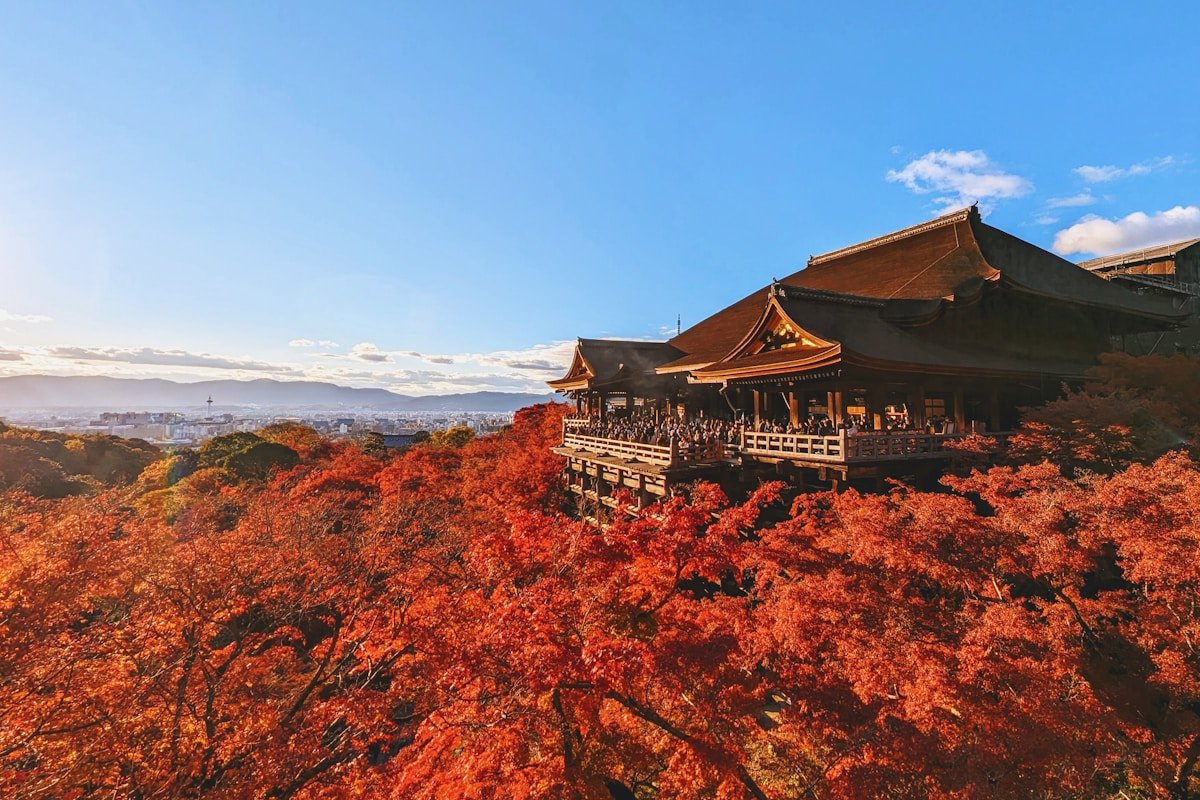
Japan’s 2026 autumn foliage season is under way. The Japan Meteorological Corporation (JMC) published its koyo forecast in late September, and as of early October the front is tracking close to the historical average - meaning Kyoto’s peak falls in the third week of November, and the route from Hokkaido to Hiroshima is broadly on schedule. This guide covers the specific 2026 timing, the best spots ranked by spectacle and crowd-to-colour ratio, and what to book immediately if you have not yet done so.
2026 Foliage Front: Where It Is Now
As of early October 2026, here is where the autumn front sits:
| Region | Status | Peak Window |
|---|---|---|
| Daisetsuzan, Hokkaido | Past peak | Late September–October 5 |
| Sounkyo, Hokkaido | Past peak / fading | September 28–October 8 |
| Nikko, Tochigi | Approaching peak | October 20–November 5 |
| Kamikochi, Nagano | At peak | October 5–25 |
| Hakone, Kanagawa | Building | Late October–mid-November |
| Tokyo area | Pre-colour | Mid-November |
| Kyoto and Nara | Weeks away | November 15–30 |
| Hiroshima / Miyajima | Weeks away | Late November–early December |
The JMC 2026 forecast noted that this summer’s heat in the Kansai region was above average, which typically delays the Kyoto peak by 3–5 days compared to the long-term mean. This puts Kyoto’s probable peak at approximately November 18th to 28th this year.
Best Spots Ranked for 2026
1. Tofukuji, Kyoto - Peak: c. November 18–28
Tofukuji remains the single best koyo site in Japan for dramatic impact per square metre. The Tsutenkyo bridge corridor spans a maple gorge: 2,000 trees visible from above, the colours descending through the layers from crimson tips to gold at the base. The 2026 crowd management at Tofukuji includes time-slot entry on peak weekends - arrive at opening (08:00 during peak) or book a weekday slot.
Cost: ¥1,600 (¥600 garden + ¥1,000 Tsutenkyo corridor during November peak). Pre-booking via Tofukuji’s site is advised for the 2026 peak weekends.
2. Nikko, Tochigi - Peak: c. October 22–November 5
Nikko is where the 2026 season begins in earnest for Honshu. Ryuzu Falls (free viewing platform), the Iroha-zaka switchback road, and Lake Chuzenji shore combine to create a multi-layer autumn landscape. The Tosho-gu shrine complex (¥1,300) sits among old-growth cedar and maple with foliage above the ornate gates.
For 2026, Sports Day falls on October 12, creating a three-day weekend that coincides with the very start of Nikko’s colour season - that weekend will be crowded. The more intense Nikko peak (October 22–November 5) falls on regular weekdays and should be more manageable.
Recommended duration: 1 night. Stay at a lakeside onsen hotel in Chuzenji for morning light on the falls.
3. Arashiyama, Kyoto - Peak: c. November 20–December 5
Arashiyama peaks later than the central Kyoto temple circuit. This makes it a useful extension for trips running into the final week of November or early December. Tenryuji garden (¥500 garden, ¥800 with main hall), Jojakko-ji temple (¥500), and the bamboo grove’s maple-framed entrances form the core circuit. The Sagano Scenic Railway operates through the autumn gorge (¥880 one-way).
4. Kamikochi, Nagano - Peak: October 5–25
Kamikochi’s window closes November 15th (annual closure for winter). For 2026, the alpine larch and dwarf birch are at peak right now. The valley floor walk between the Kappa Bridge and Myojin Pond runs through the best of the colour. Bus-only access from Sawando (approximately ¥2,000 return). This is the most time-sensitive entry in the list - book soon.
5. Eikando Zenrinji, Kyoto - Peak: c. November 17–27
Eikando’s pagoda-above-maples view and the evening illumination (¥1,000) are in the same peak window as Tofukuji. Booking the illumination in advance is essential: tickets release through the temple’s site and sell out within days of the peak forecast being confirmed.
6. Miyajima Island, Hiroshima - Peak: c. November 25–December 10
Miyajima’s foliage surrounds Itsukushima Shrine and the five-storey pagoda. The combination of the floating red torii gate and autumn colour on the slopes of Mount Misen is one of the most photographed in Japan. Miyajima peaks last of all the major sites - a useful end point for itineraries that start in Hokkaido or Nikko and track south.
Ferry from Hiroshima: ¥200 (JR Pass holders travel free on the JR ferry).
7. Ohara Village, Kyoto - Peak: c. November 10–20
Ohara peaks slightly earlier than central Kyoto, making it a useful complement if your Kyoto trip starts before the main peak. Sanzen-in garden (¥700) is the centrepiece, set in a cedar grove with maple accents. The village setting - rural, quiet, 45 minutes from Kyoto by bus - provides a genuine contrast to the main temple circuit.
2026 Booking Status
Here is what needs to be booked now (early October):
Urgent - filling fast:
- Kyoto hotels for November 20–30 weekend dates: many properties already at limited availability. Book immediately through Booking.com for the widest selection.
- Rurikoin autumn viewing (Kyoto): timed-entry slots fill weeks ahead. Check the temple’s official site.
- Eikando evening illumination tickets: released after the JMC forecast confirmation in October.
Book this week:
- Sagano Scenic Railway (Torokko), Arashiyama: November weekends fill 3–4 weeks ahead.
- Hozu River boat ride (Hozugawa Kudari): October–November weekend capacity is limited.
- Nikko accommodation for late October weekend dates.
Book in advance but not urgent yet:
- Tokyo autumn accommodation for mid-to-late November: still available but prices will rise as Kyoto fills.
- Kamikochi daytrip bus passes: the season ends November 15 - book before then.
How to Chase the 2026 Foliage Front
The most satisfying approach to Japan’s autumn season is to move with the foliage front from north to south, staying 2–3 nights in each zone at peak. A two-week itinerary aligned with the 2026 forecast:
Days 1–3: Nikko (October 22–24 or the following week)
- JR from Tokyo to Nikko: 2 hours from Ueno via limited express
- Ryuzu Falls, Iroha-zaka, Tosho-gu, Lake Chuzenji
- 1 night at Chuzenji Onsen
Days 4–5: Hakone
- Shinkansen Tokyo to Odawara + Hakone Romancecar
- Owakudani, Open-Air Museum, ryokan overnight
- Mount Fuji views are clearest in mid-October to November
Days 6–8: Tokyo
- Shinjuku Gyoen (¥500), Hamarikyu (¥300), Koishikawa Korakuen (¥300)
- Mid-November peak in the city parks
Days 9–13: Kyoto base
- Tofukuji (weekday morning, ¥1,600 peak)
- Ohara (Sanzen-in, ¥700)
- Eikando evening illumination
- Arashiyama (Tenryuji ¥500–800, Jojakko-ji ¥500)
- Nara (Kasugayama Primeval Forest + Yoshiki-en garden, free for foreign visitors)
- 1 night extension to Rurikoin if booked
Days 14–15: Hiroshima and Miyajima (late November or early December)
- Shinkansen Kyoto to Hiroshima: 1.5 hours
- Itsukushima Shrine, Mount Misen hike, Momijidani Park (free)
This route covers all the major 2026 peaks in sequence and costs approximately ¥50,000 in transport with a 14-day JR Pass.
2026 Peak Accommodation Prices
As a guide to 2026 pricing in peak koyo season:
- Kyoto budget guesthouses (peak November): ¥7,000–12,000 per person
- Kyoto mid-range hotels (Higashiyama area): ¥18,000–35,000 per night for a double
- Kyoto ryokan (3rd–4th week of November): ¥30,000–80,000 per person per night (including dinner and breakfast)
- Nikko onsen hotels (Chuzenji): ¥15,000–30,000 per person per night
- Hakone ryokan: ¥25,000–60,000 per person per night
Prices in Kyoto during the November peak are 30–50% above October rates. If budget is a constraint, consider staying in Osaka (30 minutes by Shinkansen to Kyoto) where accommodation is significantly cheaper.
Crowds, Timing, and Practical Tips
Weekdays versus weekends: October’s three-day weekends (Sports Day, Culture Day on November 3rd, Labour Thanksgiving Day on November 23rd) are the most crowded days of the season. If you have flexibility, structure your main Kyoto days around Monday–Thursday.
Early morning access: The most-visited Kyoto sites (Tofukuji, Fushimi Inari, Arashiyama bamboo grove) are dramatically less crowded before 8am. This is the single highest-leverage strategy for the 2026 peak season.
Photography: The 2026 colour at Kyoto is forecast slightly warm-toned - maples with more orange and less pure crimson than a cool-summer year. This is a minor distinction but worth noting for photographers who track colour character year-to-year.
JR Pass and regional passes: The Kansai Wide Pass (¥12,000 for 5 days) covers JR lines in the Kyoto-Osaka-Hiroshima zone and the Shinkansen on the western end. The Nikko All Area Pass (¥4,600, 2 days, from Asakusa) covers Tobu Railway to Nikko plus area buses - better value than individual tickets for an overnight Nikko trip.
The 2026 season is tracking close to historical averages, with Kyoto’s peak projected for the third week of November. Book Kyoto hotels now if you have not already - the peak weekends are nearly full. The circuit from Nikko in late October through Kyoto in mid-to-late November and Miyajima at the end of November gives you the complete 2026 foliage season in one trip.