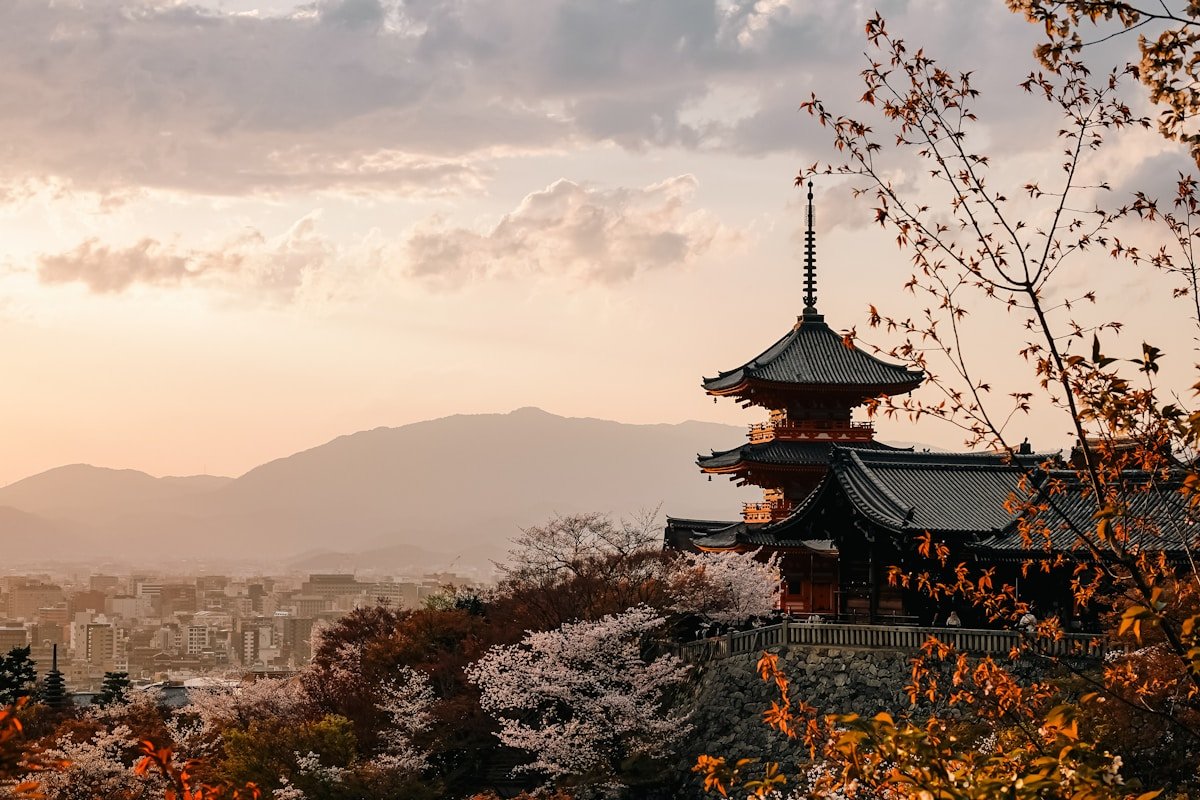
Cherry blossom season is the most celebrated natural event in Japan. The brief window when sakura trees flower draws both domestic and international visitors in the tens of millions, and for good reason - it is a genuinely spectacular sight when done right. This guide covers timing, top viewing locations, practical tips, and what to expect.
What Sakura Season Is
Sakura (桜) refers to Japanese cherry blossom trees, primarily Prunus × yedoensis (Yoshino cherry) and several related varieties. Unlike fruit-bearing cherries, sakura are grown specifically for ornamental flowering. The trees produce dense clusters of pale pink to white blossoms before the leaves appear, creating a distinctive, almost cloud-like canopy when in full bloom.
The cultural tradition of gathering beneath flowering cherry trees for food, drink, and conversation is called hanami (花見), literally “flower viewing.” Hanami dates to at least the 8th century and remains central to Japanese social life in spring. Parks across the country fill with picnickers from morning until late evening throughout the bloom period.
The Sakura Front: How the Bloom Moves
Japan spans roughly 25 degrees of latitude, and cherry blossoms track climate closely. The sakura zensen (cherry blossom front) moves from south to north:
- Kyushu (southernmost main island): late March, often the first major bloom
- Kansai region (Kyoto, Osaka, Nara): late March to early April
- Kanto region (Tokyo, Kamakura): late March to early April
- Tohoku (Sendai, Aomori): mid to late April
- Hokkaido (Sapporo, Hakodate): late April to early May
Altitude matters too. Mountain locations bloom later than cities at the same latitude. Kamikochi in Nagano Prefecture, at 1,500 metres, may not see its cherry trees flower until mid-May.
How to Check Forecasts
The Japan Meteorological Corporation (weathernews.jp/sakura/) publishes the most detailed forecasts, though the full forecast requires a subscription. Free alternatives include NHK’s annual sakura map and Tenki.jp, which publish expected bloom dates by prefecture. Plan around these forecasts, not calendar months alone - bloom dates shift by two to three weeks depending on the preceding winter’s temperatures.
Top Cherry Blossom Locations
Tokyo
Tokyo has more than 2,000 designated sakura viewing spots. The most practical and well-serviced are:
Shinjuku Gyoen is our top recommendation for first-time visitors. Entry costs ¥500 (approx. $3.30), the 65-hectare garden holds around 1,500 trees across multiple varieties, and the staggered bloom means the garden stays in good condition for longer than single-variety sites. Alcohol is prohibited, which keeps the atmosphere calmer than public parks. Open 9:00–18:00 (extended hours during bloom), closed Mondays.
Ueno Park is free and the most famous public hanami location in Tokyo. Expect dense crowds throughout the day during peak bloom. The park holds roughly 800 Yoshino cherry trees along the central promenade. Vendors sell food and drinks, and blue tarpaulin picnic spots fill from early morning. The atmosphere is festive but noisy.
Chidorigafuchi Moat, near the Imperial Palace, offers one of the most photogenic settings in Tokyo - trees lean over the water from both banks. Rowing boats can be hired for ¥800 per 30 minutes during the bloom period (queues of 60–90 minutes at peak times). Evening illuminations (yozakura) run until 21:30 and are worth the visit for a different atmosphere.
Meguro River has sakura trees lining both banks for roughly 4 kilometres between Nakameguro and Meguro stations. The combination of canal reflections and illuminated evening blossoms makes this popular for photography. It is a walking route, not a sitting spot.
Kyoto
Kyoto’s sakura season coincides with peak spring travel, meaning streets and temples are at their most crowded. Arrive early (before 08:00) at major sites.
Maruyama Park, in the Higashiyama district, is Kyoto’s most popular hanami spot. Entry is free and the park stays open 24 hours. The centrepiece is a large weeping cherry tree (shidare-zakura) that is illuminated at night - impressive but draws enormous crowds. The surrounding park fills with food stalls and picnic groups throughout the day.
Philosopher’s Path (Tetsugaku no Michi) is a canal-side footpath stretching roughly 2 kilometres, lined with around 450 Yoshino cherry trees. Walk it between Ginkaku-ji and Nanzen-ji for a quieter experience than central parks. Best in the early morning.
Kiyomizudera temple has gardens on the hillside with good views of blossoms framed by the city below. Entry ¥400. The surrounding lanes in Higashiyama fill with visitors during bloom season.
Arashiyama in western Kyoto has clusters of sakura along the Oi River and surrounding hillsides. The combination of mountains, river, and blossoms is distinctive but the area is busy in season.
Osaka
Osaka Castle Park surrounds the castle grounds with roughly 600 sakura trees. The outer park is free to enter; the castle interior costs ¥600. The combination of a historic castle backdrop and blossoms works well for photography, and the park is large enough to absorb crowds.
Mint Bureau Tsukinami-no-en is a one-week-only opening of the Mint Bureau’s inner garden, typically held in mid-April when the bureau’s 400+ sakura and prunus trees are in bloom. The varieties here include rare and late-blooming types not commonly found elsewhere. Check the Osaka Mint’s official schedule each year as dates shift.
Hiroshima
Peace Memorial Park has cherry trees throughout its grounds. Viewing blossoms in a park that commemorates the atomic bombing creates a specific and moving atmosphere. The contrast between the beauty of the season and the weight of the park’s history is hard to articulate but genuinely striking.
Yoshino, Nara Prefecture
Yoshino is considered one of Japan’s premier sakura destinations and is substantially different from city parks. The mountain holds approximately 30,000 cherry trees spread across four zones at increasing altitude (Shimo Senbon, Naka Senbon, Kami Senbon, Oku Senbon), which means some part of the mountain is usually in bloom for three to four weeks.
Travel time from Osaka: roughly 2 hours via the Kintetsu Yoshino Line (no JR Pass coverage). The town itself is small and accommodation books out months in advance. Day trips are feasible but crowded; an overnight stay lets you see the trees at dusk and dawn.
Hirosaki Castle, Aomori
Hirosaki blooms two to three weeks later than Tokyo, typically reaching peak in late April. The castle’s moat reflects the blossom-covered branches above, and the resulting images are among the most reproduced cherry blossom photographs in Japan. Around 2,600 trees in the castle park flower across several varieties for a longer-than-average season.
Getting there requires a Shinkansen to Shin-Aomori followed by a local train, roughly 4.5 hours from Tokyo. JR Pass covers the Shinkansen segment.
Hanami: The Tradition in Practice
Hanami means sitting under the trees for an extended period, eating and drinking. The practical mechanics:
Securing a spot: In popular parks during peak bloom, it is common for someone in a group to arrive early morning and claim a space with a blue tarpaulin sheet. Weekends are harder than weekdays.
Food and drink: Convenience stores (7-Eleven, Lawson, FamilyMart) are the most efficient suppliers. Onigiri (rice balls), karaage (fried chicken), nikuman (steamed pork buns), and sandwiches all work well. Department store basement food halls (depachika) sell prepared bentos. Alcohol is sold freely in convenience stores and many parks allow it.
What to bring: A waterproof picnic sheet, layers of clothing (temperatures of 8–15°C are typical), and a bag for rubbish - Japan does not have many public bins, and you are expected to take yours home.
How Long the Bloom Lasts
Bloom progression follows predictable stages:
- Kaika (開花): first flowers open on a reference tree, typically 5–6 flowers per branch
- Mankai (満開): full bloom, 80–100% of flowers open - the peak most people target
- Hanafubuki (花吹雪): “blossom snowstorm,” petals begin to fall - lasts 5–7 days and is beautiful in its own right
From first opening to petal fall, total duration is typically 2–3 weeks. But peak bloom itself (mankai) lasts only 7–14 days, often shortened by rain or wind. A heavy rainstorm during peak bloom can strip a tree’s flowers in a day.
Crowds and Booking
Cherry blossom season is consistently Japan’s busiest tourist period. Expect:
- Hotel prices 30–80% above standard rates in Tokyo and Kyoto during peak bloom weeks
- Airport and Shinkansen crowds significantly higher than shoulder season
- Long queues at popular sites
Book accommodation 3–6 months in advance for the bloom period. For Tokyo and Kyoto specifically, book even earlier if possible. If accommodation is full in central Kyoto, consider staying in Osaka and commuting (30 minutes by Shinkansen).
What to Wear
Late March and early April are still cold across most of Japan. Temperatures in Tokyo and Kyoto during peak bloom typically range from 5°C overnight to 15°C in the afternoon. Bring:
- A mid-weight jacket or layers
- Comfortable shoes for walking (5–15 km per day is typical)
- A small umbrella - spring rain is common
Evenings are noticeably colder than afternoons.
Photography
Overcast light produces the most accurate colours. Sakura pink is subtle and washes out under direct midday sun; cloud cover diffuses the light and allows the blossoms’ texture to show clearly.
Blue sky as a backdrop works well for wide shots of tree canopies and castle grounds. Shoot late afternoon for softer shadows.
Avoid shooting directly into the sun. The blossoms backlit against a bright sky often renders as blown-out white rather than pink.
Evening illuminations (yozakura) require a tripod for best results. Most major parks light their trees after dark during the bloom period. Maruyama Park in Kyoto, Ueno Park in Tokyo, Chidorigafuchi moat, and Hirosaki Castle are among the most reliably illuminated sites.
Plan the practical side: Flights to Japan vary widely by season - compare early for the best fares. Travel insurance for Japan covers medical costs, delays, and cancellations. Pick up an Airalo eSIM for Japan to have mobile data from the moment you land.
Checking Forecasts in Practice
No forecast is accurate more than two weeks ahead. The general approach:
- Use the Japan Meteorological Corporation’s annual forecast (published in January) to plan rough travel dates
- Refine the plan using free forecasts (NHK, Tenki.jp) approximately 10 days before travel
- Build in flexibility - if you’re targeting a specific location, plan for 3–4 days in the area rather than 1
A year when bloom comes early will still be beautiful; a year when it arrives late requires flexibility. The trees do not miss their mark by more than a week or two in most years.
2027 Sakura Forecast
Official forecasts from the Japan Meteorological Corporation won’t be finalised until February 2027, but early projections based on climate modelling and multi-year bloom patterns suggest a broadly average year - no extreme early or late outlier. The following dates are planning estimates only; confirm with tenki.jp and NHK’s sakura map from February 2027 onwards.
| City | First Bloom (kaika) | Peak Bloom (mankai) |
|---|---|---|
| Hiroshima | ~26 March | ~1 April |
| Osaka | ~26 March | ~31 March |
| Kyoto | ~29 March | ~4–5 April |
| Tokyo | ~25 March | ~30 March |
| Sapporo (Hokkaido) | ~25 April | Late April–early May |
2027: The Crowd Reality Check
2027 marks the first fully open sakura season since the pandemic period ended without lingering entry restrictions, tourist caps, or testing requirements of any kind. Visitor numbers to Japan hit a record high in 2024 and continued rising through 2025 and 2026 as pent-up demand from across Asia, Europe, and North America sustained. For 2027 cherry blossom season specifically, this has two direct consequences.
Accommodation is already moving. For peak dates (late March through early April in Tokyo and Kyoto), budget hotels and hostels are filling from mid-2026 onwards. Ryokan in Kyoto’s Higashiyama district, Kawaguchiko lakefront properties, and any accommodation with blossom views have limited availability for late March 2027 even at this planning stage. If you are reading this in late 2026 or early 2027 and haven’t booked, expect to either pay premium rates or stay outside the most central areas.
Book 4–6 months ahead as a minimum for Tokyo and Kyoto. For anywhere with a castle-and-moat combination (Hirosaki, Matsumae, Osaka Castle), add another month. Popular guided hanami experiences - night boat tours on the Meguro River, guided morning walks through Shinjuku Gyoen - sell out 2–3 months ahead of peak dates.
City-by-City Breakdown for 2027
Tokyo (target: 28 March–5 April)
Tokyo is projected to hit mankai around 30 March. The most practical viewing windows across the main sites:
- Shinjuku Gyoen (¥500 entry, open 9:00–18:00 with extended spring hours): best on weekday mornings, 9:00–11:00, before tour groups arrive. Over 1,500 trees across different varieties extend the bloom by 1–2 weeks compared to single-variety parks. Alcohol prohibited - the calmest major Tokyo site.
- Chidorigafuchi Moat: rowing boats hire for approximately ¥800 per 30 minutes. Queues run 60–90 minutes at peak. Arrive before 8:30 to get boats without waiting. Evening illuminations (yozakura) until 21:30 - one of the most atmospheric evening blossom scenes in the city.
- Ueno Park: 800 Yoshino trees along the main promenade. Free entry. Expect dense hanami picnic parties from 10:00 onward on peak weekend days. Weekday mornings before 9:00 are manageable; afternoons are not.
- Meguro River (Nakameguro): 4 km of canal-side blossoms between Nakameguro and Meguro stations. Walking route, not a sitting spot. Evening illuminations along the water make this one of the best yozakura locations outside Kyoto.
Kyoto (target: 1–7 April)
Kyoto typically peaks a few days after Tokyo. The 2027 projection puts mankai around 4–5 April, with good colour lasting through 8–10 April for late varieties.
- Maruyama Park: free entry, open 24 hours. The large weeping cherry (shidare-zakura) at the park’s centre is illuminated until midnight during peak. Dawn visits (before 6:30) give the best combination of light and manageable crowd levels.
- Philosopher’s Path (Tetsugaku-no-michi): 2 km canal-side path, approximately 450 Yoshino trees, best walked from Ginkaku-ji southward. Weekday before 8:00 is the quietest window. Weekends during peak are heavily trafficked.
- Kiyomizudera: entry ¥400. Garden and temple hillside blossoms with city views below. Arrive at opening (usually 6:00) for near-empty access.
- Arashiyama: trees along the Oi River embankment and surrounding hillsides typically peak slightly before central Kyoto. Day trip from central Kyoto (30 minutes by Sagano Line from Kyoto Station) or overnight for early morning access.
Osaka (target: 29–31 March)
Osaka peaks slightly before Kyoto, making it the logical first stop on a Kansai circuit.
- Osaka Castle Park: approximately 600 sakura trees surrounding the castle grounds. Outer park entry free; castle interior ¥600. The castle backdrop makes this one of the strongest photography locations in western Japan. Early morning (before 8:00) gives the castle without crowds.
- Mint Bureau Tsukinami-no-en: a one-week opening of the Mint Bureau’s inner garden, typically mid-April, with over 400 sakura and prunus varieties including rare late-blooming types. Check the Osaka Mint’s official schedule as dates shift year to year.
- Expo Commemoration Park (Suita): large public park with 5,500 sakura trees across multiple varieties, giving one of the longest effective viewing windows in the Osaka area. Less crowded than the castle park.
Hiroshima (target: 29 March–2 April)
Hiroshima peaks among the earliest of the five cities, with mankai projected around 1 April 2027.
- Peace Memorial Park: cherry trees throughout the grounds. Viewing sakura in a park commemorating the atomic bombing creates a specific atmosphere that many visitors find more affecting than any urban hanami. The blossoms and the Atomic Bomb Dome together are the most striking visual combination in Hiroshima.
- Hijiyama Park: hilltop park with around 1,200 trees and views over the city. Less visited than the Peace Park, good for a quieter morning. Free entry.
- Miyajima Island day trip: the ferry crossing to Miyajima (covered by JR Pass) passes through the Seto Inland Sea with cherry trees visible along the Hiroshima waterfront. On the island, trees near Itsukushima Shrine peak around the same time as central Hiroshima. The combination of the shrine gate rising from the water and surrounding blossoms is worth the half-day.
Sapporo (target: 25 April–5 May)
Sapporo blooms 4–5 weeks later than central Honshu, which makes it the natural conclusion to a north-following sakura itinerary - or an entirely separate trip for those who miss the earlier windows.
- Maruyama Park, Sapporo: the main hanami site for Sapporo residents, with around 120 Ezo Yamazakura trees that produce a deeper pink than the Yoshino variety common further south. Adjacent to the Hokkaido Shrine, which adds architectural contrast. Free entry; the park fills with local hanami parties on peak weekend days.
- Hokkaido Shrine grounds: the shrine’s cherry trees are less famous than Maruyama Park but the combination of a Meiji-era shrine and blossom clusters is visually distinctive. The shrine is a short walk from Maruyama Park and easily combined.
- Matsumae Castle, Hokkaido: if Sapporo is the practical base, Matsumae is the destination. About 3.5 hours south of Sapporo, it holds approximately 10,000 cherry trees in 250 named varieties with a bloom window stretching 3–4 weeks as varieties peak in sequence. Fewer international visitors reach Matsumae than any other castle-cherry combination in Japan.
Hanami Logistics: What Actually Needs to be Booked in Advance
Hanami looks spontaneous but the logistics behind a good one need thought, especially in 2027 when popular parks are competing for limited licensed vendor spots.
Licensed vendor spots in major parks are allocated to food and drink operators months ahead of the season. By the time bloom dates firm up in late February, the best stalls (yakitori, oden, grilled corn, sakura mochi) at Ueno, Maruyama, and Osaka Castle have already sold out their peak-weekend slots. This does not affect you as a visitor - the stalls are there regardless - but it means that improvised “pop-up” vendors in premium spots are limited. The practical approach is convenience store supplies or a pre-ordered depachika (department store basement food hall) bento picked up the morning of your picnic.
What to bring for hanami (2027 practical list):
- Waterproof picnic sheet (sold at Daiso/100-yen shops from ¥300)
- Layers: late March daytime in Tokyo reaches 12–15°C; evenings drop to 6–8°C
- A compact umbrella - spring rain can shorten a bloom; it also reduces crowds on the day
- Snacks and drinks from a convenience store (¥1,500–¥2,500 per person covers a solid picnic)
- A bag for rubbish - Japan has few public bins and you are expected to take yours home
- Portable phone charger - parks have no charging points and you will take several hundred photos
Spot-claiming in popular parks: On peak weekends, someone in a group typically arrives by 7:00–8:00 to lay down a tarpaulin and hold the space. Weekdays are substantially easier. If you are visiting solo or as a couple, you can usually find a quiet corner even at peak times; large group spots at prime locations are harder.
JR Pass Timing for 2027
A 14-day JR Pass activated on 22 March covers the core blossom circuit: Tokyo → Kawaguchiko (Fuji Excursion, not JR) → Kyoto → Osaka → Hiroshima → back to Tokyo, with all Shinkansen legs covered. The Pass does not cover the Kintetsu lines to Yoshino or the Fuji Excursion train, both of which require separate tickets.
For a north-following itinerary that ends in Sapporo, a 21-day Pass activated around 20 March works if you plan to reach Hokkaido by mid-April. The Hokkaido Shinkansen from Tokyo to Shin-Hakodate-Hokuto (approx. 4h, ¥26,000 reserved without pass as of 2026) is covered, with onward connections to Sapporo by limited express.
Accommodation booking windows for 2027 peak dates:
- Book by October 2026 for ryokan and boutique hotels in Kyoto (Higashiyama, Gion) during late March–early April
- Book by November 2026 for Kawaguchiko lakefront properties during the first two weeks of April
- Book by December 2026 for mid-range hotels in Tokyo during the last week of March
- Book by February 2027 for budget hotels and hostels in Hiroshima and Sapporo
If you are reading this after the October 2026 window has passed, prioritise flexible-rate bookings and check cancellations through February 2027 as original bookers who mistime their trip release rooms.
Shoulder Weeks: The Practical Alternative
The week before mankai (kaika to early bloom) and the week after (hanafubuki, petal-fall) are genuinely beautiful and significantly less crowded. In Kyoto, the window of 7–14 April 2027 should still show good colour at later-blooming varieties - particularly at Nijo Castle and in Arashiyama - and is a practical alternative to the peak crush of the first week.
In Tokyo, the period of 7–10 April sees blossom still on the trees at Shinjuku Gyoen’s late-blooming varieties, with hotel prices beginning to fall and queues noticeably shorter. For Sapporo, there is no equivalent pre-season: bloom is compressed into 10–14 days and the crowds are all domestic, making early May weekdays the quietest option.
See also: Cherry blossom itinerary Japan · Japan in March · Japan in April · Kyoto travel guide · Tokyo travel guide · Hiroshima travel guide · Osaka travel guide · Fukuoka travel guide · Tohoku region guide · Best time to visit Japan
Plan Your Trip
- Flights - Find the best fares to Japan
- Hotels - Search hotels in Japan on Booking.com
- Travel Insurance - Get covered before you go
- eSIM - Stay connected from landing
- Car Rental - Compare prices across providers
- Tours and activities - Browse experiences on GetYourGuide