Japan and South Korea are two of Asia’s most visited destinations and frequent rivals in travel itinerary planning. Both are safe, infrastructure-rich, and deeply rewarding - but they offer strikingly different experiences. Here’s an honest comparison of what each country does best.
Quick Verdict
| Category | Japan Wins | South Korea Wins |
|---|---|---|
| Cultural depth | Yes | - |
| Value for money | - | Yes |
| Food refinement | Yes | - |
| Street food culture | - | Yes (Seoul, Busan) |
| Transport experience | Yes (shinkansen) | - |
| K-culture / pop culture | - | Yes |
| Nature and scenery | Yes | - |
| Short trip (under 2 weeks) | - | Yes |
| Bucket list density | Yes | - |
Japan wins for travellers seeking cultural weight, extraordinary food depth, and iconic experiences that can’t be replicated anywhere else. South Korea wins on value, K-culture immersion, and satisfying shorter itineraries.
Climate and Best Time to Visit
Both countries follow distinct seasonal patterns.
Japan peaks in spring (late March to early May) for cherry blossom season - arguably the most visually spectacular seasonal event in Asia. Autumn (October to November) for red maple foliage is equally beautiful and slightly less crowded. Summer brings heat, humidity, and typhoon risk; winter is cold but rewards with ski resorts (Niseko, Hakuba) and fewer international tourists.
South Korea mirrors Japan’s seasonal structure. Spring cherry blossoms appear in late March and April. Autumn is the country’s most photogenic season. Summer is hot and humid, with a monsoon period (jangma) running roughly June to July. Winters are cold and dry - colder than Japan’s main islands - but rewarding for skiers heading to Pyeongchang resorts.
For a combined Japan–South Korea trip, spring is the ideal season - both countries bloom simultaneously, and flight connections between Seoul and Tokyo or Osaka run frequently from around USD 60–100 each way (as of 2026).
Cost Comparison
South Korea is meaningfully cheaper than Japan, particularly if you’re travelling solo or relying on public transport.
| Expense | Japan | South Korea |
|---|---|---|
| Budget accommodation | USD 25–45 | USD 20–35 |
| Mid-range hotel | USD 100–180 | USD 70–130 |
| Ramen / bibimbap lunch | USD 8–15 | USD 6–12 |
| Sit-down dinner | USD 20–50 | USD 15–35 |
| Bullet train / KTX | USD 80–140 | USD 30–50 |
| Daily budget | USD 80–120 | USD 60–90 |
Tokyo meals run from approximately ¥800 for a standing ramen shop to ¥2,000+ for a sit-down dinner. Seoul equivalents run from approximately KRW 8,000 for a bibimbap set to KRW 18,000 for Korean BBQ per person.
The Japan Rail Pass (currently around USD 400 for 14 days as of 2026) changes the economics of Japan travel significantly - it makes bullet train travel viable on a longer trip but adds overhead if you’re staying in one region.
Top Experiences and Highlights
Japan
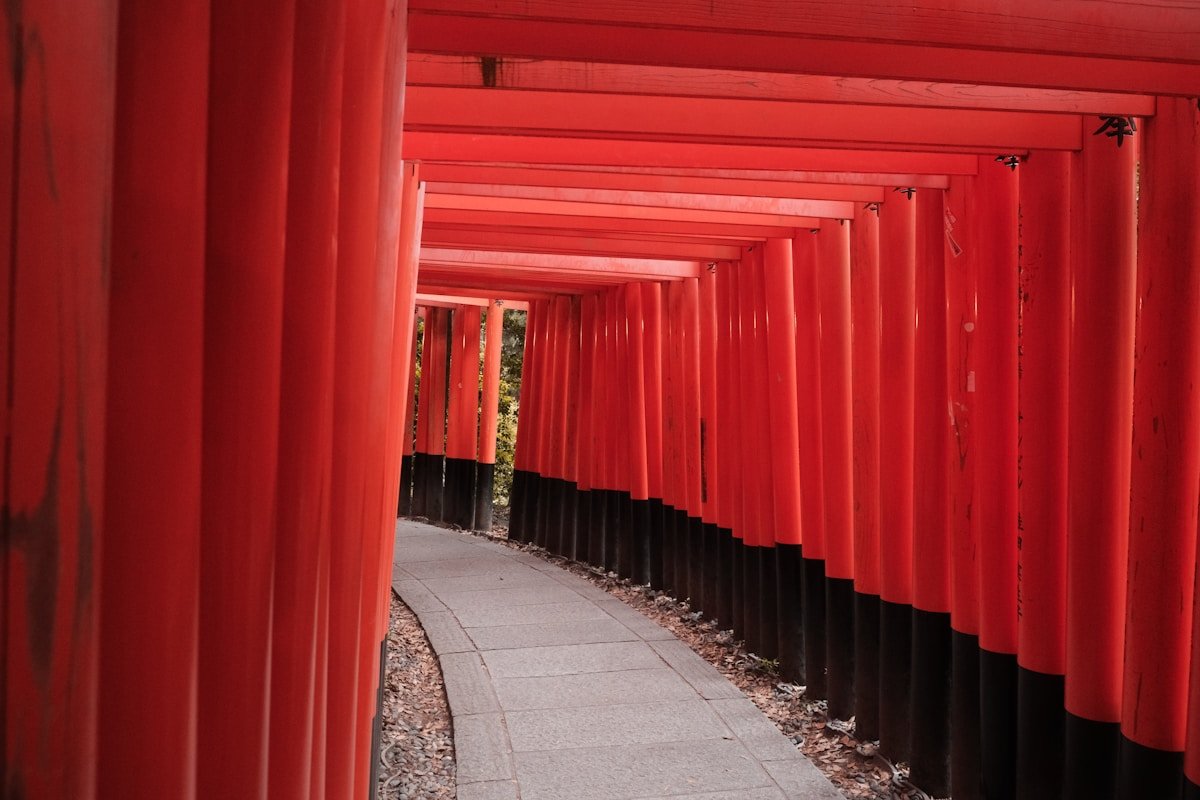
The bucket list in Japan is genuinely unmatched in Asia for sheer variety. Kyoto’s temple circuit - Fushimi Inari’s torii gate mountain trail, Kinkaku-ji (Golden Pavilion), Arashiyama’s bamboo grove - can fill three to four days without repetition. Hiroshima and the Itsukushima shrine on Miyajima Island make for one of the world’s most moving day trips. Tokyo is overwhelming in the best sense: Shibuya crossing, Akihabara for electronics and anime culture, Shinjuku’s alley bars, the Tsukiji outer market for breakfast sushi.
Mount Fuji, accessible as a day trip from Tokyo (by bullet train to Shin-Fuji, approximately 1 hour), is iconic for a reason - the symmetry of the cone is remarkable from Lake Kawaguchi even if you don’t summit. The summit climb (open July–September) costs approximately ¥2,000 in conservation fees as of 2026.
Onsen culture - bathing in natural hot springs - is uniquely Japanese and deeply relaxing. Hakone, Beppu, and Kinosaki Onsen are all excellent bases. Ryokan (traditional inn) stays with kaiseki dinner run from approximately ¥15,000 per person per night at the lower end.
South Korea
Seoul’s density of experience is remarkable for a single city. The DMZ (Demilitarized Zone), the 4km-wide buffer between North and South Korea, is an experience available nowhere else on Earth - guided tours from Seoul run approximately KRW 60,000–100,000 (as of 2026) and include JSA (Joint Security Area) access on some tours. Gyeongbok Palace in central Seoul is a beautifully restored Joseon-era palace; entry costs approximately KRW 3,000. Hanbok rental for palace visits costs from KRW 15,000 for two hours.
Gyeongju, often called “the museum without walls,” contains more UNESCO World Heritage Sites than any other Korean city - royal tombs, temples, and Buddhist sculptures from the Silla kingdom (57 BCE – 935 CE). Jeju Island (30-minute flight or 4.5-hour ferry from mainland) offers volcanic landscapes, Hallasan National Park, and a coastline dramatically different from the mainland. Busan, South Korea’s second city, is livelier and more affordable than Seoul - Gamcheon Culture Village, Gwangalli Beach, and exceptional raw fish markets.
Gwangjang Market in Seoul is mandatory for street food: bindaetteok (mung bean pancakes), mayak gimbap (sesame rice rolls), and live nakji (octopus) are all on offer from approximately KRW 3,000–8,000 per portion.
Food and Drink
Japan: Unparalleled Depth
Japan has the highest concentration of Michelin stars per capita in the world, and the quality-to-price ratio even at everyday restaurants is remarkable. Kyoto is the home of kaiseki (multi-course, seasonally driven Japanese haute cuisine), and Osaka is widely credited as Japan’s street food capital - takoyaki (octopus balls), okonomiyaki (savoury pancake), and kushikatsu (breaded skewers) are the classics.
Ramen alone could sustain weeks of dedicated eating. Tokyo-style (soy broth, wavy noodles), Sapporo-style (miso and butter corn), Hakata-style (pork bone tonkotsu) - each region has a distinct interpretation. A bowl from a good ramen shop runs approximately ¥1,000–1,500.
South Korea: Bold, Social, Spectacular
Korean food rewards eating with others. Samgyeopsal (grilled pork belly at the table) costs approximately KRW 15,000–20,000 per person at a good BBQ restaurant. Bibimbap is rice with mixed vegetables, gochujang paste, and a fried egg - simple, balanced, and found everywhere for KRW 8,000–12,000. Chimaek - Korean fried chicken with draft beer - has become a cultural export as influential as K-pop, and the fried chicken quality in Seoul’s Mapo district or Hongdae area is genuinely extraordinary.
Korean street food is more accessible and interactive than Japan’s. Markets like Gwangjang and Myeongdong street stalls make eating alone feel like a social activity.
Transport: Bullet Train vs KTX
Japan’s shinkansen is a travel experience in itself. The Tokyo to Kyoto journey takes approximately 2 hours 15 minutes on the Nozomi (from approximately ¥14,000 / USD 90 one way as of 2026). Punctuality is legendary - trains are measured as delayed if they arrive more than 60 seconds off schedule.
South Korea’s KTX is excellent and underrated. Seoul to Busan (325km) takes approximately 2 hours 10 minutes and costs around KRW 60,000 (approximately USD 45 as of 2026). Given South Korea’s smaller size, the KTX covers the country more efficiently relative to geography.
Both countries have world-class urban metro systems. Seoul’s T-money card works across subway, bus, and taxi. Tokyo’s Suica or Pasmo cards work across all JR and metro lines.
Mobile data: Japan and South Korea use separate networks. An eSIM for Japan through Airalo covers Japan from the moment you land - Korea roaming is available as a bolt-on, so a single purchase can cover both countries without queuing at airport SIM stalls.
K-Culture vs Japanese Pop Culture
South Korea dominates global pop culture in the 2020s. BTS, BLACKPINK, Squid Game, and Parasite have created a hallyu wave (Korean wave) that pulls visitors specifically for K-pop studios, idol cafés, and drama filming locations. SM Town in Coex Mall runs a K-pop museum; dedicated K-pop studio experiences where you record and film cost from approximately KRW 30,000–80,000.
Japan’s pop culture influence - anime, manga, Nintendo, Studio Ghibli - predates Korea’s by decades and runs deeper globally. Akihabara in Tokyo is the pilgrimage site for anime enthusiasts. The Ghibli Museum in Mitaka (tickets must be booked in advance, approximately ¥1,000 as of 2026) is a 3-hour experience that rewards devoted fans.
Neither is “better” - the choice depends on which cultural output resonates with you personally.
How Long Do You Need?
Japan: Minimum 10 days for Tokyo and Kyoto only. Three weeks is the realistic minimum to experience Tokyo, Kyoto, Hiroshima, Osaka, and one rural prefecture. Japan rewards longer stays with increasingly rewarding depth.
South Korea: 7–10 days is satisfying for Seoul, a day trip to Gyeongju, and 2–3 nights in Busan. Jeju Island adds 2–3 days. The country is compact enough that a 10-day trip doesn’t feel rushed.
Who Should Choose Each?
Choose Japan if you:
- Have at least 14 days to travel
- Want iconic bucket-list experiences (bullet train, Fuji, Kyoto temples, onsen)
- Prioritise food refinement and variety over social eating culture
- Are interested in traditional arts, architecture, and ritual
Choose South Korea if you:
- Have 7–14 days and want a satisfying, complete trip
- Follow K-pop, K-drama, or Korean cinema and want cultural immersion
- Are travelling on a moderate budget
- Prefer cities that feel immediate and energetic over ancient and ceremonial
Ready to book? Compare flights to Japan - prices and routes vary significantly depending on your departure city. Tours and activities across Japan cover both destinations covered in this comparison. Travel insurance for Japan is worth arranging before you commit to bookings.
Final Verdict
These are two of the world’s best travel destinations and they don’t really compete - they complement. If you’re choosing one for a first Asia trip, South Korea is the easier starting point: more affordable, easier to cover in a shorter window, and increasingly relevant culturally.
But Japan is the deeper experience. If you have the time and budget, it rewards in ways that are hard to articulate until you’re there - standing at Fushimi Inari at 6am, soaking in an onsen as snow falls, eating the best bowl of ramen of your life in a basement counter with eight seats.
Most travellers who do one eventually do the other. Start with whichever fits your current trip length and budget, and plan the return.
See also: Tokyo travel guide · Kyoto travel guide · Osaka travel guide · Japan vs Thailand · Japan vs Taiwan · 1 week in Japan itinerary · Tokyo vs Seoul
Plan Your Trip
- Flights - Find the best fares to Japan
- Hotels Japan - Search hotels in Japan on Booking.com
- Hotels South Korea - Search hotels in South Korea on Booking.com
- Travel Insurance - Get covered before you go
- eSIM - Stay connected from landing
- Car Rental - Compare prices across providers
- Tours and activities - Browse experiences on GetYourGuide