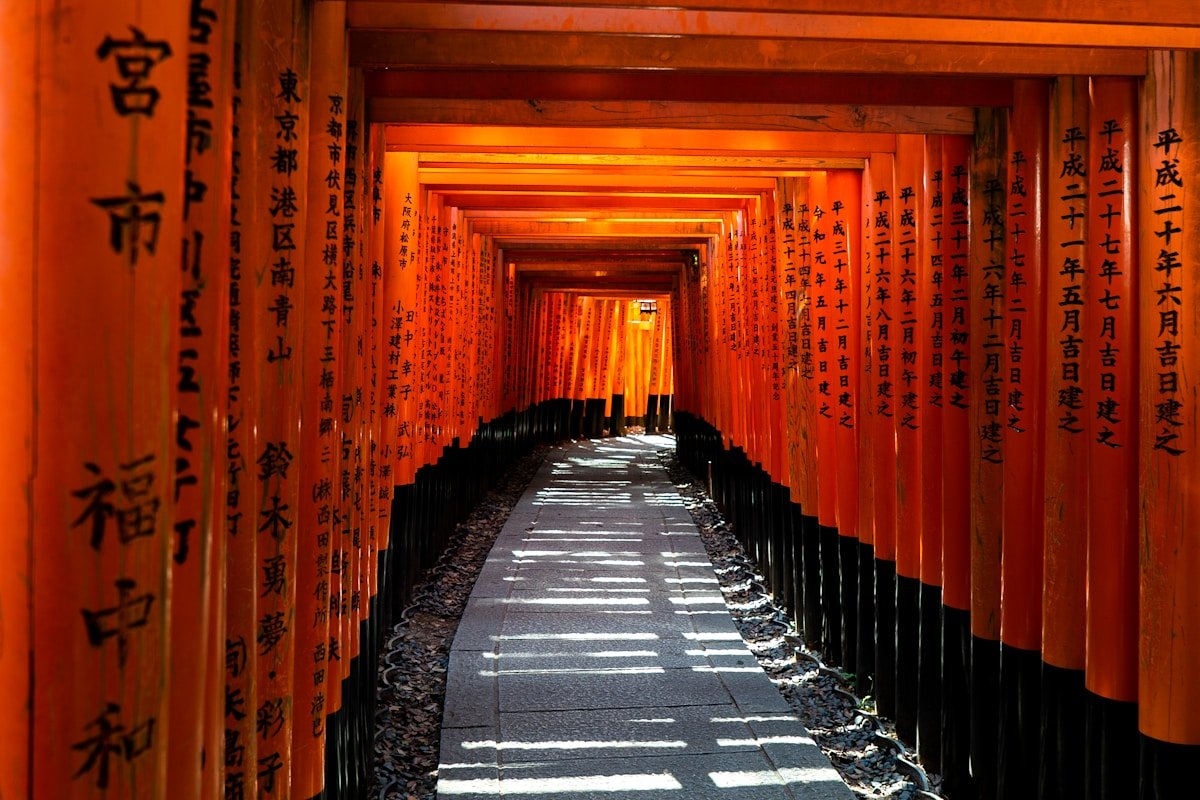
Fushimi Inari Taisha is the head shrine of approximately 30,000 Inari shrines across Japan, and the trail behind it - a winding mountain path threaded through more than 10,000 vermilion torii gates - is the single most visited site in Kyoto. The gates, each donated by a Japanese business or individual, cover the full ascent of Inari-yama (233 metres) and create the characteristic tunnel effect that photographs have made familiar worldwide.
Entry is free and the trail is open around the clock.
Top Tours at a Glance
Here’s a quick comparison of top-rated Fushimi Inari tours on GetYourGuide:
| Tour | Duration | Price (from) | Highlights |
|---|---|---|---|
| Kyoto Early Bird Tour: Fushimi Inari & Arashiyama | Full day | from ¥10,500 | Early morning torii trail before crowds, Arashiyama bamboo |
| Arashiyama, Fushimi Inari & Katsuo-ji Day Tour | 10 hrs | from ¥6,600 | Three top Kyoto sites, minibus, English commentary |
| Kyoto: Fushimi Inari Guided Early Morning Walking Tour | 2.5 hrs | from ¥6,000 | Pre-dawn torii atmosphere, lantern light, small group |
| Kyoto/Osaka: Nara, Fushimi Inari & Arashiyama Bus Tour | 9–10 hrs | from ¥7,650 | Deer park + both Kyoto sites, departs from Osaka or Kyoto |
Browse all Fushimi Inari and Kyoto tours → GetYourGuide
The Trail: 2-Hour vs Full 4-Hour Loop
The trail divides naturally into two options based on how far you climb.
The Popular Loop (approximately 2 hours)
Most visitors walk from the main shrine (Romon gate, at the base) through the first two main torii tunnels - Senbon Torii - and continue to Yotsutsuji intersection, roughly halfway up the mountain. This point, at approximately 1.2 km from the base, offers the first clear views over Kyoto and Osaka on clear days. A small teahouse here sells drinks and simple food.
From Yotsutsuji, you can descend back via the same route or take a loop path that circles back without retracing the exact route. Total walking time from the base to Yotsutsuji and back: 1.5–2 hours. The path is well-maintained stone steps throughout this section; ordinary footwear is fine.
Yotsutsuji is where most visitors turn back. If you turn back here, you will have seen the densest and most photogenic sections of the torii gates.
The Full Mountain Loop (approximately 4 hours)
Continuing above Yotsutsuji, the trail passes through smaller sub-shrines and more dispersed torii gates, climbs to the Mitsuru-sha at the upper mountain, and continues to the Ichinomine summit. The upper sections have fewer visitors, more moss-covered stone lanterns, and a distinctly different atmosphere - quieter and more genuinely forest-like. The steps become uneven in places; wear shoes with grip.
Total distance for the full loop: approximately 4 km. Elevation gain: 230 metres. The path is circular - you can descend via a different route back to the main shrine area.
Important note on the descent: Many visitors who attempt the full loop in summer significantly underestimate heat and humidity. The full trail in July–August is genuinely demanding. Carry at least 1.5 litres of water; there are vending machines near the base and at Yotsutsuji but not reliably further up.
Best Times to Avoid Crowds
Fushimi Inari is one of Japan’s most visited sites - approximately 3 million visitors per year, concentrated heavily on weekends and national holidays. The famous torii tunnel photographs require careful timing.
Best times:
- Before 07:00 - the trail is open 24 hours and the gates are at their most atmospheric in the pre-dawn and early morning light. By 08:00 the first tour groups begin arriving.
- After 20:00 - the main shrine is lit but the upper trail is dark (bring a torch/phone light). A quieter experience for those willing to hike in the dark.
- Weekday mornings - significantly less crowded than weekends even at 09:00.
Times to avoid:
- 10:00–16:00 on weekends and national holidays at any time of year
- Cherry blossom season (late March to early April) and Golden Week (late April to early May) at any time of day
- New Year period (January 1–3) - Fushimi Inari receives millions of hatsumode (first shrine visit) visitors over these three days and is essentially impassable
Visiting the Shrine Grounds
The lower shrine complex - Romon gate, Garan (main hall), and the inner precinct - is worth spending 20–30 minutes in before beginning the trail. The main hall’s architectural details and the rows of foxes (messengers of the Inari deity) made of stone or ceramic are distinctive. The stone fox statues often hold a key, a gem, a sheaf of rice, or a scroll in their mouths - each symbolises a different aspect of Inari’s domain (rice agriculture, commerce, good harvest, and knowledge).
The shrine is free to enter. Photography inside the main hall is generally not permitted, but the exterior grounds and all torii gates can be photographed freely.
Fushimi Sake Breweries
The Fushimi district (distinct from Fushimi Inari itself - the shrine sits at the base of the mountain, while the traditional brewery district is 2 km to the west along the Horikawa river) is one of Japan’s three great sake-producing regions alongside Nada (Kobe) and Saijo (Hiroshima). Fushimi’s spring water, drawn from an aquifer under the city, is exceptionally soft - ideal for producing sweet, smooth sake styles.
Several breweries offer tours and tastings:
Gekkeikan Okura Sake Museum
- Address: 247 Minamihama-cho, Fushimi-ku
- Entry: ¥600, includes one cup of sake or juice
- Hours: 09:30–16:30, closed during New Year period and several days in summer
- The museum traces 380 years of sake production history with original brewing equipment on display. A shop sells brewery-exclusive sake.
Kizakura Kappa Country
- A complex with a sake museum, restaurant, and bar near Fushimi Momoyama Station
- Sake tasting sets from approximately ¥800 for 4 cups
- The restaurant serves sake-lees cuisine (kasu-zuke) - dishes marinated or cooked with sake lees - from around ¥1,500 for a set lunch
Tsukinokatsura
- The oldest producer of nigori-zake (unfiltered cloudy sake) in Japan
- Small tasting room; private tours available by advance reservation
- Closest to the Miyakomachi area of Fushimi
From Fushimi Inari Station, take the Kintetsu Kyoto Line one stop south to Momoyama-Mikohashi or Kintetsu-Tanabe, or walk the 25-minute route along the Horikawa river to reach the main brewery cluster.
Restaurants Near Fushimi Inari
The street leading from Inari Station to the shrine gate (approximately 700 metres) is lined with food stalls and small restaurants.
Near the shrine:
- Nishiki Waffle - taiyaki fish-shaped waffles filled with matcha cream or red bean; approximately ¥350 each, popular with the walking crowd
- Torisei - a well-regarded yakitori restaurant a few minutes’ walk from the station; grilled chicken skewers from ¥200 each, with a lunch set from approximately ¥1,800. The branch at Fushimi is somewhat more relaxed than the Kyoto city centre locations.
- Soba Dosanjin - handmade buckwheat noodles near Inari Station; soba sets from ¥1,100
In the Fushimi sake district (for post-brewery dining):
- Kizakura Kappa Country Restaurant - sake-paired lunch sets from ¥2,000; open daily
- Torisei Honten (main branch) - robatayaki grills and a sake list focused on Fushimi brewers; dinner from approximately ¥3,500 per person
Getting from Central Kyoto to Fushimi Inari
JR Nara Line from Kyoto Station - the fastest option. Inari Station (稲荷駅) is one stop south of Kyoto Station on the JR Nara Line; journey time 5 minutes, fare ¥150. The station exits directly in front of the shrine’s south approach. This train is covered by the JR Pass.
Keihan Railway - from Gion-Shijo or Sanjo stations on the Keihan Main Line, ride south to Fushimi-Inari Station. Journey from Gion-Shijo approximately 10 minutes, fare ¥170. The Keihan exit is a 7-minute walk to the main torii gate.
Bus - City Bus routes 105 and Kintetsu Bus routes serve the area but are slower than rail. Not recommended when the JR option from Kyoto Station takes 5 minutes.
Taxi - from Kyoto Station approximately ¥900–1,200 depending on traffic. From Gion approximately ¥1,500.
If combining Fushimi Inari with the sake district, the brewery cluster around Fushimi Momoyama is accessible on foot (25 minutes from the shrine) or by Kintetsu Line (2 stops south from the shrine area, change at Momoyama-Mikohashi).