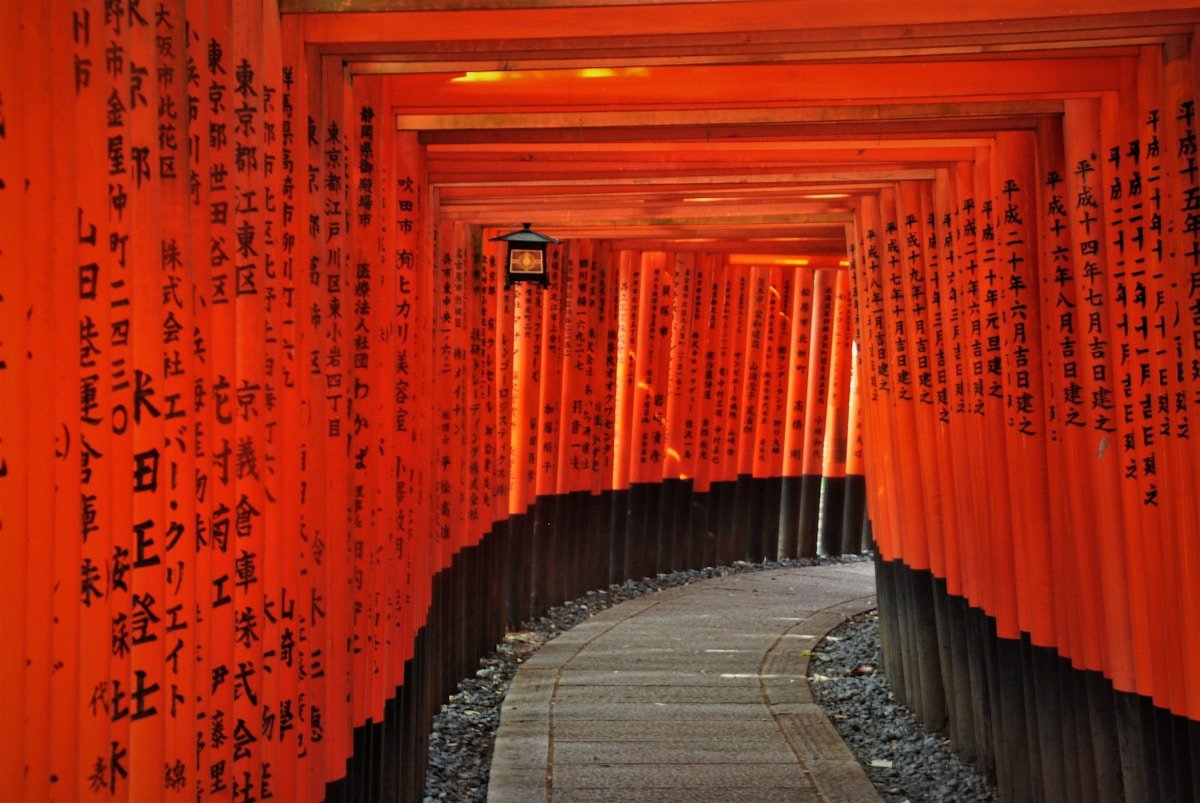
Fushimi Inari Taisha is Kyoto’s most-visited attraction - and it deserves the reputation. More than 10,000 vermilion torii gates wind up the forested slopes of Mount Inari, forming a tunnel that stretches for roughly 4 kilometres from the main shrine to the summit at 233 metres. Entry is free, access is round the clock, and the experience shifts dramatically depending on when you arrive.
Top Tours at a Glance
Here’s a quick comparison of top-rated tours on GetYourGuide:
| Tour | Duration | Price (from) | Group Size | Highlights |
|---|---|---|---|---|
| Early morning Fushimi Inari guided hike | 3 hrs | from $45/person | Small group (max 12) | Pre-dawn start, no crowds, torii gate history |
| Fushimi Inari and Nishiki Market walking tour | 4 hrs | from $55/person | Group | Temple context, food tasting, English guide |
| Kyoto highlights day tour with Fushimi Inari | 8 hrs | from $75/person | Group | Arashiyama, Kinkaku-ji, and Fushimi Inari combined |
| Private Fushimi Inari sunrise tour | 3 hrs | from $120/person | Private | Sole-use guide, flexible pace, photography tips |
Browse all Fushimi Inari tours → GetYourGuide
What Is Fushimi Inari Taisha?
Founded in 711 CE, Fushimi Inari is the head shrine of all Inari shrines in Japan - a network of approximately 30,000 across the country. Inari is the kami (deity) of rice, agriculture, and business success. The torii gates are donated by companies and individuals praying for prosperity; each one bears the donor’s name and the date of dedication on its back pillar.
The main shrine buildings at the base are impressive, but the real draw is the Senbon Torii (“thousands of torii gates”) trail that climbs the mountain behind them. The path is lined almost continuously with gates of all sizes, from narrow single-person passages to grand entrances six metres wide.
Admission and Opening Hours
Fushimi Inari Taisha is free to enter. The grounds are open 24 hours a day, every day of the year. The inner shrine hall has set visiting hours (roughly 8:00–18:00), but the mountain trail is accessible at any time.
There are no tickets to purchase, no queues at a gate, and no booking requirements. Simply walk through the main entrance - the giant torii gate on the approach road - and follow the signs for Senbon Torii.
The Hike: What to Expect
The full circuit from the main shrine to the summit (Ichi no Mine, 233 m) and back takes around 2–3 hours at a relaxed pace. The path is paved throughout - no scrambling over rocks - but it climbs steadily, and sections near the top become steep.
Key stopping points:
- Okusha Hohaisho (30–40 min up): A popular turnaround point for visitors with limited time. You get the most photogenic torii gate sections here, and the crowds thin noticeably compared to the base.
- Yotsutsuji junction (45–60 min up): A four-way crossroads with a partial view over Kyoto. Most casual visitors stop here. There’s a small tea house selling drinks and snacks (approximately ¥500 for matcha and mochi, as of 2026).
- Summit (1.5–2 hours up): Far fewer visitors reach the top. The summit itself is a clearing with small shrines - quieter and more atmospheric than the crowded lower sections.
The descent follows the same path or an alternate loop through smaller sub-shrines. Fox statues - messengers of the Inari deity - appear throughout the mountain.
Best Time to Visit
Early morning (before 8:00): This is the most important tip for Fushimi Inari. The lowest gates are tourist-free before 7:30, and the light from the east casts a warm glow on the vermilion wood. By 9:00, tour buses arrive.
Weekday afternoons: Not quite as quiet as dawn, but workable. Most visitors cluster at the base and Okusha; above Yotsutsuji you’ll often walk alone.
Night visits: The trail is lit until around 23:00. Walking the lower gates under lamplight on a weeknight is genuinely eerie and beautiful. Fewer people, flickering orange light, the sound of cicadas or wind in the cedars.
Avoid: Weekends between 9:00 and 16:00 from March to November. Foot traffic is so dense that photography becomes nearly impossible and the experience suffers. Golden Week (late April–early May) and autumn foliage season (November) are especially crowded.
How to Get There
From Kyoto Station:
- JR Nara Line → Inari Station (2 stops, approximately 5 minutes, ¥150). The station exit puts you directly in front of the first torii gate.
- Keihan Main Line → Fushimi Inari Station (from Gion-Shijo or Tofukuji), a 5-minute walk to the shrine entrance.
From Osaka:
- JR Nara Line from Osaka Station (via Kyoto), or Keihan Line from Yodoyabashi → Fushimi Inari Station. Journey time approximately 50–60 minutes.
By taxi from central Kyoto: approximately ¥1,500–¥2,000, about 15 minutes without traffic.
IC cards (Suica, ICOCA) are accepted on all rail services to Inari and Fushimi Inari stations. For mobile data to track your position on the mountain trail and check sunrise and weather conditions, a Japan eSIM is worth activating before you arrive - signal holds well on the lower and mid sections of the hike.
What to Bring
The hike involves real elevation gain. In summer (June–September), carry at least 500 ml of water - the vending machines at the base charge around ¥160 per bottle, and there are no shops past Yotsutsuji. Wear comfortable shoes with grip; the paved path can be slippery after rain.
Wearing a light layer is worthwhile in winter (December–February), as the mountain is a few degrees cooler than the city. Spring and autumn are ideal walking conditions.
Food and Drink Near Fushimi Inari
The approach road (Inari Taisha-mae) is lined with food stalls and small restaurants. Specialities include:
- Suzume-yaki: Small sparrows grilled on skewers - a local Fushimi tradition, approximately ¥700–¥1,000 per skewer, as of 2026.
- Kitsune udon: Fox-themed udon with sweet fried tofu (aburaage). Most shops charge ¥900–¥1,200.
- Matcha soft-serve ice cream: Available from several stalls near the main gate, around ¥500.
The stalls start closing around 17:00–18:00. If you visit in the evening, eat before heading up the mountain.
Guided Tours
Independent visits work perfectly well given the well-marked trail, but a guide adds context: the history behind individual gates, the role of fox mythology in Inari worship, and the meaning of the offerings left at sub-shrines. Guided tours also navigate the early-morning timing to beat crowds. Options are available through the booking widget above.
Tips for Photography
- The most iconic shots are taken at Okusha Hohaisho, where the path bends and gates recede into the distance. Arrive before 7:30 for a people-free frame.
- Shoot looking slightly upward to capture the depth of the gate tunnel.
- On cloudy days, the diffuse light reduces harsh shadows between gates - often better than bright sun.
- Evening photography with the lanterns lit works well at the lower sections; above the lantern range, a camera that handles low light is useful.
FAQs
Is Fushimi Inari worth it? Yes - it’s free, it’s open all hours, and the mountain trail is genuinely impressive. The key is timing: go early or late.
How long does it take? 30–40 minutes if you turn back at Okusha. The full circuit to the summit and back takes 2.5–3 hours.
Can you do it in the rain? Yes. The paved path drains well, and the forest canopy provides partial cover. The gates look striking in mist.
Is it stroller/wheelchair accessible? The initial section and main shrine grounds are accessible. The mountain trail has steps and steep gradients - not suitable for strollers or wheelchairs beyond the first few hundred metres.
Nearest city hub: Kyoto - where to stay, restaurants, and day trips from the city.