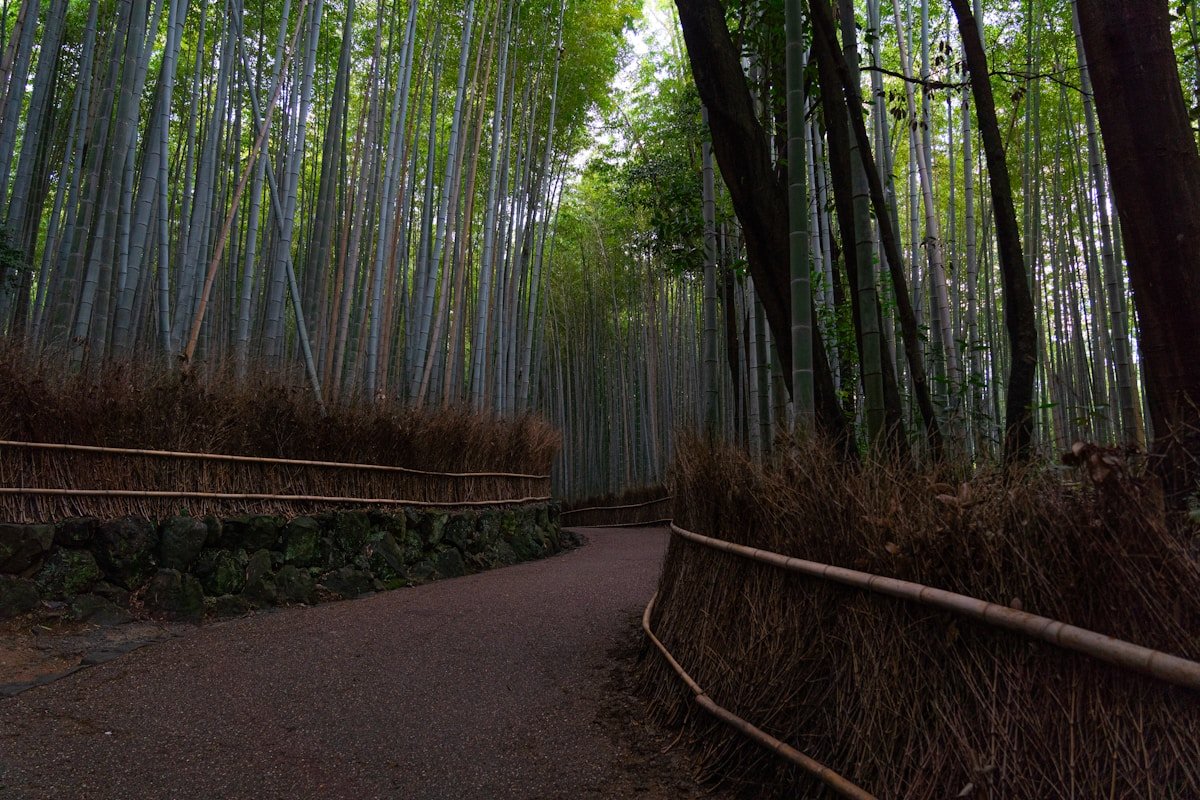
Arashiyama sits at the western edge of Kyoto where the Oi River cuts between forested hills. It is famous above all for its bamboo grove - a short but visually overwhelming corridor of densely planted Moso bamboo - but the wider district rewards a full half-day. Tenryuji’s garden, the Togetsukyo bridge, smaller temples hidden in the hills, and a string of riverside restaurants make Arashiyama one of Kyoto’s most satisfying excursions.
Top Tours at a Glance
Here’s a quick comparison of top-rated Arashiyama tours on GetYourGuide:
| Tour | Duration | Price (from) | Highlights |
|---|---|---|---|
| Kyoto: Arashiyama Bamboo, Matcha, Monkeys & Temple Tour | 4 hrs | from ¥6,450 | Bamboo grove, Tenryuji, Monkey Park, matcha tasting |
| Kyoto: Arashiyama Customised Rickshaw Tour & Bamboo Forest | 1–2 hrs | from ¥9,000 | Traditional rickshaw, bamboo grove, hidden temple paths |
| Kyoto Early Bird Tour: Fushimi Inari & Arashiyama | Full day | from ¥10,500 | Both major Kyoto highlights, small group, English guide |
| Arashiyama, Fushimi Inari & Katsuo-ji Day Tour | 10 hrs | from ¥6,600 | Three top Kyoto sites, minibus, English commentary |
Browse all Arashiyama and Kyoto tours → GetYourGuide
The Bamboo Grove
The grove occupies a narrow path of approximately 500 metres between Tenryuji’s north gate and Okochi Sanso villa. At its densest point, the canopy closes over the path entirely and the light turns green and diffuse. The sound - bamboo stalks clicking and rustling in the wind - is as distinctive as the sight.
Expect crowds between 09:00 and 16:00 on weekends and during cherry blossom (late March) and autumn foliage (mid-November) peak periods. To experience the grove at its most striking, arrive before 07:30 when the only other people present are local joggers. The grove is open 24 hours and free to enter; there is no gate or ticket.
From the grove’s north end, a short walk leads up to Jojakko-ji - a moss-covered hillside temple with a pagoda viewpoint. Entry is ¥500. The climb rewards with forest views and significantly fewer visitors than the main bamboo path.
Tenryuji Temple and Garden
Tenryuji is a UNESCO World Heritage Site and the most important Zen temple in Arashiyama. Founded in 1339, the main hall was reconstructed multiple times after fires; the current building dates to 1900. The Sogen-chi garden - a traditional karesansui (dry landscape) garden with a central pond reflecting the forested hills behind - is considered a masterpiece of Muromachi-period garden design.
Entry fees (as of 2026):
- Garden only: ¥500 per adult
- Garden + main hall tatami rooms: ¥800 per adult
- Garden + main hall + Hogon-in sub-temple: approximately ¥1,100
- Children (primary school and under): ¥300 for garden only
Opening hours are 08:30–17:30 (to 17:00 in winter, from 08:00 during peak cherry blossom and foliage periods). Tenryuji’s north gate opens directly onto the bamboo grove, so many visitors enter the garden and exit through the grove - a logical sequence.
The temple also has a well-regarded shojin ryori (Buddhist vegetarian cuisine) restaurant, Shigetsu, inside the grounds. Lunch sets run from approximately ¥3,500 to ¥6,000 and must be booked in advance by phone (+81-75-882-9725).
Togetsukyo Bridge
The bridge that arcs across the Oi River is Arashiyama’s postcard image, particularly when framed by the forested mountains behind. Togetsukyo (“Moon-crossing Bridge”) has stood in various forms since the Heian period; the current concrete structure dates to 1934 but retains a traditional wooden railing.
The bridge itself is free to cross and the short walk across offers views of the mountains in both directions. The southern bank (Arashiyama side) has boat hire available - rickshaw rental is available from Ebisuya rickshaw company from approximately ¥3,500 per person for a 30-minute course through the lanes north of the bridge. The northern bank (Saga side) has several restaurants and is the starting point for the Sagano Scenic Railway.
Sagano Scenic Railway (Torokko)
The open-sided Torokko tourist train runs 7.3 km from Sagano-Torokko Station (a short walk from Arashiyama Station) through the Hozu River gorge to Kameoka. The 25-minute journey follows a riverside route through forest and gorge scenery that cannot be reached any other way. Tickets cost ¥880 per adult one-way (as of 2026). Return trips must be booked in advance - the train sells out weeks ahead during spring and autumn peak seasons. Book via the Sagano Scenic Railway website or at the station ticket window.
Best Season to Visit
Spring (late March to early April): Cherry trees line the riverside and the approach to the bridge. Extremely crowded but genuinely beautiful. Book accommodation 3–4 months ahead.
Early summer (May–June): Green is at its most intense. Crowds drop significantly from the cherry blossom peak. Good light for photography in the mornings.
Autumn (mid-October to late November): Maples turn amber and red throughout the hills surrounding the bamboo grove and Tenryuji garden. This is the most photogenic season for the grove, particularly in November. Second-most-crowded period after spring.
Winter (December–February): The least-visited season. Occasional snow transforms the bamboo grove into one of the most striking scenes in Japan. The Torokko train runs a limited winter schedule.
Restaurants in Arashiyama
Budget (under ¥1,200):
- Sarasa Nishijin has a branch near the Arashiyama lanes - tofu dishes and simple rice sets from ¥900
- Various yudofu (tofu hot pot) stalls along the main street from approximately ¥1,000
Mid-range (¥1,500–4,000):
- Yoshida-ya - long-established restaurant near Tenryuji specialising in kaiseki-influenced set lunches; from ¥2,800
- Arashiyama Yoshimura - soba noodles with a view over the Togetsukyo bridge; kake soba sets from ¥1,100, more elaborate soba courses around ¥3,500
Higher end (¥6,000+):
- Kitcho Arashiyama - one of Japan’s most acclaimed kaiseki restaurants, with dinner starting at approximately ¥35,000. Lunch courses from around ¥17,000. Reservation-only and booked months in advance.
Getting to Arashiyama from Kyoto Station
JR Sagano Line: The fastest and most direct option. Take the JR Sagano (San-in) Line from Kyoto Station to Saga-Arashiyama Station. Journey time approximately 15 minutes; fare ¥240. Covered by the JR Pass.
Hankyu Railway: From Kyoto-Kawaramachi (Gion area) or Umeda (Osaka), take the Hankyu Kyoto Line to Katsura, then transfer to the Hankyu Arashiyama Line to Arashiyama Station. Total time from Kawaramachi approximately 25 minutes; fare ¥220 each way. This station is slightly further from the bamboo grove than the JR option.
Randen Tram: The Keifuku Electric Railway (known as the Randen) connects Shijo-Omiya in central Kyoto with Arashiyama. Journey time about 20 minutes; fare ¥250. The tram is charming and slower - good if you want to enjoy the ride. The Randen terminal is the closest to Tenryuji’s main gate.
Bus: Kyoto City Bus routes 28 and 93 serve the Arashiyama area from Kyoto Station; journey time 40–50 minutes depending on traffic. The bus day pass (¥700) makes this economical if you are using buses for the full day.
From central Gion, a taxi to Arashiyama takes approximately 25 minutes and costs around ¥2,500–3,500 depending on traffic.