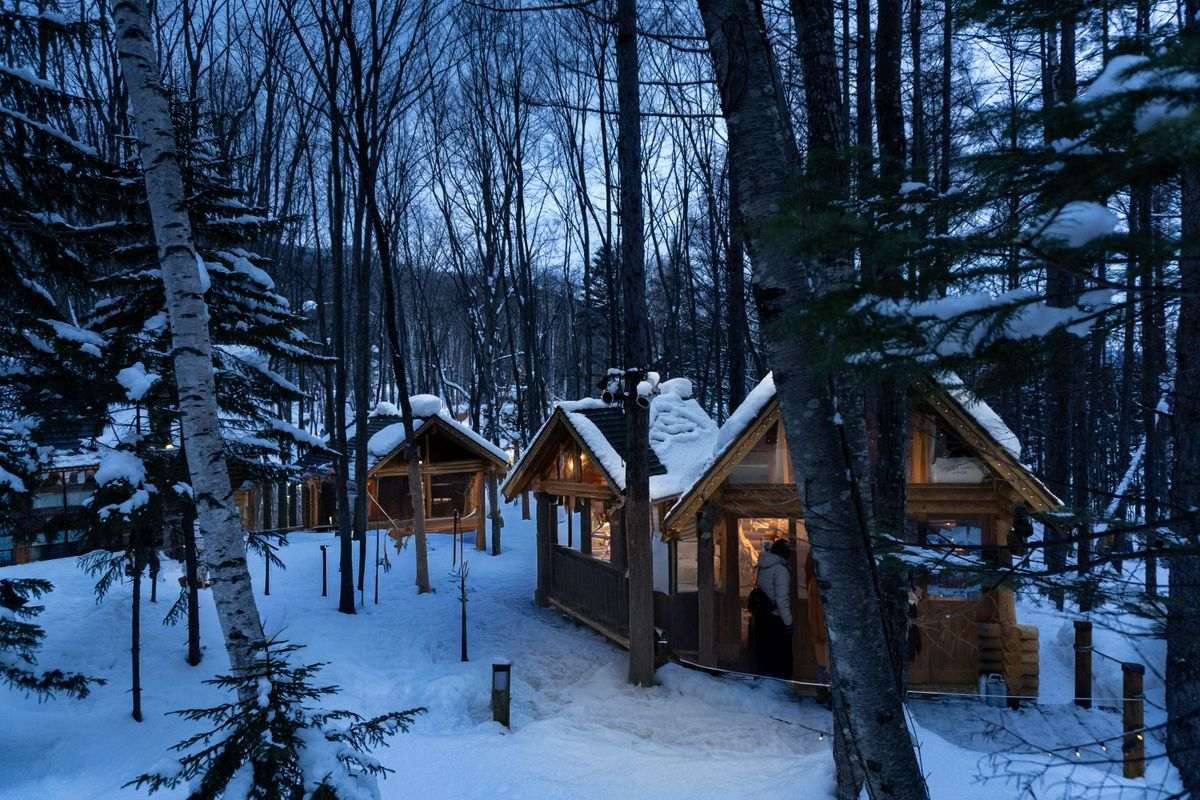
Furano sits in the geographical centre of Hokkaido, 35km southeast of Asahikawa and roughly 2 hours from Sapporo by road. While Niseko dominates international skiing coverage of Japan, Furano has a different kind of reputation among those who have skied both: longer vertical, quieter lifts, and a resort that remains predominantly Japanese in character. The town is best known internationally for its summer lavender fields and the iconic Ningle Terrace craft village, but from December through March it operates as one of Hokkaido’s most enjoyable ski destinations.
The resort consists of two connected zones on the flanks of the same mountain: the Furano Zone on the southwestern face and the Kitanomine Zone on the northern side. Together they offer 26 runs across a total vertical drop of 976m, making it one of the longest continuous descents available at any Japanese ski resort.
The Two Zones
Furano Zone is the larger of the two areas, anchored by the Prince Hotel and serviced by multiple lifts including a high-speed gondola to the 1,071m summit. The upper runs here are wide-open cruising trails with excellent views of the Tokachi plain stretching to the east. The steeper lower section through the trees holds powder longest after a storm. Beginners have a dedicated learning area at the base with flat, wide terrain.
Kitanomine Zone sits on the opposite side of the mountain and is accessed via a free shuttle bus from Furano Zone base or by traversing across from the top. This area tends to draw intermediate and advanced skiers for its north-facing slopes, which preserve snow quality for an additional day or two compared to the sun-exposed Furano Zone. The Kitanomine Expert Course has consistent pitch and rarely gets tracked out even on busy Saturdays.
The two zones are linked via a free resort shuttle that runs regularly throughout the day, though a cross-mountain traverse is also possible from the summit of the Furano Zone gondola.
Lift Pass Prices (2024/25 Season)
A standard full-day lift pass at Furano for the 2024/25 season costs approximately ¥5,400. The upgraded day pass including gondola access costs approximately ¥6,500. These are among the most affordable day rates at any major Japanese powder resort.
Multi-day passes offer meaningful discounts. A 5-day pass costs approximately ¥22,000, and a 7-day pass approximately ¥30,000. Early-season passes purchased before December 1 are available at around a 15 percent discount.
Ski and snowboard rental at the Furano Zone base costs approximately ¥4,000 to ¥6,000 per day for a standard setup. The New Furano Prince Hotel has on-site rental facilities, and several independent shops in Furano town offer competitive daily rates.
Compared to Niseko (¥10,000 to ¥12,000 for an All-Mountain pass) and Hakuba (¥7,800 to ¥8,500 for the valley ticket), Furano is consistently the most affordable major option.
Best Runs
Furano Expert Course: The longest challenging run on the Furano Zone, a narrow, steep line through trees accessed from near the gondola summit. 900m of sustained vertical through dense powder forest on a good day. Best accessed early in the morning before the upper lifts get congested.
Kitanomine Course: A long, open intermediate run on the Kitanomine Zone that covers much of the 976m vertical in a single descent. Well-groomed, with consistent pitch and wide lanes. Excellent for building rhythm and mileage.
Maple Run (Furano Zone): The gentlest long run from summit to base, winding 4km through a mix of open terrain and light forest. Suited to intermediate skiers wanting a long, rewarding descent without technical difficulty.
Off-piste birch forest (upper Kitanomine): The trees immediately skier’s-right of the Kitanomine Expert Course hold the best powder stashes in the resort, with wide birch spacing that suits powder turns. No formal marking, and best visited with guide knowledge of the terrain.
Getting to Furano
From Sapporo
The most direct option is the JR Furano Line combination: from Sapporo take the limited express Lilac or Kamui to Asahikawa (approximately 80 minutes, ¥2,530), then the JR Furano Line local train south to Furano town (approximately 70 minutes, ¥1,070). Total train journey is approximately 2.5 hours and ¥3,600. JR Pass holders cover both legs.
The Furano Ski Liner highway bus runs directly from Sapporo Bus Terminal (near Sapporo Station) to Furano ski resort in approximately 2 hours, costing approximately ¥1,400 to ¥2,000. This is often faster and more convenient than the train combination, particularly for visitors with ski bags.
If you prefer door-to-door service from New Chitose, book an airport transfer. From Furano town, resort shuttle buses connect to both the Furano Zone and Kitanomine Zone bases at no additional cost. Taxis from Furano JR station to the resort base cost approximately ¥2,000 to ¥2,500.
From Asahikawa
Furano is 35km south of Asahikawa, making it accessible as a day trip for those combining Hokkaido travel with the Asahikawa ice festival in early February. JR Furano Line from Asahikawa to Furano takes approximately 70 minutes and costs approximately ¥1,070.
From Niseko
Travelling between Niseko and Furano for multi-resort stays requires either a rental car or a two-segment journey via Sapporo. By public transport, the journey takes approximately 4 to 5 hours each way. Most itineraries that include both resorts base in Sapporo and day-trip to each, which adds transit time. See the Japan winter ski itinerary for a practical multi-resort routing plan.
For Sapporo as a base (see tours and day trips from Sapporo for non-ski days), the Odori Park and Tanuki Koji shopping arcade are within 5 minutes of the main hotels, and the city’s ramen and seafood scene is world-class.
Accommodation
Compare Furano hotels and apartments before choosing a base; the Prince Hotel and Kitanomine options fill first in January and February.
New Furano Prince Hotel is the resort’s flagship property, with ski-in ski-out access to the Furano Zone gondola. Rooms from approximately ¥20,000 to ¥50,000 per night depending on season and room type. The hotel has three restaurants, an onsen bath, and the Ningle Terrace craft village attached to the grounds.
Furano Natulux Hotel sits in Furano town rather than at the resort base, approximately 2km from the lifts. A well-regarded mid-range hotel with shuttle access to the ski resort and elegant modern Japanese styling. Rooms from approximately ¥15,000 to ¥25,000 per night.
Pension Montague is a small Western-style pension run by a local family, offering bed and breakfast accommodation from approximately ¥8,000 to ¥12,000 per person per night. Excellent homemade breakfasts and a welcoming atmosphere for solo travellers and couples.
Fusui Resort offers self-catering apartments near the Kitanomine Zone with full kitchens and ski storage. Rates from approximately ¥18,000 to ¥35,000 per night for a two-bedroom unit, making it cost-effective for small groups.
After Skiing
The New Furano Prince Hotel onsen is the most convenient end-of-day bath, available to hotel guests and day visitors at approximately ¥700 to ¥1,000 per person. The outdoor rotenburo overlooks the ski slopes and is one of the most atmospheric soaking experiences in Hokkaido.
Ningle Terrace, adjacent to the Prince Hotel grounds, is a cluster of small wooden craft cabins offering handmade pottery, jewellery, and locally produced preserves. Most cabins are open from late afternoon. It is particularly photogenic after dark when the lanterns are lit and snow is falling.
Furano town has an underrated food scene: several small noodle shops, a wine-producing area 5km out of town (Furano Winery), and the local speciality of Furano curry served at several downtown restaurants.
For a broader Hokkaido itinerary combining Furano with the Biei flower fields (summer) or the Asahikawa region, the region guide covers transport and key stops throughout central Hokkaido.
The full skiing in Japan guide covers all major resorts including Niseko and Hakuba with side-by-side comparisons of snowfall, vertical, access, and price.