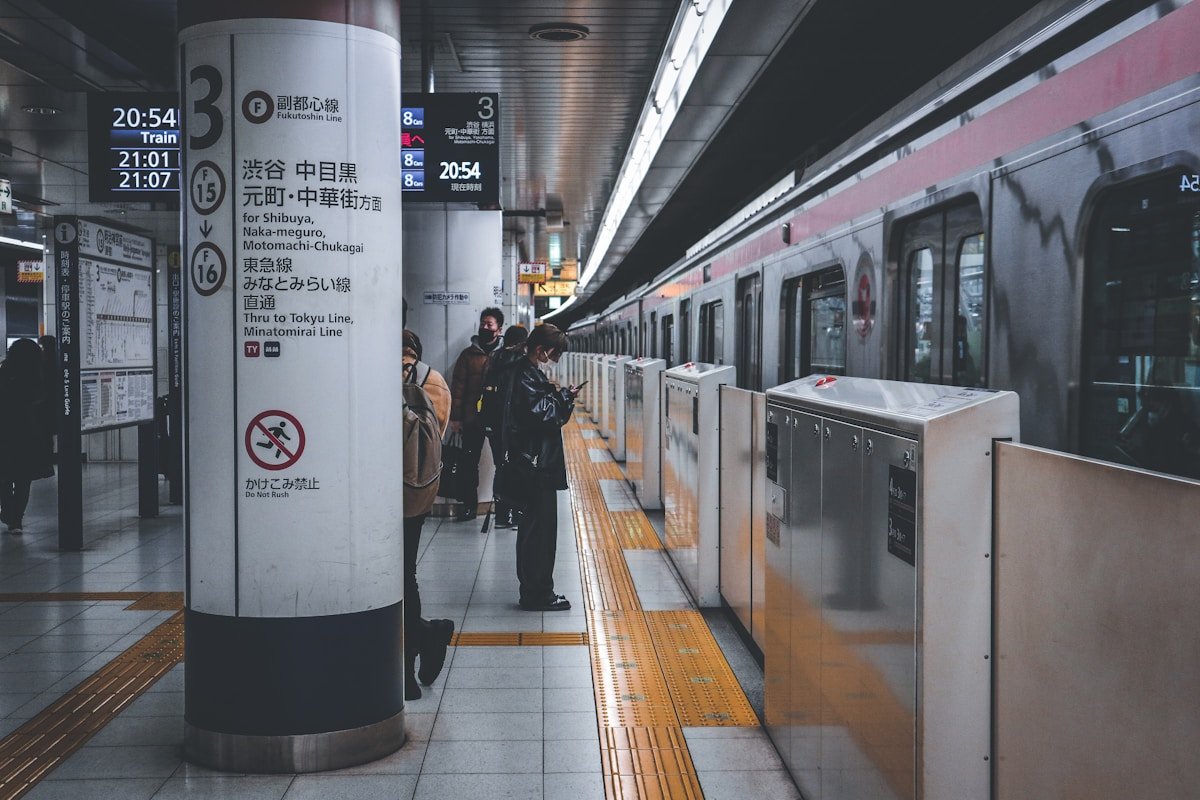
Nagoya is Japan’s fourth-largest city and one of its most car-dependent by Japanese standards - but visitors rarely need a car. The Nagoya Municipal Subway covers the main tourist zones efficiently, Meitetsu trains connect outward to Centrair Airport and Inuyama, and the Me-guru tourist bus fills in the gaps for sights that sit slightly beyond the subway’s reach.
The key geographic anchor is Nagoya Station - a dense transport hub where JR Shinkansen, Meitetsu private rail, the subway, and intercity buses all converge. Almost every visitor journey starts or ends here.
Nagoya Municipal Subway (名古屋市営地下鉄)
Nagoya has six subway lines. For tourists, three are most useful:
Higashiyama Line (東山線, yellow) - The backbone of the network. Runs east–west from Takabarinishi through Nagoya Station and Sakae (the city’s entertainment and shopping centre) continuing east to Fujigaoka. The majority of visitor transit uses this line.
Meijo Line (名城線, purple) - A circular line connecting Nagoya Station south to Kanayama, east through Yagoto, north to Higashiyama Zoo and Nagoya Dome, then back around through Heian Park and Hisaya-odori to rejoin Meijin-ku-yakusho (City Hall area). It is the only fully circular metro line in Japan. Useful stops: Kanayama (for Meitetsu to Inuyama), Osu Kannon (shopping and street food), Nagoya Dome-mae Yada (baseball), Higashiyama Zoo.
Tsurumai Line (鶴舞線, blue) - Connects Nagoya Station’s western side to Kanayama, then east to Akadori and beyond. Useful for Tsuruma Park (Tsurumai station).
Single fares: ¥210–¥340 depending on distance. IC card payment at all gates. Same gates accept manaca, Suica, Pasmo, and ICOCA interchangeably.
Subway Day Pass
| Pass | Price | Break-even |
|---|---|---|
| 1-day subway pass | ¥760 | 4 journeys |
Available from ticket machines with the “観光きっぷ” (tourist ticket) option. Covers all six Nagoya Municipal Subway lines but not Meitetsu or city buses. For a combined subway-and-bus day, the Nagoya Transport Bureau sells a 1-day Municipal Bus + Subway pass for ¥870.
Me-guru Tourist Loop Bus
The Me-guru (名古屋観光ルートバス) is a circular tourist bus connecting major sights that are inconvenient from the nearest subway station. It runs on weekends, public holidays, and during peak tourist periods from approximately 09:30–17:00.
Key stops:
- Nagoya Station (Sakura-dori exit)
- Nagoya Castle (10-minute walk from nearest subway station Shiyakusho)
- Tokugawa Art Museum & Tokugawaen Garden
- Toyota Techno Museum at Morikoro Park
- Nagoya City Art Museum
- Yamazaki Mazak Art Museum
Fares: ¥210 per ride, or ¥870 for an all-day pass. IC cards accepted. The pass is sold on the bus or at Nagoya Station.
Frequency: Approximately every 30 minutes. Check the current schedule at Nagoya Station’s tourist information office, as the route and frequency adjust seasonally.
Meitetsu (名鉄) Private Railway
Meitetsu is the major private rail operator in Aichi Prefecture, running from Meitetsu Nagoya Station (directly adjacent to JR Nagoya Station, connected via underground concourse).
Key routes for visitors:
| Route | Journey | Time | Fare |
|---|---|---|---|
| To Centrair Airport (NGO) | Mu Sky express | 28 min | ¥1,290 |
| To Centrair Airport (NGO) | Standard express | 33 min | ¥870 |
| To Inuyama (castle) | Express via Meitetsu Inuyama Line | 30 min | ¥600 |
| To Toyohashi | Limited express | 46 min | ¥1,250 |
Meitetsu tickets are purchased at Meitetsu station gates - IC cards cover standard fares but not the Mu Sky seat reservation surcharge.
JR Trains and Shinkansen
Nagoya sits on the JR Tokaido Shinkansen, making it one of Japan’s best-connected Shinkansen cities.
| Destination | Train | Time | Fare |
|---|---|---|---|
| Tokyo | Nozomi | 1h 38min | ¥11,090 |
| Kyoto | Nozomi | 33min | ¥5,640 |
| Osaka (Shin-Osaka) | Nozomi | 50min | ¥6,680 |
| Hiroshima | Nozomi | 1h 45min | ¥15,660 |
JR Pass holders: use the Hikari rather than Nozomi. Nagoya to Tokyo by Hikari: approximately 2 hours. Nagoya to Kyoto by Hikari: approximately 40 minutes.
JR local services from Nagoya:
- JR Chuo Line east to Nagano (2h25, useful for Alpine Route connections)
- JR Kansai Line to Nara (1h30, ¥2,270)
- JR Tokaido Line to Hamamatsu and Shizuoka
IC Cards
Nagoya’s local IC card is manaca, issued by the Nagoya Municipal Transportation Bureau and Meitetsu. It is functionally identical to Suica, Pasmo, and ICOCA - accepted at all subway gates, Meitetsu train gates, city buses, and Nishitetsu services in Fukuoka. Any of these cards can be used interchangeably in Nagoya.
Top up at any subway or Meitetsu ticket machine. Foreign Visa and Mastercard debit cards generally work at JR Nagoya Station machines for Suica top-up.
Airport Connection
Chubu Centrair International Airport (NGO) sits on an artificial island in Ise Bay, approximately 40km from the city centre.
- Meitetsu Mu Sky (reserved seats) - Nagoya Station to Centrair: 28 minutes, ¥1,290 as of 2026
- Meitetsu Standard Express (unreserved) - 33 minutes, ¥870
- Bus - Meitetsu and Nishitetsu buses from Nagoya Station to Centrair take approximately 60 minutes (slower and less reliable than the train)
- Taxi - Approximately ¥15,000–¥20,000. Not practical for individuals
For fixed-price airport transfers, Kiwitaxi and Welcome Pickups both serve Centrair arrivals.
Taxis
Nagoya taxis are metered and available across the city, particularly at Nagoya Station, Sakae, and Kanayama.
Approximate fares (as of 2026):
- Flag fall: approximately ¥680 for the first 1.2km
- Nagoya Station to Nagoya Castle: ¥900–¥1,200
- Nagoya Station to Osu Kannon: ¥700–¥1,000
- Late-night surcharge (22:00–05:00): +20%
The GO app and Uber operate in Nagoya and show estimated prices before booking.
Cycling
Nagoya’s city centre is relatively flat. Docomo Bike Share operates docked stations across Naka-ku and Higashi-ku.
- Per 30 minutes: ¥165
- 1-day pass: ¥1,650
Nagoya Port and the Linea Morinomiya Park area are pleasant by bicycle. The Meijin-ku canal paths offer traffic-free cycling connecting parts of the city. Rental shops near Nagoya Station offer city bikes from approximately ¥1,000–¥1,500 per day.
Transport essentials for Nagoya: The Japan Rail Pass covers the Shinkansen from Nagoya to Tokyo, Kyoto, and Osaka - excellent value given how many visitors use Nagoya as a hub city on a Japan-wide itinerary. Fixed-price airport transfers: Kiwitaxi.
Plan Your Trip
- Flights - Find the best fares to Japan
- Hotels - Search hotels in Nagoya on Booking.com
- Travel Insurance - Get covered before you go
- eSIM - Stay connected from landing
- Car Rental - Compare prices across providers
See also: Nagoya travel guide · Things to do in Nagoya · Where to stay in Nagoya · Nagoya day trips · Getting around Japan · Japan Rail Pass guide