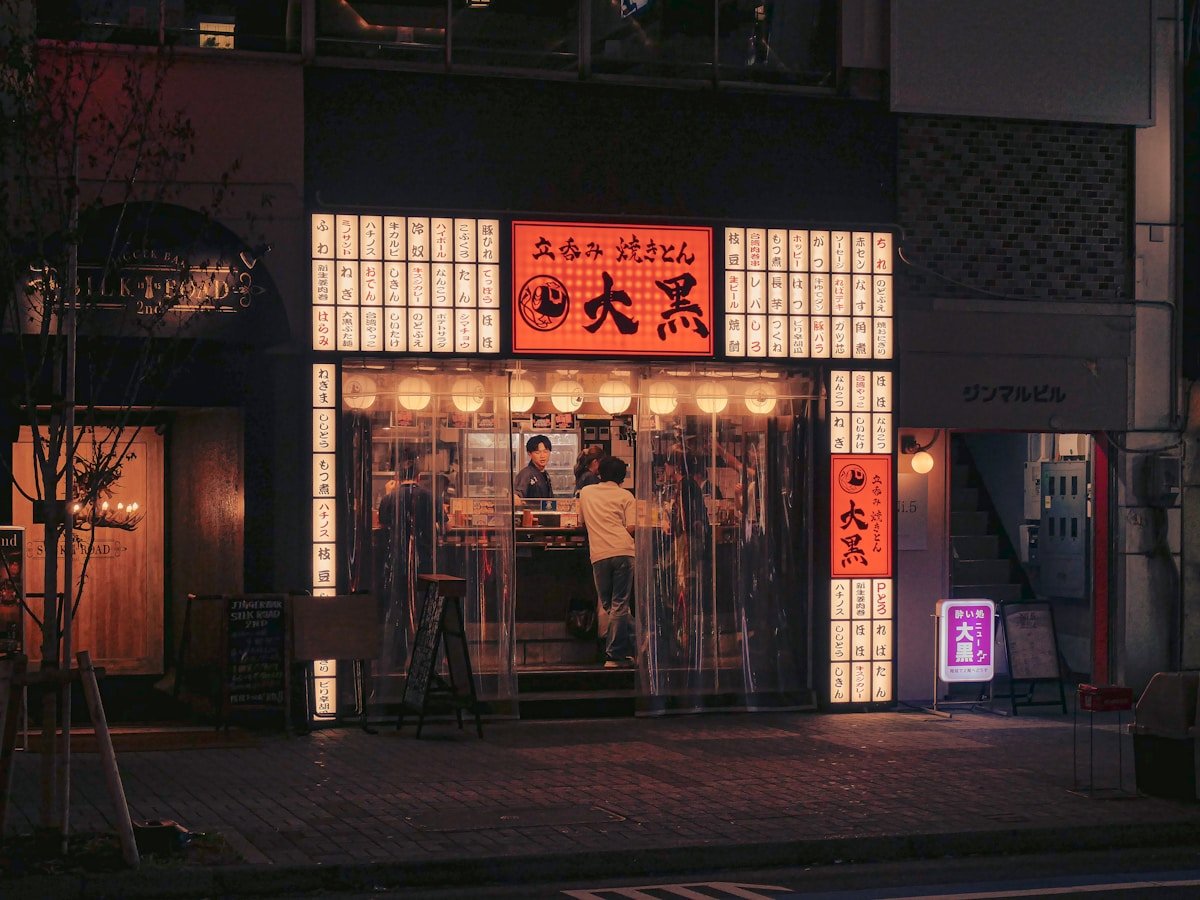
Nagoya is Japan’s fourth-largest city and consistently undersold as a food destination, despite having some of the country’s most distinctive regional cooking. The city’s food culture is shaped by hatcho miso, local eel from the surrounding rivers, and a mid-century coffee culture that evolved into the nationally replicated morning set breakfast tradition. Visitors who come for a day often end up eating their way through several distinctly Nagoya experiences in a single afternoon.
For a guide to the dishes themselves, see the Nagoya food guide.
Hitsumabushi Specialists
Atsuta Horaiken (あつた蓬莱軒)
The definitive hitsumabushi destination. Operating since 1873 near Atsuta Shrine, Horaiken claims to be the originator of hitsumabushi as a served dish rather than a casual eel bowl. The eel is sourced primarily from domestic Japanese farms and grilled over charcoal before being lacquered in the restaurant’s proprietary sauce.
Location: Jingunishi main branch (10-minute walk from Jingu-nishi subway station, Meijo Line) and a branch inside Meitetsu Matsuzakaya department store basement (more convenient for transit users). Price: Hitsumabushi from approximately ¥4,800–¥5,800 as of 2026. Wait times: 60–90 minutes on weekends without a reservation; 20–40 minutes on weekdays. Arrive at opening time (11:30) to minimise queuing.
Hitsumabushi Bincho
A more accessible specialist with a station-proximate branch in Nagoya Station’s Taiko-dori food floor and a second branch in Sakae. Quality is high without the pilgrimage atmosphere of Horaiken.
Price: From approximately ¥4,200. No reservations - walk-in only.
Miso Katsu
Yabaton (矢場とん)
The flagship miso katsu chain. The main Yaba-cho restaurant is a lively, standing-room-at-peak-hours institution with a menu centred on various cuts of pork served under a thick, sweet-salty hatcho miso glaze. The sauce is available in a jar to take home.
Location: Main branch near Yaba-cho subway station, plus branches throughout the city. Price: Full miso katsu set (pork loin or fillet, rice, shredded cabbage, miso soup) from approximately ¥1,100–¥1,600.
Butsugiri Katsu (a cheaper alternative): Several neighbourhood tonkatsu shops in Fushimi and Sakae also serve miso katsu versions for ¥900–¥1,200. The sauce recipe varies - some use a more standard red miso rather than genuine hatcho.
Tebasaki (Chicken Wings)
Furaibo (風来坊)
The originator of Nagoya-style tebasaki in 1963. Wings are whole (not split), fried until skin-crackly, then glazed in a sweet-savoury soy and black pepper sauce. The portion logic here is different from izakaya: wings are ordered by the fistful, not as a side. Allow 6–10 wings per person as a main course.
Price: Wings from approximately ¥220–¥250 each. A satisfying set order of 8 wings plus a beer runs approximately ¥1,800–¥2,200. Multiple locations citywide; the Fushimi area branch is convenient for central tourists.
Sekai no Yamachan (世界の山ちゃん)
Furaibo’s main rival and, by some measures, the more famous brand. Yamachan’s wings are slightly spicier and have a higher chilli-to-sweet ratio. The restaurant atmosphere is louder and the décor more deliberately retro.
Price: Wings from approximately ¥240 each. Set menu with beer from ¥2,000.
Miso Nikomi Udon
Yamagataya Honten (山雀屋本店)
One of the oldest and most respected miso nikomi udon specialists. The claypot arrives sealed and still simmering - the lid acts as a bowl for the broth. Interior of thick, firm handmade udon in dark miso broth with chicken, fish cake, and narutomaki; raw egg added at the table.
Location: Near Kamimaezu subway station, a short walk from the Osu shopping area. Price: Claypot sets from approximately ¥1,200–¥1,600. Cash only; no reservations.
Coffee and Morning Culture
Komeda Coffee (コメダ珈琲)
A Nagoya institution since 1968, now a national chain but still most at home in its home city. The morning service (until 11:00) provides free toast and a hard-boiled egg or red bean paste with any coffee purchase - one of Japan’s most generous included meals. Coffee from ¥500.
Sugakiya (スガキヤ)
A Nagoya-specific fast food chain serving ramen and soft-serve ice cream at budget prices. Ramen from approximately ¥380 - the cheapest bowl in the city. Widely regarded as a comfort food rather than a gourmet experience, but the ice cream-ramen combination is distinctly Nagoya.
Evening Eating and Izakaya
Sakae district is the main evening area: the streets around Sakae subway station and the TV Tower park have the highest restaurant density. Full izakaya evenings (food-focused, multiple small dishes, local sake and beer) run ¥2,500–¥4,500 per person.
Osu Kannon area has a more mixed crowd and a higher proportion of independent, under-touristed izakaya with prices typically ¥200–¥300 cheaper per person than equivalent Sakae establishments.
See Nagoya through its food: Food and cultural tours in Nagoya often include market visits, tastings, and dishes you’d never find independently.
Budget Summary (as of 2026)
| Meal | Venue | Cost per person |
|---|---|---|
| Hitsumabushi set | Atsuta Horaiken | ¥4,800–¥5,800 |
| Hitsumabushi set | Bincho | ¥4,200–¥4,800 |
| Miso katsu set | Yabaton | ¥1,100–¥1,600 |
| Tebasaki (8 wings) | Furaibo or Yamachan | ¥1,800–¥2,200 |
| Miso nikomi udon | Yamagataya | ¥1,200–¥1,600 |
| Morning coffee + toast | Komeda | ¥500–¥700 |
| Izakaya dinner | Sakae / Osu | ¥2,500–¥4,500 |
Take a Guided Food Tour of Nagoya
Nagoya’s food identity is so distinctive that locals call it ‘Nagoya meshi’ (Nagoya food) - a cluster of dishes built around the city’s fermented hatcho miso and its love of chicken wings, morning coffee, and udon. The core experiences are miso katsu (tonkatsu in thick red miso sauce at Yabaton or Yamamotoya), kishimen (flat wheat noodles in dashi broth), tebasaki (sweet soy-glazed chicken wings at Furaibo), and the famous morning coffee sets where paying ¥400–¥500 for a coffee gets you free toast, egg, and salad from 7am. A guided food tour covers all of these and explains why Nagoya developed such a different food personality from Osaka and Tokyo despite its size.
Guided food tours in Nagoya take you beyond tourist-obvious spots - local guides know which stall has the freshest tebasaki, where to find the best miso katsu, and how to navigate an all-Japanese menu.
See also: Nagoya travel guide · Things to do in Nagoya · Nagoya food guide · Chubu region guide
Search hotels in Nagoya: browse stays in Nagoya