Nagoya Travel Guide: Castle, Atsuta Shrine & Miso
Nagoya travel guide - castles, Atsuta Shrine, Toyota history, Osu shopping, and the city's famous miso-heavy food culture, all in central Japan.
Guides for Nagoya
Nagoya is Japan’s fourth largest city with a population of 2.3 million, and it is consistently underestimated by international visitors routing between Tokyo and Kyoto. The city is the manufacturing capital of Japan - birthplace of Toyota, home to Mitsubishi Aircraft, and centre of one of the most productive industrial regions in the world. What surprises most visitors is how much there is to see and eat.
Getting to Nagoya
Nagoya Station sits on the Tokaido Shinkansen, the busiest high-speed rail line in Japan. All major Shinkansen services stop here.
| From | Time | Price (unreserved) | JR Pass |
|---|---|---|---|
| Tokyo | 1h 45min | ¥11,090 (~$73) | Covered |
| Kyoto | 35min | ¥5,720 (~$38) | Covered |
| Osaka | 50min | ¥6,680 (~$44) | Covered |
| Hiroshima | 1h 40min | ¥12,580 (~$83) | Covered |
Nagoya also has Chubu Centrair International Airport (NGO), connected to Nagoya Station by the Meitetsu Airport Line (28 minutes, ¥890).
Once you are in town, our guide to getting around Nagoya covers the subway and trains in more detail.
Nagoya Castle
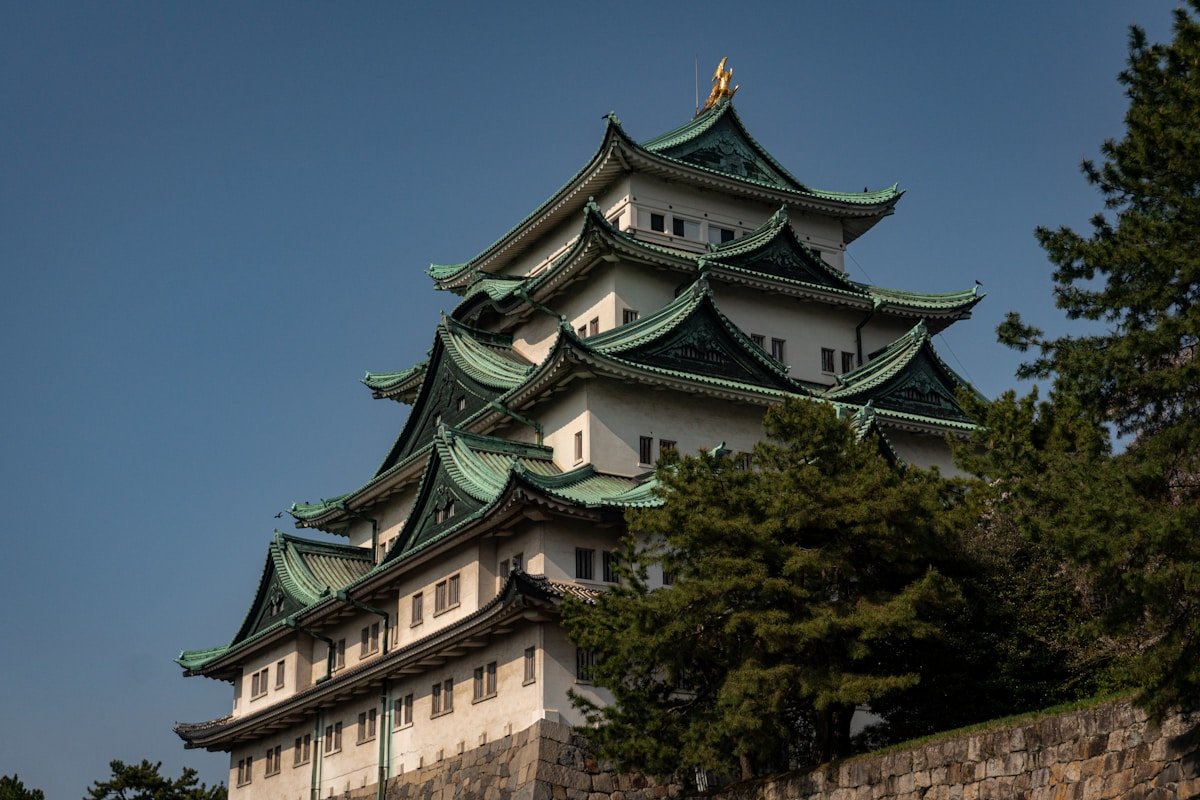
Nagoya Castle was originally built in 1612 under the order of Tokugawa Ieyasu, founder of the Edo shogunate. The castle served as the residence of the Owari branch of the Tokugawa family until the Meiji period. The main keep (tenshu) was destroyed by Allied bombing in 1945; the current reinforced concrete reconstruction dates to 1959.
The castle’s most distinctive feature is the pair of kinshachi - golden dolphin-like ornaments mounted on the roof ridge. These golden fish are the symbol of Nagoya and appear throughout the city’s branding, souvenirs, and signage. The originals are on display in the Honmaru Palace complex.
Entry costs ¥500 (approx. $3.30). The grounds include the reconstructed Honmaru Palace, which was the adjoining residence destroyed in the same bombing raid. The palace’s interior features original 17th-century decorative paintings on sliding screens - the painstaking restoration project has been ongoing for decades. Note: as of 2026, a new traditional wooden tenshu (the Honda no Shiro project) is under planning, though construction timelines have shifted repeatedly.
The castle is a 15-minute walk from Shiyakusho station on the Meijo subway line, or a 20-minute walk from Nagoya Station.
Guided Nagoya city tours typically combine the castle and Honmaru Palace with Atsuta Shrine and the Osu district - a practical structure for a full first day, with English-speaking guides for the palace’s restored interiors.
Atsuta Shrine
Atsuta Jingu is among the most sacred Shinto sites in Japan - second in importance only to Ise Grand Shrine in Mie Prefecture. The shrine houses the Kusanagi no Tsurugi, one of the Three Sacred Treasures of Japan (the other two being the imperial mirror at Ise and the imperial jewel in the Imperial Palace). The sword is not on public display.
Entry to the shrine grounds is free. The forested grounds cover roughly 6.5 hectares in the middle of urban Nagoya, with several smaller shrines, stone lanterns, and ancient camphor trees - one over 1,000 years old. The atmosphere is genuinely different from most tourist shrines: local worshippers outnumber tourist visitors outside peak periods.
The shrine’s restaurant serves a traditional dish called hitsumabushi (see Food section), which is worth ordering here if you visit at mealtime.
Getting there: Jingu-mae station on the Meitetsu Nagoya Main Line (10 minutes from Nagoya Station, ¥170), or Jingu-nishi station on the Meijo subway line.
Toyota Commemorative Museum of Industry and Technology
This is one of the best industrial museums in Japan and something of a surprise to visitors who weren’t expecting much. The museum occupies the original Toyota textile mill building in Noritake-no-Mori, northwest of Nagoya Station.
The collection documents Toyota’s origins as a loom manufacturer - Sakichi Toyoda invented an automatic power loom in 1897, and the proceeds from selling the loom patent to a British company funded the move into automobile manufacturing. The textile machinery hall is genuinely impressive: dozens of working looms demonstrate how automated weaving works, and the engineering ingenuity on display explains why the company made the transition into automotive engineering so effectively.
The automobile hall covers the full history of Toyota’s vehicle production from the 1930s to the present, including prototype and concept cars.
Entry: ¥500 (approx. $3.30). Open 09:30–17:00, closed Mondays. A 15-minute walk from Nagoya Station (Meitetsu side).
SCMAGLEV and Railway Park
Japan Railway’s museum in Nagoya covers the history of JR’s rail network and is particularly strong on Shinkansen. The centrepiece is a full-size W7 Series Shinkansen car on display alongside older models, plus a maglev test vehicle from the SCMaglev programme - the technology behind Japan’s experimental 500 km/h magnetic levitation railway that has been under development between Nagoya and Tokyo since the 1990s.
Entry: ¥1,000 (approx. $6.60). Located in Kinjofuto, on the Aonami Line from Nagoya Station (30 minutes, ¥350).
Osu Kannon and Shopping District
Osu Kannon is a large Buddhist temple in central Nagoya, rebuilt in 1970 after WWII destruction but with roots going back to 1333. The temple houses an important sutras library. Immediately surrounding it is the Osu Shopping District - a network of covered arcades extending several blocks in every direction.
The Osu area has developed a distinctive character combining:
- Vintage electronics and retro gaming (concentrated near the temple, heavier than Akihabara in some respects)
- Second-hand clothing and streetwear
- Cheap street food: taiyaki (fish-shaped cake with sweet filling), karaage, and takoyaki
- Imported goods and specialist shops
The area is popular with younger locals and has a less tourist-polished feel than equivalent districts in Tokyo or Osaka. Walk it on a weekend afternoon for maximum activity.
Nagoya-Meshi: The City’s Food Culture
Nagoya has a stronger regional food identity than almost any Japanese city outside Osaka and Fukuoka. The term Nagoya-meshi (Nagoya food) refers to a group of local specialties, most of which use the city’s distinctive red miso (hatcho miso), darker and earthier than the white miso used in most Japanese cooking.
Misokatsu: a pork cutlet (tonkatsu) served with a thick, dark hatcho miso sauce rather than the standard Worcestershire-based katsu sauce. Yabaton is the most famous chain for this dish; expect ¥1,200–1,800 for a set.
Hitsumabushi: grilled eel (unagi) rice eaten in three stages - first plain, then with wasabi and spring onion, finally with dashi broth poured over to make a kind of ochazuke. The ceremony is genuine rather than a gimmick. Atsuta Horaiken, near Atsuta Shrine, is the most established restaurant (dinner reservations required; lunch queues can exceed 90 minutes).
Miso nikomi udon: thick wheat udon noodles cooked in a red miso broth until the sauce reduces to a thick, intensely flavoured coating. Served in a clay pot. A winter-weight dish but served year-round. Around ¥1,200–1,500 at specialist shops.
Tebasaki: fried chicken wings - smaller and crispier than standard Japanese karaage, marinated in soy, mirin, and ginger, and finished with sesame and pepper. Served as a bar snack. Yamachan is the most recognised chain, with branches across the city.
Where to Stay
See our full Nagoya accommodation guide for neighbourhood-by-neighbourhood hotel recommendations covering Nagoya Station, Sakae, and beyond.
Day Trips from Nagoya
Inuyama Castle (30 minutes by Meitetsu Main Line from Meitetsu Nagoya Station, ¥570) is one of Japan’s 12 original castles - not rebuilt, not reinforced concrete, but the actual Edo-period structure dating to 1601. It sits above the Kiso River on a bluff and remains a private castle, owned by the Naruse family since the 17th century. Entry ¥1,000. One of Japan’s most underrated castle visits.
Gifu (45 minutes by JR from Nagoya, covered by JR Pass) has Gifu Castle perched above the city on Mount Kinka, accessible by ropeway, plus the Nagara River below where cormorant fishing (ukai) takes place from mid-May through October. Watching the fishing boats by torchlight from a riverbank is one of Japan’s more unusual evening experiences; advance booking required for the viewing boats.
Shirakawa-go (bus from Nagoya or Gifu, approximately 2 hours) is the UNESCO-listed mountain village with its thatched gasshō-zukuri farmhouses. Most visitors come as a day trip from Nagoya or Takayama; staying overnight in a gassho-zukuri guest house is possible but books out months ahead in peak seasons.
Planning your trip to Nagoya? Tours and activities in Nagoya cover guided experiences, cultural immersion, and the top sights with local expertise. Flights to Japan vary significantly by season - compare early to secure the best fares. Sort out travel insurance for Japan before you book, and pick up an Airalo eSIM for Japan to have mobile data the moment you land.
Explore Nagoya
Things to do in Nagoya · Where to stay in Nagoya · Best restaurants in Nagoya · Nagoya food guide · Day trips from Nagoya · Getting around Nagoya
Nagoya is the main hub of the Chubu region. For an overview of central Japan, see our Chubu region guide. Nagoya makes a practical stop on a three-week Japan itinerary combining the Golden Route with the Japanese Alps.
Search hotels in Nagoya on Booking.com
Official sources worth checking before you go: Japan National Tourism Organization.
See also: Chubu region guide · Kanazawa travel guide · Takayama travel guide · Three weeks in Japan itinerary · Japan Rail Pass guide · Getting around Japan · Long stay in Nagoya
Upcoming Events in Nagoya
Hatsumode - New Year Shrine Visits
Hatsumode 2027, 1–3 January. Japan's most important annual tradition - millions visit shrines and temples in the first three days of the new year.
Frequently Asked Questions
- Is Nagoya worth visiting?
- Yes, particularly if you have already covered Tokyo and Kyoto. Nagoya has a serious castle, one of Japan's most important Shinto shrines, a good transport museum, strong food culture, and less international tourist pressure than the main circuit. It is also a practical base for Shirakawa-go and the Kiso Valley.
- How long should I spend in Nagoya?
- One full day covers the main sights: castle in the morning, Atsuta Shrine, and Osu district in the afternoon. Two days allows for the Toyota museum, Osu Kannon market, and an evening exploring Sakae. Add a day for day trips to Inuyama or Gifu.
- Is Nagoya on the JR Pass?
- Yes. Nagoya Station is on the Tokaido Shinkansen, and JR Pass holders can travel between Nagoya and Tokyo, Kyoto, and Osaka without additional cost. Regional trains within Nagoya require a separate fare.
Book an experience
Top experiences in Nagoya
Explore the best tours and activities in Nagoya, with instant confirmation and free cancellation on most bookings.