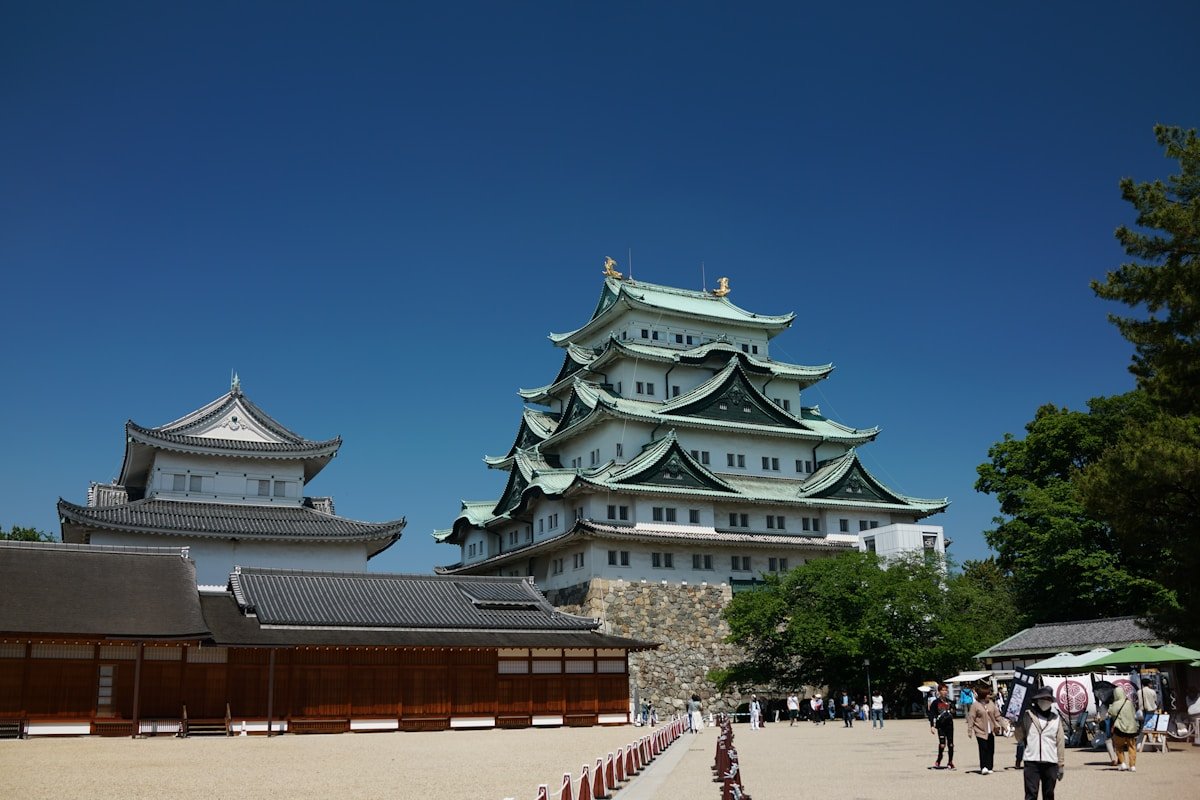
Nagoya rewards visitors who look past its industrial reputation. The city has a genuine castle, one of Japan’s most important shrines, a surprisingly good museum network, and a food culture that is arguably more distinctive than most cities on the standard tourist circuit. Here is a full breakdown of the best things to do.
1. Visit Nagoya Castle
Nagoya Castle is the city’s defining landmark and a full morning’s worth of exploration. The castle grounds include the main keep, the Honmaru Palace, and the wide moat and stone walls that give a sense of the original 17th-century fortification.
The Honmaru Palace is the restored shogunal residence that once stood alongside the main keep. Destroyed in 1945, the palace’s interior has been painstakingly reconstructed using traditional materials and techniques - the decorative paintings on the sliding screen doors (fusuma) reproduce the original Kano school artwork documented before the war. The craftwork is worth viewing closely.
Look for the kinshachi golden dolphins in the interior exhibition - these are the originals removed from the roof for preservation. The roof replicas you see from outside are the current installed versions.
Entry: ¥500. Open daily 09:00–16:30 (last entry 16:00). Closed December 29–31. Nearest station: Shiyakusho (Meijo subway line).
2. Explore Atsuta Shrine
Atsuta Jingu deserves more time than most visitors allocate. The forested grounds are a functioning place of worship that sees millions of local Japanese visitors annually - the New Year hatsumode visit to Atsuta is one of the largest in the country, drawing over 2 million people in the first three days of January.
Outside the shrine buildings (which are off-limits to non-worshippers), the grounds contain a network of smaller sub-shrines, stone lanterns along wooded paths, and one camphor tree estimated to be over 1,000 years old. Allow 45–60 minutes.
The shrine’s nearby restaurant, Miyuki, serves a traditional hitsumabushi meal (eel rice, three ways) at lunchtime. Budget ¥3,000–4,000 per person.
3. Toyota Commemorative Museum of Industry and Technology
For anyone interested in manufacturing history or engineering, this is one of the most interesting museums in Japan. The textile machinery hall - where Sakichi Toyoda’s automatic looms are demonstrated live - is particularly impressive.
What makes it work is the cause-and-effect logic of the displays: you see exactly how mechanical problem-solving in textiles translated into the systematic manufacturing principles that define Toyota to this day. The automobile section runs from 1930s prototypes through to modern production vehicles.
Entry: ¥500. Open 09:30–17:00, closed Mondays. Budget 2 hours. Located a 15-minute walk from Nagoya Station (Meitetsu side) near Noritake-no-Mori garden.
4. See the SCMAGLEV and Railway Park
Japan Railways’ museum in Nagoya is one of the better transport museums in the country. The maglev test vehicle on display is unique - there is no equivalent exhibit in Tokyo - and the Shinkansen history is more comprehensively documented here than at other JR museums.
The W7 Series Shinkansen on display is the same type used on the Hokuriku Shinkansen (Kanazawa to Tokyo), displayed at full scale with access to the interior. Adjacent displays cover the history of steam locomotives and postwar reconstruction of the rail network.
Entry: ¥1,000. Located at the end of the Aonami Line from Nagoya Station (30 minutes, ¥350 each way). Open 10:00–17:30, closed Tuesdays.
5. Explore Osu Kannon and the Shopping Arcades
Osu is the most interesting neighbourhood for aimless exploration in Nagoya. The shopping arcades run for several blocks around the Osu Kannon temple and have a reputation for:
- Electronics and retro gaming: a concentration of shops selling used electronics, vintage consoles, camera equipment, and components that rivals smaller sections of Tokyo’s Akihabara
- Second-hand fashion: vintage clothing stores, streetwear, and imported brands at lower prices than Tokyo equivalents
- Street food: taiyaki, korokke (croquettes), skewered snacks, and fresh-made sweets sold from arcade stalls
The temple itself is worth a brief visit - the main hall is accessible and the temple cat occasionally appears.
Osu is busiest on weekends; a Saturday afternoon has the most market energy. Weekday visits are calmer and easier for the electronics shops. Nearest station: Osu Kannon or Kamimaezu (Meijo/Tsurumai subway lines).
6. Eat Nagoya-Meshi
Nagoya’s regional food culture has a name - Nagoya-meshi - and six or seven dishes that every local can list. The main ones worth seeking out:
Misokatsu: tonkatsu (breaded pork cutlet) served with hatcho red miso sauce. Yabaton Yaba-cho main branch is the standard reference; expect ¥1,500–2,000 for a set with rice and miso soup. The sauce is earthy and thick - nothing like standard katsu sauce.
Hitsumabushi: grilled eel on rice, eaten in three portions. First portion plain, second with wasabi and spring onion, third with dashi broth poured over. Atsuta Horaiken near Atsuta Shrine is the famous option (lunch queue 60–90 minutes; dinner reservations recommended). Budget ¥4,000–5,500 per person.
Miso nikomi udon: thick udon in a reduced red miso broth, served in a clay pot. Best in autumn and winter but available year-round. Yamamotoya Honten is the established chain. Around ¥1,200 per bowl.
Tebasaki: small, crispy chicken wings with a sweet-soy glaze and sesame finish. Bar snack more than main course. Yamachan has branches across the city; a plate of 10 costs around ¥700.
Kishimen: flat, wide wheat noodles served in a clear broth. A milder dish than the miso-heavy specialties - good as a lighter lunch option.
7. Walk the Sakae District
Sakae is Nagoya’s entertainment and retail centre, roughly 15 minutes by subway from Nagoya Station. The area has department stores (Matsuzakaya and Mitsukoshi both have large branches), underground shopping malls, rooftop bars, and the bulk of the city’s evening restaurant options.
The Nagoya TV Tower in Hisaya Odori Park is open for viewing (¥1,300 for the sky deck at 90 metres, open until 22:00 most nights). The park below was redesigned in 2020 with cafes, a terrace area, and seasonal plantings - a reasonable spot for a break between areas.
8. Day Trip: Inuyama Castle
Inuyama Castle is 30 minutes from Nagoya by Meitetsu Main Line (¥570 from Meitetsu Nagoya Station, not covered by JR Pass). It is one of Japan’s 12 original castles - the actual Edo-period structure, not a postwar reconstruction - and sits above the Kiso River on a rock bluff with views of the valley below.
The castle is privately owned by the Naruse family, who have held it since the mid-17th century. This makes it unusual in Japan, where most castles passed to local government control. Entry ¥1,000. The surrounding old town has a preserved merchant street (Honmachi) with sake breweries, tea houses, and craft shops.
Plan 3–4 hours for the castle and town, making it a comfortable half-day from Nagoya.
9. Day Trip: Gifu and Cormorant Fishing
Gifu is 45 minutes from Nagoya by JR Tokaido Line (¥480, covered by JR Pass). Gifu Castle sits on Mount Kinka above the city, accessible by ropeway (¥1,100 return). The castle is a 1956 concrete reconstruction but the site views across the Nagara River valley are good.
The main reason to visit Gifu from May through October is ukai - traditional cormorant fishing on the Nagara River. Fishermen work at night by torchlight, using trained cormorants on leashes to catch ayu sweetfish. The birds’ throat rings prevent them from swallowing their catch; the fisherman periodically retrieves the fish from the bird’s beak.
Viewing boats depart from Nagara River embankments in the evening; book through Gifu City Tourism or via the main Gifu River Fishing Cooperative. Tickets run ¥3,500–4,000 per person and must be arranged in advance. Sessions run mid-May through October 15, except during high water and the full moon periods.
10. Seasonal Events
Nagoya Festival (mid-October): the city’s largest annual event, featuring a historical procession through the city centre. The main parade recreates the armies of three of Japan’s great warlords - Oda Nobunaga, Toyotomi Hideyoshi, and Tokugawa Ieyasu - all of whom have strong connections to the Nagoya region. Participants in period costume march from the castle through central Nagoya.
Nagoya Port Fireworks (August): a major summer fireworks display over Nagoya Port, typically held on the last Saturday of August. Access via the Port of Nagoya Public Aquarium area; crowds arrive from late afternoon.
Atsuta Festival (June 5): one of the three major festivals at Atsuta Shrine, featuring traditional noh performances, kagura dancing, and flower-arrangement displays on the shrine grounds. Free to observe.
Book ahead for popular experiences: Tours and activities in Nagoya include guided options, skip-the-line tickets, and immersive cultural experiences.
Practical Details
Getting around Nagoya: the subway network covers all major sights. The Meijo Line (purple) serves the castle and Sakae. The Meitetsu and Kintetsu private railway lines serve Inuyama and the wider region respectively. A day pass (¥870) is worth buying if you plan more than three subway journeys.
Tourist information: Nagoya Tourism Bureau has an information counter in Nagoya Station (central concourse, open 09:00–19:00). English-language maps and restaurant guides are available.
Safety: Nagoya is straightforward for solo travellers and families. The main caution is navigating the Nagoya Station underground complex, which is one of the largest in Japan - allow extra time on arrival.
Where to stay: Search hotels in Nagoya on Booking.com
See also: Nagoya travel guide · Where to stay in Nagoya · Best restaurants in Nagoya · Day trips from Nagoya · Chubu region guide