Nagoya is less celebrated as a travel base than Tokyo or Osaka, but its position at the intersection of Japan’s central mountain corridor and its Pacific coastline puts it within reach of some of the country’s most distinctive destinations. The Hida mountains to the north hold Japan’s best-preserved mountain towns and the UNESCO farmhouse village of Shirakawa-go; the Ise Peninsula to the southeast contains Japan’s most sacred Shinto shrine complex; and the Kiso River valley just 30 minutes away holds one of Japan’s original surviving feudal castles.
1. Takayama - Edo-Period Old Town in the Mountains
Travel time: 2 hours 25 minutes by JR Limited Express Hida from Nagoya Station (¥5,510 with reserved seat; covered by JR Pass) Best for: Historic streetscapes, sake breweries, mountain food Recommended time: Full day
Takayama’s Sanmachi Suji district - a preserved grid of Edo-period merchants’ houses, sake breweries, and craft shops in the Hida mountain valley - is among the most intact historic townscapes in Japan. Unlike the reconstructed historic districts at Kyoto or Nara, Takayama’s buildings are genuinely lived-in and functioning: breweries still produce sake behind their traditional facades, and local shops sell Hida beef skewers, mitarashi dango, and handmade crafts rather than mass-market souvenirs.
Sanmachi Suji (free) Three parallel east–west lanes lined with dark lattice-fronted merchant houses, sake shops, and miso breweries. The wooden facades with hanging sugi-dama (cedar balls indicating sake production) and paper lanterns have changed little in 200 years. Most shops and breweries open at 9am; the lanes are quieter before 10am. Free to walk; individual sake tastings at the breweries typically ¥300–¥500 per sample.
Sake tasting Three breweries in the Sanmachi area welcome visitors: Funasaka Shuzo, Hirase Shuzo, and Ota Shuzo. Each offers small pours of their current seasonal sake (from ¥300). Hida sake tends toward drier, cleaner profiles suited to mountain water - different in character from Kansai sake styles. Purchase bottles directly for ¥1,200–¥3,000.
Hida no Sato (Hida Folk Village) (¥700) A large open-air museum 1km from the town centre with approximately 30 relocated Hida gassho-zukuri farmhouses dating from the 17th to 19th centuries, arranged on a hillside overlooking the mountains. The farmhouses are walkable through; craft demonstrations take place inside several of them. This is the best place to understand the gassho-zukuri (steep thatched roof) construction before visiting Shirakawa-go. Allow 1.5–2 hours.
Hida Beef The Hida region’s wagyu cattle produce well-marbled beef at more accessible prices than Kobe - typically ¥1,500–¥3,000 for a beef skewer or small set meal, versus ¥5,000–¥15,000 for a Kobe beef restaurant meal. The stalls along the Jinya-mae area sell Hida beef nigiri (¥700) and grilled skewers (¥800) as street food.
Jinya-mae morning market (6am–noon) A small but atmospheric market in front of the former government office (Takayama Jinya) with local farmers and craft sellers. Most interesting for seasonal vegetables, pickled items, and handmade products rather than food.
Guided tours: GetYourGuide lists day tours from Nagoya to Takayama combining the old town with a Shirakawa-go visit, typically running 10–11 hours from ¥15,000 per person.
2. Shirakawa-go - UNESCO Thatched Farmhouse Village
Travel time: 2h 25m to Takayama by JR Hida, then 50 minutes by bus to Shirakawa-go (¥2,600 return from Takayama); or 2h 45m by highway bus direct from Nagoya (¥3,900 one-way) Best for: UNESCO heritage, mountain village atmosphere, winter snow Recommended time: 2–3 hours in the village (best combined with Takayama)
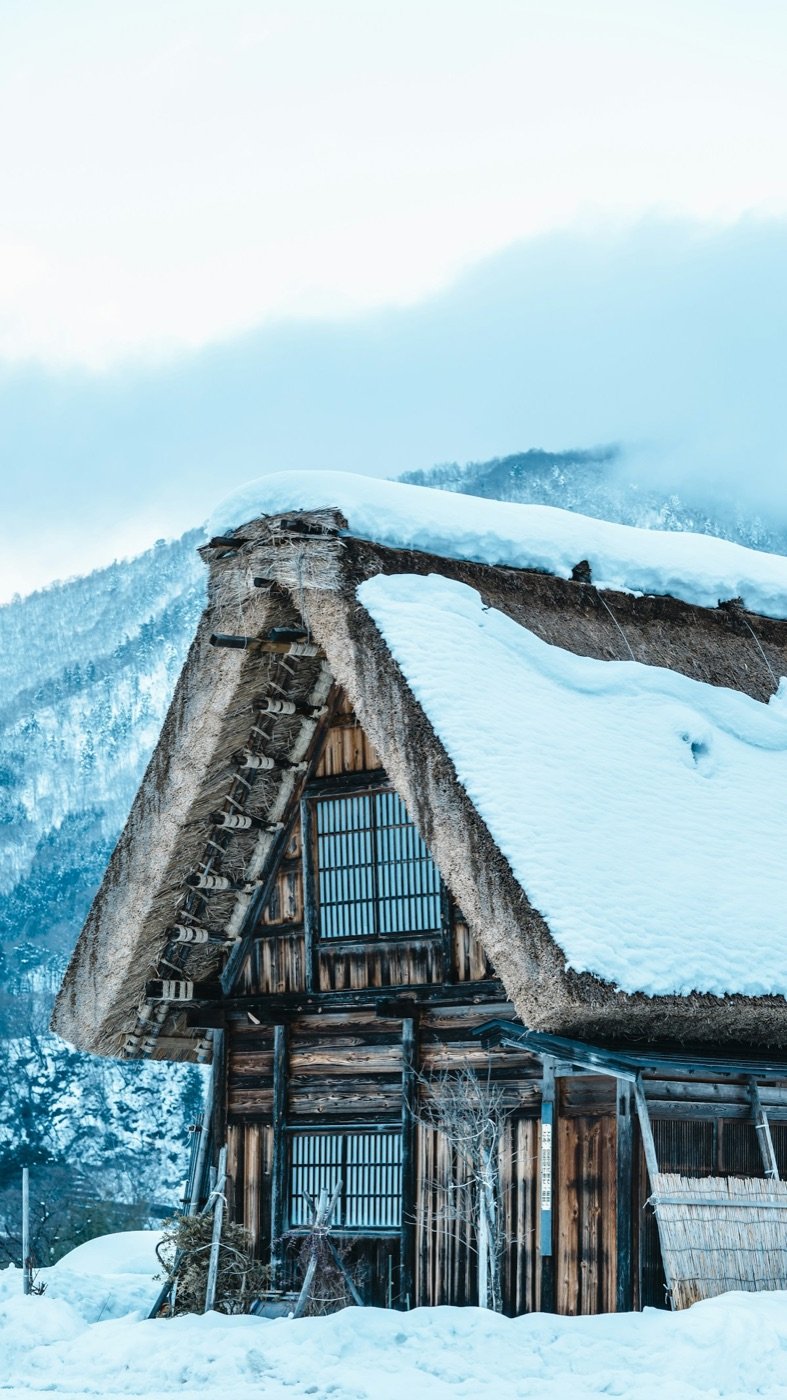
Shirakawa-go is a UNESCO World Heritage village in the Shogawa River valley, famous for its gassho-zukuri farmhouses - enormous thatched-roof structures built at steep angles to shed the region’s heavy mountain snowfall. The village of Ogimachi contains approximately 110 such farmhouses, around 20 of which are open to visitors.
Ogimachi village (free to walk; individual farmhouse entry ¥300–¥400 each) The compact village is walkable in 1–2 hours. The most visited farmhouse is Wada-ke (¥300), a particularly large example with tools and farm equipment displayed on three floors. The Doburoku Festival Preservation Hall (free) explains the village’s traditional sake-making custom.
Shiroyama viewpoint A 10-minute uphill walk from the village edge provides the panoramic view of the thatched roofs and farmhouses that appears on most Shirakawa-go photographs. Most effective in winter (December–February) when the roofs are covered in snow - the contrast of white roofs against the dark mountains and the mist in the valley is the defining image. The Shirakawa-go Gassho Preservation Society website (en.shirakawa-go.gr.jp) lists the snow forecast.
Practical note: Shirakawa-go is small enough that 2–3 hours covers the main sights. The village becomes very crowded at midday from tour buses - arriving early (before 10am) or late afternoon (after 3pm) makes the experience significantly better. The direct highway bus from Nagoya (JR Highway Bus, advance booking recommended) is the most convenient transport; check the JR Bus Tokai website for timetables and reservations.
3. Inuyama - Oldest Original Castle in Japan
Travel time: 30 minutes by Meitetsu Inuyama Line from Nagoya Station (¥680 one-way, not covered by JR Pass) Best for: History, easy half-day, castle, riverside scenery Recommended time: Half day
Inuyama is the easiest and most rewarding short day trip from Nagoya - close enough for a relaxed morning departure, with a castle that outranks almost any other in Japan for authentic historical fabric.
Inuyama Castle (¥550) Built in 1537 and one of only five castles in Japan designated a National Treasure, Inuyama’s four-storey wooden main tower has survived intact. The castle stands on a 85-metre cliff above the Kiso River, providing views up and down the gorge from the narrow exterior walkway at the top of the tower. Steep, narrow original staircases inside reward those comfortable with heights. Allow 45 minutes.
Jonai-dori The preserved merchant street below the castle gate has been sensitively restored and contains several craft shops, a sake brewery (Kagatome Shuzo, founded 1848, tastings available), and traditional sweet shops selling kuri-manju (chestnut cakes) and miso-based confectionery. A good lunch stop - set meals around ¥1,200–¥1,800.
Ukai (Cormorant Fishing) From June to October each year, Inuyama hosts traditional ukai on the Kiso River - a form of fishing in which trained cormorants (birds wearing neck rings that prevent them swallowing their catch) dive for sweetfish. Evening boat excursions (from ¥3,500–¥5,500 per person) observe the fishermen at work from the river. Advance booking is required; contact the Inuyama Ukai Tourist Association or book via the Inuyama City tourism website.
Meiji Mura (¥2,000) An open-air architectural museum 15 minutes by bus from Inuyama, with over 60 Meiji-era (1868–1912) Western-influenced buildings relocated from across Japan - including the original lobby of Frank Lloyd Wright’s Imperial Hotel from Tokyo. A full visit takes 3–4 hours; it is best combined with a shorter visit to the castle for a full day rather than attempting both with a half-day.
4. Ise - Japan’s Most Sacred Shinto Shrine Complex
Travel time: 1h 30m by Kintetsu Limited Express from Nagoya to Iseshi (¥3,340 one-way), or about 2 hours by JR with a transfer at Taki (¥1,890, JR Pass covered for the JR portion) Best for: Religious heritage, traditional architecture, seafood Recommended time: Full day
Ise Jingu is the most sacred site in the Shinto religion - the principal shrine enshrining Amaterasu, the sun goddess and ancestral deity of the Imperial family. The shrine complex is not a museum or tourist attraction in the conventional sense; the inner sanctuaries are not visually accessible to the public, and the atmosphere of the visit is defined by the ancient cedar forest and the sense of an active living religious site.
Geku (Outer Shrine) (free) A 15-minute walk from Iseshi Station. The shrine is dedicated to Toyouke-no-Omikami, the deity of food and agriculture, and has its own substantial forested precinct. Allow 30–40 minutes. The main sanctuaries are behind low wooden fences - you can see the thatched rooflines but not the interiors.
Naiku (Inner Shrine) (free) The inner shrine is 6km from Geku - reached by bus from the Geku bus terminal (¥440 one-way). The approach crosses the Uji Bridge over the Isuzu River and leads through ancient sugi cedar forest to the Kagami-ike (Mirror Pond) and the main sanctuary. The most sacred precinct, housing the sacred mirror (one of Japan’s three imperial regalia), is visible only from outside the outer fence. Allow 45–60 minutes.
Oharai-machi The traditional shopping street leading to the Naiku entrance is approximately 800 metres long and is one of the most satisfying historic commercial streets in Japan - low eaves, wooden facades, and shops selling ise-ebi (Ise lobster), akafuku mochi (pink bean-paste rice cakes, the signature sweet of Ise, ¥180 each), and pearl products. Okage Yokocho (a sub-precinct within Oharai-machi) has better quality shops and food stalls. Budget ¥1,500–¥3,000 for a seafood lunch.
Sea of Japan seafood: The Ise-Shima peninsula produces the majority of Japan’s cultivated pearls (Mikimoto founded his pearl cultivation business here in 1893) and has some of Japan’s best seafood - particularly ise-ebi (spiny lobster), abalone, and oysters. Seafood set lunches in Oharai-machi run ¥2,500–¥5,000 per person.
5. Nagiso (Magome and Tsumago) - Edo Post Towns on the Nakasendo
Travel time: 1h 40m by JR Chuo Line from Nagoya to Nagiso, then 10-minute bus to Tsumago (¥1,690 one-way; JR Pass covered) Best for: Historic walking route, forest scenery, slow travel Recommended time: Full day (Tsumago to Magome walk, 8km, 3 hours)
The Nakasendo was one of the five major highways of Edo-period Japan, connecting Edo (Tokyo) and Kyoto through the Kiso Valley mountains. The stretch between Magome and Tsumago - 8 kilometres of stone-paved path through cedar forest and past traditional farmhouses - is the most preserved section of any Edo-period road in Japan.
Tsumago is the better-preserved of the two towns, with a strict ban on advertising signs, overhead power lines, and modern building facades visible from the main street. The result is an almost entirely intact Edo streetscape. The Waki-honjin inn (¥800) was reserved for lower-ranking samurai during the Edo period and is open as a museum. Allow 1.5 hours in Tsumago.
Magome to Tsumago walk The trail follows a ridge through mixed forest with mountain views, crossing several streams and passing a waterfall. The walk (8km, 3 hours at a relaxed pace) goes mostly downhill from Magome to Tsumago (walking south to north). A bag forwarding service (¥1,000 per bag) transfers luggage between the towns. Walk Tsumago to Magome (uphill) if returning by bus from Magome - the last bus from Tsumago is earlier.
Day Trip Comparison
| Destination | Travel Time | Cost Each Way | Best For | Time Needed |
|---|---|---|---|---|
| Takayama | 2h 25m | ¥5,510 (JR Hida) | Historic sake town, mountain food | Full day |
| Shirakawa-go | ~3h 15m (via Takayama) | ¥8,110 combined | UNESCO thatched village | 2–3 hours (with Takayama) |
| Inuyama | 30 mins | ¥680 (Meitetsu) | Original 1537 castle | Half day |
| Ise | 1h 30m | ¥3,340 (Kintetsu) | Most sacred Shinto shrine | Full day |
| Tsumago/Magome | 1h 40m | ¥1,690 (JR) | Nakasendo historic walk | Full day |
Prices are approximate as of 2026. JR Pass covers Takayama (Hida express), Ise (partial JR route), and Tsumago (Chuo Line).
Make the most of your time around Nagoya: Guided day trips from Nagoya handle the logistics - transport, guide, and timing - so you can focus on the experience. For airport arrivals and departures, Kiwitaxi offers fixed-price airport transfers with no meter surprises.
Guided Day Tours from Nagoya
Independent travel is the norm for most destinations above - Inuyama and Ise in particular are easy to navigate independently. For Shirakawa-go and the Takayama + Shirakawa-go combination, a guided tour removes the transport complexity of buses between mountain towns. GetYourGuide lists Nagoya-based tours to the Gassho-zukuri farmhouse villages, the Takayama old town, and Ise Shrine from approximately ¥15,000–¥22,000 per person for a full-day tour including transport.
Where to stay: Search hotels in Nagoya on Booking.com
See also: Nagoya travel guide · Things to do in Nagoya · Where to stay in Nagoya · Takayama travel guide · Chubu region guide