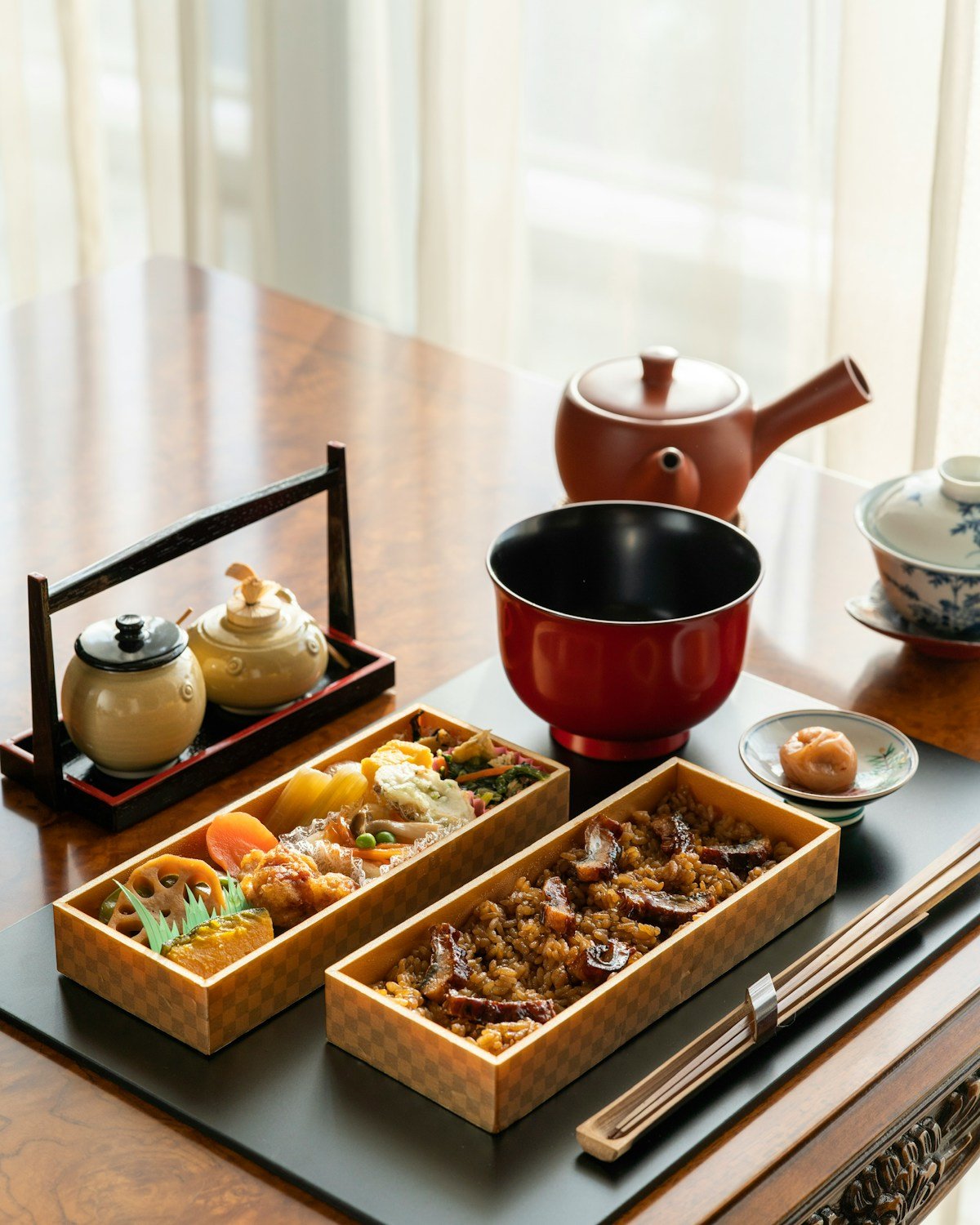
Nagoya has the most distinctive regional food culture of any major Japanese city. The term nagoya meshi (Nagoya food) covers a specific set of dishes that exist because of one ingredient: hatcho miso, a deeply fermented red miso paste produced in the nearby Okazaki region for over 600 years. This miso drives the flavour profile of nearly every local speciality - giving them a concentrated, earthy sweetness unlike anything produced with standard miso.
The city is often overlooked by visitors as a transit point between Tokyo and Osaka, but food-focused travellers who stop here eat exceptionally well at reasonable prices. For more on what to see and do, see the Nagoya travel guide.
Hitsumabushi
The most celebrated Nagoya dish and the one that requires the most advance thought. Hitsumabushi is kabayaki eel - eel filleted, grilled over charcoal, lacquered with sweet soy and mirin, then served over steamed rice in a round wooden ohitsu pot.
The ritual of eating it in three ways is central: portion 1 straight from the pot (eel and rice, plain), portion 2 mixed with condiments (wasabi, nori, spring onion, sesame), portion 3 as ochazuke with green tea or dashi poured over. The three methods reveal different aspects of the eel’s texture and the sauce.
Atsuta Horaiken (Jingunishi branch): The single most famous hitsumabushi restaurant in the city, operating since 1873 and located near Atsuta Shrine. Hitsumabushi set approximately ¥4,800–¥5,800 (as of 2026). Weekend queues regularly reach 60–90 minutes; arrive at opening time (11:30) for the shortest wait. The Jingunishi main branch and a second branch inside Meitetsu Matsuzakaya department store offer shorter queues.
Hitsumabushi Bincho: A branch in Nagoya Station’s Taiko-dori exit food floor. Hitsumabushi from approximately ¥4,200. More accessible than Atsuta Horaiken, still high quality. Reservation not accepted - queue from the time it opens.
Note on eel season: Eel is available year-round in Japan, but the traditional peak is doyo no ushi no hi (a day in midsummer, usually late July), when consumption spikes. Outside peak season, supplies are stable and restaurant quality is consistent.
Miso Katsu
A panko-breaded pork cutlet cooked in the tonkatsu style but served in a thick, dark hatcho miso sauce rather than the standard pale Worcestershire-based sauce. The result is more intense and substantially more satisfying in cold weather.
Yabaton (矢場とん): The most famous miso katsu chain in Nagoya, with the main restaurant near Yaba-cho subway station. A full miso katsu set (rice, shredded cabbage, miso soup) from approximately ¥1,100–¥1,600 depending on the size of the cutlet. The sauce is available separately as a takeaway product - many visitors buy it as a souvenir.
Katsuya and department store food halls: A secondary tier of miso katsu restaurants is available at lower price points (¥900–¥1,200) in basement food halls throughout the city.
Miso Nikomi Udon
Thick, handmade udon noodles simmered in a claypot with hatcho miso broth, chicken, fish cake, and a raw egg cracked in at the end. Unlike normal udon soup, this broth is intensely flavoured and the noodles are deliberately undercooked to remain firm (they continue cooking in the clay pot at the table). The pot arrives bubbling and is meant to be eaten while still boiling.
Yamagataya Honten (山雀屋本店): One of the most established miso nikomi udon specialists in the city. A full clay pot costs approximately ¥1,200–¥1,600. Popular with local office workers at lunch; queues manageable before noon.
Kakuozan area restaurants: Several independent miso nikomi udon specialists operate near the Kakuozan neighbourhood (Meijo Line), which also has good cafes and a more local-residential atmosphere.
Tebasaki (Chicken Wings)
Nagoya tebasaki are whole chicken wings - not split - marinated, fried, and coated in a sweet-spicy seasoning. The technique is lighter than Korean fried chicken (no thick batter) and the flavour is built on the sugar-soy-chilli glaze applied after frying. Eaten bone-in, with the technique of twisting the bones to extract maximum meat.
Furaibo (風来坊): The originator of the Nagoya tebasaki style, founded in 1963. Wings approximately ¥200–¥250 each; a satisfying portion is 5–8 wings. Multiple locations in the city centre.
Sekai no Yamachan (世界の山ちゃん): A competing chain that claims the title of “most famous tebasaki restaurant in Nagoya.” Slightly spicier than Furaibo. Wings from ¥240 each. The debate between partisans of Furaibo and Yamachan is a genuine local conversation.
Ogura Toast
A Nagoya-specific breakfast culture: thick toast topped with sweet red bean (ogura an) paste and butter, served alongside a glass of hot coffee. This combination - coffee shop toast with red bean - is unique to Nagoya’s morning culture and exists because Nagoya coffee shops historically provided free toast with a coffee purchase, eventually elevating the food into a tradition of its own.
Widely available at regional coffee chains (Komeda Coffee, Sugakiya). Komeda’s signature is the ogura toast plus a soft-boiled egg, for approximately ¥450 with coffee. Open from early morning.
See Nagoya through its food: Food and cultural tours in Nagoya often include market visits, tastings, and dishes you’d never find independently.
Budget Reference (as of 2026)
| Dish | Venue | Approximate cost |
|---|---|---|
| Hitsumabushi set | Atsuta Horaiken / Bincho | ¥4,200–¥5,800 |
| Miso katsu set | Yabaton | ¥1,100–¥1,600 |
| Miso nikomi udon | Yamagataya or local | ¥1,200–¥1,600 |
| Tebasaki wings (5 pieces) | Furaibo or Yamachan | ¥1,000–¥1,300 |
| Ogura toast + coffee | Komeda | ¥450–¥600 |
| Izakaya dinner | Sakae or Fushimi | ¥2,500–¥4,000 |
Where to stay: Search hotels in Nagoya on Booking.com
See also: Nagoya travel guide · Best restaurants in Nagoya · Things to do in Nagoya · Chubu region guide