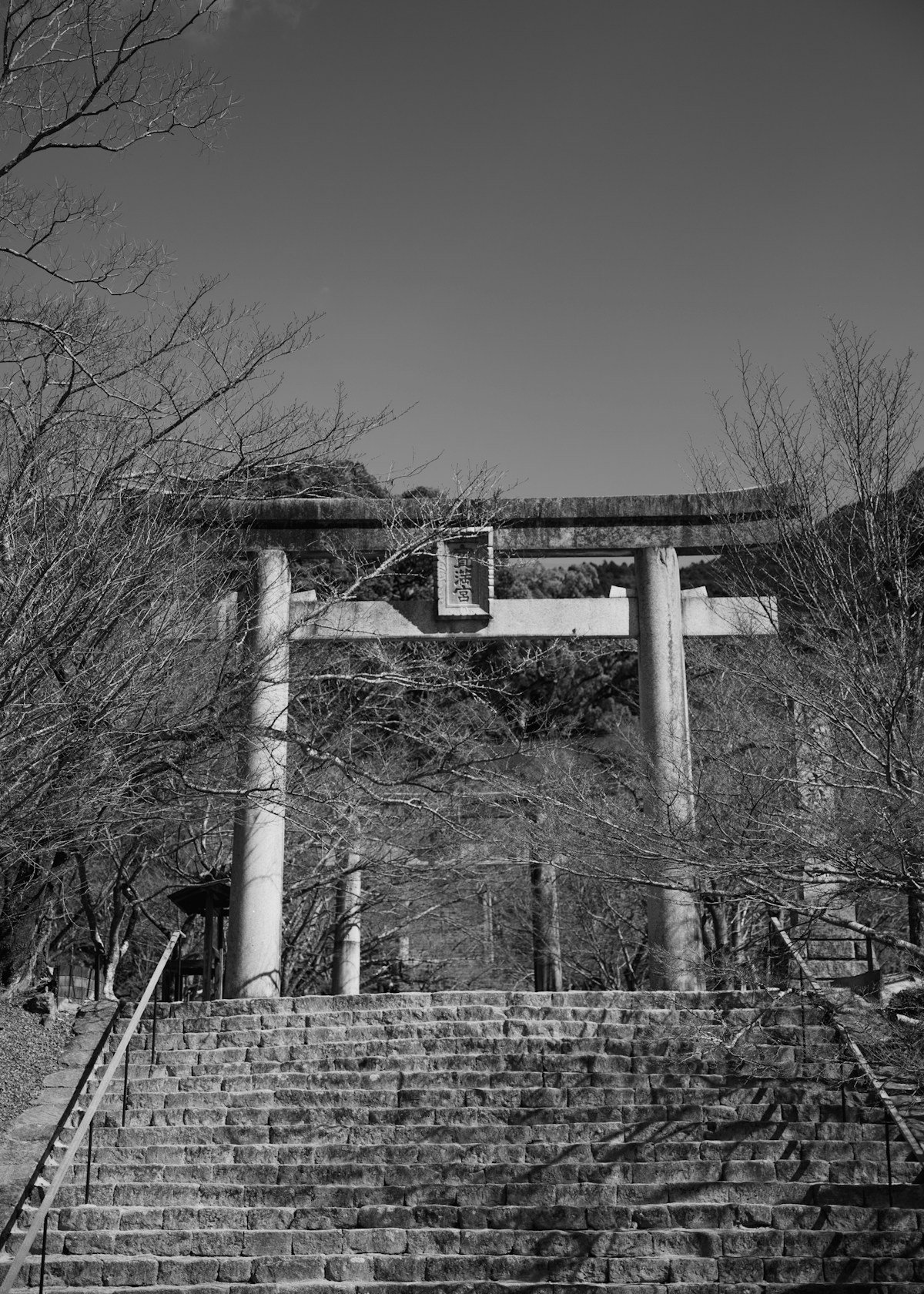
Fukuoka’s location - at the northern tip of Kyushu, near the Kanmon Strait between Kyushu and Honshu, and closer to Seoul than to Tokyo - makes it an exceptional base for day trips. Kyushu’s main attractions are well connected by Shinkansen, and the ferries to South Korea are a genuinely viable option. The city’s compactness means you can leave central Fukuoka at 8:30 and be at a different destination by 10:00 in most cases.
Here are the best day trips, organised by distance and complexity.
1. Dazaifu - Shrine, Plum Blossoms, and National Museum
Travel time: 25 minutes from Tenjin (Nishitetsu Dazaifu Line, ¥410) or 35 minutes from Hakata (Nishitetsu from Futsukaichi, ¥410) Best for: History, shrine atmosphere, national museum Recommended time: Half day to full day
Dazaifu Tenmangu is one of Japan’s most visited shrines - dedicated to Sugawara no Michizane, the deified patron of learning and scholarship, who died in Dazaifu in 903 CE. The shrine is among the most important Tenjin shrines in the country, receiving roughly 9 million visitors annually. Exam season (January to March) brings processions of students seeking divine favour before entrance examinations.
The main hall (free) sits at the end of Sando approach street (lined with souvenir shops and vendors selling umegae mochi - rice cakes with red bean filling, approximately ¥150 each). The three arched bridges in front of the main hall represent past, present, and future; visitors cross all three in sequence.
Kyushu National Museum (¥700) - opened in 2005, this is the fourth national museum in Japan and is constructed into the hillside behind the shrine. The collection covers the cultural exchange between Japan and the rest of Asia across 5,000 years. Allow 1.5–2 hours for the permanent collection.
Komyozenji Temple (¥200) - a short walk from the shrine, this Zen temple has a stone-and-moss dry landscape garden (karesansui) that is one of the finest in Kyushu.
Practical note: Nishitetsu trains run directly between Tenjin-Omuta Line and Dazaifu Line. Buy an Ume-ga-eno transfer ticket (¥620 from Tenjin return) at the ticket machine.
2. Itoshima - Coastal Japan at Its Least Crowded
Travel time: 35–45 minutes from Hakata by JR Chikuhi Line (¥560 to Chikuzen-Maebara) Best for: Beaches, seafood, photography, outdoor dining Recommended time: Half day in summer; full day with oyster lunch October to March
The Itoshima Peninsula is Fukuoka’s coastal escape: a stretch of sandy beaches, rice paddies meeting the sea, and a distinctive torii gate standing in the water at Sakurai Futamigaura. It is sufficiently off the main tourist circuit that you will encounter more local surfers and weekend picnickers than tour groups.
Sakurai Futamigaura - The torii gate at this beach is one of the most photographed spots in Kyushu. Two rocks offshore (Meoto Iwa, “married couple rocks”) are linked by a shimenawa rope. Best photographed at sunrise or in the late afternoon light.
Winter oyster huts (December to March) - During oyster season, temporary corrugated-metal huts open along the Itoshima coast, grilling fresh oysters directly on outdoor coals. Pricing is typically ¥1,500–¥2,500 for an all-you-can-eat session over a specific time window. Lines form on clear winter weekends; arrive by 10:30 or 11:00 to secure a spot.
Itoshima Shinsen-en Farm (free) - A roadside farm selling fresh local vegetables and organic products. Popular with Fukuoka residents doing weekend shopping.
Getting around Itoshima by JR train covers the coastline reasonably well, but a rental car or bicycle gives significantly more flexibility for the scattered beaches and cafes.
3. Nanzoin Temple - The World’s Largest Bronze Reclining Buddha
Travel time: 35 minutes from Hakata (JR Fukuhoku Yutaka Line to Kido-Nanzoin-mae, ¥350) Best for: A different kind of temple experience, photography Recommended time: 2–3 hours
Nanzoin’s reclining Buddha is, at 41 metres in length and 11 metres in height, the largest bronze statue in the world. The scale only fully registers when you stand beside it - it is genuinely large enough to feel disorienting. Entry to the grounds is free; an inner hall with smaller Buddhist figures costs ¥200.
The temple grounds extend up a hillside with further statues, a small waterfall, and walking paths through cedar forest. The atmosphere is considerably quieter than major city temples; Nanzoin serves a local community and most visitors are Japanese pilgrims.
4. Nagasaki - Japan’s Most Atmospheric Port City
Travel time: Approximately 1 hour 25 minutes via Nishikyushu Shinkansen (Hakata to Shin-Tosu ¥1,080, Shin-Tosu to Nagasaki by shinkansen ¥3,080; total around ¥4,160) Best for: History, atomic bomb sites, unique architecture, champon noodles Recommended time: Day trip possible but overnight strongly recommended
Nagasaki requires some planning as a day trip - the journey takes over an hour each way, and the main sites (Atomic Bomb Museum, Hypocenter Park, Glover Garden, Dejima, Chinatown) are spread across steep hills connected by tram. A 9:00 departure from Hakata allows about 7 hours in the city before a 17:00 departure to return.
Minimum day trip itinerary: Atomic Bomb Museum and adjacent Peace Park (allow 2 hours total; museum ¥200), Dejima historical Dutch trading post (¥520, 45 minutes), Nagasaki Chinatown lunch (champon noodles ¥900–¥1,400 at Kouzanrou or Shikairō). Glover Garden (¥620) requires more time and ideally a separate day.
See our Nagasaki travel guide for the full picture.
5. Beppu - Japan’s Hot Spring Capital
Travel time: Approximately 1 hour 50 minutes from Hakata by Sonic Limited Express (¥5,940 reserved) or 2h15m on slower services Best for: Onsen experience, the distinctive multicoloured “hell” hot springs Recommended time: Full day or overnight
Beppu is the hot spring capital of Japan - 8 distinctive thermal areas (the “Eight Hells of Beppu”), each with different mineral content producing waters of cobalt blue, blood red, grey mud, or pale green. The Chinoike Jigoku (Blood Pond Hell) and Tatsumaki Jigoku (Waterspout Hell) are most dramatic.
Beppu Jigoku Meguri (Hell Tour): Tickets for 6 of the main hell springs cost approximately ¥2,000 combined (individual entries ¥400–¥600). Allow 3–4 hours to visit them all.
Onsen bathing: Beppu has hundreds of public onsen. The Takegawara onsen, a historic wooden bathhouse from 1879 (¥100 for basic bath, ¥1,500 for sand burial), is the most atmospheric. Sand onsen (sunaburo) - where attendants bury you in naturally heated sand - is unique to Beppu.
6. Kumamoto - Castle and Black Bear
Travel time: 52 minutes from Hakata by Shinkansen (¥4,810 for Nozomi reserved, or ¥3,950 for Sakura) Best for: Castle, local food (karashi renkon, basashi), relaxed city Recommended time: Half day or full day
Kumamoto Castle is one of Japan’s great castles - a large black-walled fortress on a stone base, currently undergoing post-earthquake restoration but still visitable from partial areas. Entry ¥800. The castle black bear mascot Kumamon is ubiquitous in the city.
Local food: Karashi renkon (lotus root stuffed with spicy mustard miso), basashi (raw horse sashimi, a local specialty served at izakaya from approximately ¥800 per portion), and Kumamoto ramen (thinner broth than Fukuoka’s tonkotsu). Horse meat is genuinely central to Kumamoto food culture - not novelty for tourists.
7. Busan, South Korea (International Day Trip)
Travel time: Approximately 3 hours by high-speed JR Kyushu Beetle or Kobee ferry from Hakata Port (¥10,000–¥15,000 each way; book in advance) Best for: International experience, different food culture, fish market Recommended time: Overnight stay strongly recommended; day trip is possible but very long
The ferry to Busan runs multiple times daily and the crossing is smooth. Bring your passport and check visa requirements for your nationality (most Western nationalities can enter South Korea visa-free).
In Busan: Jagalchi Fish Market, Gamcheon Culture Village, Haeundae Beach, Seomyeon shopping and food streets. Korean food costs significantly less than Japan: a full meal at a seafood restaurant costs approximately ¥1,500–¥2,500 equivalent.
Day-tripping requires a very early departure (07:30 ferry) and late return. An overnight stay is far more comfortable and allows you to experience the night market and seafood at the fish market in the morning.
Make the most of your time around Fukuoka: Guided day trips from Fukuoka handle the logistics - transport, guide, and timing - so you can focus on the experience. For airport arrivals and departures, Kiwitaxi offers fixed-price airport transfers with no meter surprises.
Transport Summary
| Destination | Travel Time | Approx Cost (one way) | Notes |
|---|---|---|---|
| Dazaifu | 25 min from Tenjin | ¥410 | Nishitetsu direct |
| Itoshima coast | 35–45 min | ¥560 | JR Chikuhi Line |
| Nanzoin Temple | 35 min | ¥350 | JR Fukuhoku Yutaka Line |
| Nagasaki | 1h 25m | ¥4,160 | Shinkansen via Shin-Tosu |
| Beppu | 1h 50m | ¥5,940 | Sonic Limited Express |
| Kumamoto | 52 min | ¥3,950–¥4,810 | Shinkansen |
| Busan, Korea | 3 hours | ¥10,000–¥15,000 | Ferry from Hakata Port |
All fares as of 2026 and subject to change. JR Pass covers the shinkansen segments to Nagasaki (Shin-Tosu to Nagasaki portion), Beppu, and Kumamoto.
Where to stay: Search hotels in Fukuoka on Booking.com
See also: Fukuoka travel guide · Things to do in Fukuoka · Where to stay in Fukuoka · Beppu travel guide · Fukuoka vs Osaka · Kyushu region guide