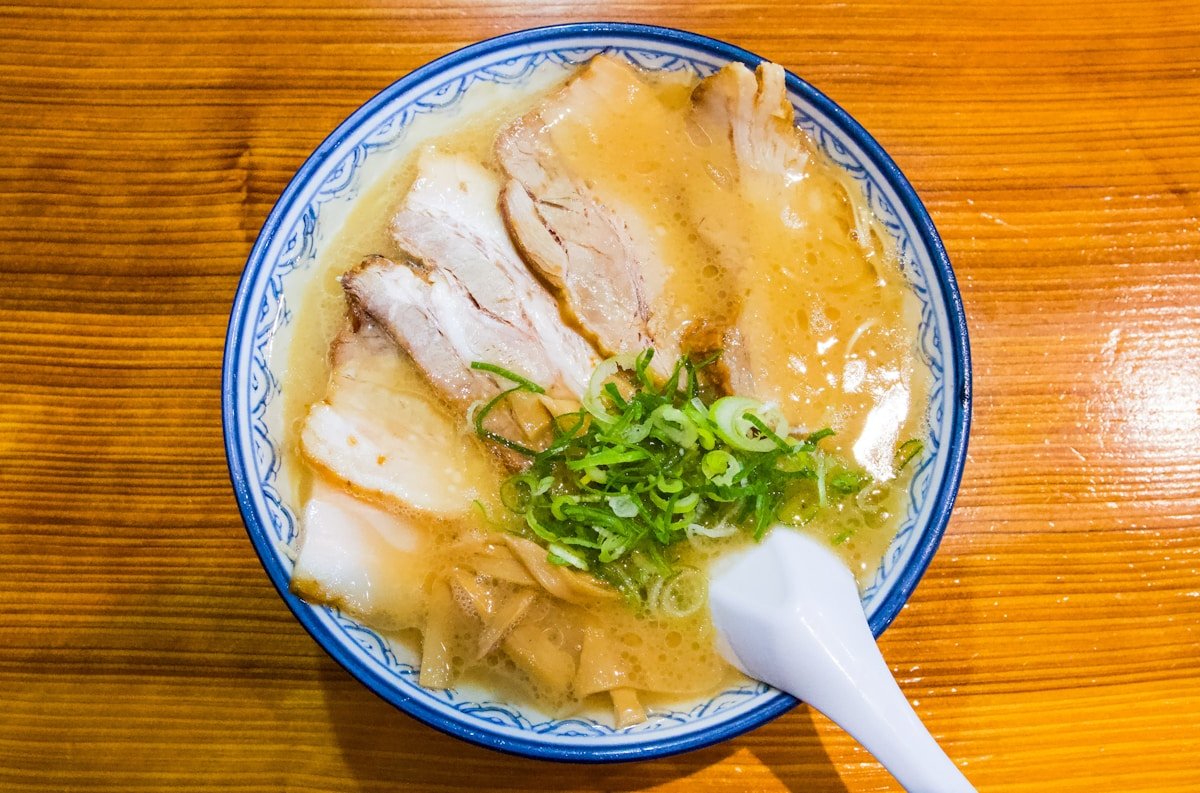
Fukuoka is widely regarded as Japan’s best food city relative to its size. The claim is difficult to argue against: it originated tonkotsu ramen (which subsequently conquered the country), maintains a functioning yatai street stall culture that disappeared from every other major Japanese city, produces mentaiko that appears on rice tables across Japan, and has a restaurant density and quality that consistently surprises first-time visitors who arrive expecting a minor regional city.
The food culture here is rooted in the Hakata district’s history as a trading port - centuries of exchange with China and Korea brought ingredient knowledge and cooking techniques that evolved into a distinct local cuisine. This guide covers the dishes Fukuoka is known for, with specific venue recommendations and current prices.
Tonkotsu Ramen
Hakata tonkotsu is the original style: pork bones boiled at a rolling boil for 12–18 hours until the broth turns opaque white and milky, with a richness and mineral depth unlike the clearer broths of Tokyo or Kyoto. Noodles are thin and straight, with a firm texture - the default order in Fukuoka is kata (firm) or harigane (extra firm). Toppings are minimalist: chashu pork, green spring onions, sesame seeds, red pickled ginger (beni shoga), and nori.
Ichiran, Nakasu - The original Ichiran location operates on Nakasu island, a short walk from the canal. The individual booth system (one customer per partitioned booth, customisation form for richness, spice level, noodle firmness, garlic, and spring onion) was invented here. The basic bowl costs approximately ¥980. Queue times vary; evening weekends see 20–40 minute waits.
Shin-Shin, Tenjin - Considered by many Fukuoka residents to be the superior ramen choice over the nationally-exported chains. Lighter and more nuanced than Ichiran’s formula, with a broth that emphasises clarity of flavour over viscosity. Bowl from approximately ¥750. Queues are common at lunch; arrive before 11:30 or after 14:00.
Ippudo, Daimyo - The other globally-known Fukuoka-born chain. The Daimyo original serves the Shiromaru (classic tonkotsu) and Akamaru (richer, with special blend miso paste) at approximately ¥890–¥1,000. This is where the chain’s global recipe was developed.
Nagahama ramen - The old wholesale fish market district of Nagahama was where tonkotsu ramen was first served to market workers before dawn. A cluster of no-frills stalls and small restaurants still operate here with bowls around ¥600–¥700 and minimal English.
Yatai Street Stalls
Yatai are the defining feature of Fukuoka’s food culture that no other Japanese city retained. These wooden counter stalls are set up from approximately 18:00 and run until 01:00 or 02:00. Each one is a small business: typically family-run, with 8–12 seats, a charcoal grill or gas burner, and a menu of 10–15 items.
Nakasu - The largest concentration (around 20 yatai) runs along the Naka River’s north bank on Nakasu island. The setting - canal water on one side, neon pachinko signs on the other - is quintessentially Fukuoka. Most stalls here specialise in ramen or yakitori.
Tenjin, Showa-dori - Around 30 yatai line the pedestrian area near Tenjin-nishi Station in the evening. This area trends slightly more varied in menu terms: alongside ramen and yakitori you will find oden, Chinese-influenced dishes, and stalls with longer menus.
What to order at a yatai: tonkotsu ramen, yakitori (grilled chicken skewers, ¥120–¥200 each), gyoza (¥500–¥700 for a plate), oden (simmered winter vegetables and fish cakes, ¥100–¥200 per item), and whatever specials the owner writes on the board. Drinks are typically Asahi or Kirin draft beer (¥500–¥600), shochu, and highballs.
Etiquette: sit down, greet the owner (konbanwa), and order freely. English menus are not guaranteed but most yatai owners are experienced at pointing-based ordering. Do not take photographs without asking - the intimacy of a yatai depends on not treating it as a tourist attraction.
Mentaiko
Spicy marinated cod roe is Fukuoka’s major export food product. The roe is cured in salt, then marinated in chilli paste for days to weeks. The result is bright orange-red, with a briny heat that intensifies as the curing period extends.
Yamaya - The city’s dominant mentaiko producer, with retail shops at Hakata Station, Tenjin, and across the city. The standard product starts at approximately ¥600 for a small package. Yamaya also produces a range of related products: mentaiko mayonnaise, mentaiko pasta sauce, mentaiko-filled onigiri.
Fukuya - The older and more traditional producer, founded in 1948. Available at Hakata Station’s Eki Marche food hall. Premium aged mentaiko (karashi mentaiko) costs approximately ¥1,200–¥2,000 for a 100g package.
In restaurants: mentaiko donburi (roe over rice with butter, approximately ¥800–¥1,200) is the most direct way to eat it. Mentaiko pasta is available at numerous cafes and lunch restaurants.
Motsu-Nabe
Motsu-nabe is a hot pot (nabe) built around motsu - cow or pork offal, specifically intestines and stomach. The offal is cleaned thoroughly, then simmered in a dashi broth with soy sauce, garlic, Chinese chives (nira), and cabbage in an earthenware pot at the table. The fat renders into the broth, creating a richness that offal-resistant diners find surprisingly approachable. Chanpon noodles are added to the remaining broth at the end.
Hakata Shoryu - A Hakata-area specialist with a clean, reliable preparation. Courses from approximately ¥2,200 per person including offal, vegetables, and finishing noodles. Bookings advisable for groups.
Tenjin-bashi area - Several small izakaya along the streets north of Tenjin Station serve motsu-nabe from approximately ¥1,500–¥2,000 per person. Less polished than dedicated specialists but more representative of how locals eat the dish.
Hakata Mizutaki
Mizutaki (water-cooked) is Fukuoka’s version of chicken hot pot: a whole chicken (or chicken pieces) simmered for hours in plain water until the broth becomes gelatinous, then served with chicken pieces, tofu, and vegetables cooked tableside. The dipping sauce is a thin ponzu citrus-soy mixture. The ritual is to drink a cup of the broth first, before adding any other ingredients.
Mizutaki Hakata - A speciality restaurant in the Nakasu area, with courses from approximately ¥4,000–¥6,000 per person. The full course includes broth, chicken pieces, vegetables, and zosui rice porridge at the end.
Mizutaki is more common as a restaurant meal than a yatai dish. Budget ¥3,000–¥6,000 per person for a full course at a dedicated restaurant.
See Fukuoka through its food: Food and cultural tours in Fukuoka often include market visits, tastings, and dishes you’d never find independently.
Hakata Ramen Price Overview
| Dish / Venue | Price Range | Notes |
|---|---|---|
| Tonkotsu ramen, Shin-Shin | From ¥750 | Lighter broth, local favourite |
| Tonkotsu ramen, Ichiran | From ¥980 | Original location, individual booths |
| Tonkotsu ramen, yatai stall | ¥700–¥900 | Canal or Tenjin area stalls |
| Yakitori at yatai | ¥120–¥200/skewer | Charcoal-grilled; budget ¥800–¥1,500 |
| Mentaiko donburi | ¥800–¥1,200 | Speciality lunch restaurants |
| Motsu-nabe, per person | ¥1,500–¥2,500 | Casual; dedicated specialist ¥2,000–¥3,000 |
| Hakata mizutaki course | ¥4,000–¥6,000 | Specialist restaurant, per person |
For a wider guide to where to eat in Fukuoka - covering all categories with neighbourhood-by-neighbourhood recommendations - see our Fukuoka restaurants guide.
Where to stay: Search hotels in Fukuoka on Booking.com
See also: Fukuoka travel guide · Best restaurants in Fukuoka · Things to do in Fukuoka · Day trips from Fukuoka · Fukuoka vs Osaka · Kyushu region guide · Japanese food guide