Toyosu Fish Market is Tokyo’s wholesale seafood market and the largest in Japan. It replaced the inner Tsukiji market in 2018. The tuna auction, the sushi counters inside the market and a small food-and-onsen complex next door make it a good early-morning plan, and most visits take two to four hours. Hours and rules are approximate as of 2026.
Tuna auction viewing
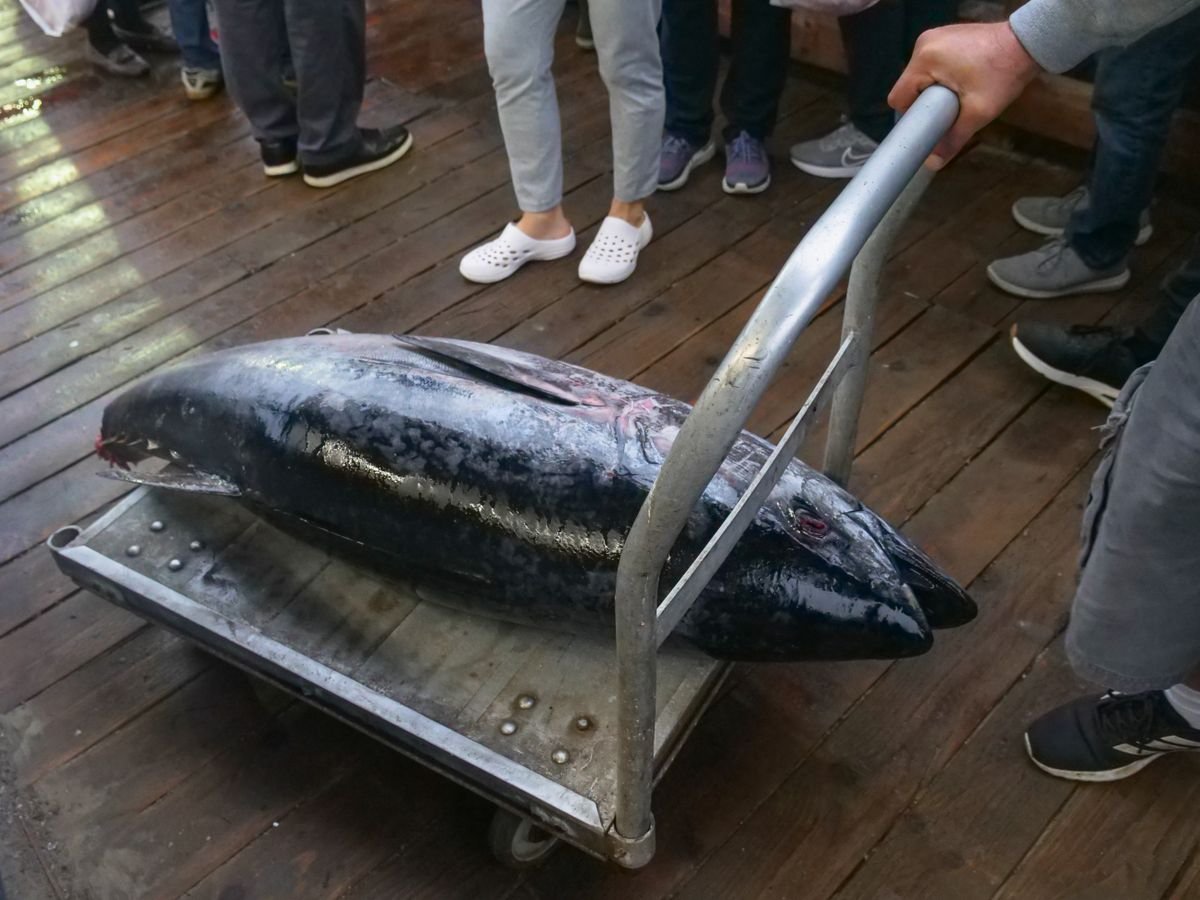
The tuna auction is the reason many people come. Frozen tuna are lined up on the floor and buyers inspect them with torches and hooks before bidding in a fast, shouted auction. Fresh tuna go through a similar process.
- Viewing is from raised galleries behind glass, so it is a view rather than a walk-on experience.
- Auctions start in the early morning, with viewing usually between about 5:30 and 6:30. Plan to arrive before 5:00, since public transport starts late and a taxi or early Yurikamome is often needed.
- The Tuna Auction Observation Deck is allocated by lottery. You apply through the official Toyosu application site during set application periods each month, and winners are emailed about two weeks later. The lottery applies if there are more applicants than places; per the Tokyo Metropolitan Government, those not selected can still watch from the Visitors Walkway on the second floor. Never pay a third party for a public viewing place.
- Auctions do not run on market closed days. Large tuna are not always auctioned on every day.
If you cannot be there at dawn, the galleries still show the wholesale halls from mid-morning, which are quieter and tidy by then. Photography rules are posted on site, so follow the signs.
Opening hours and closed days
The market is open from 5:00 to 17:00 according to the Tokyo Metropolitan Government, though each shop and restaurant keeps its own hours, and most food counters close around 14:00. The market is closed Sundays, public holidays and some Wednesdays based on a yearly official calendar. Check the calendar every time, even if you visited before.
Sushi at Toyosu
The market’s sushi counters in the fish wholesale building are the main draw for lunch. Famous shops include Sushi Dai, Daiwa Sushi and Sushi Bun. A set omakase typically costs approximately ¥4,000 to ¥7,000 per person as of 2026. Queues can reach two to three hours at the best-known counters, so go at opening, send one person to queue, or choose a quieter shop. Many shops accept cash only, so bring yen.
For the same idea without queuing, there are conveyor-belt options and kaisendon (rice bowls with raw fish) at other restaurants in the complex. For a wider sushi plan, see our Tokyo food guide.
Senkyaku Banrai
Next to the market, Toyosu Senkyaku Banrai is an Edo-style complex of restaurants, a food market and shops. It has a free foot bath, and a separate onsen facility (Manyo Club) with a paid hot-spring entry. Hours vary by tenant, and most shops open in the morning and close in the evening. It is a good second stop when the market closes and you want souvenirs, seafood or a soak.
Getting there
Take the Yurikamome Line to Shijo-mae Station, which is the stop at the market. From Shimbashi it takes about 20 minutes. From Toyosu Station on the Yurakucho Line, change to the Yurikamome for one stop. The station is a short walk from the market buildings. The same Yurikamome line serves teamLab Planets, so a morning at Toyosu pairs well with teamLab Planets Toyosu in the afternoon.
Toyosu or Tsukiji?
Tsukiji Outer Market is the street-stall and snack side that stayed in the old site, and it is easier to browse without a plan. Many visitors do both: Toyosu for the auction and sushi, then Tsukiji for tamagoyaki and snacks. See Tokyo things to do for Tsukiji details.
Tours
A guided visit helps with the auction rules and ordering at the sushi counters. Search Toyosu and Tsukiji market tours on GetYourGuide or the Tsukiji food tours for a guided breakfast. Entry to the market itself is free, so there is no ticket to buy.
Back to things to do in Tokyo.