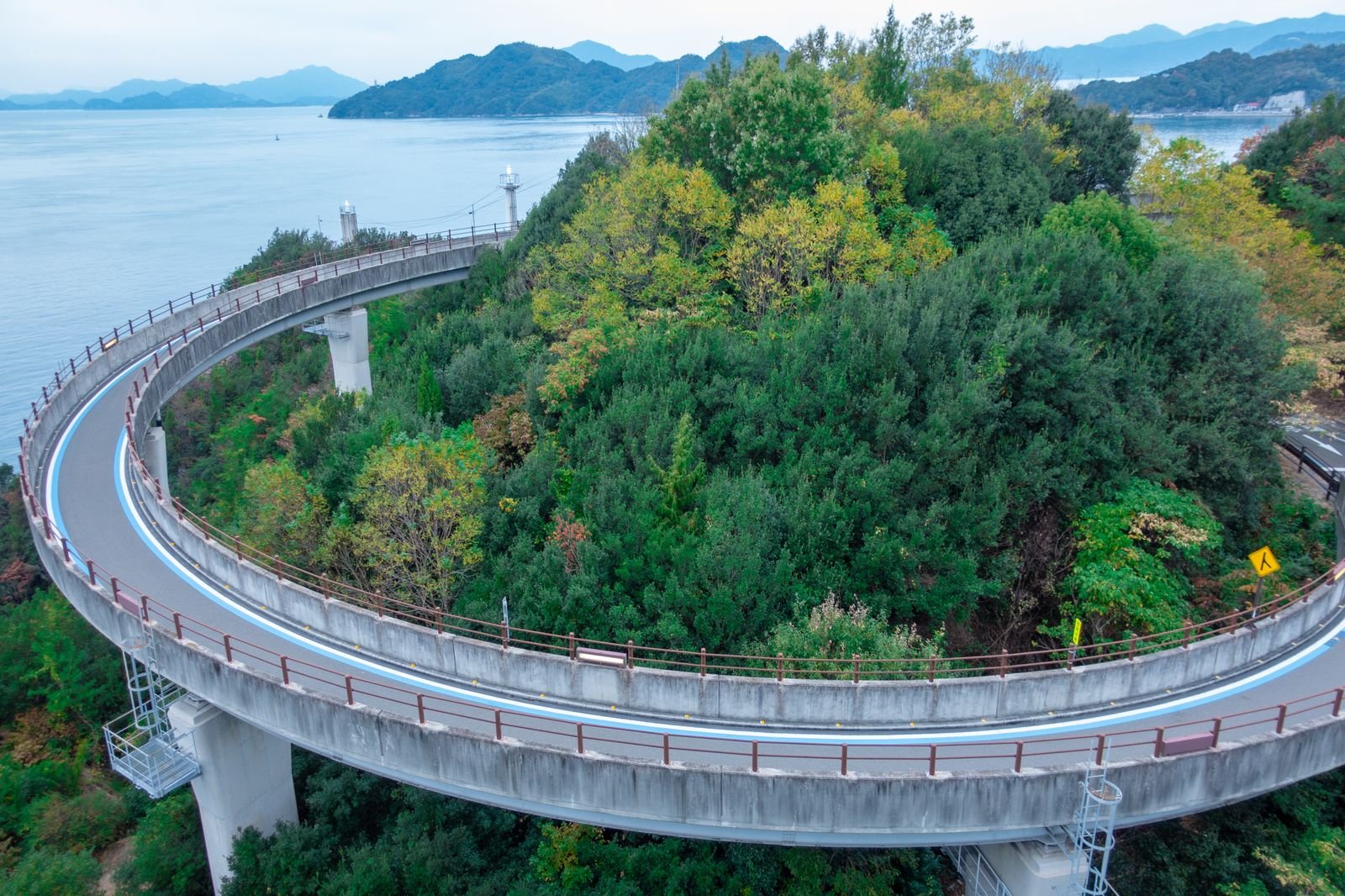
The Shimanami Kaido is Japan’s best-known long-distance cycling route: about 70 km of purpose-built cycle paths and island roads linking Onomichi on Honshu with Imabari on Shikoku, crossing the Seto Inland Sea by way of six islands and a series of bridges. Riders are routed along a painted blue line, so navigation is simple, and the scenery of cargo ships, citrus terraces and island shrines changes constantly. This guide covers how to get to each end, the two bike rental systems, one-way return fees, a one- and two-day plan and where to base yourself.
Shimanami Kaido at a Glance
| Distance | About 70 km, Onomichi to Imabari |
| Islands | Mukaishima, Innoshima, Ikuchijima, Omishima, Hakata-Oshima, Oshima |
| Riding time | 5 to 8 hours; two days is more relaxed |
| Difficulty | Easy to moderate; bridge approaches are the climbs |
| Best months | March to May, October to November |
| Navigation | Painted blue line along the whole route |
Each bridge has a separate cycling and walking lane, usually with a small toll or none at all for bicycles. Between bridges, the route runs along coastal roads and through island villages where lemons, mikan and other citrus grow. The Kurushima-Kaikyo bridges at the Shikoku end are a highlight, forming one of the world’s longest suspension bridge sequences; the cycle approach loops up to the deck on spiral ramps.
Getting to Onomichi and Imabari
Onomichi (Honshu end). From Hiroshima, Onomichi is roughly 100 minutes by JR local trains at about 1,940 yen, or faster by Shinkansen to Fukuyama and then a 15-minute local train. See our Hiroshima day trips guide for Onomichi sightseeing, and the Hiroshima city guide for planning a base. From Miyajima, the connection is covered in our Miyajima day trips guide.
Imabari (Shikoku end). From Matsuyama, Imabari is about one hour by JR limited express, around 1,500 yen. Our Matsuyama day trips guide and the Shikoku region guide describe the Shikoku side.
Direction. Most riders start in Onomichi, because Honshu is closer to the main Shinkansen corridor, and finish in Imabari. Riding in the opposite direction is just as good, and avoids the busier ends of the route.
Bike Rental: Two Systems
Two main rental systems operate along the route, and it pays to understand the difference before you arrive.
Shimanami Cycle terminals. The public rental network runs about ten terminals spread along the route, including Onomichi, Setoda on Ikuchijima, and the Imabari side. You pick up at one terminal and, with a drop-off fee, return to another. Bike types include standard city bikes, cross bikes and e-bikes. Standard bike rates have been quoted from around 1,100 yen up to 3,000 yen per day depending on bike type and the year of the source, with a deposit that is refundable when you return the bike to the same terminal. Treat these as ranges and check the current schedule on the official Visit Shimanami bike rental page.
Giant. Giant runs rental shops at both ends and focuses on road and cross-country bikes with more modern equipment. One-way returns are generally available for road bikes only, and by reservation, with a separate return fee. Expect higher day rates than the public terminals.
One-way drop-off fee. A fee of around 1,100 yen has been quoted for returning a bike at a different terminal, but sources disagree, and e-bikes can only be returned at certain terminals. Confirm the current fee and the terminal list when you book. We recommend budgeting 2,500 to 5,000 yen all-in for a standard bike one-way, and more for an e-bike or road bike.
Bring your passport or photo ID, wear shorts or trousers that suit riding, and carry a small repair kit if you bring your own bike. Helmets are available at many terminals; ask when you book.
One-Day Plan: Onomichi to Ikuchijima
A one-day ride covers the best of the western half without the pressure of the full distance:
- Rent in Onomichi and take the short ferry to Mukaishima (a few minutes across the strait, a small fare plus a bike charge).
- Ride across Innoshima Bridge, with a stop at Innoshima’s coastal viewpoints.
- Cross Ikuchijima Bridge and stop in Setoda for lunch, the Kosanji temple complex and local lemon gelato.
- Return the bike at Setoda, or ride back to Onomichi.
This is about 40 km each way if you ride back, so many riders return the bike at Setoda and take the ferry to Onomichi or Mihara.
Two-Day Plan: The Full Route
Day 1: Onomichi to Ikuchijima or Omishima. About 40 to 45 km. Stay overnight on Ikuchijima (Setoda) or Omishima, where small inns and guesthouses cater to cyclists. Book ahead in spring and autumn.
Day 2: Omishima to Imabari. About 25 to 30 km through Hakata-Oshima and Oshima, finishing on the Kurushima-Kaikyo bridges. Return your bike at Imabari or arrange your one-way drop-off in advance, then take the train to Matsuyama.
On Omishima, the Oyamazumi Shrine holds a large collection of historic armour and swords and is worth a stop. Hakata-Oshima is known for its sea salt, and the Oshima side has views of the strongest tidal currents in the strait.
E-Bikes, Road Bikes and Tours
An e-bike removes most of the effort from the bridge approaches and is worth it if you want to finish in one day or have little cycling experience. Road bikes suit fitter riders but cost more and have restrictions on one-way returns. Guided tours include bikes, a guide and sometimes luggage transfer; browse Shimanami Kaido cycling tours to compare departures from Onomichi and Imabari.
Where to Stay
Onomichi is the best Honshu base. It is compact, walkable and close to the rental terminal, with cafes and temples on the hillside. For a Hiroshima-based plan, see where to stay in Hiroshima, and for the Shikoku side see Matsuyama hotels. Overnight stops on the islands themselves are small and fill early, so reserve before you set out.
Practical Tips
- Start early. Ferries and rental terminals close in the late afternoon, and you need to return the bike before the terminal shuts.
- Carry water and snacks. There are shops in island villages but long stretches between them.
- Luggage: some terminals and operators offer luggage transfer for an extra fee. Ask when you book.
- Weather: strong wind on the bridges can make cycling uncomfortable. Check the forecast, and consider the sheltered section between bridges.
- Insurance: cycling is usually covered under standard policies, but check your cover. See our travel insurance guide for Japan.
For route maps and official access information, see the Japan Guide Shimanami Kaido page.