Kanazawa sits between mountains and the Sea of Japan in a position that has shaped its food culture for centuries. The cold Tsushima Current running along Hokuriku’s coastline delivers some of Japan’s finest seafood — snow crab, yellowtail, white shrimp, and the prized Nodoguro (blackthroat seaperch). At the same time, the former Kaga Domain’s centuries of relative stability and prosperity under the Maeda clan produced a sophisticated urban food culture that developed local dish traditions — jibuni stew, kabura-zushi fermented turnip sushi — that survive to this day.
For specific restaurant recommendations and deeper dish coverage, see our Kanazawa best restaurants guide and what to eat in Kanazawa. For broader city context including Kenroku-en, the Higashi Chaya geisha district, and getting to Kanazawa by Shinkansen, see our Kanazawa travel guide.
Omicho Market: Where Kanazawa Eats
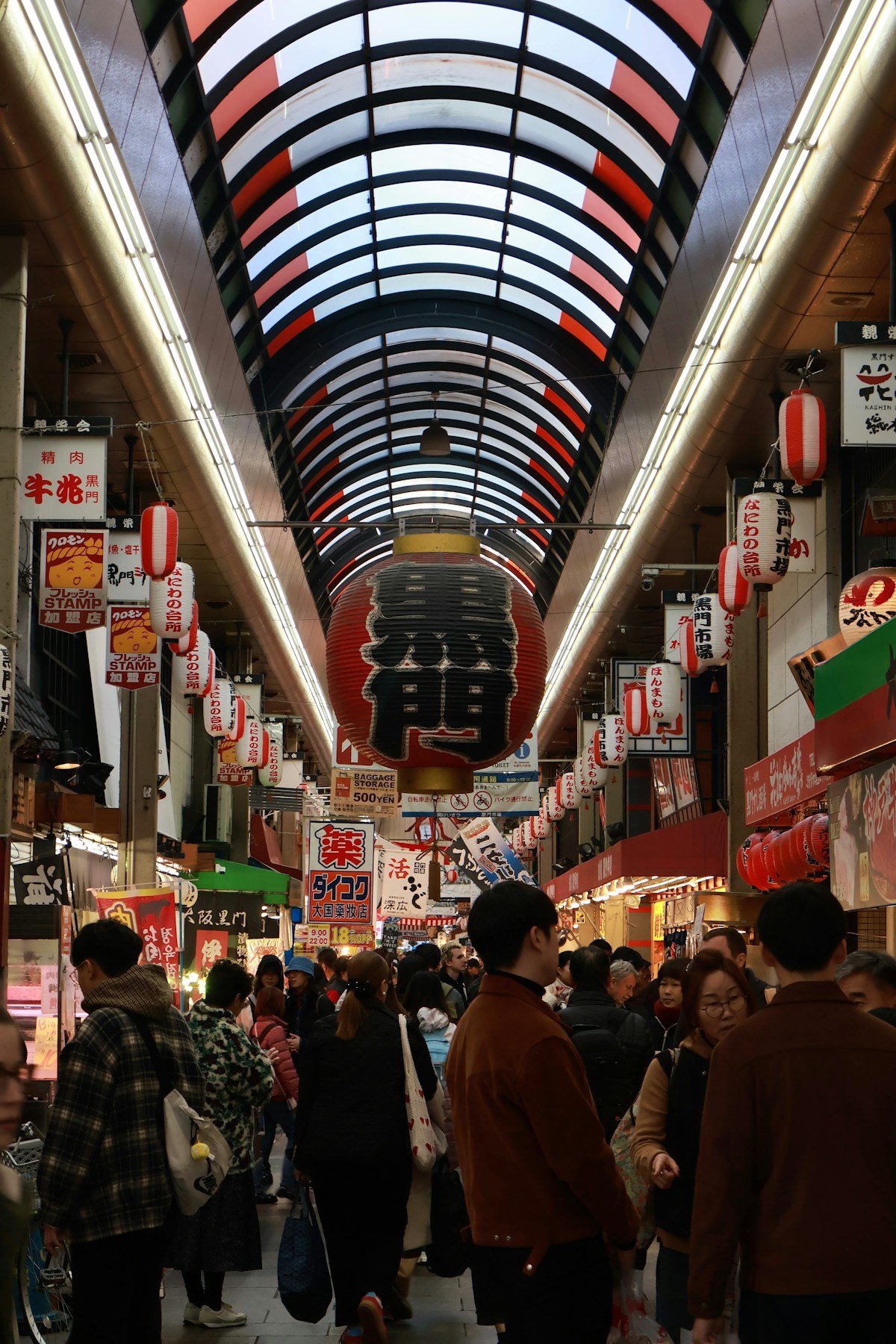
Omicho Ichiba is Kanazawa’s public market, operating since the Edo period in a covered building five minutes from Kanazawa Station. Around 170 vendors fill the stalls: fresh fish direct from Kanazawa Port, local vegetables, pickles, and prepared foods. Several small restaurants and sushi counters operate inside the market with some of the most value-driven seafood eating in the city.
The market specialities to look for:
White shrimp (shiro-ebi): A small, almost translucent shrimp specific to Toyama Bay and the Hokuriku coast. Rarely eaten raw outside this region. At market stalls, eaten as nigiri (¥200–¥350 per piece) or in tempura (¥600–¥1,200 per serving).
Snow crab (zuwaigani): In season from November through March. Crab vendors sell boiled half-crabs from approximately ¥2,500–¥4,000; full crabs from ¥6,000. Several market restaurants offer crab lunches — a half-crab with rice and miso — for ¥2,500–¥3,500.
Fresh tuna: Kanazawa Port receives high-quality bluefin and bigeye tuna. Market sushi counters serve tuna nigiri from ¥250–¥500 per piece.
The market is most active from 9am until noon. Many vendors close by 3–4pm. For a sit-down meal inside the market, several small counter restaurants serve sashimi sets and kaiten-style sushi from approximately ¥1,500–¥3,500 per person.
Kaiten Sushi: Kanazawa’s Best-Value Option
Kanazawa’s conveyor-belt sushi restaurants use local seafood to a standard that comfortably outperforms most Tokyo equivalents at the same price point. The key difference is proximity to the source — fish from Kanazawa Port arrives the same morning.
Mori Mori Sushi near Omicho Market is the most popular option with visitors, and the queues reflect it — expect 30–60 minutes at lunch on weekends. Pieces are made to order and the selection emphasises Hokuriku specialities. Price per piece: ¥150–¥550 depending on the cut; a full lunch runs ¥2,500–¥4,500 per person.
Tamazushi, with multiple branches including one inside Omicho Market, has shorter waits and equivalent quality. Similar price range.
Kaga Ryori: Kanazawa’s Formal Cuisine
Kaga ryori is the regional kaiseki style that developed under the Maeda domain — a sequence of small courses showcasing seasonal ingredients in preparations refined over generations. The style is more lavish than standard kaiseki due to the prosperity of the former domain; dishes are presented with greater decorative attention and the ingredients list often includes local specialities unavailable elsewhere.
Jibuni is the most representative Kaga dish: duck or chicken, fu (wheat gluten cakes), and vegetables in a thickened dashi broth. It appears in virtually every traditional Kanazawa restaurant. Kabura-zushi is a more unusual specialty — yellowtail fish layered with thinly sliced turnip and fermented for several weeks in a rice and sake base. The result is tangy and intensely savoury; it is sold in specialist shops as a condiment or gift rather than a restaurant dish.
Miyoshian, in a traditional building near the south gate of Kenroku-en garden, serves Kaga ryori lunch courses at approximately ¥3,500–¥6,000 per person. Booking ahead is advisable. Kinjohro, one of Kanazawa’s oldest and most celebrated traditional restaurants, offers kaiseki dinners at ¥12,000–¥25,000 per person — this is the city’s top formal dining experience, requiring reservation weeks in advance.
For mid-range Kaga cuisine without the kaiseki price: Kanazawa Maimon Sushi offers Hokuriku seafood in a casual setting at ¥2,000–¥4,000 per person.
Higashi Chaya District: Tea and Sweet
Higashi Chaya is the preserved geisha entertainment district east of the city centre, a cluster of two-storey wooden machiya townhouses from the early 19th century. Several have been converted into tea rooms and wagashi (traditional confectionery) shops. Eating here is less about full meals and more about the experience of the space.
Kaikaro, a former ochaya (teahouse), serves matcha and wagashi sets in a tatami room for approximately ¥1,000–¥2,000 per person. Morihachi, an 200-year-old confectionery shop, sells Kanazawa’s distinctive gold leaf (kinpaku) sweets — edible gold flake applied to mochi and chocolates — from approximately ¥500–¥1,500 per item.
Gold leaf is a Kanazawa specialty that appears across the food scene: gold-topped soft serve ice cream (¥500–¥800), gold-dusted sake, and gold-wrapped mochi. The concentration of gold leaf production in Kanazawa (which accounts for over 95% of Japan’s output) has made it both a genuine local product and an effective marketing hook.
Best Time to Eat Out in Kanazawa
The snow crab season (November through March) is the single best time to eat in Kanazawa, particularly for Omicho Market visits. The overlap of snow crab season with the Kenroku-en yukizuri (tree-roping) in December and January makes this a peak period for visitors — restaurant queues at Mori Mori Sushi reach 1–2 hours at weekend lunchtimes.
Arriving early at Omicho (9–10am) gives the best market selection and shorter restaurant queues. Kaiten sushi restaurants are busiest from noon to 1:30pm; arriving at 11am or after 2pm reduces wait time significantly. Most Kaga ryori kaiseki restaurants require advance reservation regardless of season.