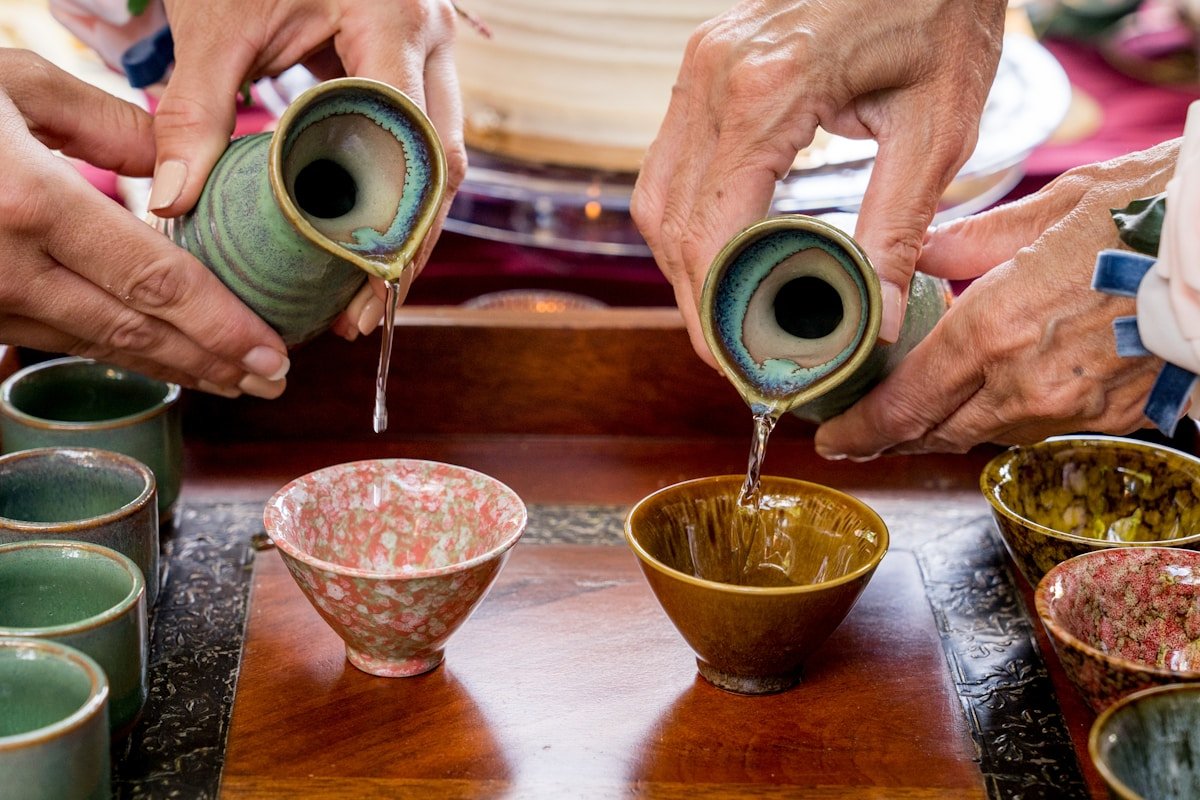
Takayama’s food culture grew from the Hida mountains’ isolation. Winters cut the region off from the lowlands for months at a time, and the cuisine reflects the self-sufficiency that required: mountain cattle raised on highland grass, sake brewed from local spring water, buckwheat soba grown at altitude, wild vegetables foraged from the surrounding forest, and preserved foods that could last through long cold seasons. Here is what to seek out.
Hida Beef
Hida beef is the food that brings most visitors to Takayama. The cattle - Hida’s native black wagyu - are raised at altitude in Gifu Prefecture, and the combination of cold mountain air, clean spring water, and unhurried rearing produces A4 and A5 grade beef with fine, even marbling and a clean flavour distinct from the intensely fatty richness of Kobe beef at its most extreme.
The most accessible entry point is the Hida beef kushiage - a skewer of prime beef, charcoal-grilled and sold from stalls near Sanmachi Suji for approximately ¥500 per skewer as of 2026. The skewer is small - two or three bites - but sufficient to understand the quality. The fat melts at near-body temperature, and the char from the grill provides exactly the right contrast.
For a proper meal, the main formats are:
- Steak set at a restaurant: from approximately ¥5,000 for a 100g cut, rising to ¥12,000–¥15,000 for A5 grade with larger portions
- Shabu-shabu: thin-sliced Hida beef cooked briefly in clear broth at the table, then dipped in ponzu or sesame sauce; sets from ¥4,500 per person
- Sukiyaki: thin-sliced beef cooked at the table in sweet soy broth with tofu, noodles, and vegetables; sets from ¥4,000 per person
- Hida beef nigiri sushi: a slice of lightly seared beef over rice, sold at a few specialist counters near Sanmachi Suji, approximately ¥800 for two pieces
The morning markets also sell Hida beef menchi-katsu (deep-fried beef croquette, ¥200–¥300) as a walking snack.
Mitarashi Dango
Mitarashi dango is one of Japan’s most universal street foods, but Takayama’s version - cooked over open charcoal grills in the morning markets - is among the best you will find anywhere. Three round mochi rice cakes are threaded onto a bamboo skewer, grilled until lightly blistered and charred at the edges, then brushed with a sweet soy glaze (the “mitarashi” sauce: soy, mirin, sugar, thickened with potato starch).
The combination of the warm, charred mochi exterior, the chewy interior, and the sticky sweet-savoury coating is simple and very good. Stall holders at both the Jinya Mae and Miyagawa morning markets grill dango to order from approximately 6am. Cost: approximately ¥200 for three on a stick.
Sake from the Sanmachi Suji Breweries
Takayama’s sake culture predates the current tourist economy by several centuries. The city’s pure mountain spring water - filtered through layers of rock in the surrounding peaks - is ideal for sake brewing, and the cold winters facilitate the slow fermentation process that produces the most refined grades.
Several breweries on Sanmachi Suji operate tasting rooms:
Funasaka Shuzo - the most visitor-accessible, with a welcoming tasting room and English-labelled sake varieties. Try the junmai (pure rice, no added alcohol) alongside a standard futsu-shu to understand how rice selection and brewing method change the flavour. Small pours cost ¥100–¥300 each.
Hirase Shuzo - a slightly more formal tasting experience, with their daiginjo (the highest premium grade) available by the glass (¥400–¥600 for a 50ml pour). The daiginjo has pronounced fruit aromatics and is worth the premium if you want to understand what high-grade sake tastes like.
Watanabe Sake Shop - attached to a small brewery, with a broader range including limited seasonal releases not available elsewhere. Look for the namazake (unpasteurised sake, available in spring only) if you visit in March or April.
Takayama’s sake festival, held in April during the Sanno Festival, involves sake being sold from barrels in the streets. If your visit coincides, the outdoor drinking atmosphere around the festival floats is memorable.
Sansai: Mountain Vegetables
Sansai (mountain vegetables) form the vegetable backbone of Hida cuisine. Spring is the primary foraging season, when warabi (bracken fern), zenmai (royal fern), and udo (mountain asparagus) are gathered from the surrounding hills. Autumn brings a different harvest: matsutake mushrooms, nameko, and various chestnuts.
Sansai appear in local food in several forms:
- Sansai tempura: seasonal greens and mushrooms in a light batter, served at most traditional restaurants
- Sansai soba: mountain vegetable toppings on handmade buckwheat noodles
- Pickled sansai: served as side dishes at restaurants and sold in jars at the morning markets (¥600–¥1,200)
- Sansai gohan: rice cooked with mountain vegetables, a standard side dish in the region
The morning market vendors are the best source for fresh or preserved sansai. Pickled fern shoots in particular make good souvenirs - they keep for several weeks refrigerated.
Hida Tofu
Takayama’s tofu is made from non-GMO soybeans using local spring water, and the result is noticeably different from standard commercial tofu - denser, creamier, and with a more pronounced soybean flavour. Cold tofu (hiyayakko) seasoned with a little soy, grated ginger, and bonito flakes is a common side dish in local restaurants. Rough-textured silken tofu (yudofu) served in light broth is a standard first course in kaiseki meals.
Artisan tofu shops sell freshly made blocks from approximately ¥150–¥300, and most traditional restaurants make their own in-house.
Hoba Miso
Hoba miso is a Hida specialty in which miso paste is placed on a dried magnolia leaf (hoba) over a charcoal fire, combined with sliced Hida beef, leek, mushrooms, and occasionally mochi. As the leaf chars slightly, the miso caramelises around the edges and the ingredients cook in the paste. The miso absorbs the smoke from the charring leaf and the result is smoky, savoury, and deeply satisfying.
Hoba miso is served as a table dish at traditional restaurants (from ¥1,200 as a side, from ¥2,500 as a main with Hida beef), and packaged hoba miso kits (leaf, miso, and instructions) are sold as souvenirs at ¥600–¥900.
See Takayama through its food: Food and cultural tours in Takayama often include market visits, tastings, and dishes you’d never find independently.
Where to Find These Foods
The morning markets (Jinya Mae and Miyagawa, both open 6am–noon) are the place for dango, produce, pickled sansai, and tofu. Sanmachi Suji has the sake breweries and street beef skewers. Traditional restaurants for hoba miso and full Hida beef meals cluster between Sanmachi Suji and the Miyagawa River.
See the Takayama travel guide for general orientation, best restaurants in Takayama for specific recommendations, and day trips from Takayama if you want to extend your visit to Shirakawa-go.
Where to stay: Search hotels in Takayama on Booking.com
See also: Takayama travel guide · Best restaurants in Takayama · Things to do in Takayama · Kanazawa travel guide · Chubu region guide · Japanese food guide