Sapporo is Hokkaido’s main city and Japan’s fifth-largest urban area, but it moves at a different pace from the megacities of Honshu. The transport network is well-designed, the subway is modern and reliable, and the layout of the central grid - modelled in part on North American urban planning when founded in the Meiji era - makes the city unusually easy to navigate on foot between stops.
The defining feature of getting around Sapporo is the season. In summer, the city is flat and bikeable. In winter, snow buries the streets from November to April, and the subway becomes the only practical option for most journeys. Plan accordingly.
Sapporo Municipal Subway (市営地下鉄)
Sapporo’s three subway lines are all rubber-tyred - quieter and slightly smoother than the steel-wheeled systems found in Tokyo and Osaka. They are heated in winter and air-conditioned in summer, making them the obvious choice during the colder months.
Namboku Line (南北線, green) - Runs north–south through the city’s spine. Key stops: Sapporo (JR Station area), Odori (central transfer hub, connects all three lines), Susukino (Sapporo’s entertainment district). Extends south to Makomanai (close to several ski resorts in winter).
Tozai Line (東西線, orange) - Runs east–west from Miyanosawa (west) through Odori to Shin-Sapporo (east, connecting JR Chitose Line). Key stops: Odori (transfer), Maruyama Koen (Maruyama Park and Sapporo Circular Zoo), Nishi 11-chome (Tanukikoji shopping arcade).
Toho Line (東豊線, blue) - Runs north–south on the eastern side of the centre. Key stops: Odori, Hōsui-Susukino (connecting Susukino area), Sapporo Dome-mae Higashimachi (Sapporo Dome).
Single fares: ¥210–¥370 depending on distance. IC card accepted at all gates.
Subway Day Passes
| Pass | Price | Best for |
|---|---|---|
| 1-day subway pass | ¥830 | Regular weekdays - break-even at 4 journeys |
| Weekend/Holiday 1-day pass | ¥520 | Saturdays, Sundays, public holidays |
The weekend pass at ¥520 is excellent value - most visitors find they use the subway at least 4–5 times on a sightseeing day. Available from any subway ticket machine; set the day of travel when purchasing.
Sapporo City Tram (市電 / Shiden)
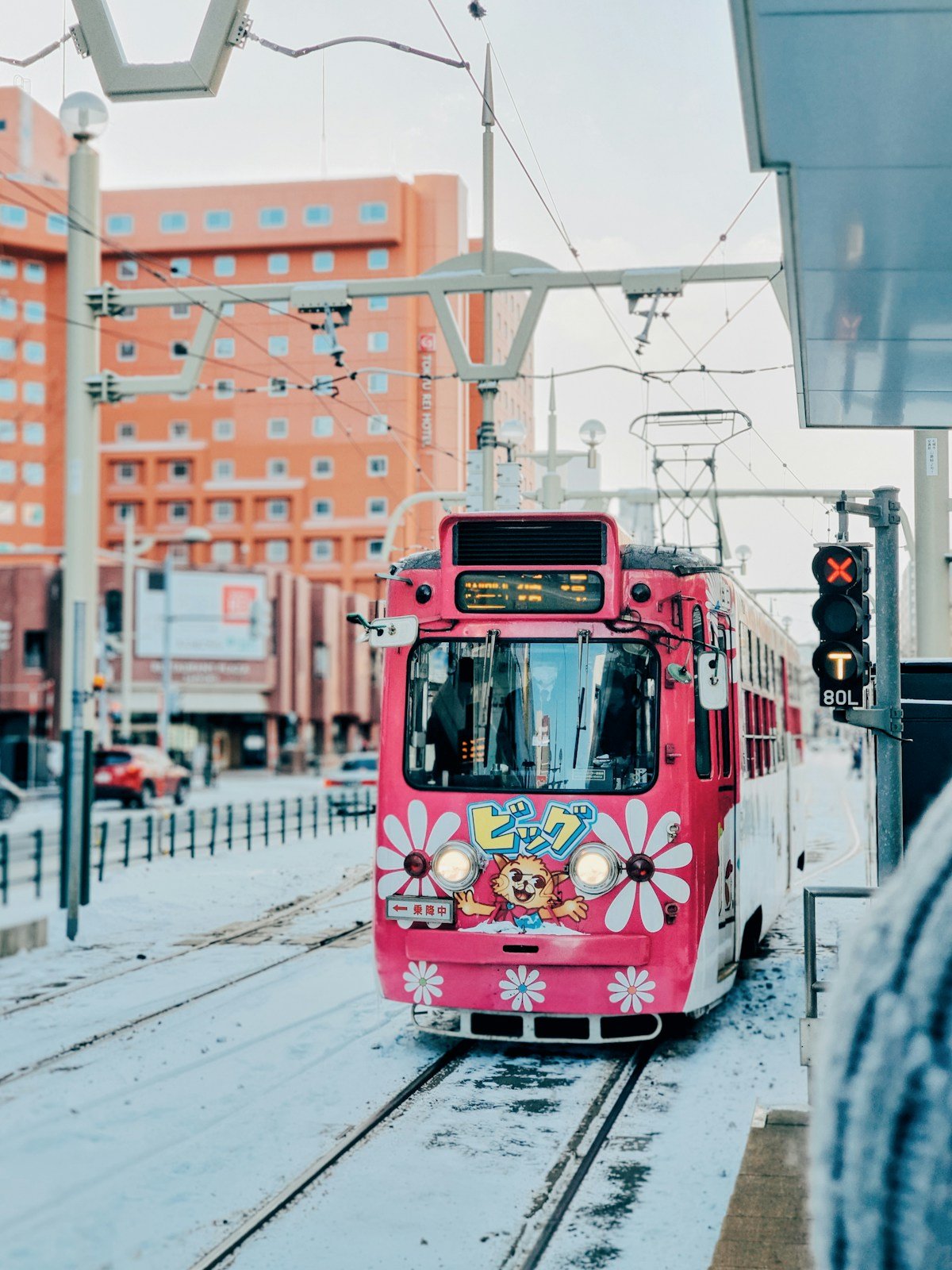
The Sapporo City Tram (Shiden) is a single horseshoe-shaped line operating in the south-western part of the city, with both ends terminating at Susukino (the two branches rejoin here). It does not serve the main JR Sapporo Station area - the subway or a short walk are needed to transfer.
Key tram stops for visitors:
- Susukino - Southern terminus (connects to Namboku subway line)
- Nakajima Koen - For Nakajima Park and the Toyoni open-air hot spring
- Ropeway Iriguchi - For the Moiwa Mountain Ropeway and summit observatory (a favourite night-view spot)
- Nishi 15-chome - Useful for western residential areas
Flat fare: ¥200 per ride (adults), regardless of distance. IC card (Suica, Kitaca, Pasmo, ICOCA) or exact cash.
Tram 1-day pass: ¥500. Worth buying if you plan to ride more than twice. Purchase on board or at the tram depot at Densha Jigyosha.
Combination subway + tram pass: Sapporo sells a combined 1-day pass covering both for ¥1,000 on weekdays, ¥750 on weekends/holidays. Good value for a day centred on Susukino and Nakajima Park.
JR Hokkaido Trains
JR Hokkaido operates train services from JR Sapporo Station to destinations across the island. The station connects directly to the Sapporo Municipal Subway.
Key routes for visitors:
| Destination | Train | Time | Fare |
|---|---|---|---|
| New Chitose Airport | JR Rapid Airport | 37min | ¥1,150 |
| Otaru | JR Rapid/Local | 33min | ¥750 |
| Hakodate | Hokuto limited express | 3h 45min | ¥9,440 |
| Noboribetsu | Suzuran limited express | 1h 20min | ¥4,290 |
| Niseko (for Niseko ski area) | Limited express + local change | 2h | ¥3,870 |
Note on the Hokkaido Shinkansen: As of 2026, the Hokkaido Shinkansen extends only to Shin-Hakodate-Hokuto (not yet to Sapporo). The planned extension to Sapporo is scheduled for the 2030s. For now, travel between Sapporo and Honshu involves either flying or a combination of Hokkaido Shinkansen + limited express.
JR Pass covers all JR Hokkaido trains including the airport rapid, limited express services, and the Hokkaido Shinkansen to Shin-Hakodate-Hokuto.
IC Cards and Kitaca
The local JR Hokkaido IC card is Kitaca (キタカ). It works on all JR Hokkaido trains and buses, the Sapporo Municipal Subway, and the city tram.
Suica, Pasmo, ICOCA, and all other national IC cards work identically on all Sapporo transport. If you are already carrying one, simply top up. Kitaca can only be topped up at JR Hokkaido machines and certain convenience stores.
Airport Connection
New Chitose Airport (CTS) is the main international and domestic gateway for Sapporo and Hokkaido. The terminal building is approximately 50km south of the city.
- JR Rapid Airport - Airport Station (in terminal basement) to JR Sapporo Station: 37 minutes, ¥1,150 (unreserved) or ¥1,840 (reserved car) as of 2026. Runs every 15 minutes at peak times.
- Airport Bus - To Sapporo Station approximately 70 minutes in normal traffic, ¥1,030. Subject to significant delays in snow conditions in winter - not recommended if you have a connection to make.
- Taxi - Approximately ¥13,000–¥18,000. Only practical for groups with heavy luggage, or at very late hours.
For fixed-price airport transfers, Kiwitaxi covers New Chitose arrivals.
Taxis
Sapporo taxis are metered and operate year-round.
Approximate fares (as of 2026):
- Flag fall: approximately ¥680 for the first 1.3km
- JR Sapporo to Odori Park: ¥600–¥900
- JR Sapporo to Susukino: ¥700–¥1,000
- Late-night surcharge (22:00–05:00): +20%
- Snow surcharge: Some operators add a small surcharge during heavy snow periods - confirm before boarding in winter
The GO app operates in Sapporo for pre-booking with upfront pricing.
Cycling
Sapporo is excellent for cycling from May to October. The central grid is flat and the Soseigawa Greenway - a converted canal path running north–south through the centre - provides a traffic-free cycle corridor linking the JR Station area to Nakajima Park.
Poroco Sapporo Bike Share:
- Per 30 minutes: ¥165
- 1-day pass: ¥1,650
- Stations at JR Sapporo, Odori, Susukino, Nakajima Koen, and throughout Chuo-ku
Winter (November–April): Do not cycle in Sapporo during snow season. Roads become icy, visibility is poor, and the subway is faster for every journey. Most bike-share stations suspend operations from approximately December to March.
Transport essentials for Sapporo: The Japan Rail Pass covers JR Hokkaido services including the airport rapid to New Chitose and the Hokkaido Shinkansen - useful if arriving in Hokkaido from Honshu. For ferry routes from Sapporo (Otaru Port) to Niigata or Sendai, book directly through Shin Nihonkai Ferry or Taiheiyo Ferry websites. Airport transfers: Kiwitaxi.
Plan Your Trip
- Flights - Find the best fares to Japan
- Hotels - Search hotels in Sapporo on Booking.com
- Travel Insurance - Get covered before you go
- eSIM - Stay connected from landing
- Car Rental - Compare prices across providers
See also: Sapporo travel guide · Things to do in Sapporo · Where to stay in Sapporo · Sapporo day trips · Getting around Japan · Japan Rail Pass guide