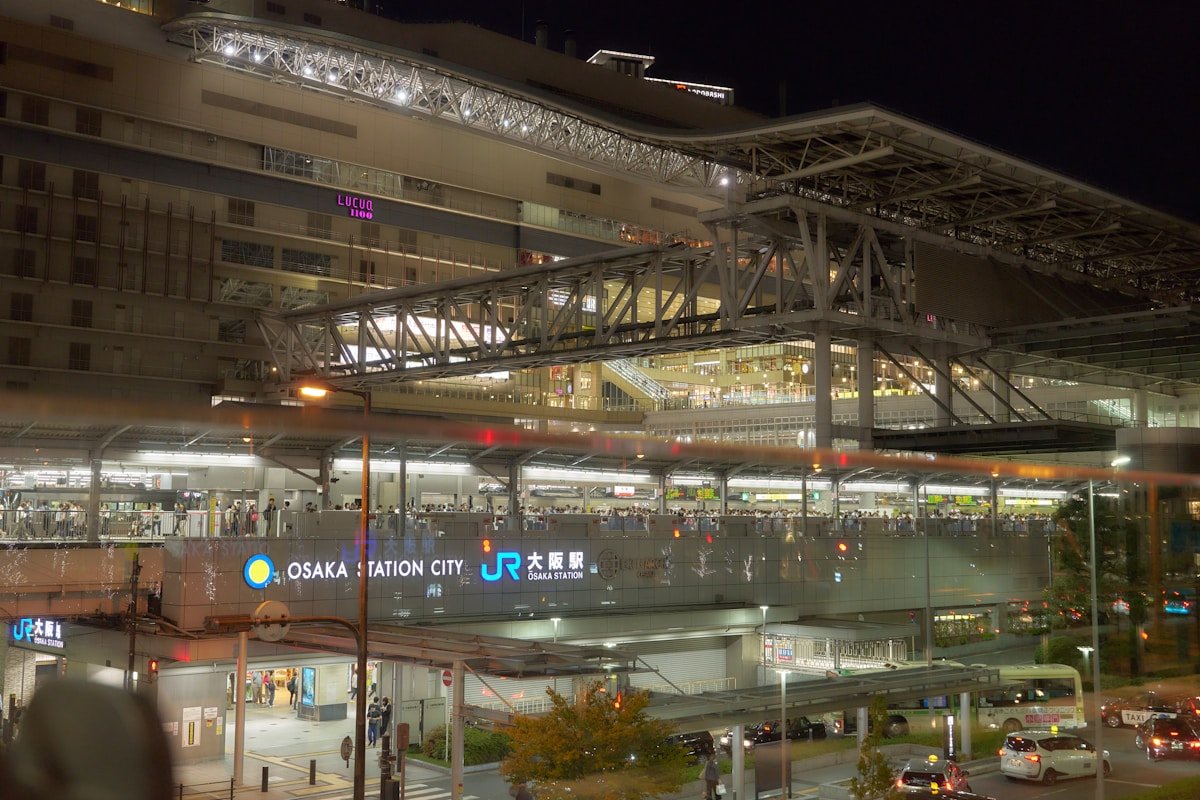
Osaka’s public transport is compact and well-organised compared to Tokyo’s sprawl. The city is served by the Osaka Metro (8 lines), JR West lines, and several private railways, overlaid on a compact grid street plan that makes the whole network easier to navigate than it first appears on a map. Most visitors use a small subset of lines repeatedly and find it intuitive within half a day.
Understanding the basic geography helps: Osaka runs roughly north–south along the Yodo River, with Umeda (the commercial and JR hub) at the north end and Namba (the eating and entertainment centre) at the south, connected by the Midosuji Line in about 8 minutes.
Osaka Metro (地下鉄)
The Osaka Metro operates 8 colour-coded lines. For visitors, four are especially useful:
Midosuji Line (red, M) - The spine of the network. Runs north–south from Esaka in the north through Umeda (Osaka’s JR hub), Shinsaibashi (shopping), Namba (food and nightlife), and south to Tennoji and Nakamozu. This is the line you will use most.
Tanimachi Line (purple, T) - Parallel to Midosuji on the east side of the city, connecting Tennoji to Higashi-Umeda and the Kyobashi area. Useful for Osaka Castle (Tanimachi 4-chome station, 10-minute walk) and the less touristy northern areas.
Sennichimae Line (pink, S) - East–west through the city’s southern section, useful for connecting Namba to Tsuruhashi (Osaka’s Koreatown).
Chuo Line (green, C) - East–west through the city centre, connecting Osaka Bay (for the Kaiyukan Aquarium) to Morinomiya in the east. Change at Honmachi for the Midosuji Line.
Single fares: ¥180–¥380 depending on distance. IC card payment at all gates.
Osaka Amazing Pass
The Osaka Amazing Pass is the key tourist product for visitors planning to hit multiple paid sights.
| Pass | Cost | What’s included |
|---|---|---|
| 1-day | ¥2,800 | Unlimited Osaka Metro + New Tram + free entry to ~40 attractions |
| 2-day | ¥3,600 | Same coverage for 2 consecutive days |
Attractions included (selected):
- Osaka Castle Nishinomaru Garden and Tenshu observatory (normally ¥600)
- HEP FIVE Ferris Wheel in Umeda (normally ¥600)
- Tsutenkaku Tower in Shinsekai (normally ¥1,000)
- Sumiyoshi Taisha (free entry anyway, but listed)
- Several museum and onsen admissions
Break-even: If you use the subway for 5–6 journeys and visit Osaka Castle + Tsutenkaku, the pass pays for itself. On a busy sightseeing day with 4–5 attractions, the 1-day pass is clearly worthwhile.
Available at: Osaka Metro station offices and at Kansai Tourist Information Centers.
JR Lines in Osaka
JR West operates several lines through the city that overlap with, and sometimes exceed, the Metro in usefulness:
JR Loop Line (Osaka Kanjo-sen, orange) - A circular line covering Osaka Station, Tennoji, Kyobashi, and Sakurajima (Universal Studios Japan). 16 stations around the loop. Not covered by the Amazing Pass - use IC card (¥170–¥200 per leg).
JR Osaka–Kyoto route (JR Special Rapid) - From Osaka Station to Kyoto Station in 28 minutes, ¥570. One of the best-value inter-city connections in Japan.
JR to Nara - From Osaka or Tennoji, approximately 50 minutes, ¥820.
JR to Kobe - From Osaka Station to Sannomiya (Kobe), 21 minutes on the Special Rapid, ¥420.
If you hold a JR Pass, use it for all JR journeys - they are not covered by the Osaka Amazing Pass.
Private Railways
Hankyu Line - Runs from Osaka-Umeda to Kyoto-Kawaramachi (43 min, ¥400), Kobe (27 min, ¥320), and Takarazuka. Useful for Kyoto if you are staying near Umeda or coming from Shinsaibashi.
Kintetsu Lines - Run from Osaka-Namba to Nara (38 min, ¥680) and to Nagoya (2 hours, ¥5,240 for the limited express). Most useful for day trips to Nara.
Keihan Line - Runs from Osaka Yodoyabashi along the Yodo River north to Kyoto Demachiyanagi (about 48 minutes, ¥430). Stops include Fushimi Inari (Fushimi-Inari station) - useful if you are visiting Fushimi Inari from an eastern Osaka base.
Nankai Line - From Namba south to Kansai International Airport (38 min, ¥930 on the Airport Express) and to Wakayama.
Getting to Key Sights from Namba
| Sight | From Namba | Method | Time | Cost |
|---|---|---|---|---|
| Osaka Castle | Tanimachi 4-chome (Tanimachi Line) | Metro + walk | 14 min | ¥230 |
| Dotonbori | Walk | Walk | 5 min | Free |
| Shinsekai/Tsutenkaku | Ebisacho (Sakaisuji Line) | Metro | 10 min | ¥180 |
| Kaiyukan Aquarium | Osakako (Chuo Line) | Metro | 20 min | ¥230 |
| Sumiyoshi Taisha | Sumiyoshi-taisha (Nankai) | Private rail | 15 min | ¥180 |
| Universal Studios Japan | Sakurajima (JR Loop) | JR | 18 min | ¥180 |
Airport Connections
Kansai International Airport (KIX) - The main international gateway.
- Nankai Airport Express “Rapi:t” to Namba: 38 minutes, ¥1,430
- Nankai Airport Express (standard) to Namba: 50 minutes, ¥930
- Haruka Limited Express (JR) to Osaka/Shin-Osaka/Tennoji: 50–60 minutes, ¥2,270 (or ¥1,800 with the ICOCA & Haruka package)
- Limousine bus to Osaka Station/Namba/major hotels: 50–70 minutes, ¥1,600–¥1,800
- Taxi to central Osaka: 50–60 minutes, approximately ¥15,000–¥20,000
Itami Airport (ITM) - Domestic flights only. Monorail to Hotarugaike, then Hankyu to Osaka-Umeda: total about 30 minutes, ¥640. Airport bus to Osaka Station: 25 minutes, ¥620.
Taxis
Osaka taxis are metered and reliable. The flag fall (daytime) is approximately ¥600 for the first 1.5km, then increments thereafter.
Typical fares (approximate, as of 2026):
- Namba to Osaka Castle: ¥900–¥1,200
- Osaka Station to Shinsaibashi: ¥700–¥1,000
- Late-night surcharge (22:00–05:00): +20%
The ride-hailing app GO is available in Osaka and shows prices upfront. Uber operates with local taxi drivers.
Cycling
Osaka has a flat city centre well-suited to cycling. Docomo Bike Share operates across most of the city.
- 30-minute ride: ¥165
- Daily pass: ¥1,650
Rental shops near Namba and Shinsaibashi offer city bikes from approximately ¥1,000 per day. The riverside cycling paths along the Yodo River and Okawa River offer traffic-free routes connecting key districts.
Note: Osaka’s covered shopping arcades (the Shinsaibashi-suji and Namba Grand Kagetsu area) prohibit cycling. Walk your bicycle through covered areas.
Transport essentials for Osaka: The Japan Rail Pass covers Shinkansen and most JR services - useful if you’re travelling between multiple cities. For airport arrivals, Kiwitaxi offers fixed-price airport transfers. If you’re planning day trips outside the city, car hire in Japan gives flexibility for destinations off the rail network.
IC Card Recommendations
ICOCA (Osaka’s own IC card), Suica, Pasmo, and all other national IC cards work on every Osaka transport network. Buy or top up at any metro station. Keep a minimum of ¥2,000 on the card for a full day of varied transport.
For full Osaka city guidance, see the Osaka travel guide.
Plan Your Trip
- Flights - Find the best fares to Japan
- Hotels - Search hotels in Osaka on Booking.com
- Travel Insurance - Get covered before you go
- eSIM - Stay connected from landing
- Car Rental - Compare prices across providers
See also: Getting around Japan · Japan Rail Pass guide · Things to do in Osaka · Where to stay in Osaka