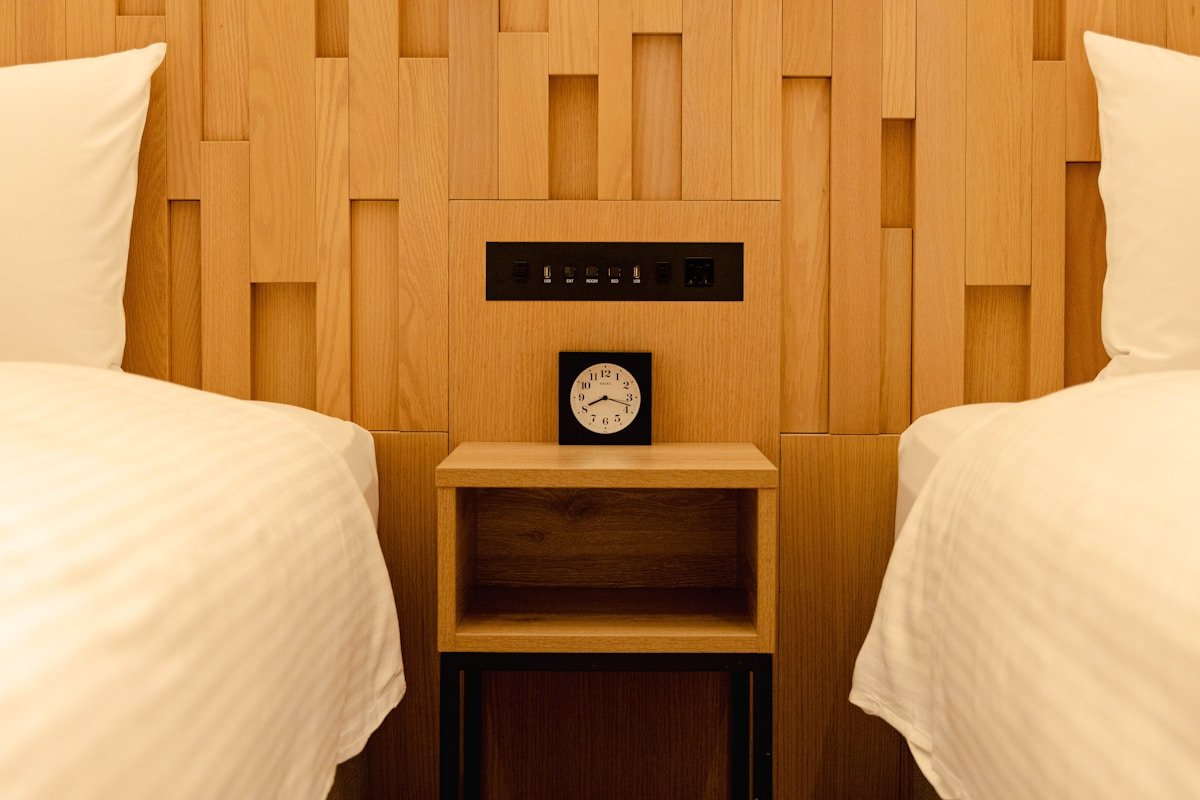
Osaka’s accommodation market is notably more affordable than Kyoto’s and more compact than Tokyo’s - you can cover most of the city efficiently from any well-chosen neighbourhood. The decision of where to stay comes down to what you want at the end of the day: proximity to restaurants and nightlife, easy access to transport for day trips, or character and neighbourhood atmosphere. Search hotels in Osaka on Booking.com
Neighbourhood Guide
Namba and Shinsaibashi - Tourist Hub, Best Food Access
The Namba and Shinsaibashi area is where most first-time Osaka visitors stay, and for good reason. Dotonbori is a 5-minute walk. Kuromon Market is 10 minutes. The Osaka Metro’s Midosuji Line runs through Namba and Shinsaibashi stations, connecting directly to Umeda in the north (8 minutes), Tennoji in the south (10 minutes), and the Osaka Bay area (25 minutes).
Average price range: ¥10,000–¥22,000 for a mid-range double per night
The downside is noise. The streets around Dotonbori and the Shinsaibashi shopping arcade stay active until midnight or later, and accommodation on the main streets reflects this. Request a room above the fourth floor or facing away from the main street. The area is also where party tourists and stag groups congregate - something to factor in if travelling as a couple or family.
Best for: First-time visitors; food-focused travellers; anyone prioritising nightlife access; travellers who want to walk everywhere rather than use transport.
Umeda and Kita - Business District, Best Transport Access
Umeda (or Kita, “the north”) is Osaka’s most important transport hub. JR Osaka Station, Hankyu Osaka-Umeda, Hanshin Umeda, and several subway lines converge here, making it the best base for day trips to Kyoto (Hankyu Kyoto Line, 42 minutes, ¥410), Kobe (Hankyu or JR, 30 minutes, ¥390–¥410), and the rest of the Kansai region.
Average price range: ¥9,000–¥20,000 for a mid-range double per night
The neighbourhood itself is a mix of high-end department stores (Hankyu, Isetan, Daimaru), office buildings, and station-adjacent restaurants. It’s less atmospheric than Namba but significantly more practical for those using Osaka as a regional base.
Best for: Travellers making multiple day trips to Kyoto, Kobe, and Nara; business travellers; those who prefer quieter streets than Namba offers.
Shinsekai - Budget-Friendly, Characterful
Shinsekai, in southern Osaka around Tsutenkaku Tower, has a distinct character - retro 1950s aesthetics, kushikatsu restaurants on every corner, and a local population that doesn’t primarily cater to tourists. The neighbourhood has gentrified substantially over the past decade and is entirely safe.
Average price range: ¥6,000–¥12,000 for a budget to mid-range room per night
Transport to central Osaka is easy (subway to Namba takes 8 minutes on the Sakaisuji Line). The local food scene - kushikatsu, fugu, horumon (offal) - is authentic and cheap.
Best for: Budget-conscious travellers; those who want neighbourhood character over tourist infrastructure; repeat Japan visitors.
Tennoji - Quiet, Good Metro Access
Tennoji is slightly south of centre, anchored by the Tennoji JR and subway interchange. The area around Abeno (adjacent to Tennoji) has undergone significant development, including the Abeno Harukas skyscraper. The wider Tennoji area is residential and relatively quiet.
Average price range: ¥8,000–¥15,000 per night
Sumiyoshi Taisha shrine is 10 minutes south by train. Namba is 10 minutes north. A good location for travellers who want more space and quiet than Namba while maintaining central access.
Osaka Bay - Aquarium Proximity, Poor Overall Access
The Tempozan Harbour area (Osakako Station, Chuo Line) has a handful of hotels targeting the Kaiyukan Aquarium visitor market.
Average price range: ¥12,000–¥25,000 per night
The location is poor for most of what makes Osaka interesting. Dotonbori is 20–25 minutes by subway. Only worth considering if the aquarium is genuinely central to your visit.
Neighbourhood Comparison Table
| Area | Best for | Budget ¥/night | Mid-range ¥/night | Luxury ¥/night |
|---|---|---|---|---|
| Namba/Shinsaibashi | Food, nightlife, first visit | ¥6,000–¥9,000 | ¥10,000–¥22,000 | ¥25,000–¥50,000 |
| Umeda/Kita | Day trips, transport access | ¥6,500–¥9,500 | ¥9,000–¥20,000 | ¥22,000–¥60,000 |
| Shinsekai | Budget, neighbourhood character | ¥4,500–¥8,000 | ¥8,000–¥14,000 | Not available |
| Tennoji | Quiet, good access | ¥5,500–¥8,500 | ¥8,000–¥15,000 | ¥18,000–¥35,000 |
| Osaka Bay | Aquarium access only | ¥8,000–¥12,000 | ¥12,000–¥25,000 | ¥28,000–¥55,000 |
Notable Properties by Category
Mid-Range Hotels
Dormy Inn Premium Namba (Motomachi-cho, Naniwa-ku): A reliable business hotel chain entry in the Namba area. Rooms ¥12,000–¥18,000. The standout feature is the communal onsen (hot spring bath) on an upper floor - an unusual addition for a business hotel and genuinely good. Free late-night ramen service (10pm–11pm) is a popular perk. Good English service.
Cross Hotel Osaka (Shinsaibashi area): Design-forward business hotel with a strong local food-focused breakfast. Rooms ¥10,000–¥15,000. The location on the edge of the Shinsaibashi shopping district is walkable for most central Osaka destinations. Rooftop terrace.
APA Hotel Namba-Ekimae (near Namba Station): Dependable APA business hotel with compact but well-equipped rooms, ¥8,000–¥13,000. APA’s online booking rate is often significantly lower than the walk-in rate.
Budget Options
Capsule Hotel Asahi Plaza Shinsaibashi (Shinsaibashi area): Pod-style capsule hotel in the ¥3,500–¥5,000 range. Separate male and female floors, good common areas, central location. One of the better capsule hotels for first-time capsule-stayers - the pods are larger than the Tokyo average.
First Cabin Namba (near Namba): Business class-sized pods (larger than standard capsules) in a sophisticated design setting. ¥5,500–¥7,500 per night. The size and privacy level is between a capsule and a private room.
Guesthouse Tomarigi (Nipponbashi): Traditional wooden house converted to a budget guesthouse. Dormitory beds from ¥2,800, private rooms from ¥7,000. Strong community atmosphere, English-speaking staff. Good for solo travellers.
Luxury
Conrad Osaka (Nakanoshima): 57-floor luxury hotel in the Nakanoshima business district. From ¥40,000/night. The sky lobby at the 40th floor and the views over the river are exceptional.
The St. Regis Osaka (Honmachi): From ¥45,000/night. The most formal luxury offering in central Osaka, with butler service and Japanese art throughout.
Osaka has few traditional inns within the city itself - if a ryokan night is on your itinerary, it usually makes more sense in Kyoto or an onsen town. Our Japan ryokan guide explains how booking and meals work.
Getting to Osaka? Compare flights to Japan to find the best international connection. Travel insurance for Japan covers delays, cancellations, and medical costs - worth sorting before you finalise accommodation bookings. An Airalo eSIM for Japan means you have mobile data and maps from the moment you land.
Osaka vs Kyoto as a Base
The practical comparison:
Osaka as base:
- Accommodation 25–35% cheaper than equivalent Kyoto
- Better food scene for casual to mid-range eating
- Active nightlife available until very late
- Easy access to Kyoto (29 min JR, ¥560), Nara (45 min, ¥890), Kobe (30 min, ¥410)
- Less atmospheric for temple and traditional culture seekers
- More English infrastructure in tourist zones
Kyoto as base:
- Morning temple access without crowds requires staying in Kyoto
- Traditional atmosphere in Gion and Higashiyama neighbourhoods
- Osaka easily accessible as a day trip
- Accommodation notably more expensive, especially in autumn and cherry season
- Better for travellers whose priority is temples, traditional arts, and Japanese cultural history
For a 7–10 night Kansai trip, splitting between three nights in Osaka and four in Kyoto covers both effectively. If budget is a constraint, base in Osaka for the duration and day-trip to Kyoto.
See also: Osaka travel guide · Things to do in Osaka · Best restaurants in Osaka · Ryokan guide Japan · Kansai region guide · Osaka long-stay guide