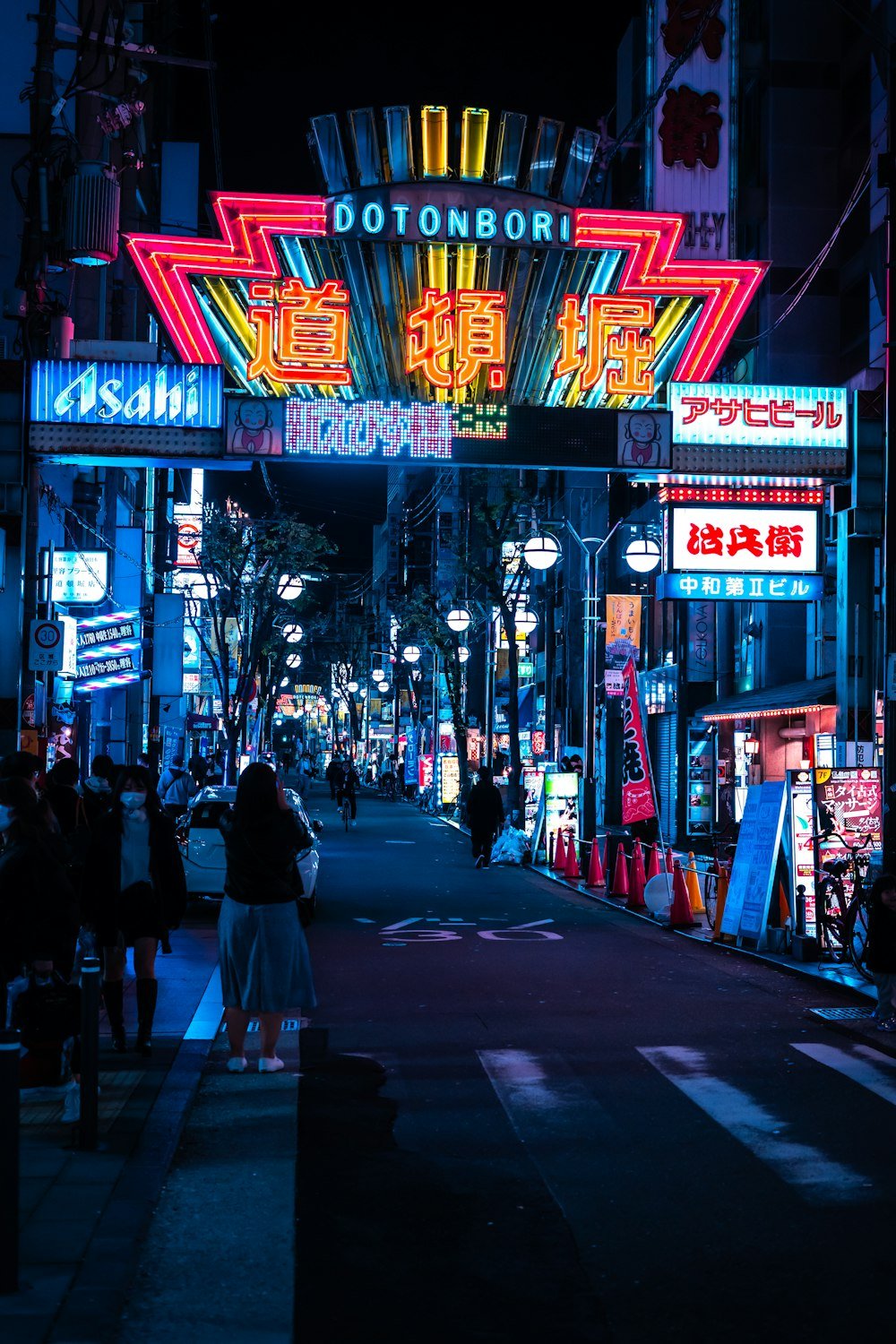
Osaka drinks differently. Where Tokyo nightlife can feel like a performance - the themed bars, the dress codes, the careful curation - Osaka’s version is blunter, louder, and considerably more affordable. This is a city that takes food and drink seriously as pleasures rather than status signals, and the nightlife reflects that.
The Dotonbori canal lights up like a carnival after dark. Namba’s back streets fill with smoke from kushikatsu stalls. In Ura-Namba, the locals who know where to go are two alleys removed from any tourist map. These are the things that make Osaka worth staying out late.
Dotonbori: The Main Event
No serious discussion of Osaka nightlife starts anywhere other than Dotonbori. The kilometre-long canal running through Namba is lined on both sides with restaurants and bars in a state of continuous competition for who can install the most aggressive neon sign.
The famous sights: The Glico Running Man billboard, the giant mechanical crab outside Kani Doraku, the Fugu puffer fish above Zuboraya - these are all real, all lit up at night, and all worth walking past at least once. They are also surrounded by tourist-trap restaurants charging twice the Osaka rate for half the food.
Where to actually drink: Walk a block or two behind Dotonbori’s main canal and the calibre improves and the prices drop. Hozenji Yokocho (Hozenji Temple Alley) is a stone-paved lane with low-key bars and restaurants tucked behind the Hozenji Fudo temple, which is worth a quick visit. The moss-covered stone Buddha gets a ladle of water poured over it day and night by residents passing through.
Craft beer: Minoh Beer Garden, run by the respected Minoh Brewery from northern Osaka, has a Dotonbori-area outlet (Namba Nipponbashi location). Their W-IPA and Stout are the best beers made in Osaka. Pints from approximately ¥800–¥1,200.
What to avoid: The hostess bars and girl bars around Dotonbori’s back streets are legal but often use confusing pricing. Touts are active on the main strip from around 19:00 onward. “Free entry” establishments typically recoup via minimum drink charges - always ask the total expected spend before you sit down.
Ura-Namba: The Local Alternative
Five minutes south of Namba Station, through the warren of streets between Sennichimae and Nankai Namba, is Ura-Namba. This is where Osaka goes to drink when it doesn’t want to deal with Dotonbori’s noise.
The streets here are narrow enough that standing outside a bar spills into the road. Small groups cluster around standing room-only stalls eating kushikatsu and yakitori, bottles of beer balanced on metal counters. The bars are almost all independently run, mostly tiny, and mostly cheap.
Ganso Kushikatsu Daruma (Dotonbori branch) - One of the original kushikatsu chains, with branches throughout Namba. Order the set (around ¥1,500 for 8–10 skewers) and keep your beer glass full. The no double-dipping rule is enforced via signage in multiple languages. Worth the queue at the Dotonbori branch.
Satou - A yakitori bar in Ura-Namba known for chicken skewers at ¥150–¥200 each and a standing counter that spills half its customers onto the pavement. Cash only. No English menu but a photoboard covers the essentials.
Craft Beer Base - A small bottle shop and standing bar near Namba that stocks Japanese microbrews alongside a rotating selection of international imports. Four to six taps on rotation. Knowledgeable staff, no cover charge.
The streets around Ura-Namba change quickly - new standing bars open, others close. The best approach is to walk the block between Sennichimae and Namba’s southern exit and follow what smells good.
Shinsekai: Kushikatsu District and the Tsutenkaku Tower
Shinsekai is Osaka’s most unusual neighbourhood - a grid of streets built in 1912 around the Tsutenkaku Tower, modelled on Paris in the north and Coney Island in the south (the southern half didn’t survive the war). What survived is a working-class neighbourhood of pachinko parlours, old cinema facades, shogi parlours, and dense concentrations of kushikatsu restaurants.
It’s not a tourist district in the conventional sense - locals actually live here and the prices reflect that. A full kushikatsu meal with drinks runs ¥2,000–¥3,000 per person at most spots.
Tsutenkaku Tower itself is worth visiting in the evening - the surrounding park is lit up and the Shinsekai streets below are at their most photogenic from around 19:00. Observation deck entry is approximately ¥1,000 as of 2026 (check current pricing on the official website before visiting).
Best kushikatsu spots:
- Janjan Yokocho - A covered arcade near the tower with stall-style kushikatsu restaurants, takoyaki stands, and a Showa-era atmosphere that feels genuinely local. Sit at the counter, point at what you want, and watch the frying. ¥100–¥200 per stick.
- Kushikatsu Daruma (Shinsekai main branch) - The original location of the chain, with queues most evenings. More atmospheric than the Dotonbori branch, less convenient for those staying in Namba.
- Kushikatsu Capricciosa - A sit-down option with table service and English menus for visitors who prefer slightly more structure. Set courses from approximately ¥1,800 per person.
Shinsekai is about 10 minutes by train from Namba (Osaka Metro Midosuji or Sakaisuji Line to Dobutsuen-mae), or 20–25 minutes on foot along Sennichimae.
America-Mura (Amemura): Young Crowd and Clubs
America-Mura (American Village) sits in the Shinsaibashi area northwest of Namba - a compact grid of streets that became a streetwear and youth culture hub in the 1970s and never really left.
During the day it’s vintage shops and cafes. At night the clubs take over. Triangle Park at the centre of Amemura is where the evening’s traffic reorganises itself - groups forming, plans being debated, skaters occupying the benches.
Club Joule (Nishi-Shinsaibashi 2-11-7) - One of Osaka’s largest clubs, running across multiple floors with a capacity of several hundred. Regular techno and house nights alongside J-pop themed events. Entry typically ¥1,500–¥2,500 with a drink ticket. Open until 05:00.
Cinquecento - A smaller club in the Amemura area with a loyal local following for hip-hop and R&B nights. Better sound system than its size suggests.
Circus Osaka - Boutique club focused on electronic music with an international booking policy. Draws a more dedicated music crowd than the general Amemura clubs. Entry around ¥2,000–¥3,000. Check their Instagram for current programming before heading over.
The bars between clubs: Shinsaibashi-suji (the covered shopping arcade) closes to shops around 20:00 but the surrounding streets stay busy. The Nishi-Shinsaibashi area has numerous small bars where you can drink between club sets without paying entry again.
Namba Parks and the Namba Station Area
The streets radiating from Namba Station offer the densest concentration of izakaya in Osaka, operating at every price point from ¥300-per-dish chains to serious restaurants with curated sake lists.
Namba Parks (the shopping complex built over an old baseball stadium) has a rooftop terrace area with restaurants and bars that are notably pleasant in warm weather - a rare outdoor seating option in Namba’s otherwise indoor-dominant landscape. Bars open until approximately 23:00.
Standing bars (tachinomi) along Namba Walk: The underground shopping promenade Namba Walk connects several stations and has a handful of standing-bar spots that are open into the evening. Not glamorous, but quick and cheap - a beer and a snack for ¥500–¥700. Popular with local commuters and therefore almost never crowded with tourists.
Namba Yasaka Shrine is two minutes from the main Namba entertainment district and worth knowing about - the giant lion’s head facade is particularly striking when illuminated at night, and the surrounding streets are calmer than Dotonbori despite their proximity.
The Kushikatsu Bar Experience: A Practical Guide
Kushikatsu bars are Osaka’s most distinctive drinking-and-eating experience. A few things worth knowing:
The no double-dipping rule is real and genuinely enforced. The shared sauce pot on the counter is communal - you dip your skewer once, you do not return for more sauce. If you want more, use the ladle or the cabbage leaves provided to scoop sauce onto your plate. Breaking this rule in Shinsekai is enough to get you asked to leave. The signs in bars are not decoration.
Order by pointing unless you read Japanese. Most kushikatsu bars display their items on signboards or have baskets of physical examples. Point at the thing, hold up fingers for the quantity. The staff will bring it, tell you the price per item (usually ¥100–¥250), and tally at the end.
Beer and highballs are the pairings. Osaka highball culture is strong - a whisky and soda (highball, haiboru) runs ¥400–¥600 and pairs naturally with the salty, fatty skewers. Draft Asahi and Kirin are the defaults; ask specifically if you want something else.
Finish with cabbage. Most kushikatsu spots put out shredded cabbage as a palate cleanser. It’s free and refillable. Use it.
Getting Around at Night
Namba is the hub for Osaka nightlife and most of the areas above - Dotonbori, Ura-Namba, Shinsekai, Amemura - are within 15 minutes’ walk of Namba Station. You don’t need taxis or trains between most of these districts.
The Osaka transport guide covers the metro in detail. For nightlife purposes:
- Last trains: Osaka Metro lines run until approximately 00:30. Check your specific line and direction - the Midosuji Line (north-south) and Sennichimae Line (east-west) are the ones you’ll use most from Namba.
- Between midnight and 05:00: Taxis are available across Namba and Shinsaibashi. Short trips (Namba to Shinsaibashi) run approximately ¥600–¥800. Longer journeys (Namba to Umeda) run ¥1,500–¥2,200. Use the GO app or Japan Taxi to book.
- Walking: Namba to Dotonbori is 5 minutes. Namba to Shinsekai is 20–25 minutes. Namba to Amemura is 10–12 minutes. Most of Osaka’s nightlife district is walkable from one centre.
Budget Guide
| Category | Typical spend |
|---|---|
| Kushikatsu meal + drinks (Shinsekai) | ¥2,000–¥3,500 per person |
| Izakaya (food + drinks, 2 hours) | ¥2,000–¥4,000 per person |
| Standing bar (tachinomi) | ¥500–¥1,500 per person |
| Club entry (Amemura, includes drink) | ¥1,500–¥3,000 |
| Craft beer (Minoh) | ¥800–¥1,200 per pint |
| Highball at izakaya | ¥400–¥600 |
| Taxi (Namba to Shinsaibashi) | ¥600–¥800 |
Osaka’s food culture - the concept of kuidaore (eat until you drop) - extends naturally into its drinking culture. The same generosity that puts good food in every price bracket applies to the bars. You don’t need to spend a lot to drink well here. You just need to know which alley to turn down.
For more on what to eat alongside your drinks, see our Osaka food guide and best Osaka restaurants.
Where to stay: Search hotels in Osaka on Booking.com
Explore Osaka: Tours and activities in Osaka - guided night food tours, bar crawls, and evening experiences across Dotonbori, Shinsekai, and beyond.
For daytime plans and the wider picture, start with our Osaka travel guide.