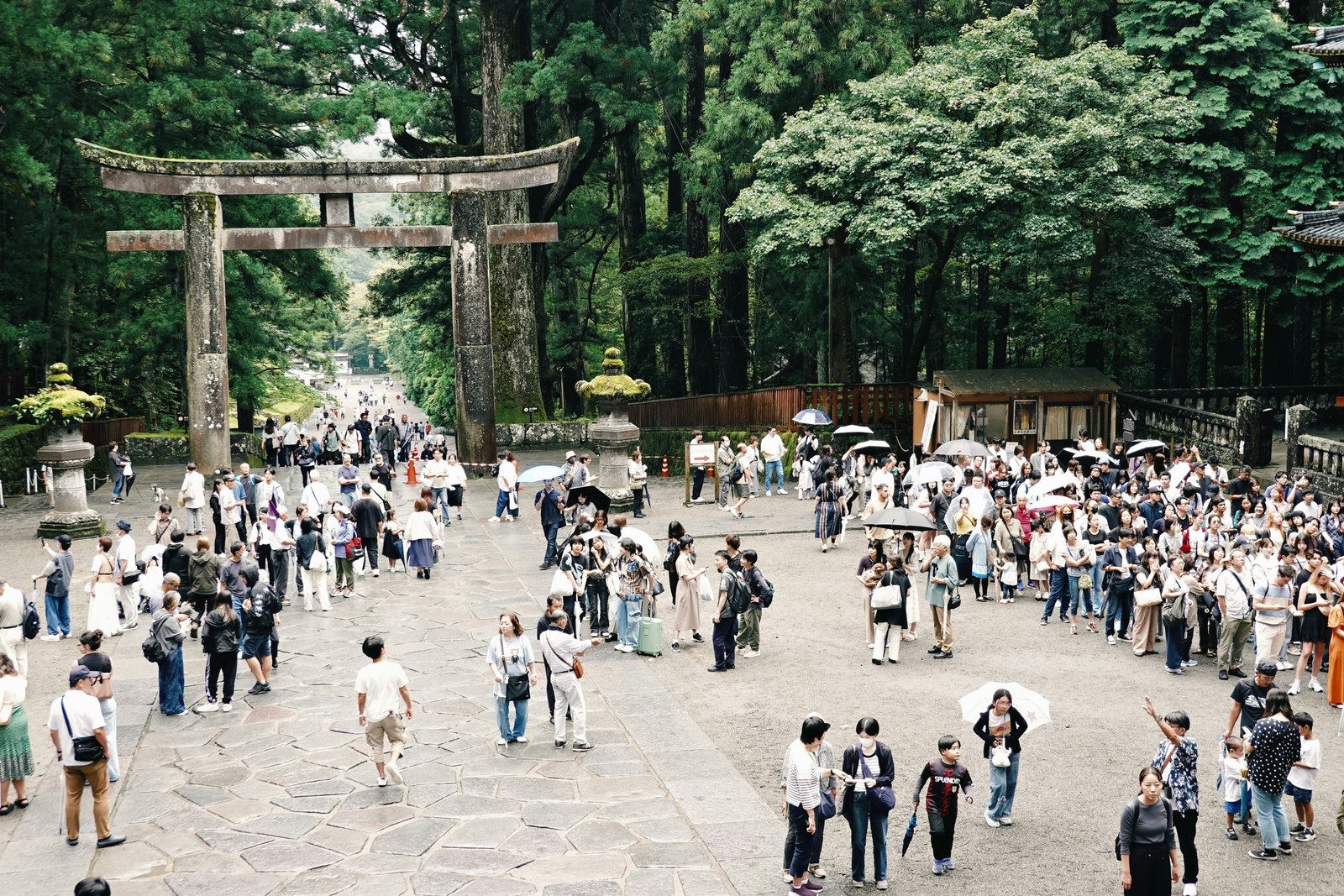
Nikko’s transport options split into two zones: the valley floor where the World Heritage shrine complex sits (easily walkable from the station), and the highland area around Lake Chuzenji and Kegon Falls (accessible only by bus along the famous Irohazaka switchback road). Understanding this geography makes the day much simpler to plan.
Getting to Nikko from Tokyo
Two rail routes connect Tokyo to Nikko. For most visitors, the Tobu Line from Asakusa is the practical choice.
Tobu Nikko Line (from Asakusa)
The Tobu Line is the standard visitor route. Trains depart from Asakusa Station (also served by the Tokyo Metro Ginza Line for connections across the city).
| Service | Journey Time | Fare (2026 approx) |
|---|---|---|
| Tobu Spacia Limited Express (reserved) | 1h 50min | ¥2,780 |
| Tobu Rapid (semi-express, no supplement) | 2h 0min | ¥1,400 |
| JR Nikko Line from Utsunomiya (JR Pass) | 45 min (from Utsunomiya) | ¥680 |
Tobu Spacia: A comfortable limited express with reserved seating, running direct without changes. Recommended for weekend visits when the rapid trains can be crowded. Book through the Tobu Railway website or at Asakusa Station.
JR Route (for JR Pass holders): Take the JR Tohoku Shinkansen from Tokyo or Ueno to Utsunomiya (50 minutes, covered by JR Pass), then the JR Nikko Line local train from Utsunomiya to Nikko (45 minutes, ¥680, not covered by JR Pass). The JR Nikko station is a 10-minute walk from the Tobu-Nikko station; both are equally convenient for the sights.
For private transfers from Tokyo hotels directly to Nikko, Kiwitaxi offers fixed-rate vehicles - useful for groups or early morning departures when train options are limited.
Local Buses
Within Nikko, Tobu Bus operates the routes visitors need. The bus system is the only way to reach Lake Chuzenji and Kegon Falls.
Nikko World Heritage Bus
The most useful service for visitors. A heritage-themed bus that loops between Nikko Station and the World Heritage shrine area (Rinnoji, Toshogu, Futarasan Jinja).
- Route: Nikko Station → Shinkyo → Nishi-sando → Omotesando (Toshogu access)
- Frequency: Every 10–30 minutes
- Single fare: ¥180–¥250 depending on stop; IC cards accepted
- 1-day pass: ¥1,200 (covers all Tobu Bus routes including Lake Chuzenji)
Irohazaka Road Buses (to Lake Chuzenji)
The route to Lake Chuzenji and Kegon Falls follows the Irohazaka mountain road - 48 hairpin switchbacks climbing approximately 450m in elevation. Private cars are prohibited on the uphill (Route 120) lane during peak seasons; buses are the only option.
| Route | Journey Time | Fare (approx) |
|---|---|---|
| Nikko Station → Chuzenjiko Onsen | 45 min | ¥1,100 |
| Chuzenjiko Onsen → Kegon Falls | 2 min walk | - |
| Chuzenjiko Onsen → Ryuzu Falls | 15 min bus | ¥340 |
| Chuzenjiko Onsen → Yumoto Onsen | 30 min bus | ¥820 |
Buses depart from bus stop 2 outside Tobu-Nikko Station. During autumn foliage season (October–November), the Irohazaka road becomes extremely congested - the 1-day bus pass offers the best value and avoids any parking headache.
Nikko All Area Pass
For visitors combining the shrines and the lake:
| Pass | Price (2026 approx) | Coverage |
|---|---|---|
| Nikko World Heritage Bus 1-day pass | ¥1,200 | All Tobu Bus routes (shrine area + Lake Chuzenji) |
| Tobu Nikko All Area Pass (2-day) | ¥4,400 (from Asakusa) | Tobu train Tokyo–Nikko return + all buses |
The Tobu 2-day All Area Pass includes the round-trip Tobu train fare from Asakusa plus unlimited buses within Nikko. For visitors making a single overnight trip, this is generally better value than buying components separately.
Purchase at Asakusa Station’s Tobu ticket counter, or at the Tobu Tourist Information Center near Tobu-Nikko Station.
IC Cards
Suica, Pasmo, and ICOCA work on the Tobu Line trains (including the rapid services) and on all Tobu Bus routes within Nikko. The Spacia Limited Express requires a separate reserved-seat supplement that must be purchased as a ticket, not paid by IC card.
Top up at station machines at Asakusa, Shinjuku, or any Tokyo Metro station before departing for Nikko - top-up options in the Nikko area itself are limited.
Walking the Shrine Complex
The World Heritage Site in Nikko is surprisingly walkable once you’re in the area. The main concentration of shrines and temples sits on a hillside approximately 10 minutes on foot from the Shinkyo Bridge.
Key walking distances:
| From | To | Walking time |
|---|---|---|
| Tobu-Nikko Station | Shinkyo Bridge | 25–30 min |
| Shinkyo Bridge | Toshogu main gate | 10 min (uphill) |
| Toshogu → Futarasan Jinja → Taiyuinbyo | 15–20 min loop |
The cedar avenue (Nikko’s famous cryptomeria avenue, stretching 35km in total) flanks the approach road from the station - walking it rather than taking the bus is one of Nikko’s understated pleasures.
Taxis
Taxis wait outside Tobu-Nikko and JR Nikko stations. A taxi to the Toshogu gate costs approximately ¥1,000–¥1,400. For the lake, taxi fares from Nikko Station to Chuzenjiko Onsen are approximately ¥6,000–¥8,000 - far more expensive than the bus, and restricted by the Irohazaka traffic controls during peak season regardless.
The GO taxi app operates in Tochigi Prefecture and can be used for Nikko pickups.
Cycling
Nikko’s valley floor - the 2km between the stations and the shrines - is flat and cycle-friendly. Bicycle rental shops near Tobu-Nikko Station offer city bikes from approximately ¥1,000–¥1,500 per day. Cycling beyond the Irohazaka switchbacks to the lake is only recommended for experienced cyclists; the road is steep, traffic-heavy, and offers no separated lane for bicycles.
Transport essentials for Nikko: The Japan Rail Pass covers the Shinkansen to Utsunomiya, making the JR route viable if you already hold a pass. For most visitors, the Tobu route from Asakusa with the 2-day All Area Pass is better value. For private transfers from Tokyo, Kiwitaxi handles Nikko runs.
Plan Your Trip
- Flights - Find the best fares to Japan
- Hotels - Search hotels in Nikko on Booking.com
- Travel Insurance - Get covered before you go
- eSIM - Stay connected from landing
- Car Rental - Compare prices across providers
See also: Nikko travel guide · Things to do in Nikko · Where to stay in Nikko · Getting around Japan · Japan Rail Pass guide