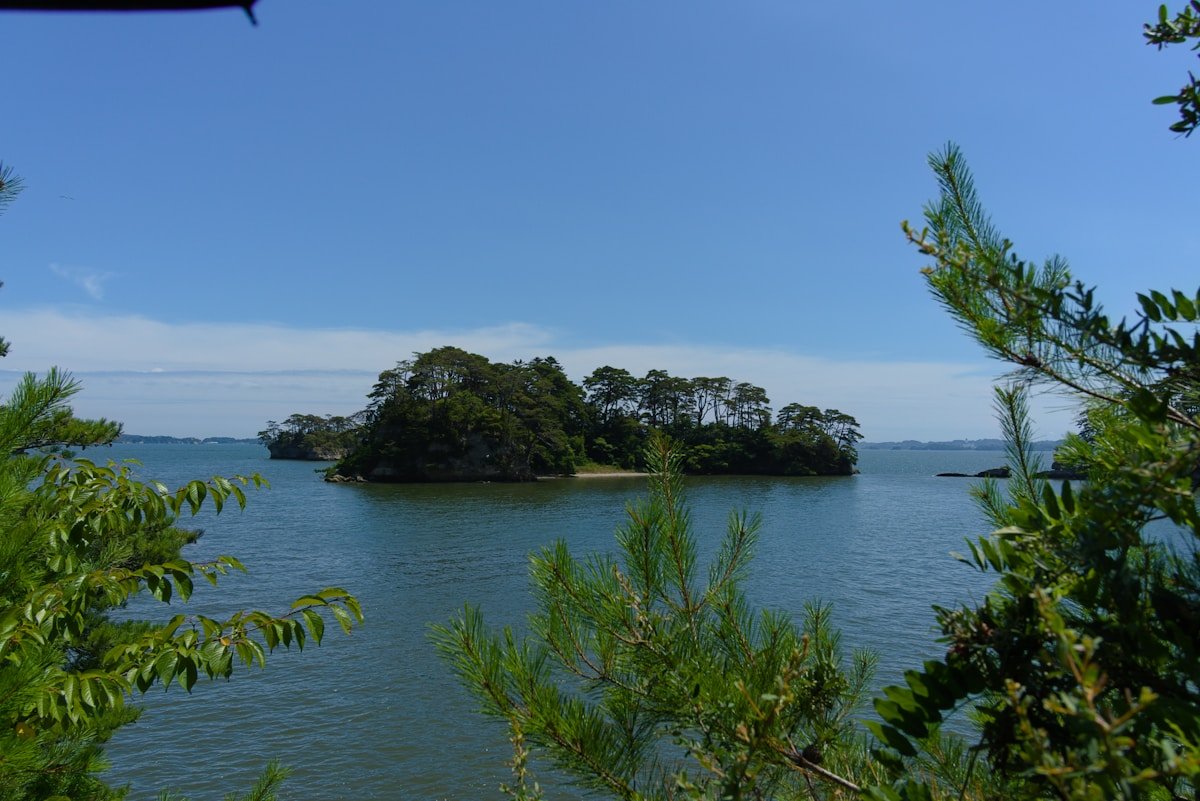
Matsushima’s food identity is shaped by two things: its protected bay and its proximity to Tohoku’s mountains and interior. The bay produces outstanding oysters; the rivers and hills of Miyagi Prefecture supply the fish paste, edamame, and rice that define the region’s most recognisable dishes. The eating here is unpretentious and closely tied to what is actually growing and swimming nearby.
Matsushima Oysters (Kaki)
The oysters of Matsushima Bay are among the most celebrated in Japan. The bay’s calm, sheltered water and rich phytoplankton supply produce oysters with a clean, concentrated brine, firm texture, and a sweetness that deepens through winter. Oyster farming in the bay is thought to date back several hundred years; today the racks of suspended oyster cages visible from the harbour and island cruise boats are a defining feature of the bay’s appearance.
The simplest way to eat them is at a charcoal stall along the harbourfront: the shells are placed on the grill, left until they pop open and the liquor inside begins to bubble, then served with lemon and soy. One piece costs approximately ¥300–¥500 as of 2026. Three or four pieces make a satisfying harbourside snack. The season runs October through March - oysters in this period have the best flavour and are considered safe to eat raw or lightly cooked.
Other presentations worth seeking out: kaki-don (oysters on rice in a light soy and mirin broth, approximately ¥1,500–¥2,000), kaki nabe (oyster hot pot, approximately ¥3,800 for two in season), and kaki-furai (battered and deep-fried oysters, crisp outside and creamy inside, approximately ¥1,300–¥1,800 for a set).
Sasakamaboko
The bamboo-leaf fish cake is Matsushima’s most portable and distinctively local food. Kamaboko is a Japanese processed seafood product made from surimi - white fish paste blended with starch and salt, then shaped and cooked. Sasakamaboko specifically is shaped by hand into an elongated bamboo-leaf profile, mounted on a small wooden skewer, and grilled until the surface develops a light golden-brown colour and a mild smokiness.
The interior is dense and springy, with a clean white fish flavour that is not fishy or strong. It is sold warm from the grill at several shops throughout Matsushima, typically for approximately ¥150–¥300 per piece as of 2026. Eat it standing on the street while walking between the temple and the harbour. Shrink-wrapped sasakamaboko is also sold as a souvenir gift (approximately ¥600–¥1,200 for a pack of five to eight) - it keeps refrigerated for several days.
The most respected producers in the area include Matsunaga Sasakamaboko near the station, which has been making the product for generations. Visitors who have spent time in Sendai may already know sasakamaboko - Matsushima’s versions tend to be made in small batches grilled to order rather than pre-produced, which makes the harbour experience slightly fresher.
Zunda Mochi
Zunda mochi is the dessert most associated with the Tohoku region and the food that most clearly signals that you are in the cultural orbit of Sendai rather than Tokyo. The base is mochi - glutinous rice cake, white and soft, with a mild chew. The coating is zunda - a sweet paste made from freshly pounded edamame (young green soybeans), giving it a pale green colour and a flavour that is sweet but also slightly savoury and faintly grassy. The combination is unusual but immediately appealing.
It is available throughout Matsushima at souvenir shops in portion cups (approximately ¥300–¥500 as of 2026) and in sealed packaging for gifts. In Sendai, a 40-minute train ride away, zunda appears in everything from shakes to parfaits to toast spreads. If you are only visiting Matsushima, the portioned cup at a souvenir shop is the most accessible version.
Matcha and Wagashi at Kanrantei
The teahouse at Kanrantei pavilion serves matcha and traditional wagashi (Japanese sweets) with a bay view. The standard tea and sweet set costs approximately ¥500–¥800 as of 2026. The wagashi changes seasonally and will typically include a seasonal manjū (sweet bean paste bun) or nerikiri (sculpted sweet made from white bean paste). The setting - a small pavilion room overlooking the pine islands - makes this an easy choice for an afternoon break.
More casual versions of matcha soft-serve (soft ice cream with matcha flavouring, approximately ¥400–¥500) are sold at stalls near the main tourist areas. These are summer-focused but available year-round at most stalls.
Seafood from Miyagi Bay
Beyond oysters, Matsushima’s restaurants draw on a broader Miyagi seafood supply. The nearby port of Ishinomaki - one of the most productive fishing ports in Japan - supplies restaurants throughout the region with Pacific seafood.
Look for anago (conger eel), which appears in the region in baked or simmered forms at traditional restaurants; kaki-su (vinegared oysters, a slightly less common preparation that showcases the oyster’s natural flavour more purely); and wakame seaweed harvested from Miyagi Bay, which appears in miso soups and seaweed salads throughout local restaurants. Miyagi wakame is among the most prized in Japan - the cold, fast-moving water of the bay produces a deep green, flavourful leaf that is entirely different from the reconstituted dried product.
Sendai Beef (Date Beef)
Matsushima’s proximity to Sendai means that Sendai’s regional beef - branded as Date beef (after the Date clan that historically dominated the region) - appears on menus at mid-range and higher restaurants. Sendai beef is a brand of Black Wagyu raised on Miyagi’s feed and considered comparable in quality to Yamagata beef. A grilled beef course at a harbourside restaurant costs approximately ¥2,500–¥4,500 as of 2026. Most visitors focus on seafood in Matsushima, but the beef is genuinely good and worth ordering if you are having a longer sit-down meal.
See Matsushima through its food: Food and cultural tours in Matsushima often include market visits, tastings, and dishes you’d never find independently.
Souvenir Foods
The souvenir economy along the main street and near Godaido Hall is active. Beyond sasakamaboko and zunda, look for: hitome-bo rice (a Miyagi short-grain brand with strong local pride), Matsushima-flavoured senbei (rice crackers in oyster or sea vegetable flavours, approximately ¥400–¥800 per bag), and various oyster sauces, pickled seaweed, and miso products specific to Miyagi. The covered arcade near the ferry pier concentrates most of the food souvenir options.
See things to do in Matsushima for the bay cruise and temples, and best restaurants in Matsushima for where to sit down and eat.
Where to stay: Search hotels in Matsushima on Booking.com
See also: Matsushima travel guide · Where to stay in Matsushima · Day trips from Matsushima · Sendai travel guide · Tohoku region guide