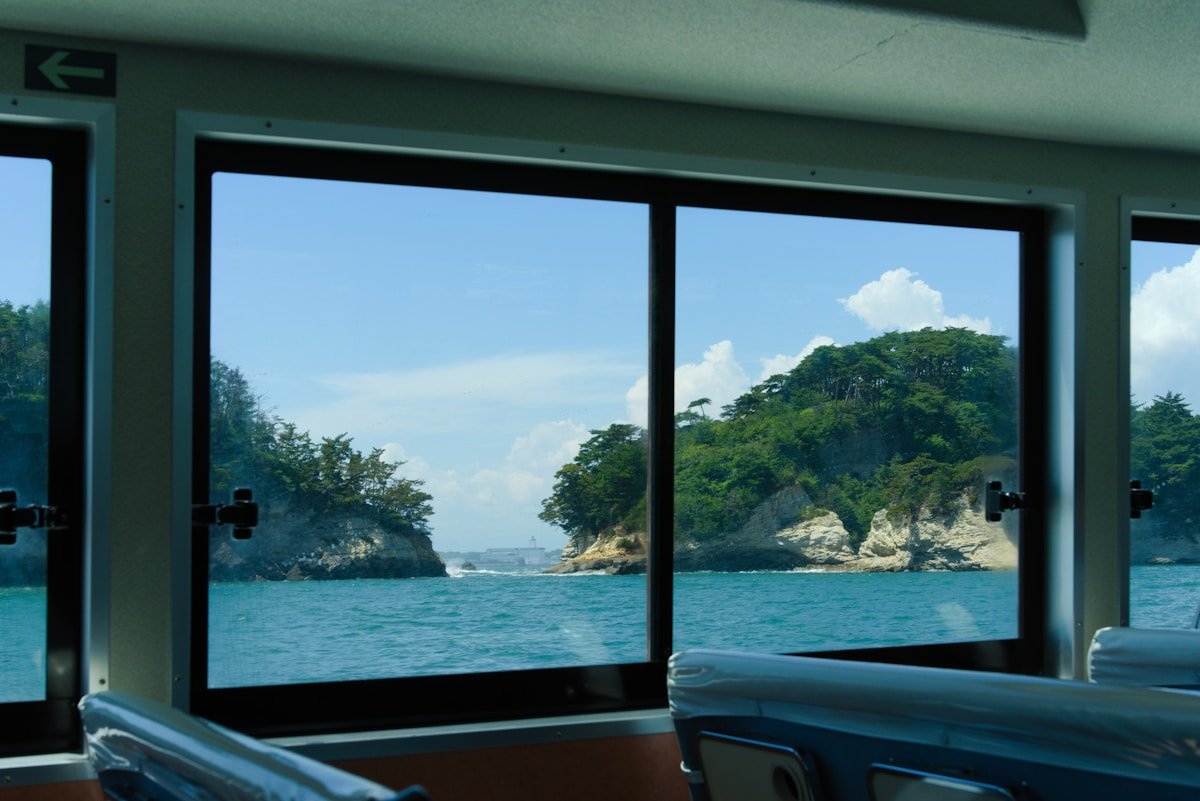
Matsushima packs a substantial amount of activity into a small area. The bay, islands, temple, teahouses, seafood stalls, and walking paths are all within easy reach of each other, and a well-planned day allows you to cover the main cultural sites, take to the water, and eat extremely well. Here is what to prioritise.
1. Walk the Zuiganji Cave Corridor and Temple
The approach to Zuiganji temple leads through a corridor of meditation caves carved into the rock face beside the main cedar-lined path. Monks over several centuries hollowed these small cells from the soft sandstone and filled them with carved Buddha figures and inscribed memorial tablets. The effect - dark alcoves cut into pale rock, illuminated by ambient light - is quietly extraordinary.
Beyond the caves, the main temple hall (hondo) built by Date Masamune in 1609 is a National Treasure displaying Momoyama-period woodcarving and painted fusuma sliding doors of the highest quality produced in the region. The adjacent Seiryuden treasure hall holds original art from the temple before restoration. Combined entry is ¥700.
The site opens at 8:00am, making it a good first stop before the boat tour crowds arrive. An early morning visit to the cave passage, when the light angles in from the east, is particularly worth arranging.
2. View Godaido Hall at Sunrise
Godaido - a small wooden hall built by Date Masamune in 1604 on a rocky islet accessible by two short bridges - is Matsushima’s most photographed subject, and for good reason. The hall is free to visit at any hour, and arriving before 7:00am puts you there with minimal or no other visitors. The combination of weathered timber, low morning light, and reflections off the still bay water produces photographs that justify an early start.
The statues inside the hall are sealed and only opened every 33 years; the last opening was in 2006, the next is 2039. The exterior architecture and location are the point.
3. Take the Bay Cruise
The 50-minute bay cruise operated by Matsushima Kanko Kisen (¥1,500 per person, boarding at the pier near Godaido) passes between the main island formations at water level. From the boat you see the caves and undercut rock faces on the island flanks that are invisible from shore, the overhanging pines growing from seemingly bare rock, and the outer bay islands that most visitors never reach on foot.
Black-tailed gulls and cormorants follow the boats throughout the cruise. The boat operates from 8:00am to 4:00pm with departures approximately every 30 minutes. A longer 80-minute route (¥2,400) extends to the southern islands; the standard 50-minute circuit is sufficient for most purposes.
4. Walk Oshima Island and its Meditation Caves
Oshima is connected to the mainland by a red arched bridge at the town’s eastern edge and is free to enter. The island was historically a retreat for Buddhist monks, and the cliff faces are carved with meditation cells similar to those at Zuiganji - though less well-maintained and more atmospheric for being largely unvisited. Stone reliefs and inscriptions cover the cave walls; some cells are deep enough to step inside.
The island walk takes 20 to 30 minutes at a relaxed pace. It is best combined with a visit to the Kanrantei teahouse on the small promontory between Oshima Bridge and the ferry pier.
5. Cross to Fukuurajima Walking Island
The pedestrian bridge to Fukuurajima (¥200 bridge toll) crosses 252 metres of open water to an island roughly 1 kilometre long. A footpath loops the island in 30 to 40 minutes past coastal cliffs, wildflower meadows, and stands of coastal trees, with views in all directions over the bay. Approximately 250 plant species have been identified on the island, many labelled with name stakes.
The island is consistently uncrowded - most visitors to Matsushima do not cross the bridge - which makes it a useful escape if the harbour area is busy. In late April and May, cherry and plum trees add colour.
6. Green Tea at Kanrantei Tea Pavilion
The Kanrantei teahouse (¥200 entry) sits on a small promontory between Oshima and the ferry pier with a terrace view across the bay toward the island clusters. Originally built at Toyotomi Hideyoshi’s Fushimi Momoyama castle in Kyoto, it was given to Date Masamune and relocated here. The building is a fine example of shoin-style tea architecture - simple, precise, deeply relaxed in its proportions.
Matcha with a traditional sweet (higashi) can be ordered on the terrace for approximately ¥500 separately from the entry fee. Late afternoon, when the light is warm and the boat traffic has settled, is the best time for the terrace.
7. Eat Fresh Oysters at Harbour Stalls
Between October and March, oyster stalls line the harbour-facing street and sell fresh kaki in several forms: raw on the half-shell (¥150–¥300 per piece), steamed in the shell (¥200–¥400), grilled over charcoal on a small brazier (¥200–¥350), or fried in panko breadcrumbs as kaki-furai (¥1,200–¥1,500 for a set). The most straightforward approach is to buy two or three raw oysters from a stall and eat them on the spot with lemon. The Matsushima bay oysters are clean and briny with a firm texture that holds up well to grilling.
Avoid oysters in summer (June to August). The peak season for the best-quality oysters is November to February when water temperatures are lowest.
8. Oyster BBQ at Pier-Side Stalls
Several of the stall operators along the harbour offer small charcoal braziers at outdoor tables where you cook your own oysters over coals. A portion of six oysters (¥600–¥800) comes raw in the shell; you place them directly on the grill and wait until the shells pop open. This format is unhurried and sociable, and the char adds a smokiness to the already rich shellfish flavour.
During peak season (November to February) these stalls can develop queues by late morning. Arriving before noon gives a better chance of a table.
9. Sit-Down Oyster Lunch at a Harbour Restaurant
For a more substantial meal, several sit-down restaurants along the harbour street serve full oyster menus. A kaki-don (oyster and rice bowl, ¥1,500–¥2,000), oyster tempura set (kakiage, ¥1,800), or multi-oyster tasting course (¥2,500–¥4,000) make a good midday meal. Donjiki and Matsushimaya are both well-regarded, open from 11:00am to 3:00pm, no reservations required for lunch.
10. Buy Matsushima Souvenir Sweets
The town produces several food souvenirs worth considering. Matsushima mochi (sweet pounded rice cakes) is sold in small box sets (¥800–¥1,500) at shops throughout the harbour district. Kaki crackers (oyster-flavoured rice crackers) come in wax paper bags for ¥600–¥900. Zuiganji temple seals (goshuin) can be collected at the temple office in red stamp-book format (¥300).
11. Cycle the Coastal Path
The town has a flat coastal cycling path running along the bay-facing streets, and rental bikes are available near Matsushima-Kaigan station from approximately ¥500 per hour. The cycling loop around the outer edges of the town and down to the bridge to Fukuurajima takes about 45 minutes at a relaxed pace.
12. Kayak Between the Islands
Guided kayaking tours of the bay run from operators based near the pier during the April to October season. A 2-hour guided session costs approximately ¥3,500 per person and takes you between islands unreachable by the ferry cruise, including through narrow channels and into shallow coves. No prior kayaking experience is needed. Matsushima Kayak Club is one of the established operators; advance reservation is recommended for weekend slots.
Book ahead for popular experiences: Tours and activities in Matsushima include guided options, skip-the-line tickets, and immersive cultural experiences.
13. Watch Sunrise from Saigyo-modoshi-no-matsu Park
A 20-minute uphill walk from the harbour brings you to Saigyo-modoshi-no-matsu park, a hilltop viewpoint above the town named for the famous 12th-century poet-monk Saigyo, who is said to have been turned away from this spot by a child’s riddle and turned back from his Tohoku journey. The hilltop view - looking down over the rooftops of the town and across the full spread of the island bay - is the best elevated perspective in Matsushima.
The park is free and open at all hours. Arriving for sunrise (between 4:30am in summer and 7:00am in winter) puts you here with no other visitors and optimal light over the water.
Where to stay: Search hotels in Matsushima on Booking.com
See also: Matsushima travel guide · Where to stay in Matsushima · Best restaurants in Matsushima · Day trips from Matsushima · Sendai city guide · Tohoku region guide