Matsushima Travel Guide: Pine Islands & Japan's Scenic Coast
Guide to Matsushima - one of Japan's three great scenic views. Pine islands, Zuiganji temple, oysters, and boat cruises 40 minutes from Sendai.
Guides for Matsushima
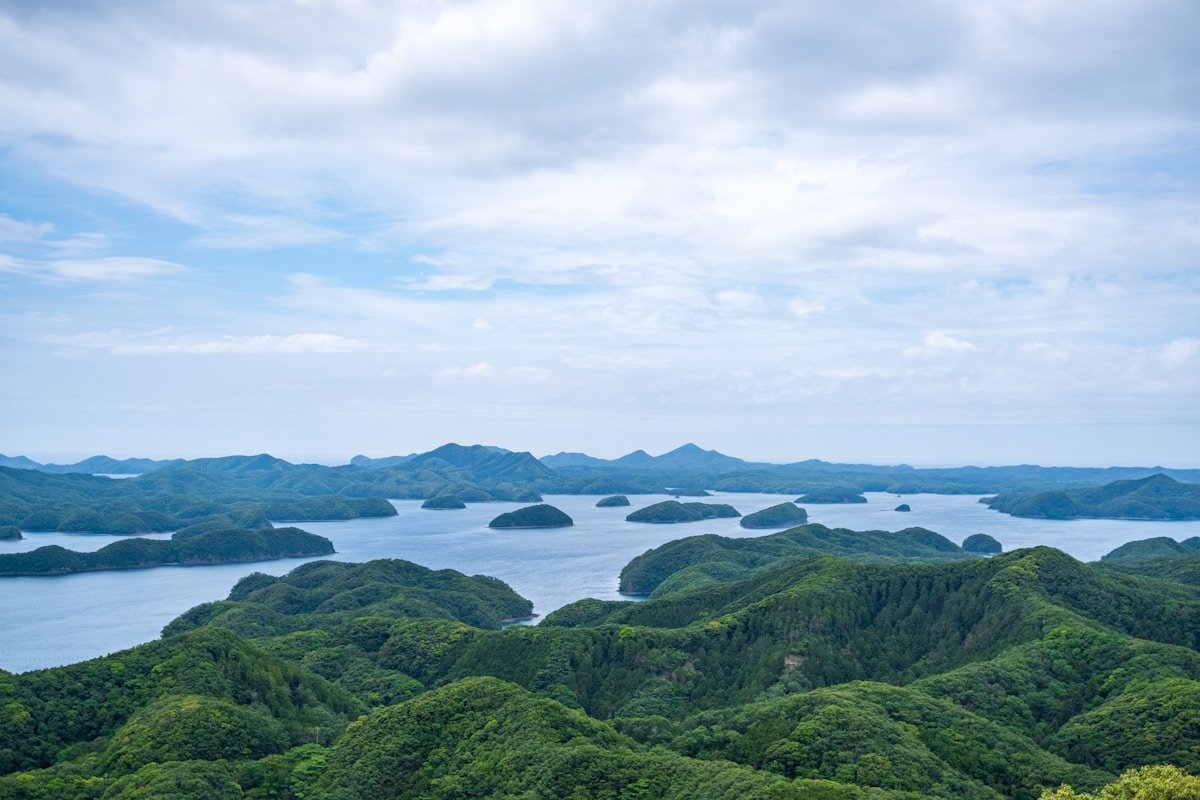
Matsushima is a small coastal resort town of approximately 17,000 people, located 40 kilometres northeast of Sendai in Miyagi Bay. Despite its modest size, it holds a place in Japan’s cultural consciousness disproportionate to its population: it is traditionally listed as one of the Nihon Sankei - Japan’s three great scenic views - alongside Amanohashidate in Kyoto Prefecture and Miyajima in Hiroshima Prefecture. The designation reflects the view across a sheltered bay scattered with 260 pine-covered rocky islands, sculpted over millennia by wave action into an extraordinary variety of shapes.
The poet Matsuo Basho famously visited in 1689 during his journey recorded in Oku no Hosomichi (The Narrow Road to the Deep North) and was supposedly so overwhelmed by the view that he could not write about it. Whether or not this story is entirely literal, it captures something true about the place - the islands and the quality of the light on the water create an atmosphere that resists easy description.
The Islands
The 260 islands range in size from large enough to walk across to bare rocks barely above the waterline. All are covered in wind-pruned Japanese black pines (matsu - the “pine” in Matsushima, or “pine islands”) that have adapted over centuries to the salt spray and rocky substrate. The pines’ contorted forms - horizontal branches reaching out over the water, canopies flattened by decades of sea wind - are as much a part of the view as the rock formations themselves.
The most striking rock shapes have names: Nishikiura has wave-carved caves on its eastern face; Oshima is connected to the mainland by a footbridge; Uchii-shima appears as two islands from certain angles but is connected below water at low tide. The bay is calm and sheltered by the outer islands, which also moderated the 2011 tsunami significantly - the islands absorbed energy that would otherwise have devastated the town completely.
Zuiganji Temple
Zuiganji is the main historical attraction in Matsushima and one of the finest Zen temples in Tohoku. The temple was founded in 828, though the current buildings date from 1609 when Date Masamune undertook a major reconstruction using craftsmen brought from Kyoto. The main hall (hondo) and corridors are designated National Treasures, and the woodcarving and painted sliding doors inside the main hall represent the finest quality of Momoyama-period decorative art in the region.
Entry costs ¥700 and includes access to the main hall and the adjacent Seiryuden treasure hall. The most distinctive feature of the approach is the corridor of meditation caves (zenidani) carved directly into the rock face beside the cedar-lined path - monks hollowed these cells out of the soft sandstone over several centuries and used them for solitary meditation practice. The caves contain small Buddha figures and stone memorial tablets. Walking through this passage is one of the more unusual experiences on the temple circuit in Japan.
Opening hours: 8:00am–5:00pm (March–November); 8:00am–4:00pm (December–February).
Guided Matsushima and Sendai tours combine the Zuiganji approach, the bay cruise, and the Kanrantei teahouse as a structured half-day circuit - convenient for visitors coming from Sendai for the day.
Kanrantei Teahouse
The Kanrantei (Karan-tei, meaning “Pavilion for Watching the Waves”) is a small tea pavilion with a history connected to the Date clan. Originally part of Toyotomi Hideyoshi’s Fushimi Momoyama castle in Kyoto, it was given to Date Masamune and relocated to Matsushima, where it was placed on a promontory overlooking the bay. The building itself is modest and elegant in the way of Japanese tea architecture - low, unadorned, with precise joinery and a view that does all the decorative work.
Entry costs ¥200 and includes a small exhibition of Date clan possessions. Matcha tea and sweets can be purchased separately for approximately ¥500. The terrace view across the bay is one of the best in town, particularly in the golden light of late afternoon.
Fukuurajima Island
A 252-metre bridge (Fukuura Bridge) connects the mainland to Fukuurajima, a small island approximately 1 kilometre long by 0.5 kilometres wide. Entry to the bridge costs ¥200. The island is designated a natural botanical garden and contains approximately 250 plant species, many labelled. The walking path around the island takes 30 to 40 minutes and passes through coastal forest above wave-cut cliffs, with views back toward the town and the main island cluster.
The island is uncrowded even in busy seasons - most visitors to Matsushima focus on the harbour area and Zuiganji, so Fukuurajima offers a quiet counterpoint to the busier sites. In spring (late April to May), cherry and plum trees on the island add colour to the woodland.
Bay Cruise
Several operators run boat cruises of the bay, with the most popular being the 50-minute circuit operated by Matsushima Kanko Kisen (¥1,500, boarding from the pier near Godaido Hall). The cruise passes between the major island formations at water level, providing perspectives on rock shapes, cave openings, and overhanging pines that are impossible to see from shore. Sea birds - black-tailed gulls and cormorants - follow the boats and can be fed crackers (sold on board).
Multiple routes exist: the shorter circuit stays in the central bay; a longer option (¥2,400) extends to the outer islands. The standard 50-minute circuit is sufficient for most visitors. Boats run approximately every 30 minutes from 8:00am to 4:00pm daily (reduced in winter).
Matsushima Oysters
The sheltered bay of Matsushima has supported oyster farming for centuries, and the local oysters (kaki) are among the best in Japan. The calm, phytoplankton-rich water of the bay produces oysters with a clean, briny flavour and a pleasantly firm texture. Harbour-front stalls and small restaurants sell oysters raw on the half-shell (¥150–¥300 per piece), steamed, grilled over charcoal, or fried in batter (kaki-furai, typically ¥1,200–¥1,800 for a set).
The season runs from October through March. Oysters are not recommended in summer (June to August) when water temperatures increase bacterial risk. The most straightforward way to eat oysters in Matsushima is to buy two or three from a harbourfront stall, eaten standing with a squeeze of lemon. For a proper sit-down meal, several restaurants near the pier serve oyster rice bowls (kaki-don, ¥1,500–¥2,000) and multi-course seafood sets (¥3,000–¥5,000).
Godaido Hall
Godaido is a small wooden hall constructed on a rocky islet connected to the shore by two small bridges. The structure was built by Date Masamune in 1604 and houses five wooden statues of Buddhist deities that are opened to the public only once every 33 years - the next opening is in 2039. The hall and its setting are free to view and photograph. As a subject for photography, particularly at dawn when the light hits the wood and water simultaneously, Godaido is one of the most rewarding spots in the bay.
The hall is open 24 hours; there is no admission charge to approach and view the exterior.
Oshima Island Meditation Caves
Oshima, accessible by a short bridge from the town’s eastern shoreline, is the largest island close to the mainland and was historically a retreat for Buddhist monks. The caves carved into the island’s rock face are similar to those at Zuiganji - small chambers hollowed from soft sandstone and used for meditation, their interiors carved with Buddhist reliefs and memorial inscriptions. Entry to the island is free. The walk takes 20 to 30 minutes and is largely uncrowded.
Getting to Matsushima
From Sendai: JR Senseki Line from Sendai Station, approximately 40 minutes to Matsushima-Kaigan station, ¥420. Trains run every 20–30 minutes. Note: Matsushima station (on a different line) is further from the bay - ensure you use Matsushima-Kaigan.
From Tokyo: Tohoku Shinkansen to Sendai (1h30m, ¥11,090), then JR Senseki Line (40m, ¥420). Total journey approximately 2 hours 10 minutes.
By boat from Shiogama: Sightseeing boats run from Shiogama Port (10 minutes by JR from Sendai) to Matsushima Pier, approximately 50 minutes, ¥1,800 one-way. This is a scenic alternative to the train for the outward journey.
Once you are in town, our guide to getting around Matsushima covers trains and boats in more detail.
Practical Information
Matsushima town is small and walkable; all major attractions are within 15 minutes on foot of Matsushima-Kaigan station. The main tourist information centre is adjacent to the station with English maps and timetables. Most restaurants and stalls are concentrated along the harbour-facing street between Godaido and the ferry pier.
Hotels and ryokan in Matsushima are relatively expensive (¥15,000–¥40,000/person with dinner and breakfast included) due to the resort location. Most visitors treat it as a day trip from Sendai and return in the afternoon.
Planning your trip to Matsushima? Tours and activities in Matsushima cover guided experiences, cultural immersion, and the top sights with local expertise. Flights to Japan vary significantly by season - compare early to secure the best fares. Sort out travel insurance for Japan before you book, and pick up an Airalo eSIM for Japan to have mobile data the moment you land. Search hotels in Matsushima on Booking.com
Explore Matsushima
Things to do in Matsushima · Where to stay in Matsushima · Best restaurants in Matsushima · Matsushima food guide · Day trips from Matsushima · Getting around Matsushima
Matsushima is one of the highlights of the Tohoku region. For a broader overview of northern Honshu travel, see our Tohoku region guide or the nearby city hub for Sendai. Matsushima fits naturally into a Japan in August trip for the Sendai Tanabata festival.
See also: Tohoku region guide · Sendai travel guide · Aomori travel guide · Japan in August · Japan in November · Japan Rail Pass guide
Upcoming Events in Matsushima
Hatsumode - New Year Shrine Visits
Hatsumode 2027, 1–3 January. Japan's most important annual tradition - millions visit shrines and temples in the first three days of the new year.
Nearby Cities
Frequently Asked Questions
- How do I get to Matsushima from Sendai?
- Take the JR Senseki Line from Sendai Station to Matsushima-Kaigan station. The journey takes approximately 40 minutes and costs ¥420. Trains run every 20 to 30 minutes.
- What is Matsushima famous for?
- Matsushima is one of Japan's three great scenic views (Nihon Sankei), featuring 260 pine-covered rocky islands in a sheltered bay. It is also known for Zuiganji temple, the Godaido Hall, and some of the best fresh oysters in Japan.
- When is the best time to eat oysters in Matsushima?
- Matsushima oysters are best from October through March. Summer months (June to August) are not recommended for raw oysters due to water temperatures. The autumn and winter season brings plump, cold-water oysters at their best.
- Is a boat cruise in Matsushima worth it?
- Yes, particularly if it is your first visit. The 50-minute bay cruise for ¥1,500 passes between the islands at water level, showing formations and cave entrances impossible to see from land. Sea birds often follow the boats throughout the cruise.
- Can I do Matsushima as a day trip from Tokyo?
- Yes but it is a long day. Take the Tohoku Shinkansen to Sendai (1h30m, ¥11,090) then the JR Senseki Line to Matsushima (40m, ¥420). You will have 4 to 5 hours at the site before returning. An overnight stay in Sendai or Matsushima makes for a more relaxed experience.
Book an experience
Top experiences in Matsushima
Explore the best tours and activities in Matsushima, with instant confirmation and free cancellation on most bookings.