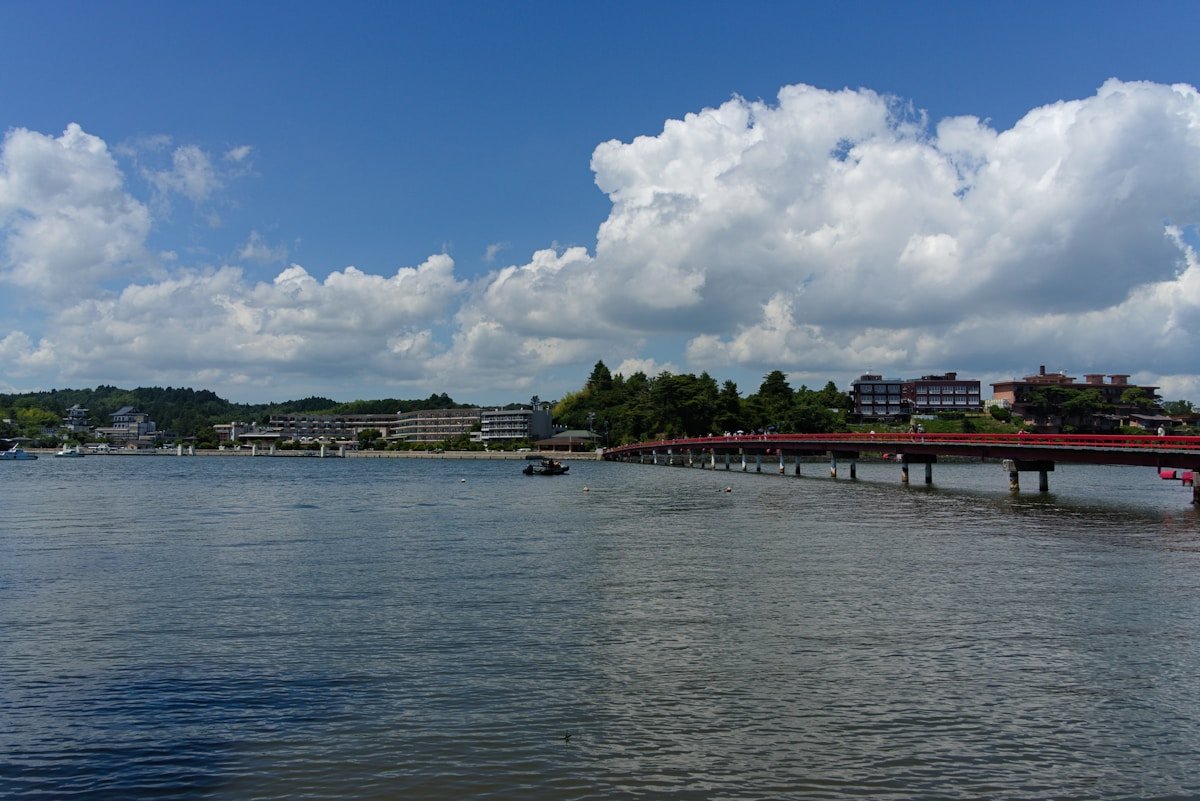
Matsushima’s position on the Miyagi coast, connected to Sendai by a direct JR line, makes it a natural staging post for exploring this stretch of Tohoku. Sendai is large enough to sustain a full day of exploring; Shiogama is a 10-minute hop for fresh tuna sushi; and the quieter reaches of the Matsushima bay - Oku-Matsushima - offer a different perspective on the same landscape with none of the harbour crowds.
Sendai
The regional capital of Tohoku sits 40 minutes from Matsushima-Kaigan by JR Senseki Line (approximately ¥420 as of 2026). A city of around one million people, Sendai is large, modern, and more animated than its Tohoku neighbours - a proper city with department stores, an underground shopping district, good food, and enough sights for a full day.
Sendai Castle Ruins (Aoba Castle): The hilltop castle of Date Masamune, the Date clan lord who shaped the history of this region, is now a public park accessible by bus or cable car from central Sendai. The stone foundations, outer walls, and a bronze equestrian statue of Date Masamune are all that remain of the original structure, but the hilltop position offers excellent city views and a good sense of why Date chose this promontory. The Aoba Castle Museum (approximately ¥700 as of 2026) explains the history of the domain.
Zuihoden Mausoleum: Date Masamune’s mausoleum, a 15-minute bus ride from central Sendai, is one of the finest examples of early Edo-period decorative architecture outside Kyoto and Nikko. The buildings are lacquered in gold and black with intricately carved transoms, more baroque and ornate than the clean lines of later Tokugawa-era buildings. Entry costs approximately ¥570 as of 2026 and includes access to the mausolea of later Date lords buried alongside.
Gyutan (Beef Tongue): Sendai’s most famous local dish is gyutan - grilled beef tongue, sliced thin, seasoned simply, and served with barley rice, pickled vegetables, and oxtail soup. The dish was developed in Sendai in the post-war period and has become the city’s defining food. A gyutan teishoku (set meal) at an established restaurant costs approximately ¥1,800–¥2,500 as of 2026. The concentration of gyutan restaurants around Sendai Station is highest in the basement food halls and the station building’s restaurant floors.
Tanabata Festival: Sendai’s Tanabata (held 6–8 August each year) is the largest and most elaborate Tanabata festival in Japan, drawing over 2 million visitors. The central shopping arcades are decorated with vast hanging bamboo ornaments 8–10 metres long, each bearing paper streamers and decorations in the traditional five-colour scheme. If your visit coincides with this period, the spectacle justifies a Sendai day trip on its own.
Shiogama
A fishing port town 10 minutes by JR Senseki Line from Matsushima-Kaigan (approximately ¥200 as of 2026), Shiogama is a working tuna port with a major fish market and one of the most important shrines in Tohoku.
Shiogama Fish Market (Uoichiba): The wholesale market, accessible to visitors from the retail sections, sells tuna, Pacific seafood, and Miyagi Bay produce. The best time to visit is early morning (from 5:00am for trade buyers, public from 8:00am or so). Several small sushi restaurants operating within or beside the market serve some of the freshest and most reasonably priced tuna sushi in Tohoku - a sushi set at a market counter runs approximately ¥1,500–¥2,500 as of 2026. The market also sells fresh sasakamaboko, Matsushima oysters, and various Miyagi seafood products.
Shiogama Shrine: One of the largest and most venerated shrines in Tohoku, Shiogama Shrine (Shiogama Jinja) sits on a hill above the port, approached by a long stone stairway lined with ancient Japanese cedar trees. The shrine complex is free to enter and contains two main halls and an unusual third shrine (Shiotsuchi-Oji Shrine) within the same compound. The hilltop position gives views over the port and bay. The shrine is credited with protecting Shiogama’s fishing community and is deeply embedded in local maritime culture.
Shiogama by Boat: For the return journey to Matsushima, the sightseeing boat from Shiogama Port (approximately ¥1,800 one-way as of 2026) is the most scenic option - 50 minutes through the outer pine islands with views of rock formations impossible to see from shore.
Oku-Matsushima
The eastern extension of Matsushima Bay, called Oku-Matsushima (Inner Matsushima), sees a fraction of the tourist traffic of the main harbour area while offering some of the most panoramic views of the pine islands and the surrounding coastline.
How to reach it: Buses run from Matsushima-Kaigan Station toward Nobiru and the Oku-Matsushima area (approximately 20 minutes, ¥250 as of 2026); some visitors use taxis. Cycling is also a practical option - bicycle rental is available near Matsushima-Kaigan Station.
Otakamori and Saotome Viewpoints: The two main hill viewpoints above Oku-Matsushima give panoramas across the inner bay and the island clusters. Otakamori (a short walk from the main road) is the higher and broader of the two; Saotome looks across a quieter stretch of water toward the outer bay. Both are free to access and usually uncrowded on weekdays.
Nobiru Beach: A long, sandy beach at the edge of the Oku-Matsushima area, backed by pine trees. Popular with local families in summer (July to August), almost empty in other seasons. The beach curves around a bay with views of the islands and is one of the more atmospheric walking spots in the area when the tide is out.
Oyster Farming: The racks of suspended oyster lines visible across Oku-Matsushima Bay are the working infrastructure of Matsushima’s oyster industry. From the viewpoints and coastal paths, you can see the full extent of the farming operation that supplies the harbourfront stalls - context that makes the experience of eating a grilled oyster at Matsushima more concrete.
Ishinomaki
A port city 30–40 minutes by JR Senseki Line from Matsushima-Kaigan (approximately ¥420 as of 2026), Ishinomaki was one of the cities most severely affected by the 2011 Tohoku earthquake and tsunami and has undergone significant rebuilding and memorial construction since.
Ishinomori Manga Museum: Shotaro Ishinomori - creator of Kamen Rider, Cyborg 009, and Super Sentai - was born in the Ishinomaki area, and the city has embraced this heritage with a manga museum (Ishinomori Manga Kan, approximately ¥900 entry as of 2026) and a town decorated with Kamen Rider character statues. The museum building itself is a silver and gold cylinder designed to resemble Ishinomori’s robot characters.
Mirai-za IRORI: A rebuilt community and cultural centre near the waterfront that serves as a memorial to the 2011 disaster and a space for local crafts and food. The earthquake memorial displays in the rebuilt area of the city document the scale of the 2011 event and the subsequent recovery - a sobering and significant piece of recent Japanese history.
Fresh Seafood: Ishinomaki port supplies a significant portion of Miyagi’s seafood. Restaurants near the port serve kaisen-don (mixed seafood rice bowls, approximately ¥1,500–¥2,500 as of 2026) and fresh sashimi sets using local Pacific catches. Less polished than Shiogama for sushi, but worth trying if you have time in the city.
Make the most of your time around Matsushima: Guided day trips from Matsushima handle the logistics - transport, guide, and timing - so you can focus on the experience. For airport arrivals and departures, Kiwitaxi offers fixed-price airport transfers with no meter surprises.
Planning Your Excursions
Sendai is the natural base for extended Tohoku exploration and deserves a full day rather than a quick visit. Shiogama is the easiest half-day add-on from Matsushima, especially when combined with the return boat. Oku-Matsushima is best visited on a weekday morning before the main Matsushima crowds arrive. Ishinomaki suits visitors with specific interests - the manga museum, the tsunami memorials, or the port seafood.
See things to do in Matsushima for what to see within the town itself, and where to stay in Matsushima for ryokan and hotel options for a longer stay.
Where to stay: Search hotels in Matsushima on Booking.com
See also: Matsushima travel guide · Best restaurants in Matsushima · Food to try in Matsushima · Sendai travel guide · Aomori travel guide · Tohoku region guide