Kobe’s position between Osaka and Himeji, with mountain hot springs 40 minutes to the north and Awaji Island visible from the waterfront, makes it an unusually good base for day trips. You can reach Japan’s finest surviving castle, a thousand-year-old hot spring town, Nara’s sacred deer, and Osaka’s street food all within the same day.
1. Himeji Castle
Journey: JR Shinkansen from Shin-Kobe to Himeji, 18 minutes, approximately ¥2,340 return; or JR Kobe Line from Sannomiya, 55 minutes, approximately ¥990 return | Castle entry: ¥1,000 | Time needed: Half-day minimum
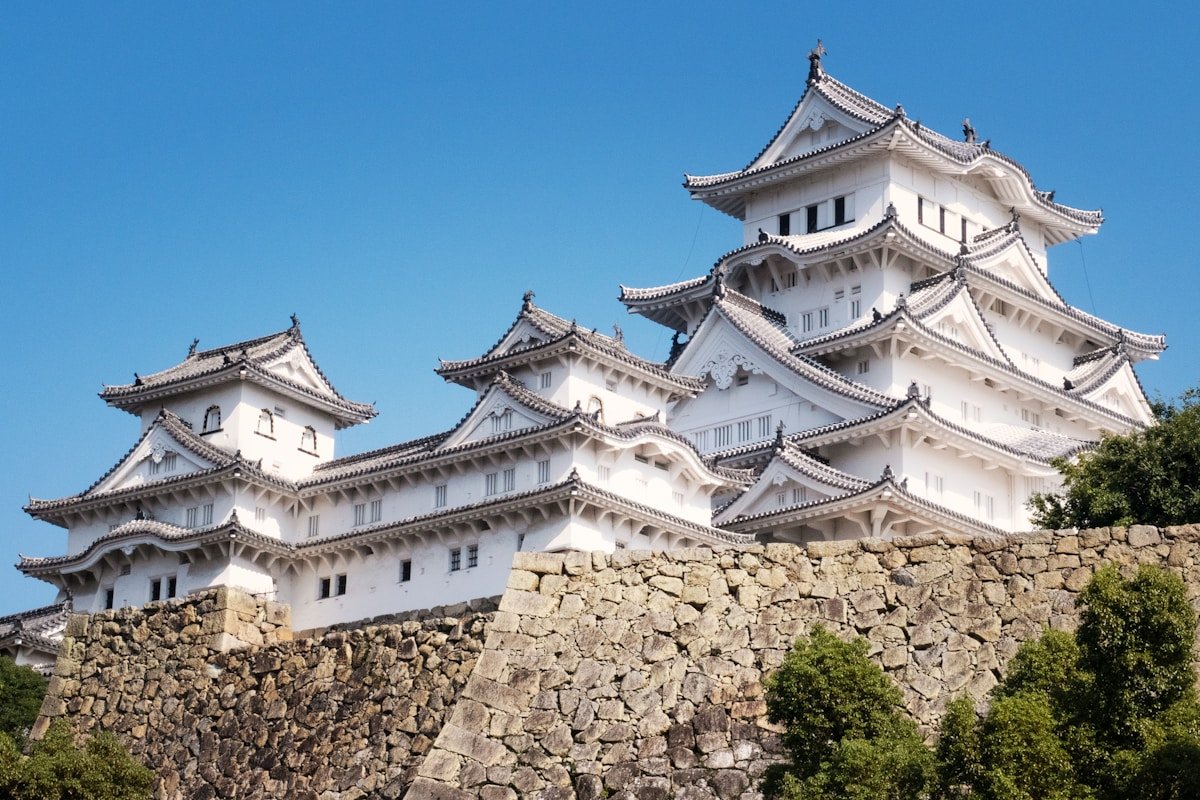
Himeji Castle is Japan’s most complete surviving feudal castle - unburnt, unbombed, and never demolished through the Meiji-era changes that destroyed most of Japan’s castle stock. The main keep and its four connected sub-keeps are entirely original, built between 1601 and 1609 for Ikeda Terumasa under the patronage of Tokugawa Ieyasu.
The defensive design is intentionally disorienting: the inner baileys spiral around the keep in a clockwise pattern, dead-end corridors confuse attackers, and gun ports and openings are arranged for maximum field of fire. The white plaster exterior - which earned it the name Hakuro-jo (White Egret Castle) - is structural, not just decorative: the lime plaster makes the walls fire-resistant.
Inside the keep: Seven floors of steep wooden stairs (shoes must be removed at entry). Upper floors give clear views across the surrounding plain toward Kobe and the Seto Inland Sea. The top floor takes about 90 minutes to reach if you read the exhibits; 40 minutes if you go straight up.
Kokoen Garden (¥310, adjacent to the west of the castle): Nine connected Edo-style gardens designed in 1992 to celebrate 100 years of Himeji’s city status. The autumn maple garden and the tea garden are the strongest individual sections.
The walk from Himeji Station to the castle takes 15 minutes along a straight boulevard - the white keep is visible from the station exit. Alternatively, a hire bicycle from near the station (approximately ¥500/3 hours) covers the castle, Kokoen, and Himeji City Museum.
2. Arima Onsen
Journey: Highway bus from Sannomiya Bus Terminal, 40 minutes, approximately ¥900 each way | Public bath entry: Kinsen no Yu ¥650; Taiko no Yu ¥1,300
Arima Onsen sits in a mountain valley 16 km north of central Kobe - close enough to feel like a different world, historically documented as one of Japan’s oldest hot spring resorts with references in 7th-century imperial records.
The defining feature of Arima’s waters is their variety. The town produces two chemically distinct spring types:
Kinsen (Gold Water): High in sodium chloride and iron, coloured amber-red from the dissolved minerals. The iron oxidises on contact with air, giving the bath water a rust-red tinge. High salt concentration leaves the skin noticeably soft.
Ginsen (Silver Water): Slightly radioactive (radon) carbonated water, colourless and clear. Less photogenic than the gold water but prized for its therapeutic qualities.
Day visit options:
Kinsen no Yu (¥650): Compact public facility in the centre of Arima village, fed by gold water only. Basic but authentic - the way most locals use the onsen.
Taiko no Yu (¥1,300): Larger public facility with both kinsen and ginsen pools, outdoor baths, and steam rooms. More comfortable for first-time onsen visitors unfamiliar with the format.
The Arima village itself rewards 90 minutes of exploration - steep narrow lanes with old wooden buildings, sake shops, sweet shops selling tansan senbei (carbonated water crackers, approximately ¥500), and a preserved section of the historic town centre near the Taiko no Yu.
3. Osaka
Journey: Hankyu Limited Express from Kobe-Sannomiya to Umeda/Osaka-Umeda, 28 minutes, approximately ¥330; or JR Rapid from Kobe to Osaka, 23 minutes, approximately ¥410 | Cost: Varies by attraction
Osaka is the natural complement to a Kobe visit - the closest major city, with a completely different personality (louder, more street-food oriented, less European-influenced than Kobe). The main visitor areas are:
Dotonbori and Namba: The most concentrated tourist district in Kansai. Giant neon signs, takoyaki stands, okonomiyaki restaurants, Glico running man sign, and department store basement food halls. Best in the evening when the canal lights up.
Osaka Castle: ¥600 entry. The current concrete reconstruction of the 1583 original has excellent historical exhibits inside. The surrounding park is one of Osaka’s best cherry blossom spots in April.
Kuromon Market: Osaka’s covered fresh food market - fish, vegetables, street food vendors - best visited for a late morning walk before the crowds arrive.
A half-day in Dotonbori or a full day combining castle, market, and Shinsekai are the typical Osaka day-trip templates from Kobe.
4. Nara
Journey: JR from Sannomiya to Osaka, then JR Yamatoji Line to Nara, total approximately 65–75 minutes, approximately ¥1,500 return; or direct Kintetsu service via Osaka-Namba | Deer Park: Free; Todai-ji ¥600
Nara’s deer park - where approximately 1,200 sika deer roam freely among the temples and tourists - is one of Japan’s genuinely unforgettable sights. The deer approach people (particularly anyone holding shika senbei deer crackers, ¥200/pack) and bow for food - a behaviour they’ve learned from generations of visitors.
Todai-ji Temple (¥600): The world’s largest wooden structure, housing a 15-metre bronze Buddha cast in 752 CE. The inner hall is enormous; the Buddha’s nostril has a hole said to be the same diameter as the Vairocana Buddha’s finger - which superstition holds will bring enlightenment to anyone small enough to crawl through.
Kasuga Taisha Shrine (free outer precinct; inner sanctum ¥500): A Shinto shrine established in 768 CE and designated a UNESCO World Heritage Site along with the broader Nara historic district. The stone lantern-lined approach through forest is one of the most atmospheric shrine approaches in Japan.
For a complete guide, see our Nara travel guide.
5. Awaji Island
Journey: Bus from Sannomiya to Awaji island via Akashi Kaikyo Bridge, approximately 60–90 minutes depending on destination, from approximately ¥900 | Self-drive recommended for flexibility
Awaji Island sits across the world’s longest suspension bridge from Kobe. The island is best experienced by car - the sights are spread over a 592 km² island - but the main attractions in the northern area are reachable by bus from Sannomiya.
Key experiences:
Awajishima Burger (multiple locations): The Awaji wagyu and caramelised Awaji onion burger has been featured on Japan’s best burger lists for over a decade. Approximately ¥1,000–¥1,500. The O’Food burger van at the northern Awajishima Service Area on the toll road is the most accessible.
Naruto Whirlpools (Uzushio cruise, approximately ¥2,200): At the southern tip of Awaji where the Seto Inland Sea and the Pacific create massive tidal differentials, whirlpools 20 metres in diameter form at maximum ebb and flow. The cruise boats get close enough to feel the turbulence. Tidal charts (available on the Naruto Kankou Kisen website) show the best time to book.
Awaji Yumebutai (free): A terraced hillside garden and conference complex designed by architect Tadao Ando on land scarred by gravel extraction during the Osaka Bay reclamation. The landscape architecture - planted since 1997 - is worth seeing for Ando fans.
Make the most of your time around Kobe: Guided day trips from Kobe handle the logistics - transport, guide, and timing - so you can focus on the experience. For airport arrivals and departures, Kiwitaxi offers fixed-price airport transfers with no meter surprises.
6. Kyoto
Journey: JR Special Rapid from Kobe-Sannomiya to Kyoto, approximately 55 minutes, approximately ¥1,100 | Full day recommended
Kyoto is the most common full-day trip from Kobe - easily reachable in under an hour, with enough content to fill a week. The standard day itinerary from Kobe covers Fushimi Inari (early morning, before crowds), Kinkaku-ji (Golden Pavilion), and Gion’s Higashiyama area (afternoon and evening).
See our Japan itinerary guide for a suggested Kyoto day programme.
For what to see in Kobe itself, see our Kobe sightseeing guide. For where to eat, see our Kobe restaurant guide.
Where to stay: Search hotels in Kobe on Booking.com
See also: Kobe travel guide · Food to try in Kobe · Where to stay in Kobe · Nara travel guide · Kansai region guide