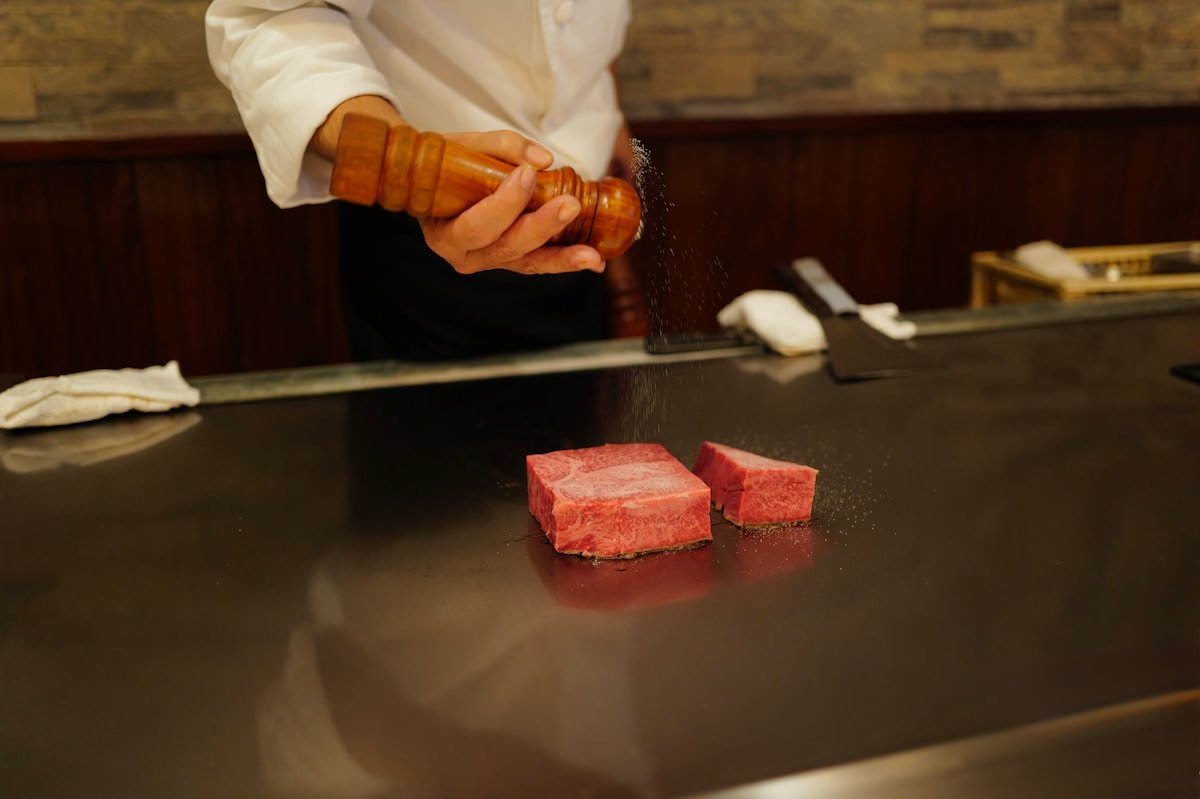
Kobe’s food identity is built around one product - certified Wagyu beef - but the city’s 19th-century port history introduced Chinese, French, German, and Indian influences that still shape what’s on menus today. Understanding the full picture of Kobe food means going beyond the teppanyaki counter to Chinatown, the working-class Nagata district, the Nada sake breweries, and the Awaji Island seafood that arrives fresh by morning boat.
1. Certified Kobe Beef
The centrepiece of Kobe cuisine and one of Japan’s most tightly controlled food products. To be labelled Kobe beef, the cattle must be:
- Tajima-gyu bloodline born and raised in Hyogo Prefecture
- A steer or virgin cow (no bulls, no cows that have calved)
- Slaughtered at a designated Hyogo facility
- Meat quality grade A or B with a BMS (Beef Marbling Score) of 6 or higher
Only approximately 3,000 cattle qualify annually as certified Kobe beef - roughly 1% of Japan’s total Wagyu production. This scarcity is real, and certified Kobe beef in Kobe costs more than at international restaurants claiming the name.
What to order: The sirloin (siron in Japanese) is the standard choice - the marbling is most visible and the flavour most characteristic. Tenderloin (hire) is leaner, more delicate, and easier to eat but shows less of the characteristic sashi. For a first tasting, sirloin at a certified teppanyaki restaurant is the right starting point.
Where to eat: See our Kobe restaurant guide for a comparison of the main teppanyaki restaurants by price.
2. Kobe Beef Croquettes (Korokke)
Price: Approximately ¥250–¥350 each | Where: Sannomiya and Motomachi street vendors
The most affordable way to taste Kobe beef. Minced Kobe beef is mixed into potato croquettes, breadcrumbed, and fried. The beef used is typically lower-grade certified Kobe (BMS 6) rather than the top-grade cattle used at teppanyaki restaurants, but it’s the real thing - not Wagyu-branded generic beef.
The best vendors are clustered near Sannomiya Station and along Motomachi shopping street. Buy one hot and eat it standing outside the shop - the crispy exterior fades quickly if you try to take it further.
3. Sobameshi
Price: Approximately ¥700–¥1,000 | Where: Nagata district, some Sannomiya izakaya
Sobameshi is a uniquely Kobe working-class dish - fried rice and yakisoba noodles cooked together on a flat iron griddle (teppan) with shredded pork or beef, cabbage, and a sauce of soy, Worcestershire, and sweet mirin. It was invented by Nagata teppanyaki chefs who cooked lunch for factory workers by mixing leftover noodles into rice.
The Nagata district (west of central Kobe, about 15 minutes by bus) has the most authentic sobameshi - small lunch restaurants that have served factory workers the same dish for decades. In central Kobe, some izakaya offer it as a side dish or small plate (about ¥700). It’s heavy, savoury, and needs a cold beer.
4. Nankin-machi (Chinatown) Specialities
Where: Between Motomachi Station and the waterfront | Price: Street food from ¥200
Kobe’s Chinatown is the second largest in Japan (after Yokohama) and has 100 shops and stalls in a compact grid. The food culture here reflects the Chinese merchants who settled in Kobe during the Meiji era and developed a distinctively Japanese-adapted Cantonese cuisine.
Nikuman (steamed pork buns): Kobe-style nikuman are slightly larger than the Yokohama version and more garlicky - made with a mix of pork and ginger in a fluffy steamed bun. Approximately ¥250 each. The Rousho stand always has a queue.
Dim sum and dumplings: Several restaurants inside Nankin-machi offer Cantonese-style dim sum by the basket (from approximately ¥500) including har gow (shrimp dumplings), shumai, and cheung fun (rice noodle rolls).
Gomadango (sesame dumplings): Sweet glutinous rice balls filled with red bean paste, rolled in sesame, and fried. Approximately ¥150 each. A good end-of-market snack.
5. Nada Sake
Where: Nada district (JR to Sumiyoshi or Uozaki stations) | Tasting: ¥300–¥500 at brewery museums
The Nada district in east Kobe produces about 30% of Japan’s total sake - the highest concentration anywhere. The secret is Miyamizu water: naturally hard water from the Rokko Mountains that’s high in minerals (particularly potassium and magnesium) and promotes vigorous fermentation, producing dry, clean sake with good structure.
The three main brewery visitor experiences:
Hakutsuru Sake Brewery Museum (free entry, ¥300 for tasting): Well-presented museum in a restored kura warehouse explaining the full production process. The tasting room serves three varieties including a junmai daiginjo (highest grade) alongside the standard honjozo. The attached shop sells museum exclusives.
Kiku-Masamune Sake Brewery Museum (¥200, Uozaki Station): A restored 19th-century warehouse with good displays on the Nada brewing tradition. The tasting set (¥200 additional) is excellent value - includes a dry honjozo, a richer junmai, and a tokubetsu (special) variety.
Hakutsuru Brewery Gift Shop (free): No museum, but the widest retail selection of premium Hakutsuru sake including limited-run seasonal bottles not available in standard retail.
6. Awaji Island Seafood
What: Sea bream, octopus, squid, oysters (winter) | Where: Harborland seafood restaurants, fresh markets
Awaji Island - visible from the Kobe waterfront across the Akashi Strait - is Kobe’s primary seafood source. The island’s tai (sea bream) are particularly well-regarded; the strong tidal currents around Awaji produce firm, flavourful fish. Octopus (tako) is also an Awaji speciality, appearing in everything from standard octopus sashimi to takoyaki-style preparations.
Oysters are in season from October to February - Awaji oysters are smaller and saltier than Hiroshima varieties. Several izakaya around Harborland serve them grilled or raw during winter.
7. French-Influenced Kobe Pastry
Where: Bakeries and patisseries around Kitano-cho and Sannomiya
The French merchant community that settled in Kobe in the Meiji era established a baking culture that persists in the concentration of French-trained patisseries around Kitano-cho. The stand-out bakeries include:
Donq (Sannomiya): Established 1905 and one of Japan’s oldest baguette bakeries. The baguette (approximately ¥300) is genuinely French in texture - not the softer Japanese supermarket version.
Pâtisserie Tooth Tooth (multiple locations): Local Kobe confectionery brand with cakes and pastries. The Kobe-specific flavours use local ingredients - a popular gift option.
Harborland bakery stalls: The Mosaic complex has several artisan bakeries with morning pastry options from approximately ¥200.
See Kobe through its food: Food and cultural tours in Kobe often include market visits, tastings, and dishes you’d never find independently.
8. Indian and International Food in Kobe
Kobe has the longest-established Indian community of any Japanese city - Indian merchants arrived with the British trade networks in the 1870s. The city consequently has better Indian food than anywhere else in Japan outside Tokyo.
Gaylord (Sannomiya): One of the oldest Indian restaurants in Kobe, with Northern Indian curries from approximately ¥1,200 for a lunch set. Naan is made fresh; the mutton curry and dal are the most ordered dishes.
The international influence extends to Turkish, Spanish, and French restaurants around Kitano - small by global-city standards but noticeably more diverse than other Japanese regional cities.
For a full guide to Kobe’s restaurants, see our best restaurants in Kobe. For day trips including Himeji, see Kobe day trips.
Where to stay: Search hotels in Kobe on Booking.com
See also: Kobe travel guide · Things to do in Kobe · Where to stay in Kobe · Kansai region guide · Osaka travel guide