Kobe concentrates a remarkable range of distinct experiences within a compact, walkable city - Wagyu beef teppanyaki, 19th-century Western architecture, Japan’s largest sake production region, a mountain hot spring town, and one of Japan’s finest surviving feudal castles within easy day-trip reach. Here are 15 of the best things to do, with honest pricing and timing for each.
1. Eat Kobe Beef Teppanyaki
Cost: Lunch from ¥3,000, dinner from ¥7,000 | Location: Within 10 minutes of Sannomiya Station
Eating certified Kobe beef teppanyaki - the beef grilled in front of you on a steel plate - is the primary food experience in the city. The best lunch sets represent one of the most cost-efficient ways to eat the world’s most precisely controlled beef product.
Kobe Beef Restaurant Comparison
| Restaurant | Lunch from | Dinner from | Style | Reservation needed |
|---|---|---|---|---|
| Steakland Kobe | ¥3,000 | ¥8,000 | Counter teppanyaki, casual | No (lunch) |
| Wakkoqu | ¥5,000 | ¥13,000 | Teppanyaki, refined | Recommended |
| Mouriya Honten | ¥7,000 | ¥15,000 | Classic teppanyaki, premium | Yes |
| Steak Aoyama | ¥5,500 | ¥12,000 | Teppanyaki, mid-range | Recommended |
| Kobe Plaisir | ¥4,500 | ¥10,000 | Course lunch, all-Kobe | Yes |
Steakland Kobe (near Sannomiya Station): Counter seating around a shared teppan grill, no reservations needed for lunch, ¥3,000–¥5,000 for a sirloin or tenderloin set (100–150g) with rice, miso soup, and vegetables. This is the most accessible format for first-time Kobe beef tasters - you watch the chef cook the beef, control the doneness, and eat at the counter. The beef is certified and the price is honest.
Wakkoqu (Nakayamate-dori, Kitano-cho area): Widely considered the best accessible teppanyaki restaurant in Kobe. Lunch sets from ¥5,000 (120g sirloin), dinner from ¥13,000. The quality of the chef’s preparation - particularly the temperature management and resting technique - is noticeably superior to the more casual options. Reservation recommended, particularly for dinner.
Mouriya Honten (Kitamachi, near Kitano): The historic option, operating since 1914. Lunch from ¥7,000, dinner from ¥15,000. The private room dining option (dinner only) is among the most refined teppanyaki experiences in the city.
What to order: Sirloin is the standard - the marbling is most visible and the flavour most characteristic. Tenderloin (fillet) is leaner and more delicate; if you want to taste the sashi (marbling) that defines Kobe beef, sirloin is the better choice. Ask for medium-rare (naka-yake) unless you have a preference otherwise.
2. Walk the Kitano-cho Ijinkan Western Houses
Cost: Free to walk the district; individual houses ¥300–¥500; combo ticket ¥1,000 | Journey: 20-minute uphill walk from Sannomiya Station
The Kitano-cho hillside is the most architecturally distinctive district in Kobe - 17 preserved Western residences from the 1868–1920 period, built by British, American, German, French, Dutch, and Danish merchants in the architectural styles of their home countries. Walking the district takes about 45 minutes for exterior viewing; entering several houses extends the visit to 2 hours.
Weathercock House (Kazamidori no Yakata) (¥500): A 1909 German-style residence with a copper rooster weathervane that became the symbol of the district. Interior includes original period furniture, a German-tile stove, and photographs of the foreign merchant community. The upper floor has harbour views.
Moegi House (¥350): A graceful 1903 American Colonial-style house with white clapboard siding and a wraparound porch, built for the American consul general. The interior is unusually well-preserved.
Uroko House (¥1,050 for Uroko + adjacent art gallery): A French-influenced residence known for its fish-scale stone tile cladding (uroko means fish scales). The art gallery in the adjacent building displays Western art alongside the house visit.
Rhine House (free exterior, now a wine bar): One of the largest residences in the district, built in 1920. The Cheval Blanc wine bar on the ground floor offers Alsace wines - an oblique continuation of the French-German mixed heritage.
The combination ticket covering Moegi House, Weathercock House, and two other properties costs ¥1,000 and represents better value than individual tickets.
3. Harborland Waterfront Evening Walk
Cost: Free | Best time: After 5pm for lights | Ferris wheel: ¥1,000
Kobe’s Harborland waterfront is at its best after dark, when the buildings, Port Tower, and the giant Ferris wheel (¥1,000, one circuit) illuminate the harbour. The open plazas, covered Mosaic walkway, and restaurant terraces facing the water are well-designed for evening strolling.
The Harborland Ferris wheel (Harborland Sky Wheel) is 50 metres in diameter and each circuit takes 15 minutes. Clear evenings offer views to the Akashi Kaikyo Bridge to the west. The gondolas are open-sided - bring a layer in cooler weather.
The Mozaik shopping complex has several outdoor restaurant terraces on the waterfront level, with most restaurants opening from 5pm for dinner. Prices in the Harborland restaurant district run ¥2,000–¥5,000/person - higher than the Sannomiya back streets but the waterfront position justifies it for a special dinner.
4. Meriken Park and the BE KOBE Sign
Cost: Free | Hours: Always accessible
Meriken Park is the open waterfront park east of Harborland, with the Great Hanshin Earthquake Memorial (open-air, free) preserving a section of the original pier exactly as it was deformed by the 1995 earthquake - twisted rails, collapsed structure, and cracked waterfront - as a permanent record of the event.
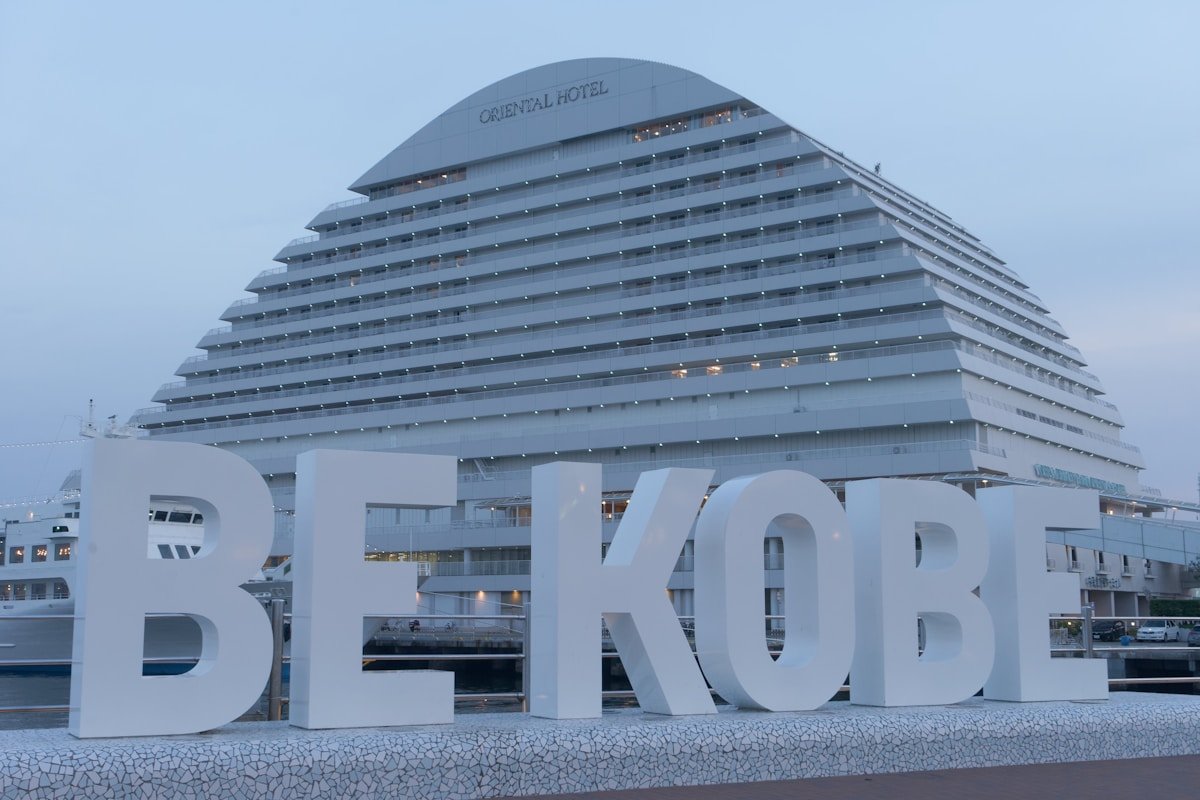
The BE KOBE steel letter installation - large free-standing letters spelling the city’s name - has become the default photograph location in Kobe and is particularly good with the Port Tower in the background. Free, open at all hours.
5. Kobe Ropeway and Nunobiki Herb Gardens
Cost: ¥1,060 return cable car; ¥200 herb gardens entry | Hours: 9am–5pm (extended in summer)
The Nunobiki Ropeway ascends from behind Shin-Kobe Station (the Shinkansen station, 5 minutes north of Sannomiya by subway) to the Nunobiki Herb Gardens at 400 metres elevation, with intermediate stops and views over the city and harbour.
The Herb Gardens (1,200 plant varieties) are at their best from late April through June when the rose garden, lavender sections, and formal beds are in full bloom. In autumn the garden retains interest but the colour is more muted. The café at the top station serves herb-infused foods and drinks - the herb lemonade (¥700) and lavender soft serve (¥450) are worth having.
The waterfall hike from Shin-Kobe Station is free: a 30-minute walk up the gorge to the Nunobiki Falls (43 metres, historically listed as one of Japan’s great falls). The path is paved and accessible without specialist equipment.
6. Chinatown - Nankin-machi
Cost: Free entry; food from ¥300 | Hours: Most stalls 10am–8pm
Kobe’s Chinatown (Nankin-machi) covers a compact grid of streets between Motomachi Station and the waterfront, with around 100 shops and restaurants. The covered entrance gate and the central plaza are lined with food stalls offering nikuman (steamed pork buns, ¥200–¥300), gyoza, fresh spring rolls (¥350), and Chinese sweets.
Unlike Yokohama’s Chinatown (the largest in Japan), Nankin-machi is small enough to walk in 30 minutes. The concentration of food stalls and the relatively affordable snacking options make it a good stop between Harborland and the Sannomiya main area.
7. Kobe Port Tower
Cost: ¥700 | Hours: 9am–9pm (to 11pm in summer)
The 108-metre Port Tower - a distinctive red latticed steel structure resembling an hourglass - has been Kobe’s harbour landmark since 1963. A renovation completed in 2023 added a new observation deck design and a rooftop terrace accessible to visitors. The 360-degree views take in the harbour, Meriken Park, Rokko Mountain range, and on clear days, Awaji Island.
The tower is visible from most of the Harborland area; at night it is illuminated in rotating colours.
8. Kobe City Museum
Cost: ¥700 (special exhibitions extra) | Hours: 9:30am–5:30pm (closed Monday)
The Kobe City Museum is housed in a 1935 neoclassical building near Motomachi Station and focuses on the cultural exchange between Japan and the West during the Nanban (Southern Barbarian) trade period and the later Meiji-era foreign settlement. The Nanban art collection - 16th and 17th-century painted screens and lacquerwork produced for the Portuguese and Spanish trade market - is exceptional.
The museum also covers the 1868 Meiji Opening and Kobe’s development as an international port, with photographs, maps, and artefacts from the foreign settlement period.
9. Hakutsuru Sake Brewery Museum
Cost: Free entry; sake tasting ¥300 | Hours: 9:30am–4:30pm (closed Mon, national holidays)
Hakutsuru (White Crane) is one of Japan’s most established sake breweries, founded in Nada in 1743. The Sake Museum occupies a restored kura (warehouse) on the original brewery site and covers the full sake production process - from rice polishing through koji mould cultivation, fermentation, and pressing.
The tasting room at the end of the tour serves three Hakutsuru varieties (¥300 for a set). The attached shop sells limited-release and aged sake not available in standard retail.
10. Nada Sake District Walk
Cost: Free to walk; brewery tastings typically free–¥500 | Location: East Kobe, 15 minutes from Sannomiya by JR to Sumiyoshi or Uozaki Station
The Nada district in eastern Kobe produces approximately 30 percent of Japan’s total sake output - the largest concentration of sake production in the country. The five major production areas (Go-go) of Nada are anchored by large breweries including Hakutsuru, Kiku-Masamune, Nadagiku, and Nada Gogumi. Most offer visitor facilities including museum-style displays and tasting rooms.
Kiku-Masamune Sake Brewery Museum (¥200, Uozaki Station): A well-maintained brewery museum in a restored 19th-century kura. The tasting set (three varieties) is ¥200 additional. The explanation of the nada production method - cold winter fermentation using the sharp mineral Miyamizu water from the Rokko mountains - is among the clearest brewery explanations in Japan.
A self-guided walk connecting three or four breweries takes about 3 hours including tasting stops.
11. Sumadera Temple
Cost: Free | Hours: 9am–4pm
Sumadera (Suma-dera) in the Suma district of western Kobe is a Shingon Buddhist temple founded in 886 CE, set in a forested hillside approach with a wide stone staircase flanked by cherry trees and old cryptomeria. The atmosphere is quiet and the architecture - several important halls spanning the Heian through Edo periods - is excellent.
The temple stores a legendary flute said to have been given to the warrior Atsumori, who was killed at the nearby Battle of Ichi-no-Tani in 1184 - an event immortalised in the Tale of the Heike. 20 minutes from Sannomiya by JR (¥200 to Suma Station).
12. Day Trip to Himeji Castle
Journey: Shinkansen from Shin-Kobe to Himeji, 18 minutes, ¥2,340 return; or JR Kobe Line from Sannomiya, 55 minutes, ¥990 return | Castle entry: ¥1,000
Himeji Castle is Japan’s finest surviving feudal castle and a UNESCO World Heritage Site. Built in its current form between 1601 and 1609, the main keep and connected sub-keeps are entirely original - the only major Japanese castle never destroyed by fire, earthquake, or war. The intricate defensive design (the baileys are arranged in a spiral to confuse attackers), the white plaster finish (which gives it the name Hakuro-jo - White Egret Castle), and the scale of the main keep are extraordinary.
Allow 2 hours for the castle complex; the interior involves seven floors of steep wooden stairs. Add 30 minutes for Kokoen Garden (¥310, adjacent to the castle) - nine connected Edo-style gardens with good seasonal planting.
The walk from Himeji Station to the castle takes 15 minutes along a straight boulevard with the keep visible from the station exit.
13. Arima Onsen - Mountain Hot Springs
Journey: Bus from Sannomiya Hankyu Bus Terminal to Arima Onsen, 40 minutes, ¥900 each way | Public bath entry: ¥650–¥1,300
Arima Onsen, in the mountains north of Kobe, is one of Japan’s oldest hot spring towns - its waters are mentioned in 7th-century imperial records. The springs produce two chemically distinct waters: kinsen (gold water), coloured amber-red by dissolved iron and sodium, and tansan-sen (carbonated water), which is unusually rare among natural hot springs globally.
Kinsen no Yu (¥650): Public bath fed by the gold water, in the centre of Arima village. The amber water is high in sodium chloride and leaves the skin noticeably soft. Small bathing area, no frills.
Taiko no Yu (¥1,300): Larger public bath facility with both kinsen and ginsen (silver water) pools, steam room, and outdoor areas. More comfortable for visitors unfamiliar with the public bath format.
The Arima village itself - a compact cluster of old buildings on steep lanes - has good food shops selling Arima-specific products: tansan senbei (carbonated water crackers, ¥500), nikumi (a local beef product), and craft saké.
14. Nunobiki Falls Short Hike
Cost: Free | Duration: 30 minutes from Shin-Kobe Station | Difficulty: Easy
The gorge walk from Shin-Kobe Station to the main Nunobiki Falls is one of the most accessible nature walks from any Japanese city centre. The 1.3km paved path climbs gradually through cedar and maple forest past four waterfalls - Menotaki (43m, the main fall), Onnotaki (15m), Tsutsumigaeri-no-taki, and Shiraitodaki.
The walk requires no special equipment or fitness level. The path is well-maintained and signposted in English. In November the maples along the gorge turn red, making this one of the better urban autumn colour experiences in Kobe.
Book ahead for popular experiences: Tours and activities in Kobe include guided options, skip-the-line tickets, and immersive cultural experiences.
15. Akashi Kaikyo Bridge Viewpoint
Cost: Maiko Park free | Journey: 20 minutes from Sannomiya by JR to Maiko Station
The Akashi Kaikyo Bridge - opened in 1998 - connects Kobe to Awaji Island with a main span of 1,991 metres, making it the world’s longest suspension bridge. The Maiko Park viewpoint, adjacent to the bridge’s Kobe anchorage, provides the best ground-level view of the structure.
The bridge walkway experience (¥500, accessible via Maiko station) runs tours on the maintenance walkway inside the main cables - not for those uncomfortable with heights, but offering a genuinely unusual perspective on one of the world’s great engineering structures. Tours must be booked in advance.
The sunset view from Maiko Park is excellent on clear evenings - the bridge cables catch the light and the span disappears into haze toward Awaji Island.
Where to stay: Search hotels in Kobe on Booking.com
See also: Kobe travel guide · Where to stay in Kobe · Best restaurants in Kobe · Day trips from Kobe · Kansai region guide