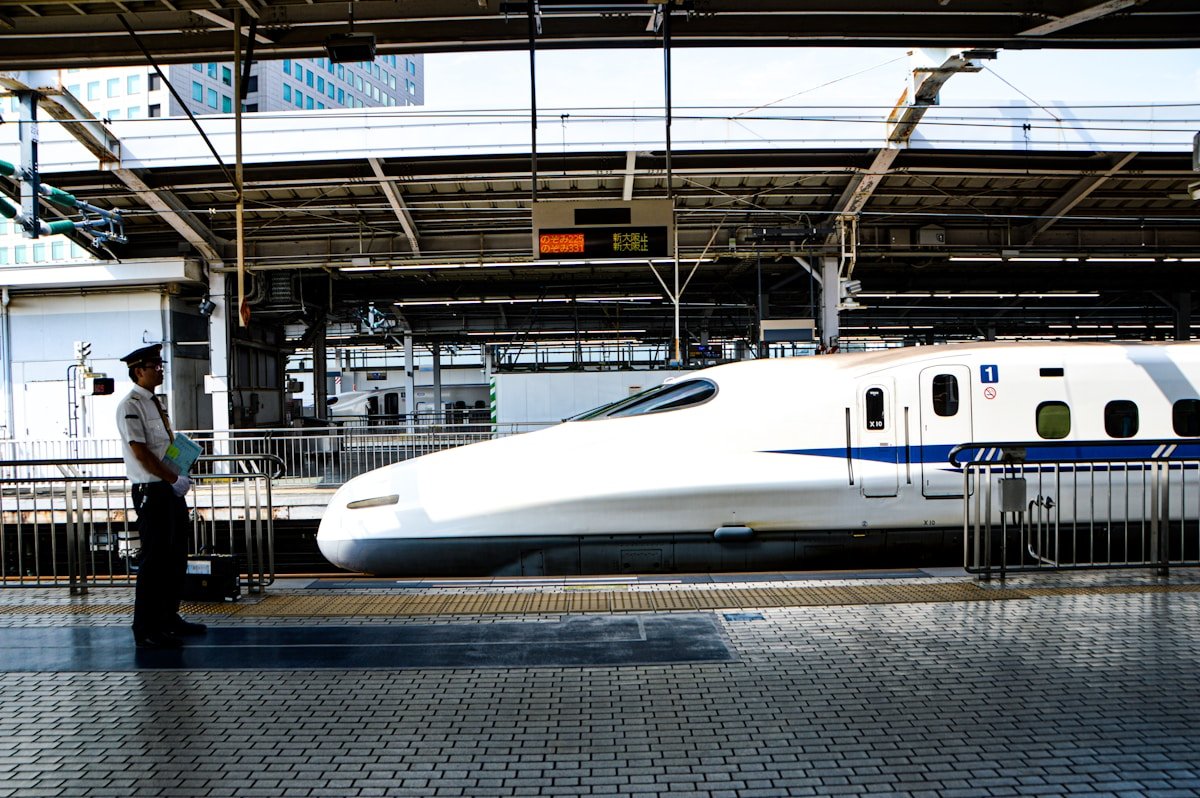
Narita International Airport sits roughly 66 kilometres east of central Tokyo. That distance matters: it shapes your transfer decision more than almost any other factor. Unlike Haneda, which is a short hop from the city, Narita requires a real journey - and the range of options, from ¥1,270 to ¥20,000+, is wider than most arrivals expect.
This guide covers every practical route with current approximate fares (as of 2026), honest journey times, and the trade-offs worth knowing before you queue.
Narita Express (N’EX) - The Reliable Choice
The Narita Express, operated by JR East, is the airport’s flagship rail service. It runs directly between Narita Airport Terminals 1 and 2 and the major Tokyo stations: Shinjuku, Shibuya, Ikebukuro, Yokohama, and Tokyo Station.
- Fare: approximately ¥3,250 one-way to Tokyo Station (as of 2026)
- Journey time: around 53 minutes to Tokyo Station, up to 90 minutes to Shinjuku
- Frequency: roughly every 30 minutes during daytime hours
- Reserved seating: all seats are reserved - book at the airport or via the JR East website
The N’EX is particularly efficient if you are staying near Shinjuku, Shibuya, or Yokohama, as it serves those stations without a transfer. Foreign visitors can also pick up a discounted round-trip N’EX ticket (approximately ¥4,000–5,000) bundled with JR East tourist passes.
Pro: Door-to-door simplicity for many central Tokyo neighbourhoods. Large luggage racks on every car. Punctual to the minute.
Con: More expensive than alternatives. Reserved seating means you cannot just board and sit - confirm your coach and seat number before boarding.
Book the N’EX round-trip ticket on Klook before landing to secure the discounted round-trip rate and skip the airport ticket queues.
Keisei Skyliner - Fastest to Ueno and Nippori
The Keisei Skyliner is the fastest train service between Narita and Tokyo, reaching Ueno in approximately 41 minutes and Nippori in 36 minutes. Operated by Keisei Electric Railway, it is the go-to option if you are staying in northeastern Tokyo, Asakusa, or planning to connect onto the Tokyo Metro network at Ueno.
- Fare: approximately ¥2,520 one-way to Ueno (as of 2026)
- Journey time: 41 minutes to Ueno Station
- Frequency: every 20–40 minutes
- Reserved seating: all seats reserved
The Skyliner consistently wins on speed and price versus the N’EX if your destination puts you near the Keisei Ueno or Nippori stations. Combined Skyliner + Tokyo Metro 24/48/72-hour passes are available and often represent good value for visitors planning heavy metro use.
Pro: Fastest option to northeast Tokyo. Slightly cheaper than N’EX.
Con: Terminates at Ueno - useful only if that area works for your itinerary.
Keisei Access Express - The Budget Rail Option
The Keisei Access Express (also called the Narita Sky Access Line limited express service) uses the same Keisei line but takes a different routing that makes more stops and adds journey time. It connects Narita Airport to Asakusa, Higashi-Ginza, and Oshiage in Tokyo.
- Fare: approximately ¥1,270 one-way to central Tokyo (as of 2026)
- Journey time: approximately 70–80 minutes to Asakusa
- Frequency: varies - check Keisei timetables, runs less frequently than the Skyliner
- Seating: unreserved on some services
For budget-conscious travellers willing to add 30–40 minutes to the journey, the Access Express is the cheapest rail option to central Tokyo. It is also IC-card compatible, meaning you can use your Suica or PASMO card without buying a separate ticket.
Pro: Cheapest rail option by a significant margin. IC card compatible.
Con: Longer journey, fewer departures, less predictable during peak hours.
IC Card Tip - Suica and PASMO
If you plan to use the Access Express or any standard Keisei service, purchase or load a Suica or PASMO IC card at the airport. Both cards work across JR, Tokyo Metro, Toei, and most private railways - tap in and tap out, no separate tickets required. Suica also functions at convenience stores, vending machines, and many restaurants across Japan.
The Skyliner and N’EX require separate paid tickets or reservations and cannot be covered by standard IC card balance alone.
Airport Limousine Bus - Best for Heavy Luggage
The Airport Limousine Bus (operated by Limousine Bus Co.) connects Narita to major hotels and stations across Tokyo, including Tokyo Station, Shinjuku, Shibuya, Roppongi, and Haneda Airport.
- Fare: approximately ¥3,200 one-way (as of 2026)
- Journey time: 75–130 minutes depending on traffic and destination
- Frequency: varies by route - roughly hourly on most corridors
- Luggage: large bags go in the underfloor hold - no overhead rack scramble
The limousine bus works exceptionally well if you are staying at a hotel served by a direct route, as it drops you close to the front door. The trade-off is traffic: the expressway between Narita and Tokyo is subject to congestion, particularly on Friday evenings, public holidays, and during major events. Journey times are estimates, not guarantees.
Pro: No stairs, no transfers, underfloor luggage storage. Drops near major hotels and station hubs.
Con: Slowest option in traffic. Fixed schedules - missing a departure means waiting up to an hour.
Seats on popular routes to Shinjuku and Shibuya fill quickly on busy arrival afternoons. Pre-book your Narita limousine bus ticket on Klook to guarantee a seat before you land.
Shared Airport Shuttle
Several shared door-to-door shuttle services operate between Narita and Tokyo addresses. These collect multiple passengers heading in similar directions, consolidating the journey.
- Fare: approximately ¥2,500–4,000 per person depending on destination (as of 2026)
- Journey time: 90–150 minutes including drop-off routing
- Booking: advance reservation required - arrivals counters at Narita or online before travel
Shared shuttles work best for groups or families with children and significant luggage, where splitting a private taxi fare is not practical but a bus is inconvenient. Solo travellers typically find trains more time-efficient.
Pre-Booked Private Transfer - Fixed Price, Door to Door
If you prefer a fixed price agreed before you land, pre-booked private transfers are the cleanest option. Kiwitaxi and GetTransfer both cover Narita routes and let you lock in a price in advance - useful when travelling with family or significant luggage and you want certainty rather than a metered fare. If you want a driver with a name board waiting in arrivals, Welcome Pickups offers meet-and-greet transfers from Narita. Prices vary by vehicle class and destination but are typically cheaper than a metered taxi for groups of three or more.
Taxi - Convenient, Expensive
Taxis are available at the designated rank outside each terminal arrival hall.
- Fare: approximately ¥20,000–25,000 to central Tokyo (as of 2026)
- Journey time: 60–90 minutes depending on traffic
- Flat-rate taxis: some providers offer flat-rate Narita transfers - worth checking at the taxi counter
At those fares, taxis are rarely the right choice for solo or pair travel. For groups of four sharing the cost - roughly ¥5,000–6,000 each - they become more competitive, particularly late at night when the limousine bus has stopped running.
Car Hire from Narita
Driving from Narita into Tokyo city centre is not recommended - parking is scarce and expensive, and Japan’s expressway toll system adds significant cost to any journey. However, if you plan to explore rural areas around Tokyo, the Kanto countryside, or northern Honshu by road after your initial days in the city, picking up a rental car at Narita before heading out is convenient.
Major rental operators with Narita desks include Toyota Rent a Car, Nissan Rent a Car, Times Car Rental, and OTS Rent a Car. Advance booking through an international aggregator typically yields better rates.
Which Transfer Should You Book?
| Option | Approx. Fare | Journey Time | Best For |
|---|---|---|---|
| Narita Express (N’EX) | ¥3,250 | 53–90 min | Shinjuku, Shibuya, Yokohama |
| Keisei Skyliner | ¥2,520 | 41 min to Ueno | Northeast Tokyo, metro connections |
| Access Express | ¥1,270 | 70–80 min | Budget travellers, Asakusa |
| Limousine Bus | ¥3,200 | 75–130 min | Hotel drop-off, heavy luggage |
| Taxi | ¥20,000+ | 60–90 min | Groups late at night |
For most independent travellers on a first trip, the Keisei Skyliner (to Ueno) or N’EX (to Shinjuku or Tokyo Station) is the right default - fast, reliable, and reasonably priced. Once you have your hotel location confirmed, compare which terminus is closer and choose accordingly.
See our Japan Rail Pass guide if you plan extensive onward rail travel, and our getting around Japan guide for transport beyond the airport.
Plan Your Trip
- Flights - Find the best fares to Japan
- Hotels - Search hotels in Tokyo on Booking.com
- Travel Insurance - Get covered before you go
- eSIM - Stay connected from landing
- Car Rental - Compare prices across providers
- Narita Express - Book the N’EX round-trip on Klook
- Limousine Bus - Pre-book your Narita limousine bus on Klook
- Tours and activities - Browse experiences on GetYourGuide