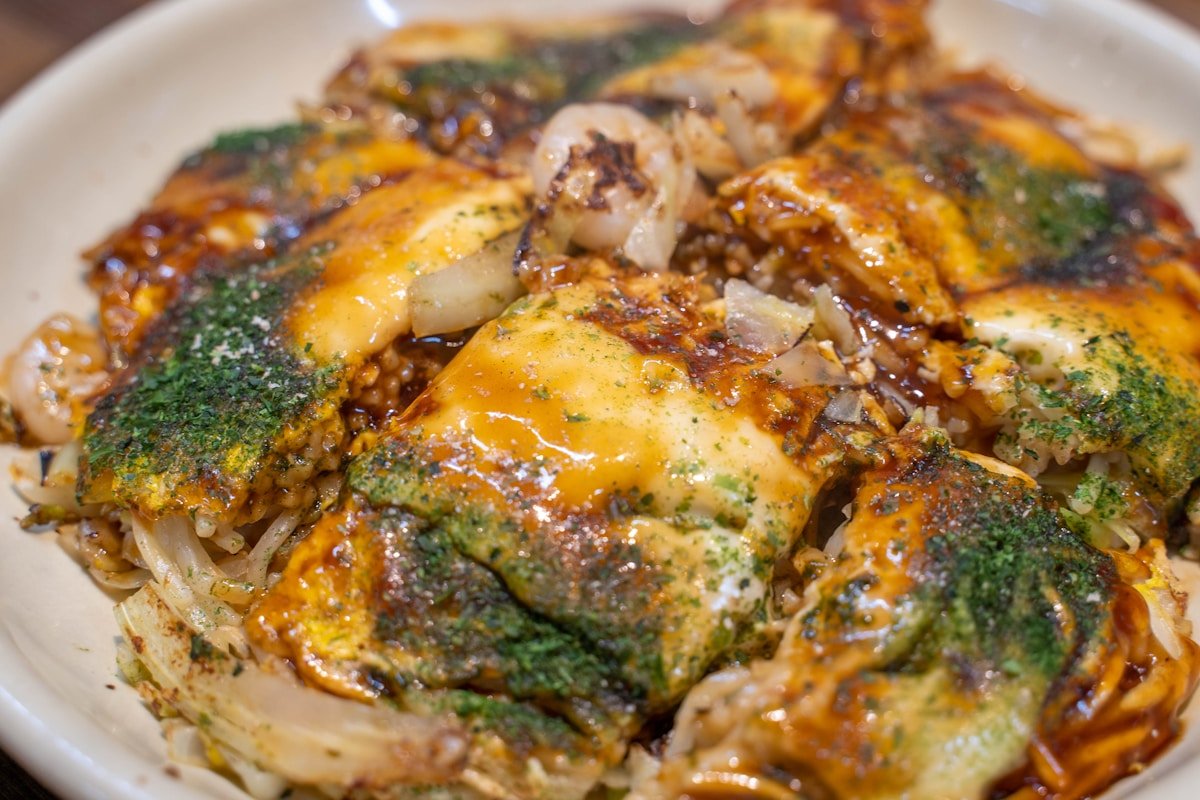
Hiroshima has two dishes that define its food identity with unusual clarity: okonomiyaki and oysters. Both are products of geography — the okonomiyaki style evolved locally over decades into something distinct from the Osaka version, while the oysters grow in the Seto Inland Sea that surrounds the region. Understanding this gives Hiroshima eating a logical shape: you can structure a day around one or both of these dishes, with momiji manju (maple-shaped cakes) and Miyajima anago eel filling the gaps.
For deeper coverage of individual restaurants and specific dish histories, see our Hiroshima best restaurants guide and what to eat in Hiroshima. For the broader city context, including Peace Memorial Park, transport, and day trips, see our Hiroshima travel guide.
Hiroshima Okonomiyaki: How It Works
The Hiroshima version of okonomiyaki builds in layers rather than mixing ingredients into a single batter. A thin crepe is cooked first on the iron griddle (teppan), then a mountain of shredded cabbage is piled on top and steamed under a lid until it collapses. Yakisoba or udon noodles are cooked separately alongside, then placed under the cabbage stack before the whole construction is flipped. An egg cracks onto the griddle, the pancake lands on top, and the result — lacquered with Otafuku sweet Worcester sauce and sprinkled with dried seaweed and bonito flakes — arrives as a compact, layered disc roughly 5–6cm tall.
The best entry point is Okonomimura (Okonomi Village), a four-storey building five minutes’ walk from the Peace Memorial Museum in Naka-ku. Around 25 family-run stalls occupy floors 2–4, each with a counter facing the teppan. Standard pork and noodle versions run ¥900–¥1,100; add shrimp, squid, or cheese for ¥100–¥200 more. There is no wrong choice — the base technique is consistent across stalls.
For a slightly more refined sit-down experience: Micchan Honten near Hiroshima Station is one of the city’s oldest okonomiyaki restaurants (open since the 1950s), with a ground-floor teppan counter and versions from approximately ¥950 per person. Hassho, a small chain with a branch near Hondori shopping street, is popular with local office workers at lunch; prices are in the same ¥950–¥1,300 range.
Budget for a full okonomiyaki meal: ¥900–¥1,400 per person including a drink.
Hiroshima Oysters
Hiroshima produces roughly two-thirds of Japan’s oysters, grown on the sandy, plankton-rich shallows of the Seto Inland Sea. The local preference is for large, brine-forward oysters eaten grilled (yaki-gaki) rather than raw — the heat opens the shell at the table and concentrates the flavour.
Kanawa is the best-known oyster restaurant in the city — a converted wooden barge moored on the Motoyasu River, a short walk from Peace Memorial Park. The setting is atmospheric and the oysters are from Kanawa’s own beds in Hiroshima Bay. Expect to pay ¥3,500–¥6,000 per person for a full meal with grilled and steamed preparations; reservation recommended for dinner.
Closer to Miyajima, the stalls at Miyajimaguchi pier and along the island’s main shopping street offer single grilled oysters from ¥300–¥500 each, eaten standing at a small table with a cold beer from a vending machine. This is the most casual and arguably most enjoyable way to eat them.
The oyster season runs October through March. Summer oysters are available but smaller and milder; most visitors timing a Hiroshima trip around oysters aim for November through February.
Miyajima: Anago and Momiji Manju
Miyajima island (a 10-minute ferry from Miyajimaguchi) has its own food traditions distinct from the mainland city. Anago (conger eel, not unagi freshwater eel) is the island’s signature dish, served in a anago-meshi bentō box: eel sliced, grilled, and laid over rice with a soy-mirin glaze. Ueno Shokudo near the ferry terminal does a reliable version for approximately ¥2,200–¥2,500 per box.
Momiji manju are maple-leaf-shaped cakes filled with red bean paste (the classic version), matcha, custard, or chocolate. They are everywhere on the island — sold individually from ¥150 and as gift boxes from ¥800. Buy them freshly baked from stalls near the main torii gate rather than pre-packaged shops near the ferry.
Where to Eat: Hiroshima Neighbourhoods
Naka-ku / Peace Park area: The central eating district. Okonomimura, Hondori shopping street with its covered arcade, and the stretch along the Motoyasu River including Kanawa. Most visitors eat the majority of their meals here.
Hiroshima Station area: Larger restaurants with longer hours, practical for early or late meals. Micchan Honten is here; the eki (station) building has a food floor with ramen, tempura, and sushi from ¥800–¥2,000 per person.
Miyajima / Miyajimaguchi: Oyster stalls and anago bentō. Best for lunch on a day trip from the city. The last ferry back to the mainland runs around 10pm.
Best Time to Eat Out in Hiroshima
Dinner at Okonomimura runs from 5pm onwards and fills quickly on weekends — aim to arrive by 5:30pm or after 7:30pm to avoid queuing. Oyster restaurants along the river take reservations for dinner; lunch slots are generally walk-in. The peace tourism peak season (spring and autumn) brings longer waits at popular okonomiyaki spots — weekday lunch is the most straightforward time to eat without planning ahead.
For the oyster season specifically, November through February gives the best product. The Hiroshima Oyster Festival, held in Motomachi waterfront in February most years, offers grilled oysters at stall prices (approximately ¥200–¥300 per oyster) from multiple producers.