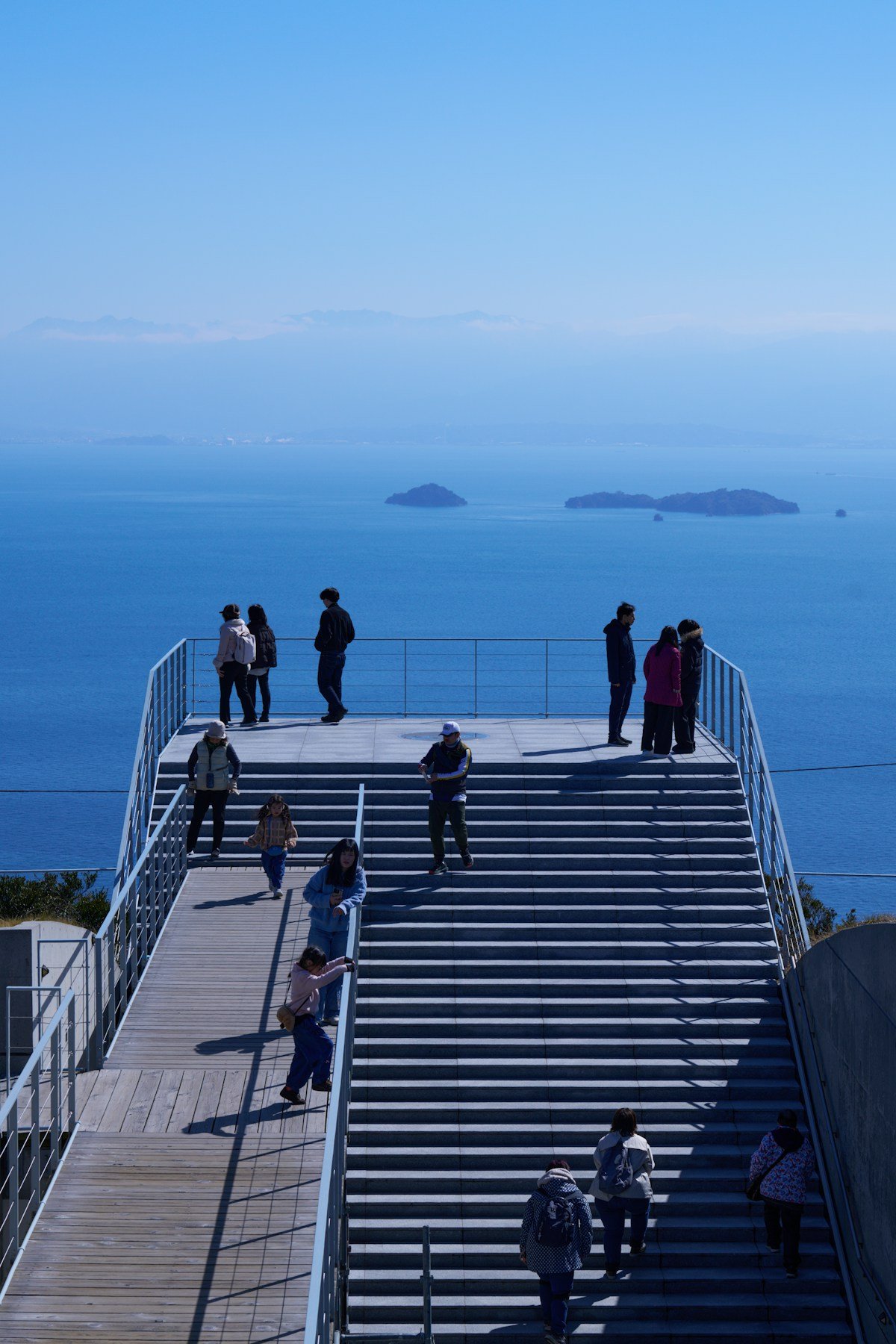
Sendai’s position at the heart of the Tohoku region makes it one of the most useful bases for day trips in northern Honshu. Within two hours by train or bus, you can reach island-studded bays, cliff-top temple complexes, ancient Buddhist heritage, mountain gorges, and hot spring villages. Here are the most rewarding options.
Matsushima Bay
Matsushima is the most immediate day trip from Sendai and the one that most visitors make. The bay contains approximately 260 pine-covered islands of varying sizes, eroded by centuries of sea action into arches, pillars, and grottos. It is traditionally listed alongside Miyajima and Amanohashidate as one of Japan’s three most scenic views (Nihon Sankei).
Getting there: JR Senseki Line from Sendai to Matsushima-kaigan, approximately 40 minutes, ¥420 one way as of 2026. Trains run every 20–30 minutes.
What to see: Zuiganji temple (¥700, 9am–4pm) is the most important historical site in the bay area - a Zen temple with a dramatic carved cliff-face approach lined with meditation caves used by monks. The main hall dates from 1606 and is designated a National Treasure. Entsuin temple (¥300, 8am–5pm), adjacent to Zuiganji, contains a garden built around a small mausoleum with carvings of playing cards and wine - items that were considered secret Christian symbols under the persecution of that era.
Boat tours: 50-minute bay cruises (approximately ¥1,500 as of 2026) depart from the pier next to Matsushima-kaigan Station and thread between the islands. The largest boat company, Matsushima Island Cruise, operates routes every 40 minutes during peak season. The cruise gives closer views of the main islands - Oshima, Nishikigatajima, and Kanemajima - than you get from the shoreline.
Matsushima is also excellent for oysters: the bay’s oysters are smaller and more intense than farmed varieties, and a dozen on the half-shell from the market stalls near the pier costs approximately ¥1,000.
Allow: 3–5 hours. Combine morning Zuiganji and Entsuin visits with an afternoon boat cruise and late lunch.
Yamadera
Yamadera - formally named Risshakuji temple - is built into a cliff face above the Tama River gorge, with halls and hermit caves ascending 1,015 stone steps to a summit temple at 860 metres. The climb passes through cedar forest, past cave temples carved directly into the rock, and eventually reaches Okuno-in, the main hall, where the views over the gorge and river valley are exceptional.
The temple was founded in 860 CE by the monk Ennin and has been in continuous use since. The poet Matsuo Basho visited in 1689 and wrote what became one of the most famous haiku in Japanese literature here: “The stillness - a cicada’s cry penetrates the rock.”
Getting there: JR Senzan Line from Sendai to Yamadera, approximately 1 hour, ¥860 one way as of 2026. Trains run roughly hourly. The station is directly at the base of the climb.
Entry: Root gate (Sanmon) entry ¥300, open 8am–5pm. The entry fee covers the full climb and all temple buildings.
The climb: Allow 60–90 minutes for the round trip at a comfortable pace. The steps are uneven stone and can be slippery in wet weather - wear footwear with grip. The final section to Godaido viewing platform and Okuno-in involves ladders and very steep sections. The views from the top justify every step.
Allow: 4–5 hours total including travel. An early start avoids the midday heat in summer.
Akiu Onsen
Akiu Onsen is the closest traditional hot spring resort to Sendai, approximately 30 kilometres southwest of the city in the Natori River gorge. It is a compact onsen town - fewer than a dozen ryokan and hotels around a riverside main street - and serves as Sendai’s weekend escape. The thermal water is sodium chloride, slightly salty, and effective for muscle relaxation.
Getting there: Miyagi Kotsu buses depart from in front of Sendai Station (west exit, bus stop 8), approximately 40–50 minutes to Akiu Onsen, ¥600 one way as of 2026. Buses run every 30–60 minutes.
Day-use onsen: Most ryokan offer day-use bath access (立ち寄り湯, tachiyori-yu). Prices range from ¥800 to ¥1,500 as of 2026 and include towel rental at most establishments. Saigyo Modoshi no Matsu Park, 5 minutes’ walk from the main onsen street, has an outdoor public footbath (free).
The gorge: The Akiu waterfall (Akiu Otaki) is a 15-minute bus ride or 30-minute walk from the main onsen area. At 55 metres high, it is the largest waterfall in Miyagi Prefecture and particularly impressive in spring snowmelt. Entry to the falls viewing area is free.
Allow: 4–6 hours. A morning arrival for a temple walk, the waterfall, and a late lunch at an onsen ryokan restaurant covers the highlights.
Hiraizumi
Hiraizumi is a UNESCO World Heritage Site approximately 90 minutes south of Sendai and is among the most significant historical locations in northern Japan. In the 12th century, under the Fujiwara clan, it was the de facto capital of the north - a city of 100,000 people that rivalled Kyoto in cultural sophistication. All of it was destroyed in 1189 by Minamoto no Yoritomo’s forces. What remains is the Chuson-ji temple complex on a wooded hilltop.
Getting there: Tohoku Shinkansen from Sendai to Ichinoseki (18 minutes, ¥3,020 as of 2026), then local JR Tohoku Line to Hiraizumi (8 minutes, ¥230). Or take the JR Tohoku Line directly from Sendai (approximately 75 minutes, ¥1,170 - slower but cheaper).
What to see: The Konjiki-do (Golden Hall, entry included in Sankozo museum ticket ¥800, open 8:30am–5pm) is the essential sight - a 12th-century mausoleum covered entirely in gold leaf inside and out, holding the mummified remains of three Fujiwara clan leaders. It is extraordinary. The hall is protected under a modern cover structure, which is practical but slightly anticlimactic approaching from outside. The surrounding Chuson-ji grounds, with their cedar avenue approach, are free to walk.
The Motsu-ji temple grounds (¥700, 8:30am–5pm) in the lower town contain Japan’s best-preserved Heian-period garden - a large pond garden designed according to 12th-century garden principles, now a designated Special Historic Site.
Allow: A full day including travel. Plan 2–3 hours at Chuson-ji and 1 hour at Motsu-ji.
Make the most of your time around Sendai: Guided day trips from Sendai handle the logistics - transport, guide, and timing - so you can focus on the experience. For airport arrivals and departures, Kiwitaxi offers fixed-price airport transfers with no meter surprises.
Naruko Gorge
Naruko Gorge is a dramatic river canyon about 60 kilometres northwest of Sendai, best visited in October when the maple and zelkova trees along the canyon walls turn orange and red. The gorge is 2 kilometres long, 100 metres deep, and cut through green tuff rock - the colour contrast between the autumn foliage and the pale stone is the image that appears on every Tohoku autumn tourism poster.
Getting there: JR Tohoku Line from Sendai to Furukawa, then JR Rikuu East Line to Naruko Onsen (total approximately 80 minutes, ¥1,690 as of 2026). Naruko Gorge is a 20-minute walk from Naruko Onsen Station, or take a local bus.
The gorge: The main viewing bridge (Ofukazawa Bridge) over the canyon is free. A walking trail along the rim provides alternative angles. The gorge area also sits within the Naruko Onsen resort district, where day-use baths are available at several ryokan for ¥500–¥1,000.
Best season: October for autumn foliage is the peak. In summer the gorge is green and pleasant but less dramatic.
For more on Sendai itself, see our Sendai travel guide and what to eat in Sendai.
Where to stay: Search hotels in Sendai on Booking.com
See also: Things to do in Sendai · Where to stay in Sendai · Best restaurants in Sendai · Matsushima travel guide · Aomori travel guide · Tohoku region guide