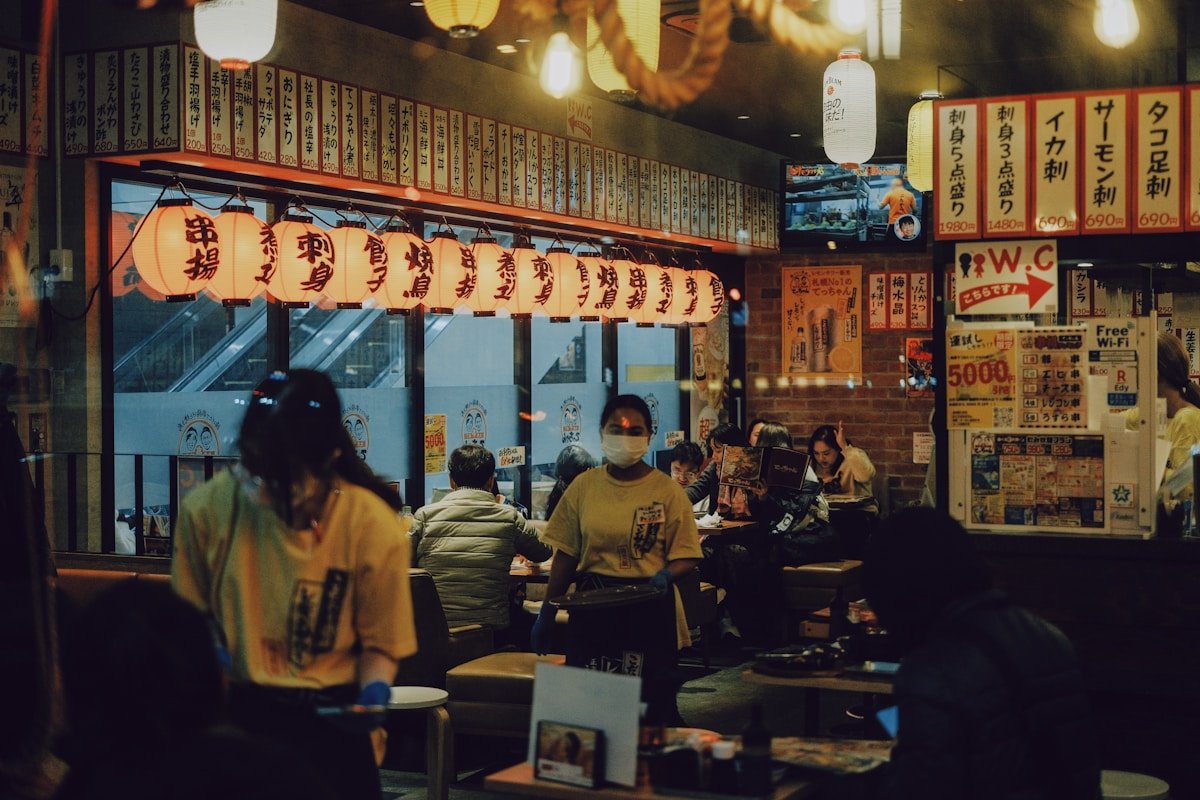
Sendai’s restaurant scene is larger and more varied than most visitors expect from a regional city. As the economic and cultural capital of Tohoku, it has a well-developed food culture centred on gyutan (grilled beef tongue) but extending to excellent Tohoku seafood, several distinctive regional noodle traditions, and a lively nightlife district that keeps izakayas and ramen shops busy until late.
1. Tasuke (the original gyutan restaurant)
Price: Standard gyutan set approximately ¥2,500–¥3,500 | Hours: 11:30am–10pm | Location: Multiple branches near Sendai Station
Tasuke was founded in 1948 by Keishiro Sano, who developed the Sendai gyutan style: thick-cut tongue, dry-salted and cured for several days, grilled over charcoal until the surface caramelises while the interior stays tender. The method produces a fundamentally different product from the thin-sliced tongue of standard yakiniku restaurants.
The standard set at Tasuke includes six to eight thick slices of grilled tongue, mugi-gohan (barley-mixed rice), oxtail soup (teisho-jiru), and Japanese pickles. The barley rice is an intentional pairing - the slight nuttiness and chew of the barley balances the richness of the meat. A premium set with aged tongue (juku-neri gyutan) costs approximately ¥4,500–¥5,000 and is worth the upgrade for those wanting the most delicate version.
The main branch near Sendai Station has English menus. Queues at lunch; less wait after 2pm.
2. Rikyu (gyutan chain, best value)
Price: Gyutan set from approximately ¥2,200 | Hours: 11am–10pm | Location: Multiple branches including Sendai Station underground arcade
Rikyu is the largest and most accessible gyutan chain in Sendai, with branches in the station’s underground restaurant arcade and the surrounding streets. The gyutan quality is consistent across locations - thick-cut, properly cured, grilled to order - and the sets are slightly more affordable than Tasuke at entry level.
The station branch opens at 11am and is a convenient option for those catching a shinkansen after eating. English menus available. Recommended for visitors who want a reliable gyutan experience without searching for a specific neighbourhood.
3. Kisuke (gyutan and grill)
Price: Gyutan set from approximately ¥2,000; full grill sets ¥3,500–¥5,000 | Hours: Noon–2pm, 5pm–10pm | Location: Kokubun-cho entertainment district
Kisuke combines a gyutan specialist menu with a broader grilled meat selection. The gyutan here uses a slightly different marinade from the Tasuke tradition - a touch of soy in the cure - which gives the meat a marginally darker colour and more complex savoury flavour. A second menu of offal cuts (horumon) is available for adventurous diners.
The Kokubun-cho location is further from the station than the other gyutan restaurants but in the heart of Sendai’s most lively evening district, making it a natural choice for a dinner combined with bar-hopping afterward.
4. Sendai Asaichi (Morning Market) and Seafood
Price: Varies by vendor | Hours: 7am–12 noon | Location: Near Sendai Station, north side
Sendai’s morning market (asaichi) is not a tourist attraction - it is a working wholesale and retail fish market where restaurants and home cooks buy the Tohoku coast’s catch. Visitors can browse and buy direct from stalls selling:
- Oysters (kaki) from Matsushima and Kesennuma: large, briny, available by the shell for eating on the spot or by the box.
- Sanriku uni (sea urchin): Miyagi Prefecture produces some of Japan’s most prized sea urchin in summer. Fresh uni at the market is approximately ¥2,000–¥4,000 for a tray, significantly cheaper than restaurant prices.
- Pacific saury (sanma): Sendai’s unofficial autumn fish, eaten grilled with daikon and soy. Peak season September–October.
For a sit-down seafood meal, the izakayas on Kokubun-cho street near the entertainment district serve seasonal Tohoku seafood - expect to spend approximately ¥3,000–¥6,000 per person with drinks.
5. Murata (kaiseki and Sendai cuisine)
Price: From approximately ¥6,000 for dinner; ¥3,500 for a weekday lunch course | Hours: Noon–2pm, 6pm–9pm (closed irregular days) | Location: Jozenji-dori area
The most refined restaurant in Sendai proper for traditional Japanese cuisine using Tohoku ingredients. The kaiseki-style dinner course uses Miyagi seafood, Sendai miso, local mountain vegetables, and Sendai hime negi (a local spring onion variety with a sweet, mild flavour). The setting is a traditional townhouse with a small garden.
The weekday lunch course (approximately ¥3,500) offers accessible pricing for what is otherwise an expensive dinner venue. Reservation required.
6. Donjiki (Sendai ramen)
Price: Approximately ¥800–¥1,100 | Hours: 11am–9pm (closed Tue) | Location: Central Sendai
The Sendai ramen tradition uses a pork-based broth with a clean, slightly sweet soy seasoning - different from the heavier Sapporo miso ramen or the thin Hakata tonkotsu. Donjiki is a local favourite that maintains the lighter local style with good noodles. A standard bowl is ¥800; add a gyutan chashu topping for ¥200 to combine the city’s two food identities in one bowl.
See Sendai through its food: Food and cultural tours in Sendai often include market visits, tastings, and dishes you’d never find independently.
Where to Eat by Budget
| Budget | Best options |
|---|---|
| Under ¥1,500 | Donjiki ramen, Sendai Asaichi market snacks |
| ¥1,500–¥3,000 | Rikyu gyutan set, Kisuke gyutan |
| ¥3,000–¥5,000 | Tasuke premium gyutan, Kokubun-cho seafood izakayas |
| ¥5,000+ | Murata kaiseki, aged tongue sets |
For sightseeing in Sendai, see our Sendai travel guide. For day trips including Matsushima, see our day trips from Sendai guide.
Take a Guided Food Tour of Sendai
Sendai is Japan’s beef tongue (gyutan) capital - a dish born here in 1948 when grill chef Sano Keishiro adapted American GI food supplies into a distinctly Japanese preparation of thinly sliced tongue over charcoal, served with mugi meshi (barley rice) and oxtail soup. The dish has spawned an entire Sendai restaurant genre, with the covered Ichibancho and Kokubuncho shotengai streets lined with gyutan specialists competing on marbling grade and grill technique. Beyond gyutan, Sendai produces zunda mochi (rice cakes with edamame paste, vivid green) and some of the finest sake in Tohoku from the cold mountain water of the Zao range. A guided food walk covers all three pillars and explains why gyutan became the city’s defining dish.
Guided food tours in Sendai take you beyond tourist-obvious spots - local guides know which stall has the freshest gyutan, where to find the best zunda mochi, and how to navigate an all-Japanese menu.
See also: Food to try in Sendai · Things to do in Sendai · Where to stay in Sendai · Matsushima travel guide · Tohoku region guide
Search hotels in Sendai: browse stays in Sendai