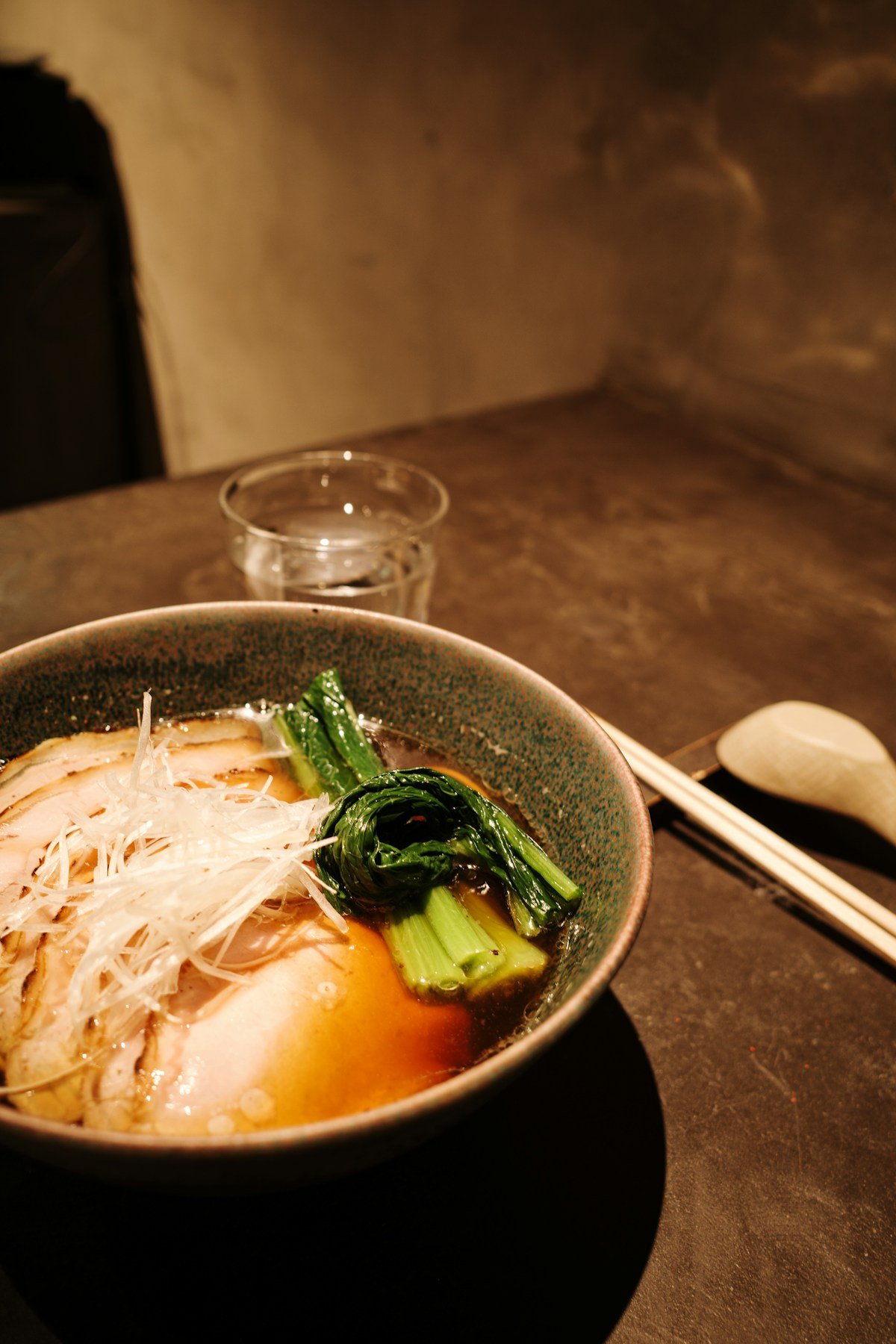
Nagasaki’s food culture reflects its singular history: more than two centuries as Japan’s only open trading port left a culinary legacy that mixes Chinese, Portuguese, and Dutch influences with Japanese cooking in ways not found anywhere else in the country. The result is a restaurant scene that rewards specific ordering - champon noodles, shippoku multi-course banquets, kakuni-manju pork buns, and castella sponge cake are Nagasaki originals. Imported fish at the harbour and locally farmed seafood from the surrounding bays mean seafood restaurants deliver unusual quality for a mid-sized city.
For context on Nagasaki’s food history and what to try, see the Nagasaki food guide.
Champon and Chinese-Nagasaki Cuisine
Shikairou (四海楼)
Shikairou is the restaurant that claims to have created champon in 1899, when founder Chen Ping-shun developed the dish to provide cheap, filling meals for Chinese students studying in Nagasaki. The restaurant has occupied its current five-storey building near Glover Garden since 1962. The fourth-floor dining room overlooks Nagasaki Harbour.
What to order: The regular champon (¥1,200), which is closer to the original recipe than anywhere else in the city. The restaurant also serves sara udon (¥1,100), a broader Nagasaki Chinese menu, and a champon history museum in the basement.
Practical notes: Open 11:30am–3pm and 5pm–9pm; closed Tuesdays. Reservations accepted but not usually necessary for lunch on weekdays. Access: 3-minute walk from Oura-Tenshu-Do tram stop.
Ringer Hut (リンガーハット)
A national chain founded in Nagasaki, and a worthwhile visit despite the chain format. The champon here is fresher and more carefully made than its category suggests - the pork broth is clean, the vegetables consistently crunchy, and the standard large champon (approximately ¥730) uses domestically sourced ingredients. Multiple locations near Nagasaki Station and throughout the city.
Best for: A quick, reliably good introduction to champon when you don’t have time for a sit-down restaurant. Not a substitute for Shikairou or a Chinatown specialist, but genuinely good.
Chinatown (Shinchi-machi) Champon Restaurants
Nagasaki’s Chinatown - about 20 restaurants and shops within the four Chinese-gate perimeter - is the most concentrated area of champon eating in the city. Several restaurants serve both champon and sara udon from approximately ¥900–¥1,300, with slightly more rustic atmospheres than Shikairou. No single standout; quality is consistently high across the established restaurants facing the central plaza.
What to order: Champon with extra seafood (if available), or a champon and sara udon combination if dining with a companion. Most restaurants are open from around 11am and close in the evening.
Shippoku Banquet Restaurants
Shippoku is Nagasaki’s formal dining tradition: a multi-course meal served on a round shared table, combining Chinese, Dutch, and Japanese cooking techniques in a succession of small dishes. It developed during the sakoku period as a way for Japanese hosts to serve foreign merchants in the city. Full-course shippoku is a special-occasion meal - it requires advance reservation, takes 2–3 hours, and costs ¥8,000–¥15,000 per person as of 2026.
Yossou (吉宗)
Established in 1866, Yossou is Nagasaki’s most famous shippoku restaurant and one of the oldest surviving examples of this style. The building is a traditional wooden merchant house in the Hamanomachi shopping district. The kaiseki-influenced multi-course menu changes with the season.
What to order: The full shippoku course (¥12,000–¥15,000 per person as of 2026); a shorter lunch version is available for approximately ¥4,000. The chawanmushi (steamed egg custard) served here is considered among the best in Kyushu.
Practical notes: Advance reservation essential - at least 2 days ahead for weekends. Minimum group size 2 people. Access: Hamanomachi shopping arcade, 5 minutes’ walk from Nishihamano-machi tram stop. Closed Wednesdays.
Hamakatsugyo Nagasaki (浜勝魚)
A more accessible option for shippoku-adjacent multi-course dining with a strong seafood focus. Seasonal menus based on the day’s catch from Nagasaki Bay, served in private rooms or at counter seats. Lunch sets from approximately ¥2,500; dinner courses from approximately ¥5,000–¥8,000 per person.
Best for: Groups of 2–4 who want a formal sit-down seafood experience without the full cost or formality of shippoku. Reservations recommended for dinner.
Seafood
Nagasaki Prefecture is one of Japan’s most productive fishing regions. The city’s restaurants benefit from direct access to the harbour market; fresh aji (horse mackerel), tai (sea bream), and local oysters from the surrounding bays are reliable choices.
Sakaeya (栄屋)
A mid-range seafood restaurant near Nagasaki Port specialising in the local aji - particularly aji no tataki (raw horse mackerel with ginger and spring onion, approximately ¥1,200), which is among the freshest in the city given its proximity to the unloading docks. Set lunches from ¥1,500 including miso soup, rice, and pickles.
Practical notes: Lunch only on weekdays; dinner service Thursday–Sunday. Access: 10-minute walk from Nagasaki Station, near the port fish market area. No English menu, but the fish display counter allows point-ordering.
Hamaryu (浜竜)
A counter-seating sashimi and grilled fish restaurant in the Shianbashi dining district, open for dinner from 6pm. The menu leans heavily on local catches. Sashimi platters from approximately ¥1,800; grilled Nagasaki swordfish (kajiki) from approximately ¥1,500.
Practical notes: Dinner only. Reservations recommended for Friday and Saturday evenings. Access: near Shianbashi tram stop, Nagasaki’s main evening dining district.
Budget Eating and Street Food
Kakuni-manju Stalls
Braised pork belly (kakuni) in a steamed Chinese bun is sold from takeaway stalls throughout the historic districts - particularly near Glover Garden, Dejima, and along the Hamanomachi arcade. Approximately ¥400–¥600 per bun. The most visible stall on the Glover Garden approach usually has the longest queue.
Convenience Stores and Bento
Nagasaki’s konbini (convenience stores) stock locally made champon onigiri and Nagasaki Chinese-style bento boxes not found elsewhere. For a lunch under ¥700, the Lawson and 7-Eleven stores near Chinatown and the station are useful. Several small bento shops in the Hamanomachi arcade sell teishoku-style boxes from ¥650.
Neighbourhood Guide
| Area | Best for | Price range |
|---|---|---|
| Chinatown (Shinchi) | Champon, sara udon | ¥900–¥1,400 |
| Glover Garden area | Shikairou champon, kakuni stalls | ¥400–¥1,500 |
| Hamanomachi | Shippoku (Yossou), castella (Fukusaya) | ¥1,200–¥15,000 |
| Shianbashi | Izakaya, seafood, dinner bars | ¥1,500–¥5,000 |
| Nagasaki Station area | Ringer Hut, bento shops | ¥700–¥1,500 |
See Nagasaki through its food: Food and cultural tours in Nagasaki often include market visits, tastings, and dishes you’d never find independently.
Practical Notes
Payment: Most restaurants accept IC cards (Suica, Nimoca) and major credit cards, but smaller champon shops and street-food stalls are often cash-only. Carry ¥5,000 in small bills when eating outside the main tourist areas.
Opening hours: Many Nagasaki restaurants close between lunch and dinner (roughly 3pm–5:30pm). If you arrive outside those hours, Chinatown restaurants, convenience stores, and the Hamanomachi arcade have continuous-service options.
Language: English menus are available at Shikairou and most tourist-area champon restaurants. In Shianbashi, neighbourhood izakaya rarely have English menus - pointing at neighbouring diners’ dishes or the kitchen display works reliably.
Dining times: Nagasaki locals eat lunch early (11:30am is prime), creating queues at popular spots from noon to 12:30pm. Arriving at 11:30am avoids the main rush at champon restaurants.
Take a Guided Food Tour of Nagasaki
Nagasaki’s food culture is the most internationally influenced in Japan - the city was the only open port during Japan’s 200-year isolation, and Chinese and Dutch trade produced hybrid dishes that exist nowhere else: champon (thick noodle soup with pork, seafood, and vegetables, invented at a Chinese restaurant in 1899), sara udon (crispy fried noodles with the same toppings), and kakuni manju (Chinese braised pork belly in a steamed bun). Castella (Portuguese-derived sponge cake) has been made in Nagasaki since the 16th century. A guided food walk through Chinatown, the Shianbashi district, and the harbour covers all these threads without any of the confusion about which dishes are modern tourist versions and which are the originals.
Guided food tours in Nagasaki take you beyond tourist-obvious spots - local guides know which stall has the freshest champon, where to find the best castella, and how to navigate an all-Japanese menu.
See also: Nagasaki travel guide · Things to do in Nagasaki · Nagasaki food guide · Hiroshima vs Nagasaki · Kyushu region guide
Search hotels in Nagasaki: browse stays in Nagasaki