Hiroshima and Nagasaki share a history that sets them apart from every other city in the world. Both were targets of atomic bombs in August 1945. Both rebuilt from near-total destruction. Both now dedicate significant civic energy to peace education. But they are very different cities with different personalities, different histories, and different reasons to visit.
Quick Verdict
| Category | Hiroshima | Nagasaki |
|---|---|---|
| Peace memorial scale | Yes (larger park, more visitors) | - |
| Historical layering | - | Yes (centuries of history) |
| Day trip attraction | Yes (Miyajima Island) | Yes (Gunkanjima) |
| Atomic Bomb Museum | Both excellent | - |
| Food culture | Hiroshima okonomiyaki | Champon, kakuni bun |
| International feel | - | Yes (port city heritage) |
| City size | Larger (1.2M) | Smaller (400K) |
| Accessibility | Yes (shinkansen stop) | Less direct shinkansen |
| Nagasaki Ropeway views | - | Yes |
| Nagasaki Chinatown | - | Yes |
Hiroshima is the more internationally known and easily accessible city, with Miyajima as a spectacular day trip. Nagasaki offers a richer layered history and a more personal peace narrative.
Historical Context
Understanding both cities requires understanding what made them different targets.
Hiroshima in 1945 was Japan’s eighth-largest city and a significant military command centre. The bomb dropped on August 6, 1945 killed an estimated 80,000 people instantly; radiation deaths brought the total to approximately 140,000 by the end of the year. The city was rebuilt methodically and now has a population of 1.2 million. The decision to preserve the Genbaku Dome (the Industrial Promotion Hall, the closest surviving structure to the hypocenter) as a permanent ruin defined Hiroshima’s modern identity.
Nagasaki had a different significance. As Japan’s only designated trading port with the West during the Edo period’s sakoku (closed country) policy, Nagasaki was home to Dutch, Chinese, and later Catholic communities for over 200 years. The atomic bomb on August 9, 1945 killed an estimated 40,000 people instantly. Nagasaki’s Catholic community - concentrated in the Urakami district - was disproportionately affected: Urakami Cathedral, one of Asia’s largest Catholic churches (rebuilt, now restored), was at the epicentre.
Peace Memorials and Museums
Hiroshima Peace Memorial Park
The Peace Memorial Park covers 12 hectares at the hypocenter of the blast. The Atomic Bomb Dome (Genbaku Dome) is the most photographed structure - its skeletal ruins were deliberately left as a reminder of what happened. Entry to the park is free; the dome’s exterior is viewable at all hours.
The Hiroshima Peace Memorial Museum (entry ¥200 as of 2026) is Japan’s most visited museum of this type. It houses artefacts from the blast - a melted lunchbox, a child’s tricycle, a shadow burnt into stone steps by the thermal flash - alongside detailed historical documentation. The museum was significantly renovated in 2019; allow 90 minutes to two hours. Visiting in the morning on weekdays avoids peak school groups.
The Children’s Peace Monument (free), inspired by Sadako Sasaki’s story of folding 1,000 paper cranes before her death from leukemia, receives millions of folded cranes each year from visitors worldwide.
Nagasaki Atomic Bomb Museum and Urakami
The Nagasaki Atomic Bomb Museum (entry ¥200 as of 2026) focuses on the bomb’s human and structural impact, with particular attention to the Catholic community of Urakami. The Hypocenter Park is a short walk away - a black stone pillar marks the exact detonation point 500 metres above ground.
Urakami Cathedral (Urakami Tenshu-do) was rebuilt in 1959 after total destruction; the original brick columns and heads of stone saints, melted by the blast, are displayed in the grounds. The atmosphere here is quieter and more personal than Hiroshima’s Peace Park. The Peace Park (Heiwakoen) above the museum holds the iconic praying hands statue and a collection of international peace sculptures donated by world governments.
Day Trips
From Hiroshima: Miyajima Island
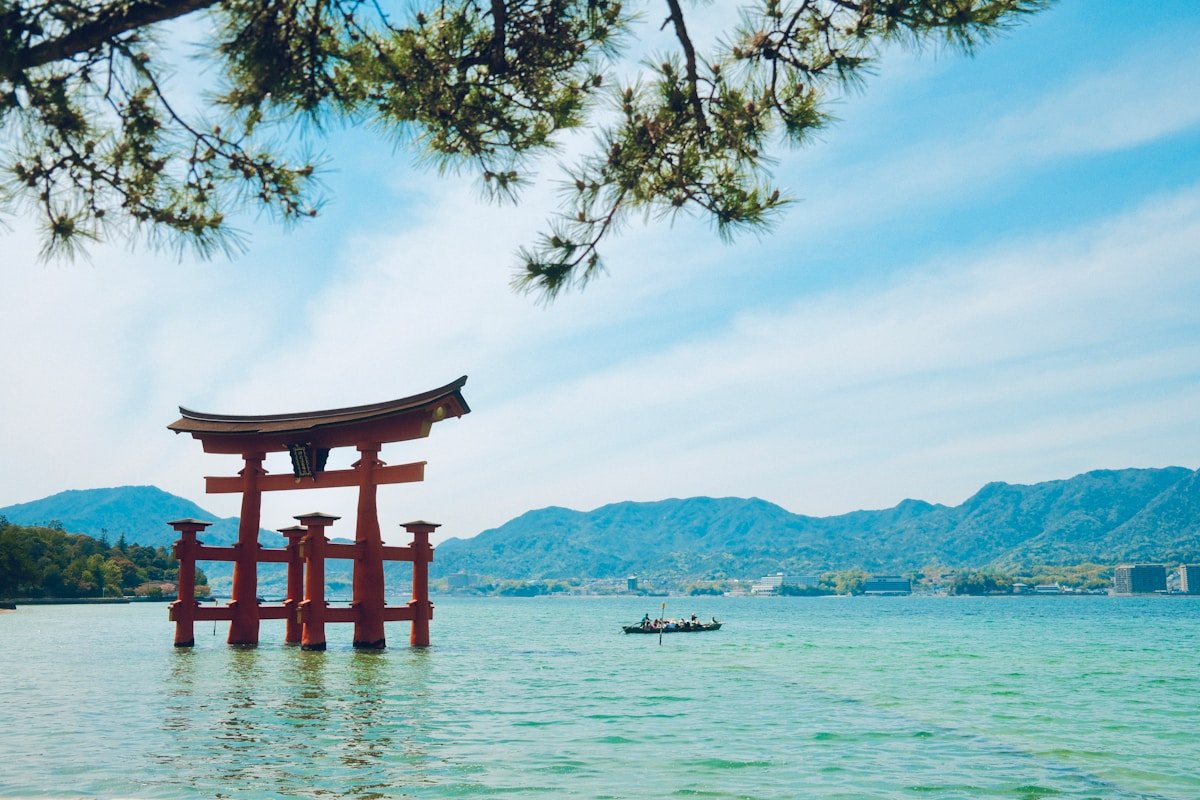
The ferry to Miyajima (Itsukushima) from Hiroshima port takes 10 minutes and is covered by the JR Pass (¥200 otherwise). The Itsukushima Shrine - with its famous torii gate standing in the tidal flats - is one of Japan’s most photographed sites and a UNESCO World Heritage Site. At high tide, the gate appears to float; at low tide, you can walk to its base. The shrine interior costs ¥300 to enter. The island’s deer roam freely. Allow 3–4 hours including the ferry crossing.
From Nagasaki: Gunkanjima (Hashima Island)
Gunkanjima (Battleship Island) is a decommissioned coal mining island 19km offshore whose dense concrete apartment buildings gave it its battleship silhouette. Now a UNESCO World Heritage Site (as part of the Meiji Industrial Revolution sites), it’s accessible only via guided boat tour (approximately ¥4,000–4,500 as of 2026, including landing fee). The tour takes approximately 2.5 hours; landing isn’t possible in rough weather. The ruins are atmospheric and the historical narrative - forced labour during World War II - is complex.
Food
Hiroshima-style okonomiyaki is fundamentally different from Osaka’s version. Layers are built sequentially - crepe, cabbage, noodles (yakisoba or udon), pork, and egg - rather than mixed together. The result is denser and more substantial. Okonomimura (a six-floor building in central Hiroshima with 25 okonomiyaki restaurants on each floor) is the classic spot; meals run ¥900–1,400. Hassei in central Hiroshima is frequently cited as the best standalone restaurant for the dish (approximately ¥1,200, cash only).
Nagasaki has two signature dishes neither found consistently elsewhere in Japan. Chanpon is a rich pork bone broth soup loaded with seafood, pork, and vegetables - the original fusion of Chinese and Japanese culinary influences. Kakuni manju (braised pork belly steamed bun) is Nagasaki’s great street food, sold from stalls near Chinatown for approximately ¥300–400. Nagasaki Shippoku cuisine - an elaborate banquet style blending Japanese, Chinese, and Dutch influences - is the city’s fine dining tradition; set menus start from approximately ¥8,000 per person.
Accommodation
Hiroshima has a solid range. Anu Hiroshima (approximately ¥12,000–18,000 per room) is a well-designed boutique option near the Peace Park. The Rihga Royal Hotel Hiroshima (from approximately ¥18,000) is the established business hotel standard. Hostels near Hiroshima Station: Len Hiroshima (from ¥3,200 dorm) is recommended for solo travellers. For the full Miyajima experience, staying overnight on the island at a ryokan - after the day-trippers leave - is extraordinary; Jukeiso ryokan runs from approximately ¥35,000 per person with dinner.
Nagasaki is smaller and accommodation options reflect this. The Hamilton Nagasaki (approximately ¥15,000–22,000) is modern and well-located. Hotel Monterey Nagasaki mimics a 19th-century Dutch building and starts from approximately ¥16,000. Guesthouses near Urakami station offer proximity to the peace sites for approximately ¥8,000–12,000 per room.
Getting There and Between
From Hiroshima to Nagasaki: the shinkansen connects Hiroshima to Hakata (Fukuoka) in 50 minutes (covered by JR Pass on Hikari/Sakura services). From Hakata, the Kamome limited express runs to Nagasaki in approximately 1 hour 50 minutes (partially on new Nishikyushu Shinkansen from Takeo-Onsen as of 2022). Total journey: approximately 2.5–3 hours by the fastest routing.
Both cities are also accessible from Osaka or Kyoto. Hiroshima is 90 minutes from Shin-Osaka by shinkansen; Nagasaki is approximately 3 hours from Osaka (Hakata transfer).
Ready to book? Compare flights to Japan - prices and routes vary significantly depending on your departure city. Tours for each side: Hiroshima tours and activities and Nagasaki tours and activities. Travel insurance for Japan is worth arranging before you commit to bookings.
Which to Visit?
Visit Hiroshima if you have limited time in western Japan and want the most internationally significant memorial experience combined with the exceptional Miyajima day trip.
Visit Nagasaki if you want a peace experience that is more personal and layered, combined with a city that has more diverse historical identity than any other in Japan.
Visit both if you’re following the Kansai and Kyushu itinerary - they work naturally together as part of a western Japan circuit.
See also: Hiroshima travel guide · Things to do in Hiroshima · Nagasaki travel guide · Things to do in Nagasaki · Miyajima travel guide · Chugoku-Hiroshima region guide · Kyushu region guide · Fukuoka vs Osaka · Nara vs Kamakura · Tokyo vs Kyoto
Plan Your Trip
- Flights - Find the best fares to Japan
- Hotels - Hotels in Hiroshima · Hotels in Nagasaki
- Travel Insurance - Get covered before you go
- eSIM - Stay connected from landing
- Car Rental - Compare prices across providers
- Tours and activities - Hiroshima experiences · Nagasaki experiences · All Japan tours