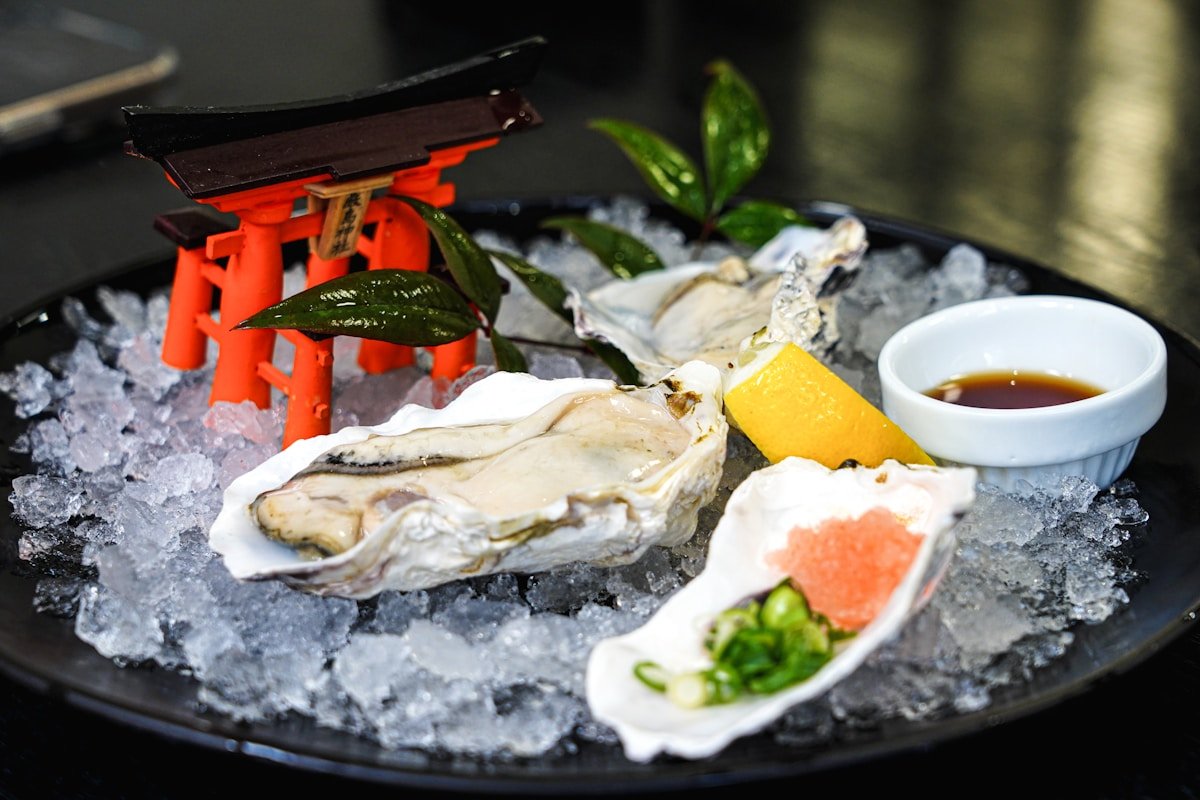
Miyajima’s culinary reputation rests on its geography: an island surrounded by the tidal waters of the Seto Inland Sea, where oyster aquaculture thrives and conger eel is abundant. The two signature foods - Hiroshima oysters and anago (conger eel) - are among the best examples of their kind in Japan. The third food identity - momiji manju - is souvenir food that happens to be genuinely good when fresh.
Hiroshima Oysters (Kaki)
Hiroshima Prefecture produces approximately 60% of Japan’s oyster output. Miyajima Bay, at the mouth of several river systems flowing from the Chugoku Mountains, provides the shallow, nutrient-rich water that oyster larvae require. The oysters raised here grow larger and faster than in many other parts of Japan.
Grilled oysters (yaki-gaki): The primary way to eat Miyajima oysters. Oysters in the shell are placed on a charcoal or gas grill until the shells open with an audible crack. The liquor inside boils briefly, concentrating the brine, and the flesh turns from translucent to just-set. Eat directly from the shell. The flavour is intense - briny, oceanic, with a faint sweetness. No additional seasoning is needed, though lemon and soy are available.
Cost: approximately ¥300–¥500 per shell from stalls along Omotesando.
Deep-fried oysters (kaki fry): Oysters coated in panko breadcrumbs and deep-fried until golden. The contrast between the crisp exterior and the hot, creamy interior is the point. Served with tartare sauce and shredded cabbage. Available at Kakiya restaurant (¥1,800 for a set) and several other restaurants.
Raw oysters (nama-gaki): Less common on the island than the grilled version, but available at Kakiya and some sit-down restaurants. The Miyajima oysters are large enough to be eaten raw in two bites. A squeeze of ponzu or lemon is the standard accompaniment.
Best season: Oysters are available year-round in Japan but peak in quality October through March, when cold water concentrates their flavour and fat reserves. Summer oysters are leaner and milder.
Anago-meshi (Conger Eel Rice)
Anago - saltwater conger eel - from the Seto Inland Sea has been a local speciality since at least the Meiji era. The fish is caught in the tidal channels around the island group, where strong currents keep the flesh firm and clean-tasting.
Preparation: The eel is split, cleaned, skewered, and first steamed to remove excess fat, then brushed with a tare (sweet soy sauce glaze) and grilled over high heat. The result is firmer and less fatty than unagi - the flesh holds its texture and the sweetness of the glaze is more restrained. Served over rice in a wooden lacquer box (jubako) with clear soup and pickles.
Ueno restaurant near the ferry terminal has served this dish since 1901, and their version is the reference point. The eel sourced is genuine Seto Inland Sea anago, not farmed - the supply varies with the season, which is why the restaurant occasionally sells out early.
Price: approximately ¥2,100–¥2,500 for a full set.
Momiji Manju (Maple Leaf Cakes)
Momiji manju are shaped like the five-pointed Japanese maple leaf - the same leaf that turns scarlet in Momijidani Park in November. They are made from castella sponge cake batter baked in a leaf-shaped mould around a filling.
Traditional filling (tsubu-an red bean): Coarsely mashed adzuki beans sweetened with sugar. The filling has texture - you can feel the bean skins. The sweetness is moderate, not cloying. This is the original filling and still the most popular.
Custard cream filling: Smooth vanilla egg custard. Popular with visitors who find the red bean paste too unfamiliar. The custard version is best eaten immediately while the cake is still warm - the cream sets firmer when cold.
Matcha (green tea) filling: White bean paste flavoured with matcha. The matcha bitterness balances the sweetness of the bean. More interesting than the chocolate version, less reliable than the red bean.
How they are made: Momiji manju are baked in iron moulds pressed together over a gas flame, a process visible from shop windows along Omotesando. Many shops bake continuously through the day; the fresh-from-the-mould versions at approximately 60°C are worth the 2-minute wait.
Shops producing notable examples: Tachibana-ya and Yamazaki-ya are both considered among the most consistent, with a higher ratio of filling to cake and careful attention to the red bean sweetness level. Price: approximately ¥130–¥200 per piece.
Momiji Manju Tempura
A relatively recent variant invented by a Miyajima vendor: whole momiji manju dipped in light tempura batter and briefly deep-fried. The result is a warm, slightly crisp exterior with the cake and filling heated through. Sold from specific stalls (not all shops offer this). The deep-fried version is genuinely different from the baked original - worth trying as a curiosity rather than as a substitute.
See Miyajima through its food: Food and cultural tours in Miyajima often include market visits, tastings, and dishes you’d never find independently.
Seasonal Additions
Kaきのこ/Mushroom dishes (autumn): Mushrooms from the island’s forests appear on restaurant menus in October–November, often as tempura or as a miso soup component.
Maple sap and leaf foods (November): During the peak foliage season, some vendors sell maple-themed seasonal items: momiji-flavoured shochu, maple jelly, and leaf-decorated rice crackers. Somewhat gimmicky but sold only during a narrow window.
Matcha soft serve: Available at several shops. Uses Hiroshima prefecture matcha. Approximately ¥450.
For restaurant recommendations, see our best restaurants in Miyajima guide. For travel information, see the Miyajima travel guide.
Where to stay: Search hotels in Miyajima on Booking.com
See also: Things to do in Miyajima · Where to stay in Miyajima · Day trips from Miyajima · Hiroshima travel guide · Chugoku-Hiroshima region guide