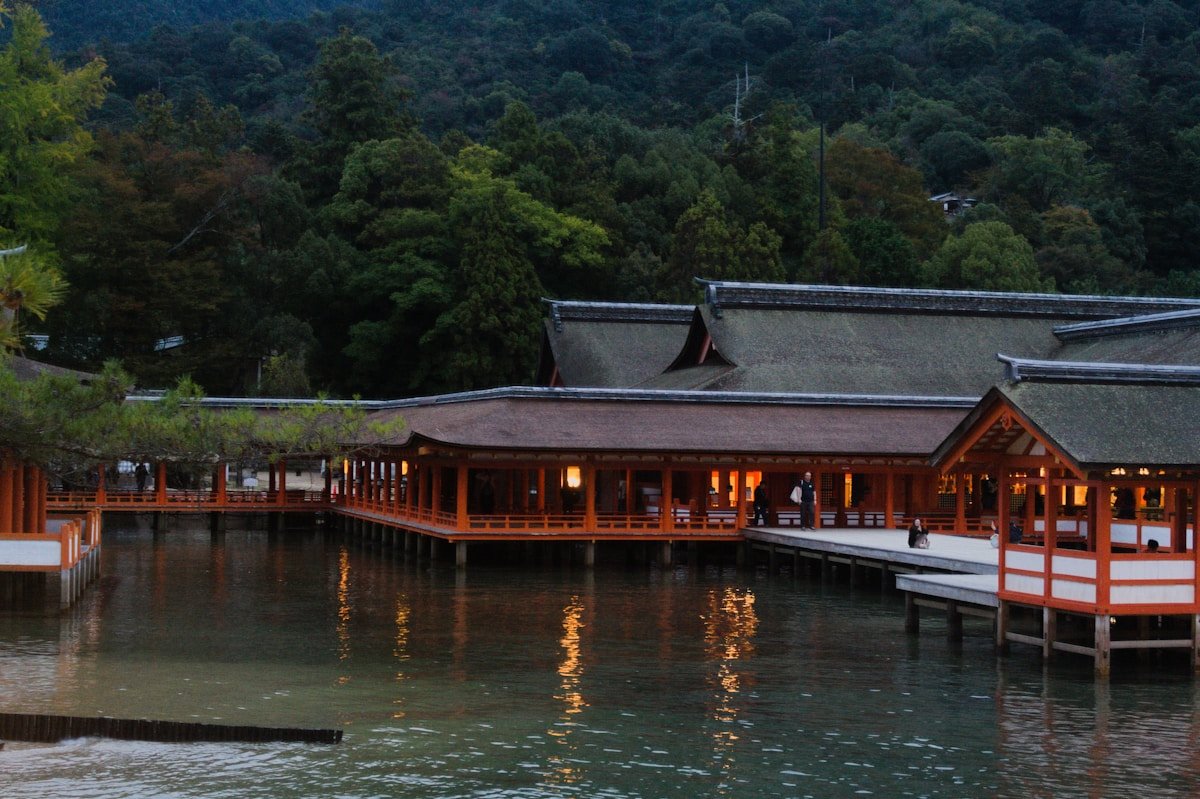
Miyajima Island - officially Itsukushima - is a 30-square-kilometre island in Hiroshima Bay, best known for the O-torii gate of Itsukushima Shrine standing in the sea at high tide. It is one of Japan’s most-visited tourist sites and one of the three traditional scenic views (Nihon Sankei). Overnight accommodation on the island is deliberately limited - the island has been sacred since the 6th century, and its character as a protected natural and cultural landscape means large-scale hotel development has not occurred. Search hotels in Miyajima on Booking.com
Staying on Miyajima Island
The Case for Staying on the Island
The day-trip experience of Miyajima is compressed and crowded, particularly from 10:00 a.m. to 4:00 p.m. when the bulk of visitors are present. The overnight experience is categorically different. After the last ferry departs in the evening, the island holds only its resident population and overnight guests - roughly 2,000 people on a busy day become perhaps a few hundred after dark. The shrine approach, the torii, and the hillside paths belong to you in the early morning and late evening.
Most island ryokan serve kaiseki dinner that emphasises local seafood - particularly oysters and anago (salt-water eel), both of which are Miyajima specialities - and many have gardens or bay-view baths.
Accommodation on Miyajima Island
Miyajima has approximately eight to twelve small ryokan and one larger resort hotel. There are no budget business hotels on the island; the minimum price for any overnight stay includes meals and is significantly higher than comparable mainland accommodation.
Iwaso Ryokan is the oldest and most celebrated property on the island, established in 1854. The main ryokan is set in a garden in the Momijidani (Maple Valley) gorge, with private wooden bungalows amid the trees. Rates from approximately ¥40,000 per person including kaiseki dinner and breakfast as of 2026; premium bungalows run considerably higher.
Miyajima Grand Hotel Arimoto is a larger-scale property near the island’s main shopping street with sea views from upper-floor rooms and multiple onsen baths. Rates from approximately ¥25,000 per person with meals.
Kinsui is a well-regarded ryokan in the quieter northern part of the village, from approximately ¥22,000 per person with meals.
Smaller minshuku and guesthouses operate on the island from approximately ¥12,000–¥18,000 per person including meals.
Miyajima Island Accommodation Summary
| Property type | Price range (per person, including meals) | Notes |
|---|---|---|
| Iwaso Ryokan | ¥40,000–¥80,000+ (~$267–$533+) | Historic, garden setting, most prestigious |
| Miyajima Grand Hotel | ¥25,000–¥45,000 (~$167–$300) | Larger, bay views, onsen |
| Mid-size ryokan (Kinsui etc.) | ¥22,000–¥35,000 (~$147–$233) | Quality traditional experience |
| Minshuku/guesthouses | ¥12,000–¥18,000 (~$80–$120) | Simpler facilities, meals included |
Using Hiroshima as a Base
Hiroshima (25 minutes by JR train to Miyajimaguchi ferry port, then 10 minutes by ferry) is the natural base for Miyajima visits and provides access to a full range of accommodation.
For most travellers - particularly those who want flexibility, a wider price range, or are combining Hiroshima’s Peace Memorial site and city attractions with Miyajima - basing in Hiroshima makes practical sense.
Hiroshima accommodation options:
- Budget business hotels: approximately ¥6,500–¥10,500 (~$43–$70) per room near Hiroshima Station (Toyoko Inn, APA Hotel, Dormy Inn Hiroshima)
- Mid-range hotels: approximately ¥12,000–¥22,000 (~$80–$147) - Rihga Royal Hotel Hiroshima, Vessel Hotel Campana Hiroshima
- Luxury: approximately ¥28,000–¥55,000+ (~$187–$367+) - ANA Crowne Plaza Hiroshima, Sheraton Grand Hiroshima
A full day in Hiroshima (Peace Memorial Museum, Hiroshima Castle, Shukkeien Garden) plus a full day on Miyajima (early ferry, full island circuit, shrine, Mt Misen ropeway) is a practical two-day combination with Hiroshima as the overnight base.
Getting to Miyajima? Compare flights to Japan to find the best international connection. Travel insurance for Japan covers delays, cancellations, and medical costs - worth sorting before you finalise accommodation bookings. An Airalo eSIM for Japan means you have mobile data and maps from the moment you land.
Booking Tips
Book Iwaso very early: The most sought-after ryokan rooms at Iwaso and other island properties book out three to six months in advance for peak season dates (cherry blossom in late March to early April, autumn colour in mid-November, Golden Week in late April to early May). If Iwaso is on the itinerary, book it the moment dates are confirmed.
Tidal timing: The torii gate looks different at different tide levels - at high tide it appears to float; at low tide you can walk to its base across the sand. Check tide tables before planning your arrival time. Several websites provide Miyajima-specific tide charts.
Night photography: Photographers who want to shoot the illuminated torii at night without crowds need to be on the island after approximately 9:30–10:00 p.m. on a weekday. Only overnight guests are present at this hour. A tripod and patience produce the classic reflection image.
Mt Misen: The island’s highest point (530 metres) is reached by ropeway (approximately ¥2,000 round trip as of 2026) followed by a 30-minute walk to the summit. Conditions at the top can be significantly windier and cooler than the waterfront - bring a layer regardless of the season.
See also: Miyajima travel guide · Things to do in Miyajima · Best restaurants in Miyajima · Hiroshima city guide · Ryokan guide Japan