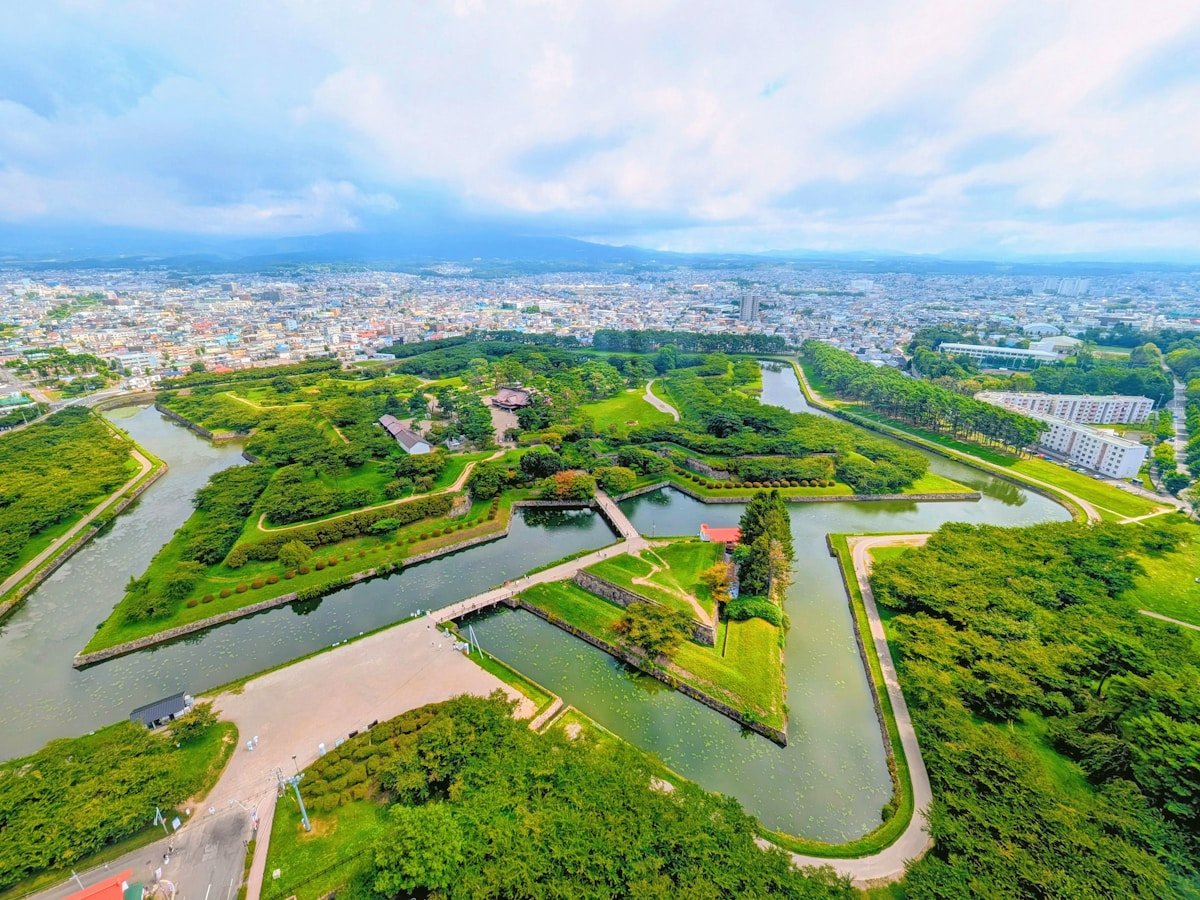
Hakodate is one of Japan’s most food-focused regional cities relative to its size. The morning market is the most famous seafood market in Hokkaido after Sapporo’s Nijo Market; the salt ramen here is one of the three great Hokkaido ramen styles; and live squid fishing from the Tsugaru Strait produces one of the most distinctive sashimi experiences in the country. Here is where to eat well across all price ranges.
Hakodate Morning Market (Asaichi)
The most famous food destination in the city. The market opens at 5:00am and runs until around noon, with the peak activity between 6:00am and 10:00am. Around 250 stalls sell fresh seafood from the Tsugaru Strait and surrounding Pacific waters - live squid in tanks (from which restaurant stalls serve same-morning sashimi), king crab, sea urchin, scallops, salmon, and ikura (salmon roe).
Several restaurant stalls on the perimeter serve assembled seafood rice bowls (kaisen-don). A three-topping bowl (typically crab, sea urchin, and ikura) costs approximately ¥2,800–¥4,000 as of 2026 depending on portion. The ikura-don (salmon roe rice bowl) is an excellent lower-cost option at approximately ¥1,800–¥2,200. Some stalls allow visitors to fill their own bowl from a selection of toppings - paying per scoop rather than a fixed combination.
The live squid experience - ordering a bowl of ika-somen (raw squid cut into noodle-thin strips, still moving) - costs approximately ¥1,500 and is one of the most memorable ways to eat in Hakodate.
Ajisai (Goryokaku Branch)
The original location of Hakodate’s most celebrated shio ramen shop, a five-minute walk from Goryokaku Tower. Ajisai’s salt ramen has a pale, exceptionally clear broth built on chicken and dried shellfish, with thin straight noodles and minimal toppings - chashu, menma, nori. The simplicity is the point. A standard bowl costs approximately ¥950 as of 2026. The Goryokaku branch is the original; there is a second branch near the station. Both are small and fill quickly at lunchtime - arrive at opening (11:00am) or after 2:00pm.
Ichifuku
A second long-established shio ramen option near Hakodate Station, Ichifuku serves a slightly richer version of the salt broth - more seafood depth, slightly less translucent - at approximately ¥1,050 as of 2026. The counter seats face an open kitchen where the broth is maintained at temperature throughout service. A supplementary order of gyoza (approximately ¥500) is a reliable accompaniment.
Gotouken
A Hakodate institution opened in 1879, originally serving Western-influenced Japanese cuisine during the Meiji period when the city was a major trading port. The lunch menu at Gotouken now features a mix of Japanese and Western dishes - beef stew, crab gratin, rice dishes - reflecting the city’s history of foreign influence. A lunch set (soup, main, rice) costs approximately ¥1,800–¥2,500 as of 2026. The interior has retained some of the European-influenced architectural detail of the original building. Located in the Motomachi historic district below the cable car.
Hakodate Beer
The Hakodate Beer brewery near the waterfront bays offers sit-down dining alongside its craft beer production. The beer styles include a light ale brewed with local water, a dark lager, and seasonal offerings. A set menu combining a selection of Hokkaido food - scallop butter soy, grilled seafood, Hokkaido cheese - and three beer samples costs approximately ¥2,500–¥3,000 as of 2026. The brewery operates as a restaurant from late morning; the best viewing of the copper brew tanks is from the upper gallery.
La Vista Hakodate Bay - Kaiseki Dining
The La Vista hotel on the waterfront has a kaiseki restaurant focusing on Hokkaido seasonal ingredients. The dinner kaiseki menu (approximately ¥10,000–¥15,000 as of 2026) changes monthly and typically features Hakodate squid in the autumn season, snow crab in winter, sea urchin in summer, and various mountain vegetables from the Hokkaido interior. Non-guests can book for dinner; lunch is more accessible at approximately ¥3,500 for a three-course set. Views over the bay are particularly good at dusk.
Goryokaku Tower Area - Lunch Restaurants
The streets around Goryokaku Park have a cluster of casual lunch restaurants - teppanyaki, soba, beef tongue, and hamburger steak - at prices of approximately ¥900–¥1,500 per set. The Goryokaku Tower basement food court is convenient if you are visiting the park; a Hokkaido milk soft-serve cone here costs approximately ¥350. The area is less tourist-focused than the waterfront and the morning market, and locals eat here regularly.
Milk Soft Serve and Dairy
Hokkaido dairy is exceptional throughout the prefecture, and Hakodate is no exception. Soft-serve ice cream made from local milk (approximately ¥350–¥500) is sold at multiple stands near the morning market, in the Motomachi historic district, and at the Goryokaku area. The flavour - pure milk with high fat content - is richer than the soft serve found in Honshu and worth the modest price difference.
See Hakodate through its food: Food and cultural tours in Hakodate often include market visits, tastings, and dishes you’d never find independently.
Budget Eating
Several ramen shops near the station serve bowls for ¥750–¥950. The morning market’s stand-up seafood counters are excellent value - an ikura-don at the market costs less than the same dish at a sit-down restaurant. Hakodate’s convenience stores sell Hokkaido milk, dairy desserts, and local crab bento for reasonable prices. The Goryokaku area side streets have a handful of student-friendly set-lunch spots at ¥800–¥1,000.
For the full picture of what to see and do, including the ropeway, fort, and morning market, see things to do in Hakodate. For accommodation near the market or waterfront, see where to stay in Hakodate.
Take a Guided Food Tour of Hakodate
Hakodate’s morning market (Asaichi) is one of the most spectacular in Japan - live king crab, sea urchin, salmon roe, and Hokkaido squid are sold directly from fishing boats, with restaurants attached for immediate preparation. The challenge is knowing which stalls are running the same frozen inventory recycled for tourists and which are genuinely selling the morning’s catch. A guided food tour of the market and the adjacent Kanemori red-brick warehouse district covers the hakodate salt ramen scene alongside the seafood - a combination that makes for one of the best half-day food experiences in Hokkaido.
Guided food tours in Hakodate take you beyond tourist-obvious spots - local guides know which stall has the freshest uni, where to find the best salt ramen, and how to navigate an all-Japanese menu.
See also: Hakodate travel guide · Food to try in Hakodate · Day trips from Hakodate · Hokkaido region guide · Sapporo travel guide
Search hotels in Hakodate: browse stays in Hakodate