Hakodate rewards visitors with a strong concentration of distinctive experiences within a small and easy-to-navigate city. The night view, morning market, star fort, and Western-heritage hillside district cover the major sights, but there are enough secondary activities - onsen, a quiet convent, day trips, squid fishing, craft beer - to fill three or four days without repetition. Here is what to prioritise.
1. Mt Hakodate Night View
The night view from Mt Hakodate (334 metres) is rated Michelin three stars - one of Japan’s most exceptional visual experiences - and seeing it once makes clear why the designation exists. The city lies on a narrow isthmus between two bays; from above, the lights of the residential streets and harbours spread symmetrically on both sides of the ridge below. The view at full dark has a quality of ordered luminosity that photographs show but do not completely convey.
The ropeway (¥1,500 return) departs every 3 minutes during peak hours from the Motomachi hillside base station. Take the cable car approximately 30 to 40 minutes before sunset (4:00pm in winter, 7:00pm in summer) to watch the transition from daylight through dusk to full night illumination. The observation deck is exposed; bring warm layers regardless of season, and significantly more in winter. Last ropeway down is at 10:00pm.
2. Hakodate Morning Market Breakfast
The 300-stall morning market opens at 5:00am and runs until noon, with the freshest seafood and most active atmosphere from 6:00am to 9:00am. Counter restaurants serve kaisen-don (seafood rice bowls) from opening - a standard ikura (salmon roe) don costs ¥1,500–¥2,000; uni (sea urchin) don runs ¥2,500–¥4,000; combination bowls with multiple ingredients reach ¥4,000–¥5,000 for the top tier.
From July to November, live squid fishing (ika-tsuri) is available at select market stalls - pay ¥1,000 to fish your squid from a small tank with a hand-held line, then ¥500 to have it prepared as sashimi immediately. Eating squid within minutes of catching it is a Hakodate experience specific to this place and season.
The market opens at 5:00am; arriving at 6:00am balances freshness, stall activity, and reasonable queue lengths. The market location is immediately beside Hakodate Station - no transport required.
3. Goryokaku Star Fort and Tower
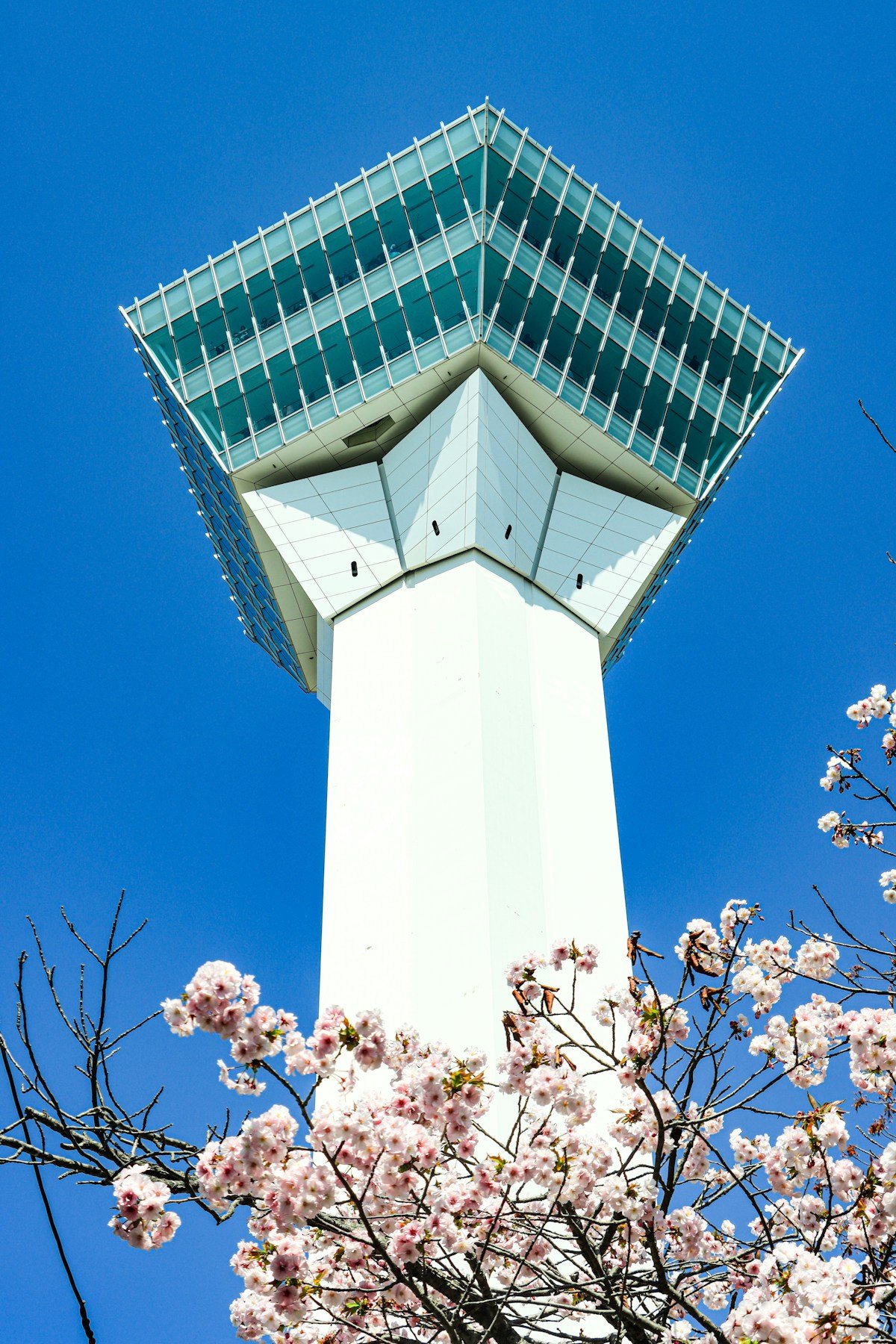
Goryokaku (¥840 tower entry) is Japan’s first Western-style bastion fort, completed in 1866. The star-shaped earthwork and moat system is designed so all rampart faces can provide defensive fire, a European technique adapted by Japanese engineers who studied Dutch and French military architecture. The shape is invisible from ground level; only the tower (constructed in 2006, separate from the fort) reveals the pentagon star outline.
The tower’s observation deck shows the geometric form clearly, particularly effective in cherry blossom season (late April) when pink trees trace the star’s five points. The ground-floor exhibition covers the 1868–69 Battle of Hakodate - the last armed confrontation of the Meiji Restoration - with models, documents, and personal effects of the combatants. The fort grounds (park) are free and pleasant for walking.
In December and January, the tower’s forecourt opens as an ice skating rink (¥1,000 including skate rental), with the illuminated fort walls behind the rink as a backdrop.
4. Motomachi Hillside Walk
The Motomachi district above the tram street is the most architecturally distinctive neighbourhood in Hakodate - a hillside of Western-influenced consulates, churches, merchant houses, and civic buildings from the late Meiji period (1868–1912). Entry to the street is free; individual buildings charge small fees.
The Hakodate City Old Public Hall (¥300) is the showpiece - a large colonial-style building in pale blue and cream with neoclassical columns, completed in 1910. The Former British Consulate (¥300) has a pleasant tearoom and garden. The Harisutosu Orthodox Church (exterior free, interior by visiting hours) is the most visually distinctive church building, with green copper domes visible from the harbour below.
Allow 90 minutes to walk the main buildings in a loop from the Jujigai tram stop. The slope from the tram stop to the Old Public Hall is steep - comfortable shoes matter.
5. Hakodate City Old Public Hall Evening
The Old Public Hall (¥300) is illuminated after dark from November through March, when the pale blue façade is lit against the night hillside and the harbour visible below. The combination of the lit building and the night view of the harbour makes the evening walk up the Motomachi slope worthwhile in winter even when daytime temperatures are uncomfortable. The illumination runs from sunset to 10:00pm.
6. Kanemori Red Brick Warehouses
The Kanemori warehouses on the waterfront (free entry) house restaurants, craft shops, and the Hakodate Beer brewery taproom. The best time to visit is around 4:00pm to 6:00pm when the brick buildings catch the low-angle late-afternoon light and the harbour behind is active with fishing boat traffic. The waterfront promenade in front of the warehouses is the best daytime viewing point in the city.
The on-site Hakodate Beer taproom serves locally brewed lager, ale, and stout at ¥700–¥1,200 per glass, with a food menu including Hakodate clams and smoked seafood. In December, a Christmas market (free entry) occupies the forecourt with vendor stalls selling food, crafts, and mulled drinks.
7. Lucky Pierrot Chinese Chicken Burger
The Hakodate-only burger chain Lucky Pierrot serves a Chinese Chicken Burger (¥530) - sweet-glazed fried chicken thigh in a soft bun - that has become one of the city’s defining food experiences. The Kanemori-area branch is most convenient given proximity to the warehouses. The interiors are deliberately chaotic with clown imagery, vintage toys, and dense decoration. Order at the counter; queues form quickly at peak meal times (12:00pm–1:30pm, 6:00pm–8:00pm).
8. Yunokawa Onsen
Yunokawa is Hakodate’s primary onsen district, located at the terminus of the tram line (20 minutes from Hakodate Station, ¥260). Several large resort hotels line the beach adjacent to the hot spring town, most offering day-use bathing access at ¥600–¥1,200 per person. Hotel Tetora (¥800 day-use) has a rooftop outdoor bath with sea views; the Yunokawa-Onsen Chorakukan (¥600) offers a more traditional public bath experience.
The water is a sodium chloride hot spring associated with improved blood circulation. The beach promenade in front of the onsen hotels is walkable year-round; in winter the contrast of the cold sea air and the outdoor bath water is severe and satisfying.
9. Trappistine Convent
The Trappistine Convent, 15 minutes by taxi from central Hakodate (approximately ¥2,000), is a Catholic convent founded in 1898 by French sisters and the oldest women’s convent in Japan. The grounds are open to visitors (free), and the convent shop sells butter cookies (¥900 for a tin) and butter candy produced by the sisters. The tree-lined approach, rose garden, and Gothic-influenced brick chapel create an unexpectedly peaceful atmosphere in what is otherwise a commercial city.
The interior of the convent is not accessible to general visitors. The grounds close at 5:00pm (4:30pm November–March).
10. Shirakami-misaki Lighthouse Walk
The coastal area near the Shirakami lighthouse, 20 minutes by bus south of Hakodate, offers dramatic ocean cliff walking with views of the Tsugaru Strait and, on clear days, the coast of Aomori to the south. The lighthouse is free to approach; the surrounding cliff paths are unpaved and rewarding on dry days. The area sees minimal tourist traffic outside summer weekends.
11. Onuma Quasi-National Park Day Trip
Onuma Park, 35 minutes by JR from Hakodate (¥540), sits at the base of the active volcano Mt Komagatake (1,131 metres) and consists of three lakes - Onuma, Konuma, and Junsainuma - connected by walking paths and cycling trails. The park is best in late April (cherry blossoms), July–August (water activities), and October–November (foliage).
Lake kayaking (¥2,500 for 2 hours) is available from April to October. Cycling the lake perimeter road takes approximately 1 hour on a rental bicycle (¥500/hour). The views of Mt Komagatake reflected in the lake surface are the park’s defining image; the mountain occasionally emits volcanic steam, adding atmosphere to the view.
12. Horse Riding at Onuma
The Onuma area has horse riding operators offering trail rides through the lakeside forest (approximately ¥3,500 for 30 minutes, ¥6,000 for 60 minutes). Rides pass through woodland trails with views of the lake and mountain. No prior experience required. Available April to November; reservation recommended.
13. Squid Fishing and Eating at the Morning Market
From July to November, live Hakodate squid (ma-ika) can be fished from small tanks at several morning market stalls (¥1,000 to catch, ¥500 for sashimi preparation) and eaten within minutes. The squid’s extraordinary freshness at this stage - firm, slightly sweet, translucent - is different from even high-quality restaurant squid. This is a seasonal activity specific to Hakodate and worth planning around if visiting in the right months.
14. Craft Beer at Hakodate Beer Brasserie
The Hakodate Beer taproom in the Kanemori Warehouses serves a rotating selection of locally brewed beers (¥700–¥1,200 per glass) including a malt-forward lager inspired by Meiji-era German brewing, a dark mild ale, and seasonal specials. The brick interior and harbour view through the warehouse windows make for a good afternoon stop. Open from 11:30am daily.
Book ahead for popular experiences: Tours and activities in Hakodate include guided options, skip-the-line tickets, and immersive cultural experiences.
15. Hakodate City Museum of Northern Peoples
The Hakodate City Museum of Northern Peoples (¥300) in the Motomachi district covers the cultures and material heritage of the Ainu (Hokkaido’s indigenous people), the Nivkh of Sakhalin, and other northern indigenous groups with particular relevance to Hakodate as a trade hub. The collection of Ainu clothing, tools, boats, and ceremonial objects is well-curated and explained. Open 9:00am–7:00pm in summer, 9:00am–5:00pm in winter. Closed Mondays.
Where to stay: Search hotels in Hakodate on Booking.com
See also: Hakodate travel guide · Where to stay in Hakodate · Best restaurants in Hakodate · Day trips from Hakodate · Hokkaido region guide