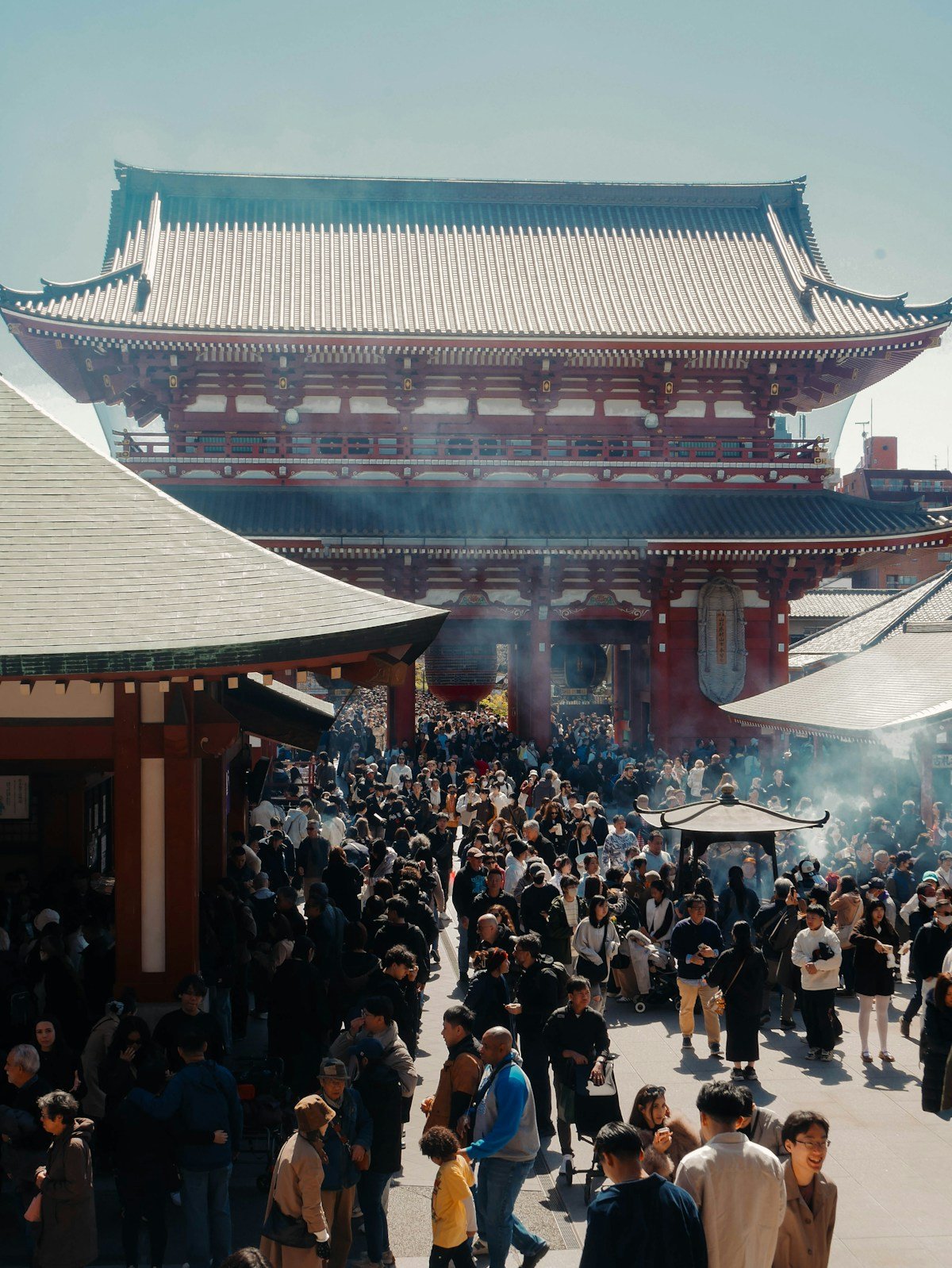
Senso-ji is Tokyo’s oldest and most visited temple, drawing around 30 million people a year to its incense-filled courtyard in Asakusa. Despite the crowds, it earns its place on every Tokyo itinerary: the approach through Nakamise-dori, the five-storey pagoda, and the giant bronze incense burner in front of the main hall create an experience that feels genuinely ancient even in the middle of a modern city.
Top Tours at a Glance
Here’s a quick comparison of top-rated tours on GetYourGuide:
| Tour | Duration | Price (from) | Group Size | Highlights |
|---|---|---|---|---|
| Asakusa early morning walking tour | 3 hrs | from $42/person | Small group (max 12) | Pre-crowd access, temple history, Nakamise street |
| Asakusa food and culture tour | 3.5 hrs | from $58/person | Group | Senso-ji, street food tasting, Nakamise shopping |
| Tokyo old town Asakusa private tour | 4 hrs | from $95/person | Private | Customisable, rickshaw option, English guide |
| Tokyo highlights full-day tour | 10 hrs | from $80/person | Group | Senso-ji, Shibuya, Shinjuku, Harajuku combined |
Browse all Asakusa tours → GetYourGuide
What Is Senso-ji?
Founded in 628 CE according to legend - when two fishermen reportedly pulled a golden statue of the bodhisattva Kannon from the Sumida River - Senso-ji is a Buddhist temple of the Tendai sect dedicated to Kannon, the goddess of mercy. It’s the focal point of the Asakusa district and one of the few places in Tokyo that retains an Edo-period character.
The complex includes the Kaminarimon (“Thunder Gate”) with its enormous red lantern, Nakamise-dori shopping street, Hozomon inner gate, the five-storey Asakusa Pagoda, and the main hall (Hondo) housing the golden Kannon statue. Photography is permitted throughout the grounds; the interior of the main hall where the deity is enshrined is not open to the public.
Admission and Opening Hours
The outer grounds - including Nakamise-dori and the courtyard - are free to enter and accessible 24 hours a day.
The main hall (Hondo) has set hours:
- April–September: 6:00–17:00
- October–March: 6:30–17:00
The inner prayer hall closes during these hours but the courtyard, gates, and pagoda are always accessible.
There are no tickets, no booking requirements, and no timed entry. You simply walk through Kaminarimon and proceed through the precinct.
The Incense Burner
The large bronze incense burner (jokoro) in the courtyard is a defining part of the Senso-ji experience. Visitors wave the smoke towards themselves - the belief being that the smoke heals whatever part of the body it touches. On busy days, the area around the burner is thick with white smoke and the smell of burning incense sticks (available for purchase from a stall beside it, approximately ¥200 for a bundle, as of 2026).
Omikuji Fortune Slips
Senso-ji is famous for its omikuji - paper fortune slips drawn by shaking a numbered stick from a metal canister and retrieving the corresponding slip. This is one of the few temples in Japan where omikuji are still drawn this traditional way. Each slip is approximately ¥100 and results range from Great Blessing (daikichi) to Great Curse (daikyo). If your fortune is bad, you tie the slip to a wire rack near the canister and leave it behind.
Nakamise-dori Shopping Street
The 250-metre approach from Kaminarimon to the inner gate is lined with around 90 shops selling traditional goods and food. Highlights include:
- Ningyo-yaki: Small cakes filled with sweet red bean paste, baked in traditional moulds (pigeons, lanterns, pagodas). Approximately ¥800–¥1,200 for a bag of 10, as of 2026.
- Senbei: Hand-grilled soy sauce rice crackers, made fresh in front of you. Around ¥100–¥200 each.
- Yukata and accessories: Reasonably priced summer kimono, fans, and hair ornaments.
- Kaminari Okoshi: Puffed rice brittle, a classic Asakusa souvenir, approximately ¥500–¥800 per box.
Most Nakamise shops are open 10:00–18:00 (some close by 17:00). The street itself is open at all hours; only the shops have set hours.
Best Time to Visit
Early morning (before 8:00): The grounds are near-empty before 7:30, especially on weekdays. The main hall is open from 6:00 (or 6:30 in winter), so early risers can experience the space with almost no one else present.
Evening: After 18:00, the Nakamise shops close but the gates remain lit by lanterns and spotlights. The courtyard is much quieter than daytime, and Kaminarimon photographed against a dark sky is spectacular.
Avoid: Weekends between 10:00 and 15:00 are extremely crowded year-round. New Year (January 1–3) sees some of Japan’s largest shrine visits - Senso-ji draws millions over those three days; it’s an experience but not a calm one.
How to Get There
By subway:
- Asakusa Station (Ginza Line, Asakusa Line, or Tobu Skytree Line): 5-minute walk to Kaminarimon.
By bus:
- Several bus routes stop at Asakusa (Kaminarimon) stop on the main road.
From Shibuya: Ginza Line → Asakusa Station, approximately 30 minutes, ¥280. From Shinjuku: Transfer at Asakusa or use the bus network. Approximately 40–50 minutes. From Tokyo Station: Marunouchi Line → Ginza → Ginza Line to Asakusa, approximately 25 minutes, ¥290.
Asakusa is also reachable by boat from Hamarikyu Gardens or Hinode Pier - a 40-minute Sumida River cruise that costs approximately ¥1,000, giving a water-level view of the city arriving into Asakusa.
Suica is accepted on all subway and bus routes serving Asakusa. For mobile data to navigate Nakamise-dori’s side alleys and translate shop signs, a Japan eSIM is the simplest option - activate before landing so maps work from the airport.
Nearby Attractions
The Asakusa district rewards several hours of exploration beyond Senso-ji:
- Asakusa Shrine (Asakusa Jinja): Immediately to the right of the main hall, a Shinto shrine that predates Senso-ji in founding legend. Free to enter.
- Nakamise Side Streets: The alleys flanking Nakamise-dori have older, quieter shops selling lacquerware, fans, and kitchen knives.
- Sumida Park: A five-minute walk east along the river, especially impressive during cherry blossom season (late March–early April).
- Tokyo Skytree: A 10-minute walk or one subway stop from Asakusa. Tokyo’s tallest structure, with observation decks at 350 m and 450 m.
Food and Drink in Asakusa
Asakusa has a dense concentration of traditional Japanese restaurants. Within a five-minute walk of Senso-ji:
- Tempura Daikokuya (since 1887): Bowl of tempura over rice, approximately ¥1,800–¥2,500. Open for lunch and dinner; queues are common at peak hours.
- Sometaro: Okonomiyaki (savoury pancakes cooked at your table), approximately ¥1,200–¥1,800 per dish.
- Kamiya Bar: Tokyo’s oldest Western-style bar, open since 1880. Famous for Denki Bran, a brandy-based mixed drink unique to the venue, approximately ¥600 per glass.
Guided Tours
Senso-ji works well as an independent visit, but a guided walk of Asakusa adds layers: the history of the Kannon statue legend, the symbolism of the gate guardians, and the neighbourhood’s transformation from Edo-period entertainment district to wartime destruction and postwar recovery. Tours typically cover the temple and extend into the surrounding streets. Options are available through the booking widget above.
Tips
- Respectful behaviour at the main hall: clap twice, bow, and step aside promptly. The hall is an active place of worship, not just a tourist site.
- The best photo of Kaminarimon is from the far end of Nakamise-dori looking back - this gives the perspective of the gate framed by the shopping street.
- Morning light falls on the front of Kaminarimon from the east; afternoon light on the main hall.
Nearest city hub: Tokyo - where to stay, restaurants, and planning your Tokyo trip.